

Plastic Solar Cell Market
Plastic Solar Cell Market Size, Share, Trends, Growth, and Industry Analysis, By Type (PN Junction Structure, Dye-Sensitized Nanocrystalline), By Application (Disposable Solar Panels, Hydrogen Powered Cars, Wireless Devices, Consumer Electronics), Regional Analysis and Forecast Period 2026-2035
Plastic Solar Cell Market Overview
As per Econ Market Research analysis, the Global Plastic Solar Cell Market was recorded at US$ 3.19 Billion in 2026 and is projected to expand to US$ 22.63 Billion by 2035, registering a CAGR of 24.3% over the forecast period. The base year used is 2025.
Plastic Solar Cell Market Size 2025-2035 (USD Billion)

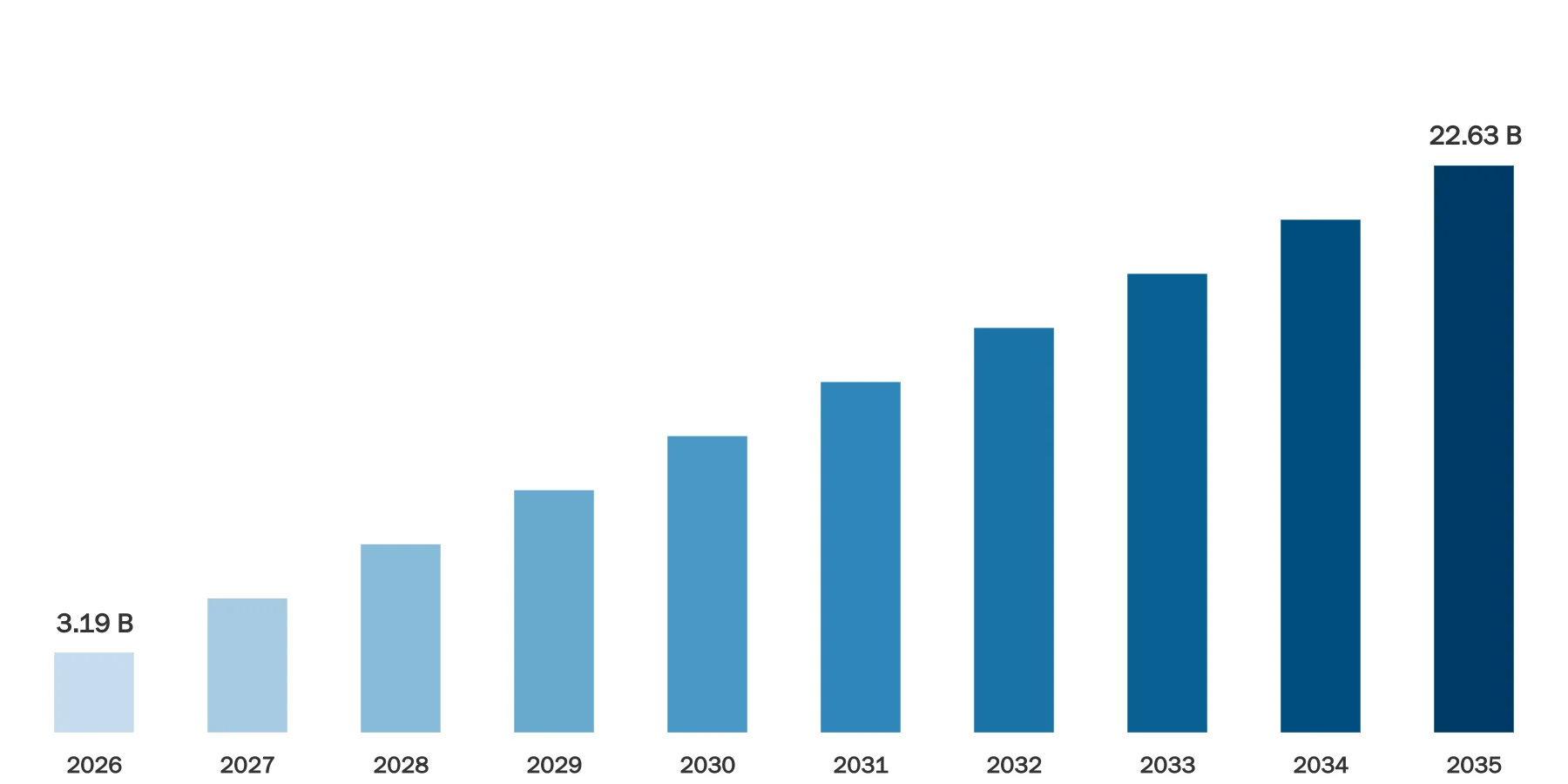
Source: Econ Market Research
Plastic solar cells, or organic photovoltaics (OPVs), are a type of solar cell that uses organic materials like polymers or small molecules instead of silicon. They are light, flexible, and affordable, with potential uses in various areas such as portable electronics, Building-integrated Photovoltaics (BIPV), and wearable tech. The global market for plastic solar cells has grown due to the growing need for renewable energy, advancements in organic electronics, and environmental worries.
Over the past few years, the worldwide plastic solar cell industry has seen significant expansion, driven by the increasing need for eco-friendly energy solutions and the push for sustainability. Plastic solar cells have numerous benefits compared to traditional silicon-based ones, such as being flexible, lightweight, and easier to produce using cost-effective roll-to-roll printing methods. These features make plastic solar cells a promising choice for a range of applications, including powering portable gadgets, blending into construction materials, and even incorporating into garments and accessories.
In addition, continuous research and development initiatives focusing on improving the performance and reliability of plastic solar cells are projected to boost market growth in the future. Despite this, issues like lower efficiency when compared to silicon-based solar cells and doubts about the long-term durability of organic materials persist as important concerns for both industry experts and researchers. With the ongoing technological advancements and the growing acceptance of sustainable energy solutions, the worldwide plastic solar cell market is set to experience substantial growth in the near future.
Plastic Solar Cell Dynamics
The worldwide plastic solar cell market is affected by many changing factors that are shaping its growth path. One important factor is the rising popularity of renewable energy sources around the globe, driven by concerns for the environment and the urgency to combat climate change. Governments and various organizations are encouraging the use of Solar Energy through different policies, subsidies, and tax breaks, leading to an increased demand for plastic solar cells. Moreover, the flexibility and cost efficiency of plastic solar cells are making them a preferred choice for off-grid purposes, particularly in isolated or developing areas where conventional energy systems are scarce.
The growing market for organic electronics is driven by advances in technology, which have enhanced the performance, durability, and production methods of plastic solar cells. The solar energy market is facing challenges with efficiency and stability of organic materials compared to traditional silicon-based solar cells. Research and development efforts are ongoing to improve these issues, but it requires significant investment and time. The market is rapidly evolving with competition from established companies and new players. Collaborations between industry, research institutions, and government bodies are on the rise to drive innovation and address challenges in the market.
Plastic Solar Cell Drivers
Rising Demand for Renewable Energy
The growing emphasis on cutting carbon emissions and shifting to sustainable energy sources worldwide is a key factor driving the plastic solar cell market. Governments across the globe are putting in place policies and incentives to encourage the use of renewable energy, like solar power. Plastic solar cells provide a flexible and affordable option compared to the usual silicon-based solar cells, which makes them especially attractive for decentralized energy production and off-grid uses. With the increasing need for renewable energy due to environmental worries and energy stability, the plastic solar cell market is projected to grow even more.
Technological Advancements
The increasing focus on reducing carbon emissions and transitioning to sustainable energy sources globally is a major driver of the plastic solar cell market. Governments worldwide are implementing policies and offering incentives to promote the adoption of renewable energy, such as solar power. Plastic solar cells offer a flexible and cost-effective alternative to traditional silicon-based solar cells, making them particularly appealing for decentralized energy generation and off-grid applications. With the growing demand for renewable energy in response to environmental concerns and energy security issues, the plastic solar cell market is expected to continue expanding.
Restraints:
Limited Efficiency
One of the main challenges for the plastic solar cell market is its lower efficiency when compared to silicon-based solar cells. Despite advancements in improving plastic solar cell efficiency, they still fall behind silicon cells. This limitation hinders their wide acceptance, especially in large utility projects where efficiency is key for economic success. To address this hurdle, more research and development is needed to enhance the efficiency of plastic solar cells by optimizing materials, device structures, and manufacturing methods.
Stability Concerns
One challenge facing the plastic solar cell market is the durability of the organic materials used in these cells. Environmental factors like moisture, heat, and light can impact the performance and longevity of plastic solar cells. It is crucial to ensure that these cells are stable and durable for them to be commercially successful, particularly in fields like building-integrated photovoltaics (BIPV) and automotive integration where reliability is key. To address these concerns, continuous research into material chemistry, encapsulation methods, and device design is necessary to improve the resilience of plastic solar cells in practical usage scenarios.
Opportunities:
Emerging Markets
The growing demand for renewable energy solutions in emerging markets presents a significant opportunity for the plastic solar cell market. Countries in Asia, Africa, and Latin America are experiencing rapid urbanization and industrialization, driving the need for clean and sustainable energy sources. Plastic solar cells offer a scalable and adaptable solution for meeting this demand, particularly in regions with limited access to conventional energy infrastructure. By tapping into these emerging markets, manufacturers and suppliers of plastic solar cells can unlock new growth opportunities and diversify their revenue streams.
Segment Overview
By Type
In the realm of plastic solar cells, there are two primary types: dye-sensitized nanocrystalline cells and PN junction structure cells. Dye-sensitized cells use a dye-sensitized Semiconductor layer to capture sunlight and create power, while PN junction structure cells, or P-N heterojunction cells, and rely on a more traditional semiconductor junction for converting solar energy into electricity. The latter offers better efficiency and stability compared to the former. Both types of plastic solar cells have unique characteristics and are suitable for different applications, catering to diverse market needs and preferences.
By Application
The use of plastic solar cells in various industries is expanding rapidly. These cells can be integrated into wireless devices like smartphones, tablets, and IoT devices to improve battery life and make them more portable. Hydrogen-powered cars can also benefit from plastic solar cells by using them to generate electricity for onboard systems or to charge auxiliary batteries, ultimately leading to improved energy efficiency and sustainability in transportation.
Additionally, the implementation of disposable solar panels that are lightweight and affordable allows for temporary or emergency installations in situations where traditional solar panels are not feasible due to cost or practicality constraints. Other applications of plastic solar cells include outdoor signage, remote sensing, and agricultural monitoring, demonstrating the versatility and adaptability of this technology across various industries and sectors.
By End User
The plastic solar cell market is utilized by various industries such as consumer electronics, residential, automotive, power and energy, and more. Consumer electronics companies incorporate plastic solar cells into their products to provide environmentally friendly and energy-efficient options to customers, improving the attractiveness and performance of electronic devices. For residential purposes, plastic solar cells are used in rooftop installations, solar chargers, and portable solar kits, allowing homeowners to utilize solar energy for power generation and decrease their environmental impact.
Plastic solar cells in the automotive industry can help power extra systems, increase the range of electric vehicles, and charge batteries. This reduces the use of fossil fuels and boosts energy efficiency. Plastic solar cells are also useful in off-grid power generation, solar-powered lighting, and integrating renewable energy, offering cost-effective and sustainable energy solutions in a variety of settings.
Plastic Solar Cell Overview by Region
North America and Europe are leading the way in technology advancements and the acceptance of renewable energy solutions, resulting in substantial investments in research, development, and implementation of plastic solar cells. The Asia Pacific region, specifically countries such as China, Japan, and India, is undergoing rapid industrialization and urbanization, increasing the need for clean and sustainable energy sources and offering promising prospects for market growth.
Latin America is currently experiencing a rise in government support and funding for renewable energy projects, which is driving the use of plastic solar cells in applications such as off-grid electrification and rural development. In the Middle East and Africa, there is a shift towards exploring alternative energy sources and reducing reliance on fossil fuels, increasing interest in plastic solar cells for meeting energy needs in remote areas. The plastic solar cell market is influenced by regional differences in regulations, market development, technology, and consumer preferences, influencing growth prospects and opportunities in various regions.
Plastic Solar Cell Market Competitive Landscape
Established companies such as Heliatek GmbH, Solarmer Energy Inc., and DisaSolar are focusing on research and development activities to improve the efficiency, stability, and scalability of plastic solar cells, while also investing in manufacturing capabilities to meet growing market demand. Additionally, collaboration and partnerships with technology providers, research institutions, and government agencies are common strategies employed by market players to accelerate product development and market penetration.
Emerging players, including Ossila Ltd., InfinityPV ApS, and Armor Group, are leveraging technological advancements and niche market segments to carve out a foothold in the competitive landscape. Furthermore, mergers and acquisitions, along with strategic alliances, are prevalent strategies adopted by companies to enhance their market position, expand their product portfolio, and capitalize on emerging opportunities in the rapidly evolving plastic solar cell market.
Key Players:
Heliatek GmbH
Solarmer Energy Inc.
DisaSolar
Ossila Ltd.
InfinityPV ApS
Armor Group
Dyesol Ltd.
Konarka Technologies Inc.
SolarWindow Technologies Inc.
Mitsubishi Chemical Corporation
Eight19 Ltd.
Plastic Solar Cell Report Segmentation
Plastic Solar Cell Market Report Scope & Segmentation
| Attributes | Details |
|---|---|
Market Size (Current) | US$ 3.19 Billion in 2026 |
Market Size (Forecast) | US$ 22.63 Billion in 2035 |
Growth Rate | CAGR of 24.3% from 2026 to 2035 |
Forecast Period | 2026 – 2035 |
Base Year | 2025 |
Historical Data Available | Yes |
Regional Scope | Global |
Segments Covered | By Type
By Application
|
Frequently Asked Questions
Common questions about this report
The study period covers historical insights and forecast projections for the period 2026-2035.
About the Author
Market research expert with years of industry experience

Related Reports
Explore more market insights from the same category