

Reed switch device Market
Reed switch device Market Size, Share, Trends, Growth, and Industry Analysis, By Type (Form A, Form B, Form C), By Application (Reed Relays, Magnetic Sensors), Regional Analysis and Forecast Period 2026-2035
Reed switch device Market Overview
As per Econ Market Research analysis, the Global Reed switch device Market valuation stood at US$ 2.36 Billion in 2026 and is expected to reach US$ 4.33 Billion by 2035, growing at a steady CAGR of 6.9% from 2026 to 2035. 2025 serves as the base year.
Reed switch device Market Size 2025-2035 (USD Billion)

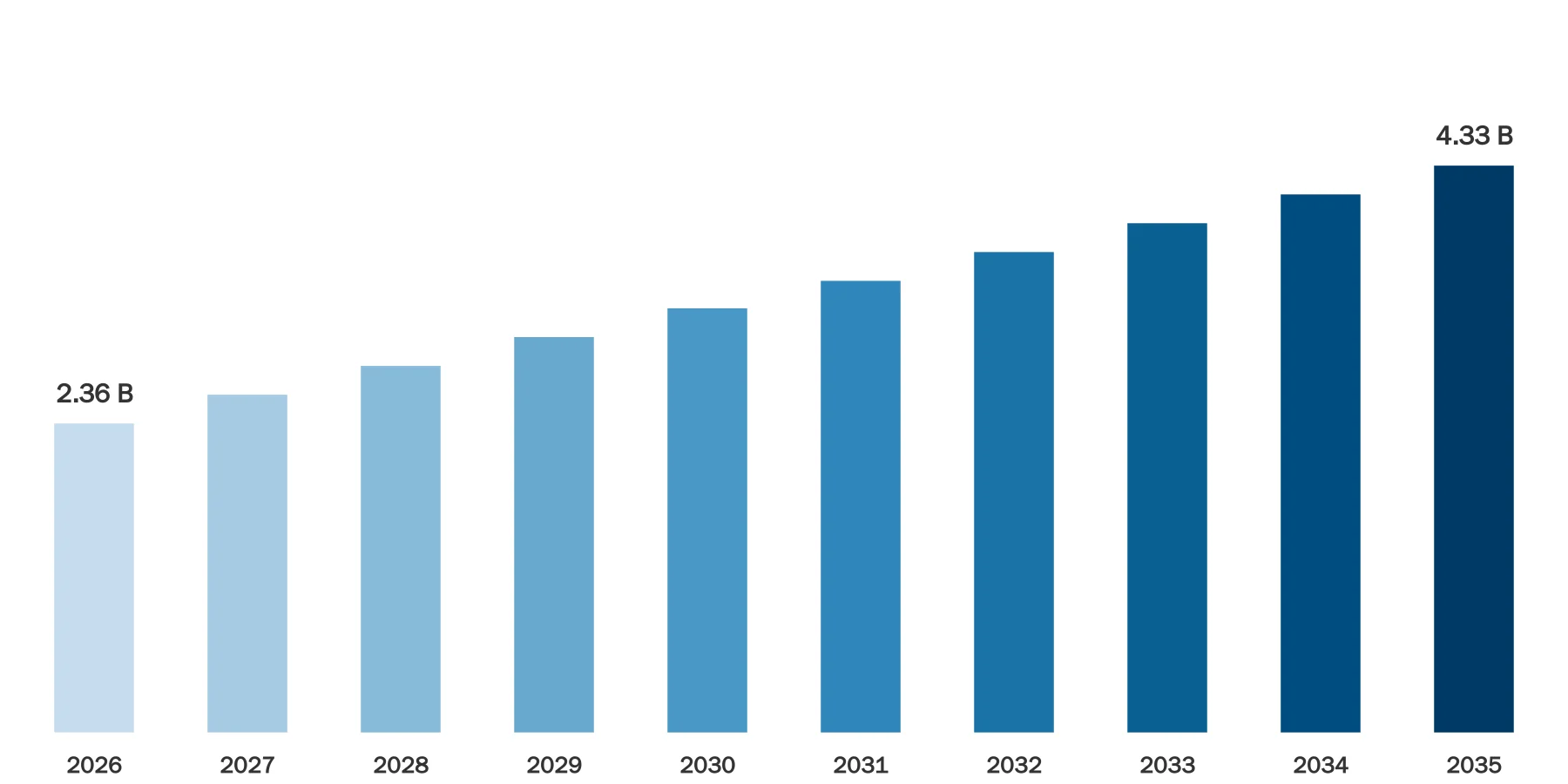
Source: Econ Market Research
The Reed Switch device are small electrical switches which gets activated by magnets and are commonly used in a wide array of electronic devices. They are made up of two metal reed elements housed in a glass tube filled with inert gas, usually nitrogen. When a magnetic field is present, these reeds come together, closing an electrical circuit. Reed switches are highly regarded for their durability, long lifespan, and energy efficiency, which makes them crucial components in a variety of applications such as automotive sensors, security systems, Medical Devices, and consumer electronics.
The global market for Reed switch devices includes the entire industry dedicated to creating, distributing, and utilizing Reed switches. In recent years, the global market for Reed switch devices has been steadily increasing due to the growing demand for automation and smart technology across various industries. A key driver of this growth is the automotive sector, where Reed switches are commonly utilized in safety systems such as airbag sensors and ABS.
Additionally, the rising popularity of IoT devices and home automation has further fuelled the demand for Reed switches in Smart Home Appliances, door and window sensors, and HVAC systems. In addition, progress in nanotechnology and material science has resulted in the creation of small Reed switches, which are now being used in compact electronic devices such as wearables and medical implants.
While facing competition from other sensor technologies like Hall effect sensors and optical sensors, the market for Reed switch devices is expected to keep growing due to ongoing advancements and increasing use in new areas like renewable energy and Industrial Automation. Not only are Reed switches commonly used in traditional electronics, but they are also being utilized in new areas like renewable energy. They are essential in wind turbines and solar power systems for monitoring and controlling functions.
Reed Switch Device Dynamics
The Global Reed switch device market is influenced by ever-changing factors that determine its path. Advances in technology consistently transform the field, as developments like shrinking size and improved sensitivity broaden the use of Reed switches in various industries. This growth is especially noticeable in areas like the automotive sector, where strict safety regulations and the need for more advanced electronic systems lead to the incorporation of Reed switches in advanced driver assistance systems (ADAS) and electric vehicles (EVs).
Moreover, the rapid expansion of the Internet of Things (IoT) industry is driving market growth, with Reed switches being essential parts of smart home gadgets, industrial sensors, and wearable technology. These switches play a crucial role in facilitating connectivity and automation. Although the market faces challenges, such as competition from other sensor technologies like Hall effect sensors and optical sensors, the dominance of Reed switches in certain applications can be threatened. Factors like cost, performance, and environmental considerations all influence which sensors are chosen for specific use cases.
Supply chain disruptions, geopolitical tensions, and regulatory changes can also create uncertainties that affect the market. Nevertheless, ongoing research and development efforts are driving growth in the market by improving the performance, reliability, and versatility of Reed switch devices. Moreover, the increasing emphasis on sustainability and energy efficiency in various industries underscores the relevance of Reed switches, given their low-power consumption and long-term reliability, further driving market growth.
Reed Switch Device Drivers
Rapid Technological Advancements
The Reed switch device market is experiencing notable growth due to continual technological advancements like miniaturization, enhanced sensitivity, and improved durability. These innovations are broadening the use of Reed switches across various industries, leading to market expansion. For example, in the automotive sector, smaller and more sensitive Reed switches are being used in advanced safety systems and electric vehicles, improving vehicle performance and safety standards. Likewise, in the consumer electronics industry, the need for smaller and more efficient sensors is driving the adoption of Reed switches in smartphones, wearables, and IoT devices, contributing to market growth.
Increasing Adoption of IoT Devices
The increasing number of IoT devices in different industries is a key factor driving the market for Reed switch devices. Reed switches are essential for connecting and automating smart home appliances, industrial sensors, and healthcare devices. With the growing IoT ecosystem, driven by the need for remote monitoring, predictive maintenance, and energy efficiency, the Reed switch market is expected to expand significantly. Their reliability, low power consumption, and compatibility with digital networks make Reed switches vital components in IoT-enabled systems, leading to steady demand and market growth.
Restraints:
Competition from Alternative Sensor Technologies
Competition from other sensor technologies like Hall effect sensors and optical sensors is a major obstacle for the Reed switch device market. These alternatives have varying performance features, such as greater sensitivity or resistance to environmental factors that can be more suitable for certain uses. Therefore, Reed switches struggle to retain market share and importance, especially in fields where strict performance criteria or cost concerns dictate sensor choices.
Supply Chain Disruptions and Regulatory Changes
Manufacturers of Reed switch devices face risks from supply chain interruptions, political tensions, and regulatory shifts, leading to uncertainty and market impact. Price changes in raw materials, trade disputes, and regulatory modifications can affect production costs, timelines, and compliance needs, influencing market stability and growth potential. Moreover, advancing environmental laws and product certification standards present obstacles for manufacturers to meet regulations and stay competitive in the market.
Opportunities:
Expansion in Renewable Energy Sector
The increasing focus on renewable energy sources is creating a big opportunity for the Reed switch device market. Reed switches are important for monitoring and controlling renewable energy systems like wind turbines and solar panels. As wind and solar power technologies become more popular around the world due to environmental issues and government support, there will be a growing need for Reed switches in these applications. Additionally, improvements in renewable energy technologies, like making power generation systems more reliable and efficient, present opportunities for Reed switch manufacturers to enhance their products and cater to the specific requirements of the renewable energy industry.
Segment Overview
By Type
By type, Reed switch device market is segmented into Form A and Form B configurations. Form A switches, also known as normally open (NO) switches, are the most common type. They remain open when there is no magnetic field present and close when a magnetic field is detected to complete the electrical circuit. On the other hand, Form B switches, also known as normally closed (NC) switches, are in a closed state by default and open up when they are exposed to a magnetic field.
Both Form A and Form B switches are used for specific purposes depending on the needs of the application. Form A switches are typically used in applications where the default state should be open, like in alarm systems or position sensors. Form B switches are useful in scenarios where a closed default state is needed, like power circuits or safety interlocks. The decision to use Form A or Form B switches depends on factors such as circuit behaviour, safety, and compatibility with other system components.
By Application
By Application, Reed switches are segmented into automotive, consumer electronics, and industrial automation for tasks like proximity sensing, speed detection, and magnetic field mapping. In contrast, Reed relays are electromechanical switches that are controlled by a magnetic field created by a Reed switch. Reed relays are commonly used in various industries such as telecommunications, testing and measurement, and automation for tasks like signal routing, isolation, and switching. They provide benefits such as quick response times, low energy usage, and dependable performance, which make them ideal for switching tasks that involve both low and high voltages.
Reed switch device Overview by Region
North America and Europe, known for their advanced technology, have a large market share due to the strong automotive, consumer electronics, and industrial industries. Demand for Reed switches remains steady in these regions, particularly for applications that need reliable and precise sensing. Meanwhile, Asia Pacific is a key factor in market growth due to rapid industrial development, urbanization, and increased use of IoT devices in sectors like manufacturing, automotive, and healthcare.
Additionally, the growing emphasis on renewable energy projects in Asia Pacific opens up more possibilities for market growth, especially in areas like wind and solar power. Latin America and the Middle East &, Africa show promising growth potential as well, driven by factors such as infrastructure upgrades, government support, and investments in industries like automotive and telecommunications.
Reed Switch Device Market Competitive Landscape
Established companies like Littelfuse Inc., Standex International Corporation, and HSI Sensing dominate the market with their extensive product portfolios, technological expertise, and global presence. These companies focus on continuous research and development to enhance the performance and reliability of their Reed switch devices, catering to diverse industry requirements.
Additionally, strategic collaborations with technology providers, distributors, and end-users help these players expand their market reach and strengthen their competitive position. Emerging players, such as RMCIP and PIC GmbH, are also making inroads into the market with their innovative offerings and competitive pricing strategies. As the market evolves, competition intensifies, prompting companies to invest in differentiation strategies and customer-centric approaches to maintain their foothold and capitalize on emerging opportunities in sectors like automotive, IoT, and renewable energy.
Reed Switch Device Market Leading Companies:
Littelfuse, Inc.
Standex International Corporation
HSI Sensing
RMCIP Ltd.
PIC GmbH
ABLIC Inc.
Coto Technology, Inc.
Aleph America Corporation
Reed Relays and Electronics India Ltd.
Hamlin Electronics
Coto Technology Ltd.
Coto Technology GmbH
Coto Technology Pvt. Ltd.
OKI Sensor Device Corporation
HAMLIN GmbH
Reed Switch Device Market Recent Developments
Jan 2022, the International Centre for Industrial Transformation (INCIT) was established in Singapore to drive the adoption of Industry 4.0 in manufacturing.
Mar 2021, ABLIC Inc. introduced the ",S-5701 B Series", surface mount TMR sensor IC, featuring ultra-low current consumption, high magnetic sensitivity, and extended lifespan, with an operating current of just 160nA.
Reed Switch Device Report Segmentation
Reed switch device Market Report Scope & Segmentation
| Attributes | Details |
|---|---|
Market Size (Current) | US$ 2.36 Billion in 2026 |
Market Size (Forecast) | US$ 4.33 Billion in 2035 |
Growth Rate | CAGR of 6.9% from 2026 to 2035 |
Forecast Period | 2026 – 2035 |
Base Year | 2025 |
Historical Data Available | Yes |
Regional Scope | Global |
Segments Covered | By Type
By Application
|
Frequently Asked Questions
Common questions about this report
The study period covers historical insights and forecast projections for the period 2026-2035.
About the Author
Market research expert with years of industry experience

Related Reports
Explore more market insights from the same category