

Smart Home Appliances Market
Smart Home Appliances Market Size, Share, Trends, Growth, and Industry Analysis, By Product (Smart Washing Machines, Smart Refrigerators, Smart Air Purifiers, Smart TV), By Distribution Channel (Online, Offline), Regional Analysis and Forecast Period 2026-2035
Smart Home Appliances Market Overview
As per Econ Market Research analysis, Global Smart Home Appliances Market size stood at US$ 70.38 Billion in 2026 and is projected to reach US$ 294.08 Billion by 2035, growing at a CAGR of 17.22% over the forecast period 2026–2035. 2025 is taken as the base year.
Smart Home Appliances Market Size 2025-2035 (USD Billion)

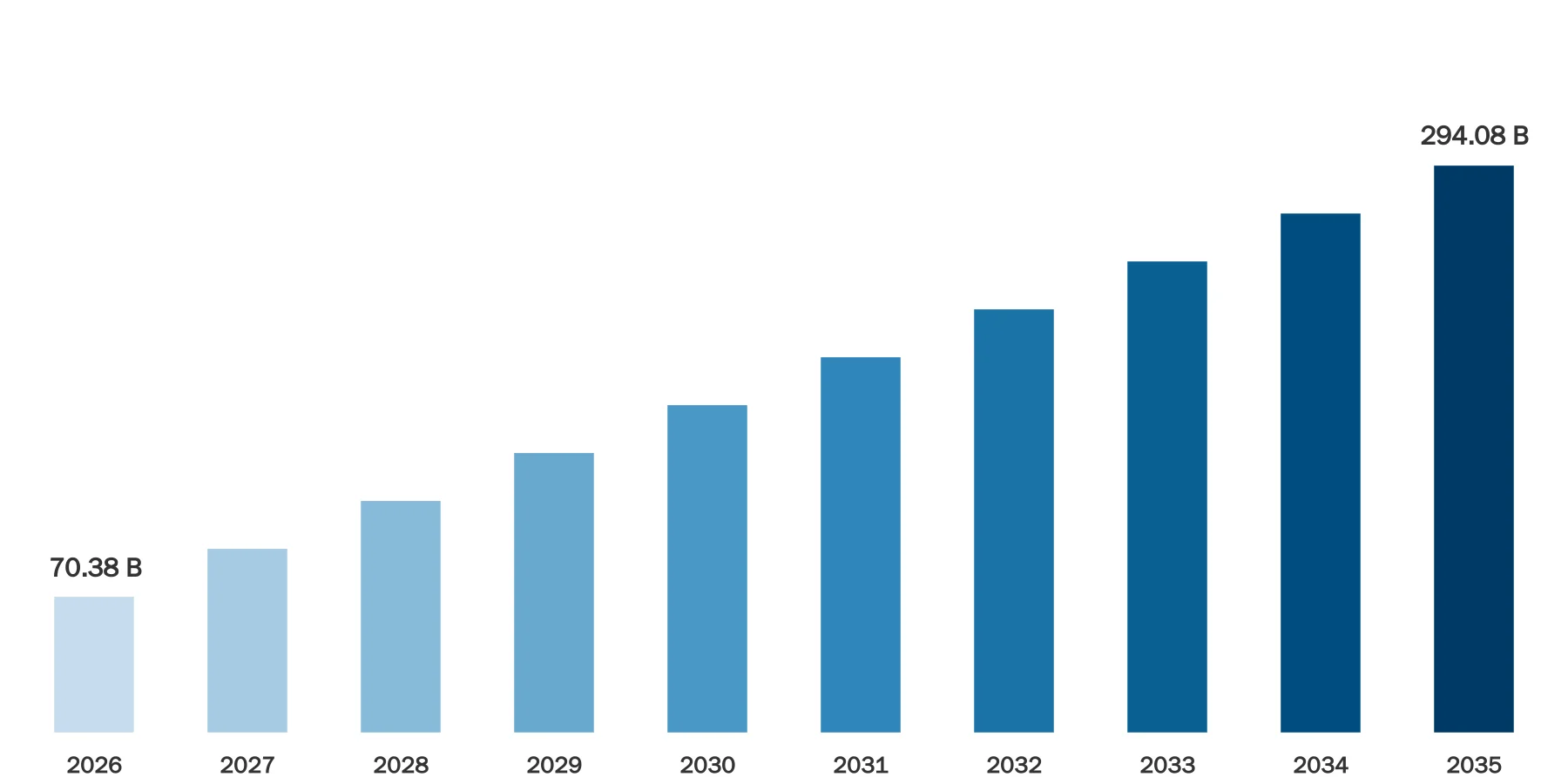
Source: Econ Market Research
The smart device is any electronic device that can be connected to smart home system, that can interact with other devices, and that can make some decisions on its own. Televisions, stoves, alarm systems, doorbells, garage doors and stereos are examples of smart devices. Furthermore, smart home appliances are next generation conventional home appliances, equipped with advanced features for receiving, processing, and transmitting information using smartphones, tablets, and laptops. Increasing use of appliances in homes has led to higher energy consumption, thereby, posing challenges for power companies to produce more electricity.
Smart Home Appliances Market Drivers:
Technological advancements in smart home appliances
Wireless communication technology developments would allow for remote operation of residential equipment. For example, smartphones and tablets are used to monitor and manage these appliances over Wi-Fi. Furthermore, Bluetooth technology enables data sharing between two devices. As a result, Bluetooth-enabled appliances can be controlled and monitored using smartphones. New technologies, such ZigBee, have emerged as viable options for monitoring smart home equipment.
Opportunities:
Improving lifestyle of people
The industry is predicted to develop due to rising income levels and changing consumer lifestyles. Consumers', improving lifestyles, particularly in metropolitan areas, along with rising disposable money, have boosted sales of smart home products. Smart home appliances are becoming increasingly popular due to their simplicity of management and operation. This trend is projected to continue during the forecast period, boosting the growth of the smart home appliances market.
Restraints:
Lack of awareness among consumers
The smart home appliances market is limited by a lack of consumer knowledge of these items. Lack of awareness about the use of technology and advanced appliances is a major impediment to industry expansion. However, industry participants have used promotional efforts and advertising initiatives to promote these products. Furthermore, growing cost of electricity bills is a major concern for household consumers. For instance, according to a recent study by Hawaiian Electric, appliances, such as air conditioners, water heaters, refrigerators, lighting fixtures, and Home Entertainment systems consume enormous amount of electricity.
Segment Overview
By Product Type
Based on product type, the global smart home appliances market is divided into smart washing machine, Smart TV, refrigerator, dishwasher, air conditioner, others. The smart washing machine segment dominated the market in 2023 and is expected to dominating during the smart home appliances market in forecast period, due to the people are becoming more conscious of new technology, and the usage of smart devices in the home has expanded dramatically. Furthermore, changing lifestyles, increased per capita income, and a growing need to reduce overall energy consumption costs are expected to enhance product demand.
By Technology
Based on technology, the global smart home appliances market is fragmented into Wi-Fi, Radio Frequency Identification, cellular technology, zigbee, bluetooth, others. The bluetooth segment dominated the global smart home appliances market in 2023. This is attributed to bluetooth are the most widely used technologies. In addition, the electric oven that includes bluetooth technology to link the appliance to a companion app for remote access is referred to as a smart oven. The users may use the device',s built-in Bluetooth speaker to play music to set the mood in the kitchen, whether they are hosting a party or cooking for themselves.
By Distribution Channel
Based on distribution channel, the global smart home appliances market is segmented into online, offline. The offline segment dominated the smart home appliances market with the largest revenue share in 2023. This is owing to some of the elements driving the popularity of smart home appliance sales through the retail channel include the availability of an in-store associate/expert, assistance with product specs, and the chance for the consumer to physically examine the device.
However, the online segment is expected to grow the fastest throughout the forecast period, because to the rapid expansion of e-commerce and emerging digitization, particularly in developing nations such as India and China. Furthermore, the growing popularity of online shopping and smart and connected gadgets among millennial and the younger population is driving up global online sales of smart home equipment.
Smart Home Appliances Market Overview by Region
Asia Pacific dominated the smart home appliances market in 2023. This is attributed to growing use of cloud-based services, increasing internet penetration, rising regional per capita income, increasing smartphone adoption, changing lifestyles, rising personal health awareness, and the ongoing implementation of government policies encouraging digitalization. Furthermore, expanding investments from global companies in the region, as well as increasing demand for innovative technologies from developing economies like as China and India, are important factors driving the Asia Pacific market',s growth.
Smart Home Appliances Market Competitive Landscape
In the global smart home appliances market, a few major players exert significant market dominance and have established a strong regional presence. These leading companies remain committed to continuous research and development endeavors and actively engage in strategic growth initiatives, including product development, launches, joint ventures, and partnerships. By pursuing these strategies, these companies aim to strengthen their market position, expand their customer base, and capture a substantial share of the market.
Smart Home Appliances Market Leading Companies:
Whirlpool Corporation
LG Electronics
Haier Group
Samsung Electronics Co. Ltd
Panasonic Corporation
BSH Hausgerä,te GmbH
Electrolux AB
Koninklijke Philips N.V
GE Appliances
Xiaomi Corporation and others
Smart Home Appliances Market Recent Developments
In April 2022, Xiaomi Corporation introduced the Redmi Smart TV A58. The device features a 4K display with over 1 billion colors, and a 95.4% screen-to-bezel ratio is made possible by the ultra-thin bezel. The device has MIUI TV, allowing users to operate other smart home devices from the TV.
In September 2022, LG Electronics introduced its ground-breaking refrigerator with MoodUP technology, which includes color-changing LED door panels. The new refrigerator skillfully bridges the borders between design and technology to serve younger consumers', changing needs better. With the help of LG',s MoodUP technology, customers can design a unique lighting system for the refrigerator using a variety of brilliant colors to match their mood or the surroundings.
In August 2022, Enphase Energy, Inc has declared a new partnership with Home Connect. This open digital platform enables the management of multiple brands of home appliances through a single app. Enphase will connect its home energy systems with the Home Connect platform as part of the partnership, providing a smart, eco-friendly, and highly effective solution to power home appliances that support Home Connect.
In February 2022, Godrej Group, specifically Godrej &, Boyce, has introduced a new range of high-end air conditioners through its subsidiary, Godrej Appliances. These air conditioners boast advanced cooling capabilities, air purification technology, Internet of Things (IoT) controls, unique aesthetics, and various other features. Incorporating IoT functionality, UVCool technology, Nano Coated Anti-Viral filtering, reduced derating, and other cutting-edge technologies, these air conditioners cater to tech-savvy consumers, providing not only comfort but also smart controls for enhanced safety and convenience.
Smart Home Appliances Market Report Scope & Segmentation
| Attributes | Details |
|---|---|
Market Size (Current) | US$ 70.38 Billion in 2026 |
Market Size (Forecast) | US$ 294.08 Billion in 2035 |
Growth Rate | CAGR of 17.22% from 2026 to 2035 |
Forecast Period | 2026 – 2035 |
Base Year | 2025 |
Historical Data Available | Yes |
Regional Scope | Global |
Segments Covered | By Product
By Distribution Channel
|
Frequently Asked Questions
Common questions about this report
The study period covers historical insights and forecast projections for the period 2026-2035.
About the Author
Market research expert with years of industry experience

Dipali Bhingare serves as the Market Research Director at Econ Market Research. With a focus on translating complex global economic shifts into actionable business intelligence, she oversees the strategic direction of comprehensive market studies. Her work empowers organizations to navigate volatile industries through data-driven forecasting and deep-dive competitive analysis.
Related Reports
Explore more market insights from the same category