

Open-Source Intelligence Market
Open-Source Intelligence Market Size, Share, Trends, Growth, and Industry Analysis, By Technique (Security Analytics, Text Analytics, Social Media Analytics, Video Analytics, Geospatial Analytics), By Application (Military andamp; Defense, Private Sector, Public Sector, National Security), Regional Analysis and Forecast Period 2026-2035
Open-Source Intelligence Market Overview
As per Econ Market Research analysis, the Global Open-Source Intelligence Market was estimated at US$ 15.9 Billion in 2026 and is forecast to attain US$ 133.6 Billion by 2035, expanding at a CAGR of 26.7% between 2026 and 2035. The base year for the study is 2025.
Open-Source Intelligence Market Size 2025-2035 (USD Billion)

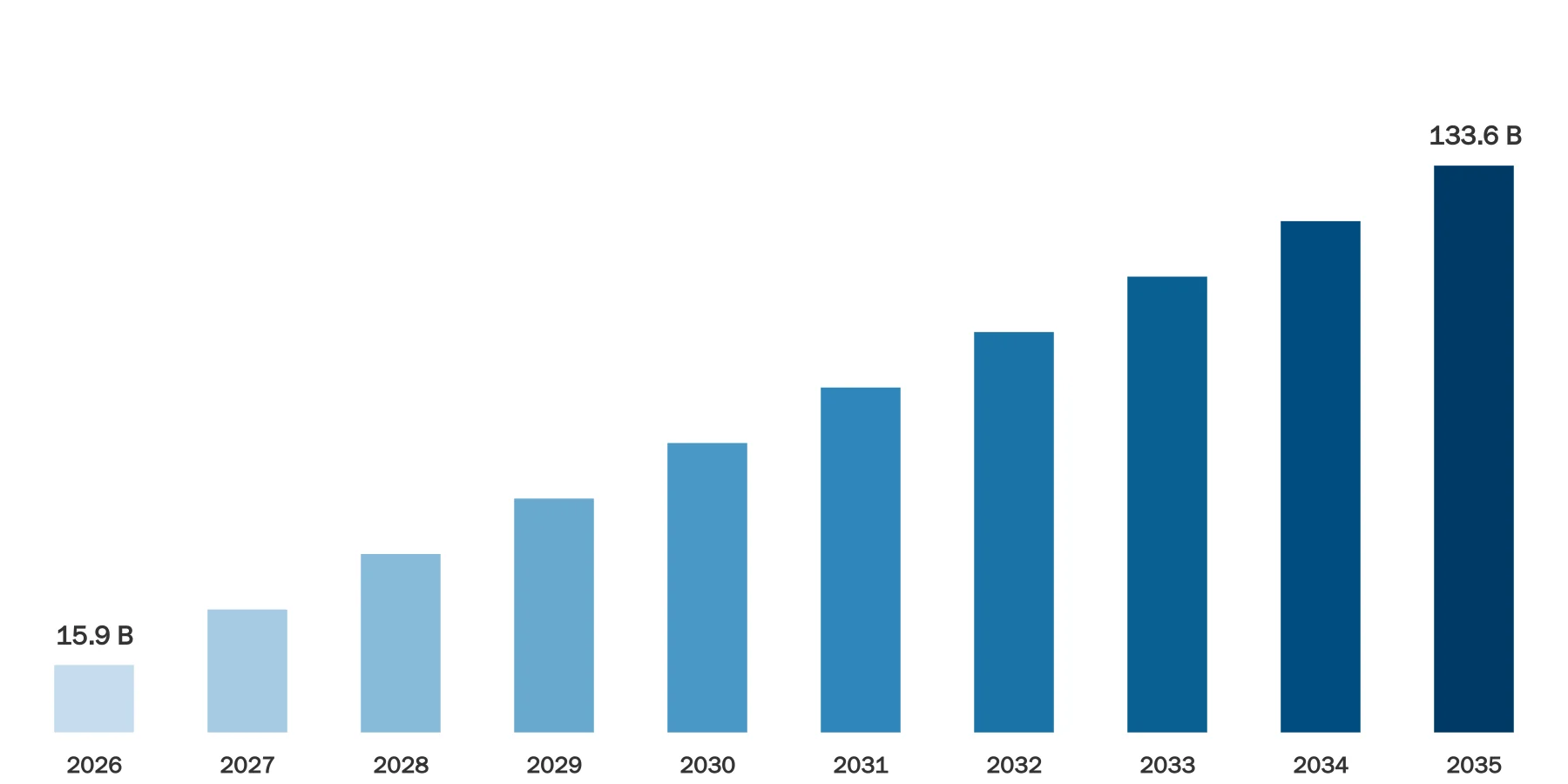
Source: Econ Market Research
Global Open-Source Intelligence (OSINT) refers to collecting and analysing publicly available information from different sources to gain insights on various topics. These sources range from social media and news websites to government publications and online repositories. OSINT helps organizations and governments obtain valuable intelligence without relying on classified data, leading to a better understanding of geopolitical, security, and business matters. Businesses are realizing the value of using open-source information for decision-making, risk assessment, and strategic planning, leading to a significant growth in the market for OSINT solutions and services.
Recently, there has been a significant increase in the Global Open-Source Intelligence market. This growth can be attributed to the rise of online digital platforms and the massive volume of data being created online. Various organizations, such as government agencies, defence departments, law enforcement agencies, and businesses, are now utilizing OSINT to improve their understanding of current situations, monitor potential risks, and uncover new possibilities.
The expansion of the market is being fuelled by the development of Data Analytics, Artificial Intelligence, and machine learning tools, which allow for more effective processing and evaluation of large quantities of open-source information. Moreover, the rising use of OSINT tools and services for competitive analysis, monitoring brand reputation, and managing reputation is driving the market forward. Yet, there are obstacles like the trustworthiness of open-source information and worries about data protection and security that remain major roadblocks to market growth.
Open-Source Intelligence Dynamics
The global market for Open-Source Intelligence (OSINT) is experiencing significant growth due to various factors. One of the main drivers is the growing amount of data that is readily available online. The rise of social media, online forums, and digital publications has created a wealth of information that organizations can use for strategic insights. With the help of advanced data analytics and AI technologies, businesses are able to analyse and interpret this data more effectively, leading to an increased demand for OSINT solutions and services.
Moreover, many industries are now seeing the importance of open-source intelligence, which is leading to the growth of the market. Businesses are using OSINT for a variety of purposes, such as competitive analysis, brand protection, cybersecurity, and risk evaluation. In areas like government and defence, OSINT is essential for national security, allowing organizations to keep an eye on global events, identify threats, and gather information on enemies.
Open-Source Intelligence Drivers
Increasing Volume of Publicly Available Data
The rise of digital platforms and online content has led to a massive amount of data being accessible to the public, which is now being utilized for OSINT purposes. Social media, news sites, blogs, and government sources all play a role in this data pool. As more devices connect to the internet and online interactions become more prevalent, the amount of open-source information is only going to increase. This will drive the need for more OSINT solutions and services. Cutting-edge data analytics and machine learning technologies allow companies to uncover important insights from large amounts of data, driving the use of OSINT for purposes like threat intelligence, market analysis, and competitive intelligence.
Advancements in Data Analytics and AI Technologies
Advances in technology, such as data analytics, artificial intelligence (AI), and machine learning (ML), are dramatically changing how open-source intelligence (OSINT) is used. These improvements allow businesses to handle large amounts of open-source data in a more precise and effective manner.
AI and ML algorithms can streamline data collection and analysis, pinpoint trends, uncover irregularities, and produce useful insights from different open-source data sets. With ongoing advancements in these technologies, OSINT solutions are becoming more advanced and able to offer real-time intelligence, giving organizations in different industries a competitive edge in decision-making processes.
Open-Source Intelligence Restraints:
Reliability and Credibility of Open-Source Information
A major issue in the OSINT market is the trustworthiness of open-source information. While classified data is usually verified and reliable, open-source data can be vulnerable to inaccuracy and manipulation. It is crucial for organizations that depend on OSINT for decision-making to ensure the accuracy and credibility of this type of information.
Data Privacy and Security Concerns
One major challenge facing the OSINT market is concerns about data privacy and security. The gathering and examination of open-source data can lead to ethical and legal dilemmas regarding privacy rights, data protection laws, and intellectual property rights. Companies need to carefully navigate intricate regulatory structures and meet compliance standards when handling open-source data to prevent data breaches, privacy infringements, and legal issues. It is crucial for organizations to adopt strong Data Governance measures, encryption methods, and access controls to protect sensitive information and adhere to applicable regulations.
Open-Source Intelligence Opportunities:
Expansion of OSINT Applications
The increasing appreciation of OSINT in different industries is creating exciting growth opportunities. Companies are using OSINT more and more for tasks like competitive analysis, monitoring their brand, enhancing cybersecurity, and assessing risks. As the benefits of OSINT become more widely understood, new ways to use it are coming to light, leading to a higher demand for cutting-edge solutions and services. OSINT',s capability to offer immediate insights and practical intelligence makes it a crucial tool for navigating the ever-changing landscape of today',s digital world.
Segment Overview
By Source
By source, OSINT market is segmented into social media platforms, public records and databases, websites and search engines, news outlets and publications, forums and discussion boards, WHOIS databases, dark web monitoring, academic research, and others. Each source offers unique insights and data types, contributing to the richness and depth of OSINT analysis.
By Deployment Type
By Deployment type, OSINT market is segmented into on-premises deployment, where software is installed and managed within an organization',s infrastructure, and cloud deployment, where solutions are hosted and accessed remotely via the internet. The categorization shows how adaptable and expandable OSINT solutions are, meeting the diverse requirements and preferences of businesses in various sectors and industries.
By Technique
In the world of Open-Source Intelligence (OSINT), different techniques are used to analyse data. These include video analytics, social analytics, text analytics, geospatial analytics, security analytics, public APIs, satellite imagery analysis, and more. Each technique has its own strengths in extracting valuable intelligence from a variety of sources. This helps organizations identify trends, patterns, and anomalies that are important for their goals and priorities.
By Organization Size
By organization size, the OSINT market is segmented into small and medium-sized enterprises (SMEs) and large enterprises. This segmentation recognizes that OSINT solutions and services can vary in complexity, resource requirements, and deployment considerations depending on the size and maturity of the organization.
By Application
By application, market is segmented into financial services, medical and journalism, insurance, technology and IT services, government and defence, law enforcement and public safety, cybersecurity, private security and risk management, travel and hospitality, energy and utility, critical infrastructure protection, aerospace and defence, and others. In every field, there are specific challenges and opportunities that come with using OSINT to improve decision-making, reduce risks, and promote innovation across different areas.
Open-Source Intelligence Overview by Region
North America dominates the market, driven by the presence of key market players, technological advancements, and high adoption rates across industries such as government, defence, and cybersecurity. Europe follows closely, identified by stringent data privacy regulations and a growing focus on cybersecurity and counterterrorism efforts. The Asia Pacific market is growing quickly due to more people accessing the internet, a greater understanding of the value of intelligence gathering, and government efforts to boost national security. In the Middle East and Africa, there',s potential for growth due to investments in cybersecurity, intelligence services, and counterterrorism. Latin America also offers probabilities for expansion as governments and businesses see the benefits of using OSINT to tackle security risks, fight organized crime, and boost competitive intelligence.
Open-Source Intelligence Market Competitive Landscape
Key players such as Palantir Technologies, Recorded Future, and Dataminr dominate the market with their comprehensive OSINT solutions, leveraging advanced analytics and machine learning capabilities to provide actionable intelligence to governments, enterprises, and law enforcement agencies. Moreover, big technology companies such as Google and Facebook are impacting the competition by providing advanced data analytics and social media monitoring tools.
At the same time, a rising number of new businesses and specialized companies are joining the market, offering unique OSINT solutions customized for different industries or purposes. Collaborations with data providers, academics, and government bodies are more crucial than ever for accessing a wider range of sources and improving the quality of Open-Source Intelligence solutions.
Open-Source Intelligence Market Leading Companies:
Palantir Technologies Inc.
Recorded Future, Inc
Dataminr, Inc.
Google LLC,
Facebook, Inc.
Babel Street, Inc.
SAIL LABS Technology GmbH
Verint Systems Inc.
Digimind Inc.
Thales Group
Open-Source Intelligence Recent Developments
Apr 2023, Babel Street introduced its latest offering in open-source intelligence analysis, Babel Street Insights. This solution aids organizations in uncovering and interpreting publicly accessible data, facilitating the rapid generation of crucial insights for both corporate entities and government bodies.
Nov 2023, Silobreaker announced its forthcoming generative AI tool, Silobreaker AI. This tool is designed to support threat intelligence teams by assisting in the collection, analysis, and reporting of intelligence needs.
Open-Source Intelligence Report Segmentation
Open-Source Intelligence Market Report Scope & Segmentation
| Attributes | Details |
|---|---|
Market Size (Current) | US$ 15.9 Billion in 2026 |
Market Size (Forecast) | US$ 133.6 Billion in 2035 |
Growth Rate | CAGR of 26.7% from 2026 to 2035 |
Forecast Period | 2026 – 2035 |
Base Year | 2025 |
Historical Data Available | Yes |
Regional Scope | Global |
Segments Covered | By Technique
By Application
|
Frequently Asked Questions
Common questions about this report
The study period covers historical insights and forecast projections for the period 2026-2035.
About the Author
Market research expert with years of industry experience

Dipali Bhingare serves as the Market Research Director at Econ Market Research. With a focus on translating complex global economic shifts into actionable business intelligence, she oversees the strategic direction of comprehensive market studies. Her work empowers organizations to navigate volatile industries through data-driven forecasting and deep-dive competitive analysis.
Related Reports
Explore more market insights from the same category