

Employee Scheduling Software Market
Employee Scheduling Software Market Size, Share, Trends, Growth, and Industry Analysis, By Deployment (Cloud-based, On-Premise), By Application (Workforce Management, Time andamp; Attendance Tracking, Shift Scheduling, Others), By Organization Size (SMEs, Large Enterprises), Regional Analysis and Forecast Period 2026-2035
Employee Scheduling Software Market Overview
As per Econ Market Research analysis, the Global Employee Scheduling Software Market accounted for US$ 0.64 Billion in 2026 and is expected to surpass US$ 2.93 Billion by 2035, witnessing a CAGR of 18.32% throughout 2026–2035. The analysis is based on 2025 as the base year.
Employee Scheduling Software Market Size 2025-2035 (USD Billion)

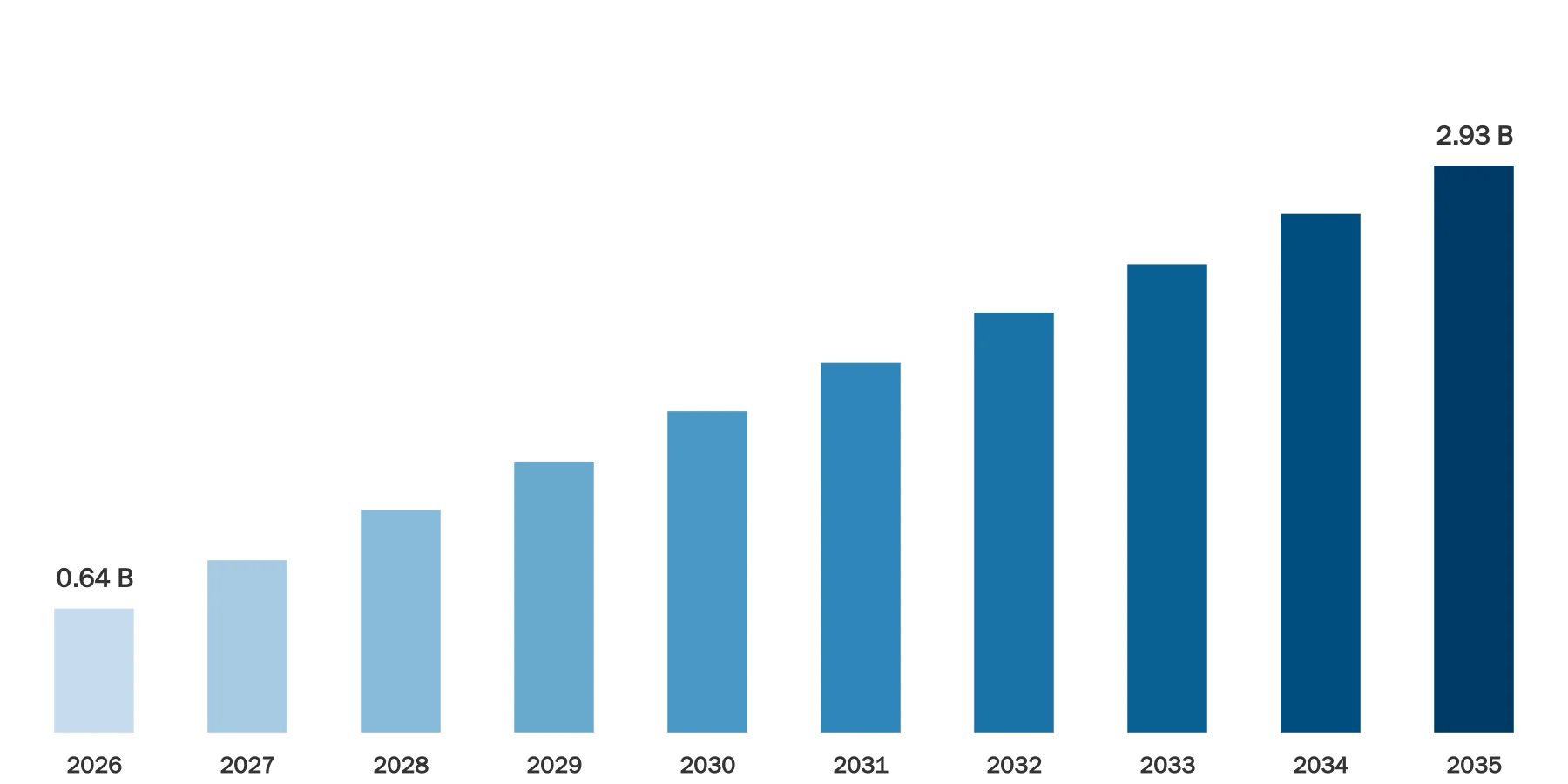
Source: Econ Market Research
Employee Scheduling Software assists businesses in managing their workforces&rsquo, schedules efficiently. This software allows companies to create, organize, and adjust employee schedules in a more streamlined way, leading to improved coordination and productivity across different departments and locations. Features such as shift planning, time tracking, and automated scheduling help businesses maximize their staffing resources and minimize scheduling conflicts, resulting in enhanced operational efficiency and employee happiness. Recently, there has been a significant increase in the need for Employee Scheduling Software as businesses are realizing the importance of having adaptable and versatile workforce management tools.
Various factors including the shift towards remote work, stringent compliance regulations, and the challenge of managing schedules across multiple time zones and shifts have LED to a growing demand for these software solutions in different industries. Furthermore, technological advancements like Artificial Intelligence and Cloud Computing have improved the features and usability of employee scheduling software, simplifying the process for businesses of all scales to adopt and incorporate into their current systems. The Employee Scheduling Software market is set to grow further as the global workforce changes and workplaces undergo digital transformation. There is a growing emphasis on efficiency and productivity in business operations, which is driving this growth.
Employee Scheduling Software Dynamics
The market for Employee Scheduling Software is influenced by various factors that drive demand and innovation in the industry. One key factor is the growing popularity of remote work and flexible scheduling, leading to a need for software that can efficiently manage teams working from different locations and with different work preferences. This trend is especially evident in industries like technology, finance, and customer service, where remote and dispersed teams are increasingly common.
In addition, there is a growing focus on compliance and labour regulations in various regions, leading to a demand for employee scheduling software that can effectively track work hours, oversee overtime, and ensure adherence to regulations. Companies are in need of solutions that can streamline compliance processes and minimize the possibility of facing fines or legal problems due to non-compliance. Moreover, the heightened recognition of the significance of employee wellness and maintaining a proper work-life balance has prompted businesses to prioritize scheduling methods that enhance employee contentment and efficiency. This has resulted in a surge in the adoption of software tools offering functions such as shift exchanges, time-off requests, and customizable scheduling options.
Employee Scheduling Software Drivers
Remote Work Trend
The rise in remote work is a major factor driving the growth of the Employee Scheduling Software market. Businesses are increasingly adopting remote work setups to cater to evolving work preferences and offer more flexibility to their workforce. This has created a high demand for effective scheduling solutions. Employee scheduling software helps companies in managing teams spread across different locations, organizing virtual meetings, and promoting smooth collaboration across various time zones. This shift is particularly noticeable in sectors like technology, where remote work is now the norm, leading to a surge in the need for advanced scheduling tools that can effectively support remote teams.
Regulatory Compliance Requirements
The rise in labour regulations and compliance standards globally is leading to a higher use of employee scheduling software. Companies are under more pressure to follow labour laws, track work hours, and handle overtime efficiently. This software provides automated compliance tracking, timekeeping, and reporting tools to help businesses comply with rules and avoid penalties. With regulations tightening, particularly in sectors such as healthcare and retail, there is a growing need for reliable scheduling solutions to maintain compliance and reduce legal risks.
Employee Scheduling Software Restraints:
Integration Challenges
One major obstacle faced by the Employee Scheduling Software market is the challenge of integrating scheduling software with current systems and workflows. Many companies already utilize multiple tools and platforms for tasks like HR management, payroll processing, and communication. The process of integrating employee scheduling software with these various systems can be difficult and time-consuming, resulting in implementation obstacles and potential disruptions to daily operations. Furthermore, compatibility issues between different software platforms can emerge, impeding the smooth integration of scheduling solutions and limiting adoption among certain businesses.
Resistance to Change
Many businesses are resistant to change regarding traditional scheduling methods. They can be hesitant to embrace new technology because of concerns like employee acceptance, training needs, and disruptions to current processes. This resistance can hinder the adoption of employee scheduling software, particularly in industries with long-established practices or conservative values. To overcome this resistance, effective communication, getting stakeholders on board, and showing the practical benefits of scheduling software are essential in improving efficiency, reducing costs, and boosting employee satisfaction.
Employee Scheduling Software Opportunities:
AI and Predictive Analytics
The Employee Scheduling Software market offers a great opportunity through the incorporation of artificial intelligence (AI) and predictive analytics. Utilizing AI algorithms and data analysis, scheduling software can create optimized schedules by examining past trends, employee preferences, and company requirements. AI-driven scheduling can enhance productivity, cut down on labour expenses, and decrease scheduling conflicts by taking into account factors like employee availability, skills, and workload distribution. In addition, using predictive analytics can help predict future staffing needs by analysing patterns and seasonal changes. This allows for better planning and allocation of resources in advance. The combination of AI and predictive analytics presents a great opportunity for companies to set themselves apart and provide extra benefits to businesses looking for more advanced scheduling options.
Segment Overview
By Type
By type, the market is segmented into Installed-PC software, historically popular, offers robust scheduling capabilities but requires on-premises installation and maintenance. Employee Scheduling software, focused solely on scheduling tasks, provides specialized functionality for efficient workforce management. Cloud-based solutions take advantage of the scalability and accessibility of the cloud, making it easier for companies to use scheduling tools from anywhere and enjoy automatic updates and data backups.
Mobile apps are designed for the growing number of mobile workers, letting them check schedules, ask for time off, and stay in touch with co-workers while on the move. Software solutions offer a variety of options, integrating scheduling features with other abilities like HR management and payroll processing to offer complete workforce solutions for businesses.
By Application
By application, the market is segmented into midsize enterprises, with their moderate scale and complexity, seek scalable scheduling solutions that can accommodate their growing workforce and evolving needs. Big companies, which oversee many operations and teams, need powerful scheduling software that can handle a lot of data and complicated scheduling situations in various places.
On the other hand, small businesses, which typically have fewer resources, seek affordable scheduling options that provide necessary features without unnecessary complications. There are also specific industries like healthcare, hospitality, and retail that require customized scheduling solutions to meet their unique needs and comply with industry regulations.
Employee Scheduling Software Overview by Region
In North America, advanced scheduling solutions are widely adopted in the United States and Canada, especially in industries like technology, healthcare, and retail. The region benefits from a strong IT infrastructure, supportive regulations, and a focus on optimizing workforce efficiency. Europe is also seeing growth in employee scheduling software usage, with countries such as the United Kingdom, Germany, and France responding to regulatory demands, labour market trends, and the push for digital innovation.
The Asia Pacific region is experiencing rapid growth due to the expansion of businesses, the increasing mobility of the workforce, and the widespread adoption of cloud-based technologies in countries like China, India, and Japan. This region offers great opportunities for market players with its large population, diverse industries, and evolving business environment. In contrast, Latin America and the Middle East &, Africa regions are also showing promising growth prospects as they embrace technology solutions to tackle workforce management challenges and improve operational efficiency in industries such as hospitality, manufacturing, and logistics.
Employee Scheduling Software Market Competitive Landscape
Key players such as Microsoft Corporation, Oracle Corporation, and SAP SE dominate the market with comprehensive workforce management suites that integrate scheduling functionalities with HR, payroll, and other enterprise solutions. Meanwhile, specialized vendors like Kronos Incorporated, Deputy, and When I Work focus solely on employee scheduling, offering niche solutions tailored to specific industries or business sizes.
The market also sees the emergence of cloud-based platforms such as Shiftboard, Humanity, and Sling, which capitalize on the scalability and accessibility of the cloud to deliver flexible scheduling solutions to businesses of all sizes. Furthermore, there is intense competition in the market with many mobile app developers creating scheduling apps for smartphones and tablets tailored to the mobile workforce. These apps are designed to be easy to use and user-friendly.
Employee Scheduling Software Market Leading Companies:
Microsoft Corporation
Oracle Corporation
SAP SE
Kronos Incorporated
Deputy Inc.
When I Work Inc.
Shiftboard Inc.
Humanity Inc.
Sling Inc.
Workforce Software Inc.
ScheduleAnywhere Inc.
HotSchedules Inc.
UKG Inc.
BambooHR LLC
Homebase Inc.
Employee Scheduling Software Recent Developments
In January 2023, ActiveOps PLC unveiled CaseworkiQ, a new addition to its suite of workforce efficiency solutions. Specifically designed to address industries facing heavy caseloads and stringent compliance requirements, CaseworkiQ serves as advanced employee scheduling software supporting operational needs. This latest solution enhances ActiveOps', existing offerings by incorporating features tailored to managing caseloads effectively. By allowing customers to schedule resources based on service level agreements (SLAs) and caseload demand, CaseworkiQ aims to reduce risks, lower costs, and optimize overall performance.
Employee Scheduling Software Report Segmentation
Employee Scheduling Software Market Report Scope & Segmentation
| Attributes | Details |
|---|---|
Market Size (Current) | US$ 0.64 Billion in 2026 |
Market Size (Forecast) | US$ 2.93 Billion in 2035 |
Growth Rate | CAGR of 18.32% from 2026 to 2035 |
Forecast Period | 2026 – 2035 |
Base Year | 2025 |
Historical Data Available | Yes |
Regional Scope | Global |
Segments Covered | By Deployment
By Application
By Organization Size
|
Frequently Asked Questions
Common questions about this report
The study period covers historical insights and forecast projections for the period 2026-2035.
About the Author
Market research expert with years of industry experience

Related Reports
Explore more market insights from the same category