

Queue Management System Market
Queue Management System Market Size, Share, Trends, Growth, and Industry Analysis, By Component (Solutions, Services), By Deployment (Cloud, On-Premise), By Enterprise Size (Small andamp; Medium Enterprises (SMEs), Large Enterprises), By End-User (BFSI, IT andamp; Telecom, Retail andamp; E-commerce, Healthcare andamp; Life Sciences, Government andamp; Public Sector, Hospitality, Transportation), Regional Analysis and Forecast Period 2026-2035
Queue Management System Market Overview
As per Econ Market Research analysis, the Global Queue Management System Market was valued at US$ 0.59 Billion in 2026 and is expected to reach US$ 0.77 Billion by 2035, registering a CAGR of 3.5% during the forecast period 2026–2035. The base year considered is 2025.
Queue Management System Market Size 2025-2035 (USD Billion)

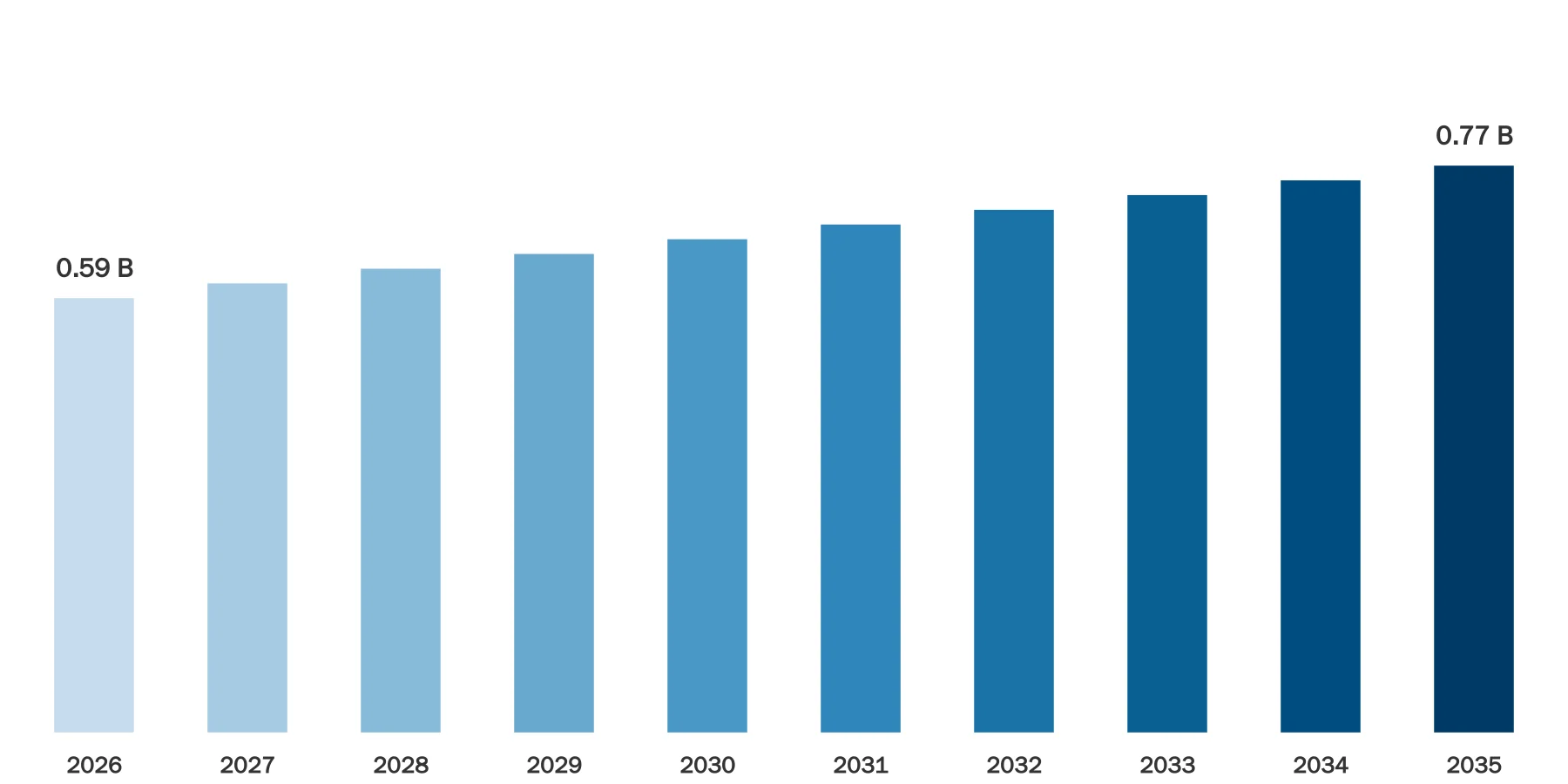
Source: Econ Market Research
The market for Global Queue Management Systems (QMS) refers to the development and provision of solutions aimed at efficiently managing customer queues. Such systems enable businesses to effectively manage customer flow, resulting in reduced wait times and improved customer satisfaction. QMS solutions often include ticketing systems, Digital Signage, and real-time monitoring tools to streamline the queuing process. With a global focus on enhancing customer experiences, the demand for QMS solutions is increasing in sectors like retail, healthcare, banking, and government agencies.
Recently, the market for Global Queue Management Systems has seen a big boost due to more and more businesses turning to technology-based solutions for better customer service. Companies are realizing the value of efficiently managing customer queues to improve operations and increase profits. By incorporating cutting-edge technologies like AI and data analysis, QMS providers are coming up with new and improved ways to meet the changing needs of customers. In addition, the COVID-19 pandemic has sped up the use of contactless queuing systems, leading to increased growth in the market.
Queue Management System Dynamics
The Global Queue Management System market is constantly evolving due to various factors that are fuelling demand and fostering innovation. In the face of rising competition in various industries, companies are turning to QMS solutions to cut wait times, make better use of resources, and enhance service quality. Furthermore, the widespread adoption of digital technologies and the Internet of Things (IoT) is transforming the market dynamics.
Quality management system providers are now introducing new features like mobile queuing, virtual queuing, and predictive analytics in order to provide customers with smooth and personalized experiences. Additionally, the increasing need for contactless services due to the COVID-19 outbreak has sped up the use of QMS technologies, contributing to the growth of the market.
One of the factors driving the growth of the Global Queue Management System market is the growing use of AI and Data Analytics. These tools allow QMS solutions to analyse how customers behave, predict changes in demand, and improve queuing strategies instantly. By using data-driven information, businesses can make smarter choices to improve operational efficiency and keep customers happy. Additionally, the rise of cloud-based QMS solutions is making it easier for small and medium-sized companies to access advanced queuing features. The move towards using cloud technology allows for growth, adaptability, and cost savings, making it popular across various industries.
Queue Management System Drivers
Regulatory Compliance and Industry Standards
Regulatory bodies and industry associations frequently require queuing standards and protocols to guarantee fair and effective service delivery. Following these regulations leads to the implementation of Queue Management Systems (QMS) as businesses strive to comply with industry standards and prevent penalties. In sectors such as healthcare and finance, stringent regulations dictate how patients or customers should queue, pushing organizations to invest in QMS solutions that simplify operations and adhere to compliance requirements.
Increasing Customer Expectations and Competition
In today',s competitive market, businesses are feeling the heat to provide top-notch service as customer expectations soar. Lengthy wait times and disorganized queues can drag down customer satisfaction and loyalty. To combat this, companies are turning to QMS solutions to streamline queues, reduce wait times, and improve service quality. By putting customer experience first with effective queue management, businesses can stand out from the crowd and build lasting customer relationships, spurring the need for QMS solutions.
Restraints:
Complex Implementation and Customization Requirements
Queue Management Systems have several benefits, but businesses can encounter challenges when implementing and customizing them. Every organization has different queuing needs depending on customer demographics, services provided, and infrastructure constraints. Customizing a QMS to meet specific business processes can be complex, resulting in longer deployment times and increased costs. This complexity can discourage some businesses from adopting QMS solutions or cause delays in implementation, hindering market growth.
Resistance to Change and Organizational Culture
When introducing Queue Management Systems into a company, employees who are used to traditional queuing methods can push back or be hesitant to embrace new technology. This resistance can be due to concerns of losing their job, not fully grasping the advantages of a QMS, or facing cultural obstacles within the organization. Overcoming this resistance and promoting a culture of innovation and ongoing improvement necessitates proactive change management tactics and comprehensive employee training initiatives. Failure to effectively address this resistance can hinder the implementation and effective incorporation of QMS solutions, diminishing their effectiveness in enhancing organizational efficiency and customer satisfaction.
Opportunities:
Integration with Omnichannel Customer Engagement
Businesses are increasingly focusing on omnichannel customer engagement, aiming to offer a smooth experience across different touchpoints such as online, mobile, and physical channels. Queue Management Systems are essential in this strategy as they can sync with other customer engagement platforms and data sources. Allowing customers to remotely join queues through mobile apps or online portals and easily switch between virtual and physical queues, QMS solutions can improve the overall omnichannel experience.
Segment Overview
By Queue Type
By Queue Type, market is segmented into Structured queues follow a predefined order, typically used in environments like banks or government offices, ensuring fairness and efficiency. In retail settings, unstructured queues let customers choose any line they want, emphasizing speed and flexibility. Mobile queues let customers join a line from their smartphones, making waiting times shorter and more convenient. Kiosk queues use self-service kiosks for customers to check in or schedule appointments, making the queuing process smoother and lightening staff workload.
By Offering
By offering, Queue Management Systems solutions is segmented into and services. Solutions include software platforms and hardware components designed to manage queues effectively, such as ticketing systems, digital signage, and queuing algorithms. Services include implementation, customization, training, and support provided by QMS vendors or third-party service providers to ensure seamless integration and optimal performance of the solution.
By Deployment Model
By Deployment Model, Queue Management Systems is segmented into on-premise and cloud-based deployments. On-premise deployment involves installing and maintaining the QMS software and hardware within the organization',s premises, offering greater control and security over data but requiring upfront investment and IT infrastructure.
Deploying software in the cloud means using servers and the internet to host a quality management system (QMS) solution. This approach offers scalability, flexibility, and easy access while lowering initial expenses and IT workload. There are different kinds of QMS solutions, like virtual queuing, where customers join queues from their phones or online, and non-virtual queuing, where customers wait in line at a physical location.
By Industry Vertical
By Industry Vertical, Queue Management Systems is segmented into BFSI, healthcare, retail, government, IT, travel, energy, and others. Each industry has unique queuing requirements and challenges, such as compliance regulations, peak hour demands, and customer service expectations. QMS solutions are tailored to address these specific needs, offering industry-specific features and functionalities to optimize queue management and enhance customer experiences.
By Enterprise Size
By Enterprise Size, Queue Management Systems is segmented into, small and medium-sized enterprises (SMEs) and large enterprises. While large enterprises often have greater resources and complex queuing needs, SMEs can seek affordable and scalable QMS solutions tailored to their specific requirements. QMS providers offer packages and pricing models suitable for businesses of different sizes, ensuring accessibility and affordability for organizations across the spectrum.
By Application
By Application, Queue Management Systems is segmented into reporting and analytics functionalities to track queue performance and customer behaviour, real-time monitoring for proactive queue management, appointment management for scheduling and resource allocation, customer service features for enhancing interactions, query handling capabilities for resolving customer inquiries, in-store management tools for optimizing retail environments, and other customizable applications tailored to specific business needs.
Queue Management System Overview by Region
The North American market is being propelled by the widespread use of advanced technologies and a focus on improving customer experiences in industries like retail, healthcare, and BFSI. In Europe, there is a similar trend with a stress on regulatory compliance and the optimization of queuing processes in sectors such as government and transportation.
The Asia Pacific region is experiencing strong growth due to rapid urbanization, rising disposable incomes, and a growing retail sector, leading to a high demand for effective queue management solutions. Moreover, cloud-based QMS deployments are becoming increasingly popular in emerging economies like India and China because of their scalability and cost-effectiveness. QMS solutions are slowly being adopted in Latin America and the Middle East &, Africa regions due to infrastructure modernization and increasing recognition of customer satisfaction. Economic fluctuations and regulatory obstacles could hinder market expansion in these areas.
Queue Management System Market Competitive Landscape
The competitive landscape of the Queue Management System (QMS) market is considered by the presence of several key players competing to offer innovative solutions and services. Established companies such as Qmatic, Wavetec, and Tensator dominate the market with their comprehensive QMS offerings, including software platforms, hardware components, and consulting services.
These companies leverage their wide industry experience and robust technological capabilities to cater to a wide range of industry verticals and enterprise sizes. Additionally, emerging players like Qudini, QLess, and Q-nomy are gaining prominence by focusing on niche markets, offering specialized features such as virtual queuing, appointment management, and mobile queue solutions.
Queue Management System Market Leading Companies:
Qmatic Ltd
Wavetec Inc
Tensator Ltd
Qudini Inc
QLess Ltd
Q-nomy Inc
Qtrac Ltd
Lavi Industries Inc
Skiplino Ltd
Xtreme Media Pvt Ltd
TallyFi Inc
Advantech Co Ltd
Acrelec SA
AKIS Technologies SA
AUREA Technology Inc
Queue Management System Recent Developments
July 2023, Qtrac, a renowned global leader in virtual queue management, introduced WhatsApp integration to its system. This enhancement enables an expanded global reach and provides clients with greater customization for customer communication, diversifying messaging options for personalized client interactions and improved service.
July 2023, Alizz Islamic Bank announced a partnership with SEDCO, a queue management solution provider based in Dubai, UAE, to implement SEDCO',s Advanced Queue Management Solution. With this solution, Alizz Islamic Bank aims to elevate the customer experience by optimizing customer flow and operations.
Mar 2023, the QMatic group launched a mobile ticketing feature allowing customers to join a queue via text message. This launch aimed to provide customers with a quick, easy, and convenient method of queuing via text.
Feb 2023, Orabank Gabon collaborated with GBM to adopt SEDCO',s virtual queue management solutions, with the goal of opening new branches to reduce customers', waiting times.
Queue Management System Report Segmentation
Queue Management System Market Report Scope & Segmentation
| Attributes | Details |
|---|---|
Market Size (Current) | US$ 0.59 Billion in 2026 |
Market Size (Forecast) | US$ 0.77 Billion in 2035 |
Growth Rate | CAGR of 3.5% from 2026 to 2035 |
Forecast Period | 2026 – 2035 |
Base Year | 2025 |
Historical Data Available | Yes |
Regional Scope | Global |
Segments Covered | By Component
By Deployment
By Enterprise Size
By End-User
|
Frequently Asked Questions
Common questions about this report
The study period covers historical insights and forecast projections for the period 2026-2035.
About the Author
Market research expert with years of industry experience

Dipali Bhingare serves as the Market Research Director at Econ Market Research. With a focus on translating complex global economic shifts into actionable business intelligence, she oversees the strategic direction of comprehensive market studies. Her work empowers organizations to navigate volatile industries through data-driven forecasting and deep-dive competitive analysis.
Related Reports
Explore more market insights from the same category