

Next-Generation Data Storage Market
Next-Generation Data Storage Market Research Report: By Storage System (Direct-Attached Storage, Network-Attached Storage, Storage Area Network, Storage Architecture, File & Object-based Storage, and Block storage), By Deployment Type (On-premises and Cloud), By Storage Medium (Hard Disk Drive, Tape, and Solid-State Drive), By End-Use (BFSI, Healthcare, Retail, Cloud service providers, Government, IT & telecom, and Others), and Region (North America, Europe, Asia-Pacific, and Rest of the World) Global Industry Analysis, Size, Share, Growth, Trends, Regional Analysis, Competitor Analysis and Forecast
Market Overview
As per Econ Market Research analysis, the Global Next-Generation Data Storage Market was valued at approximately US$ 61.69 Billion in 2026 and is predicted to reach US$ 114.38 Billion by 2035, expanding at a CAGR of 7.1% over the forecast duration. The base year is 2025.
Next-Generation Data Storage Market Size 2025-2035 (USD Billion)

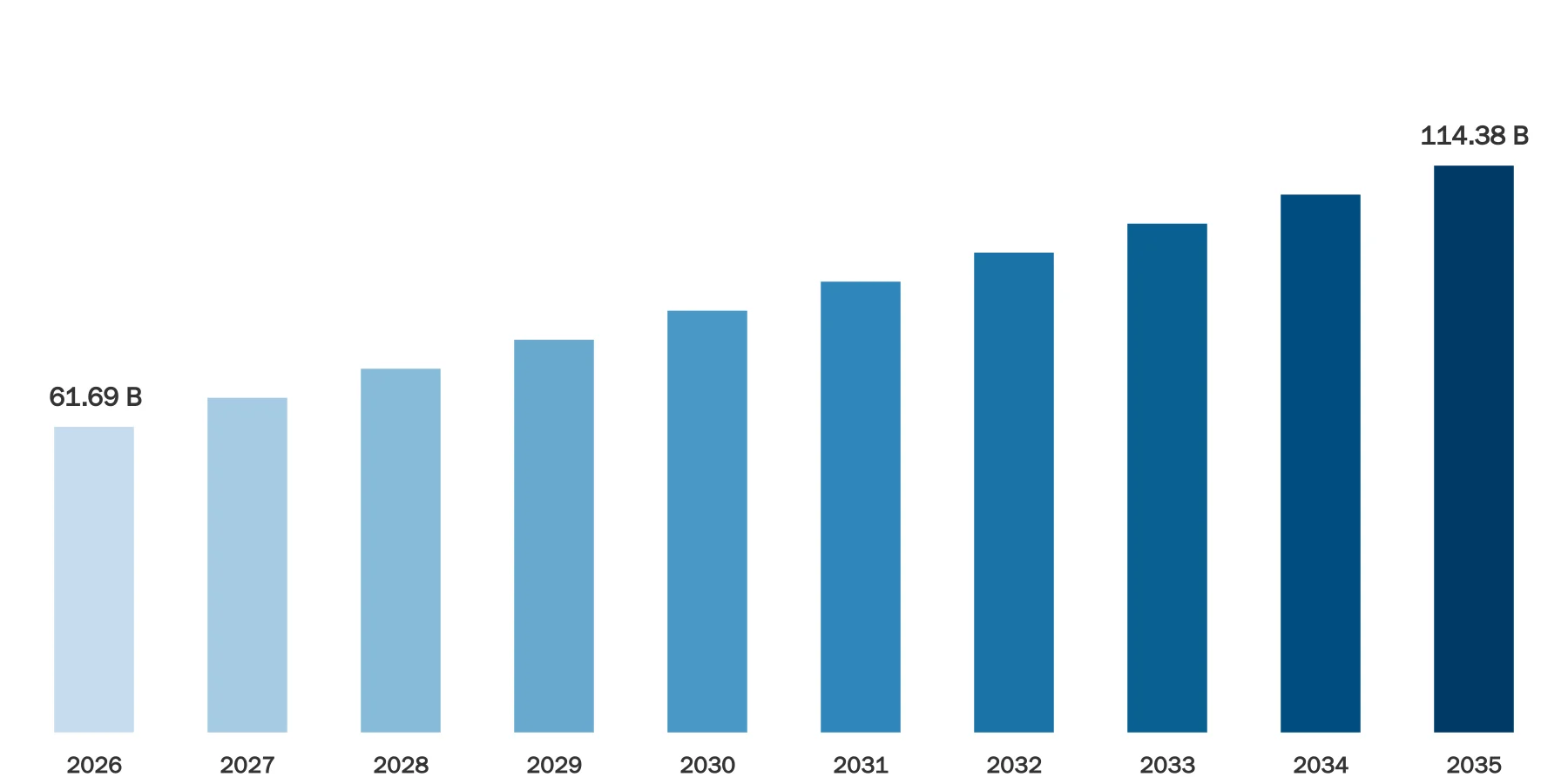
Source: Econ Market Research
Next-generation data storage refers to a set of revolutionary technologies and methodologies aimed at revolutionizing data storage and administration. Traditional storage systems have proven more insufficient in addressing the needs for capacity, speed, and reliability as digital information has grown exponentially. Solid-state drives (SSDs), cloud storage, object storage, distributed storage systems, and storage virtualization are examples of next-generation data storage innovations. These technologies significantly enhance data transfer speeds, scalability, durability, and efficiency. They let organisations to store and manage massive volumes of data created by developing technologies such as artificial intelligence, IoT, and big data analytics.
Next-Generation Data Storage Market Dynamics
The increasing expansion of data volumes across sectors, driven by developments such as IoT, artificial intelligence, and machine learning, is creating a pressing demand for scalable and effective storage solutions. Furthermore, rising demand for high-speed data processing and real-time analytics is propelling the use of faster and more responsive storage technologies such as solid-state drives (SSDs). The growing popularity of cloud computing, as well as the demand for versatile and cost-effective storage alternatives, are driving the market growth during the forecast period.
Next-Generation Data Storage Market Drivers
Growing Need for High-Speed Data Access
Organizations require faster data access and processing capabilities to support real-time analytics, decision-making, and customer experiences. Next-generation data storage technologies like solid-state drives (SSDs), in-memory computing, and non-volatile memory express (NVMe) enable high-speed data access, reducing latency and improving overall system performance.
Restraints:
Data Migration Challenges
Migrating large volumes of data from legacy storage systems to next-generation platforms can be time-consuming, resource-intensive, and prone to disruptions. The complexities involved in data migration can act as a barrier to adoption for some organizations.
Opportunities:
Big Data Analytics and AI
The advancements in big data analytics and AI technologies require storage solutions capable of handling large datasets and supporting real-time data processing. Next-generation data storage technologies, such as flash storage arrays and distributed file systems, offer the necessary performance and capacity to support these applications.
Segment Overview
By Storage System
Based on the storage system, the global next-generation data storage market has been segmented into direct-attached storage, network-attached storage, storage area network, storage architecture, file &, object-based storage, and block storage. The file &, object-based category dominates the market with the largest revenue share of around 37.4% in 2022. These systems offer a unified approach to storage, allowing users to access files and objects from many applications and platforms. Furthermore, file and object-based storage systems include extensive data management features such as data deduplication, encryption, and metadata tagging, which improves data organization and retrieval.
By Deployment Type
Based on deployment type, the global next-generation data storage market has been segmented into on-premises and cloud. The on-premises category dominates the market with the largest revenue share of around 72.8% in 2022. Many businesses prefer on-premises solutions because they provide them direct control and physical ownership of their data storage infrastructure. This is especially true in businesses with strict security and compliance standards, where keeping data on corporate premises gives a sense of control and alleviates worries about data privacy. Furthermore, on-premises storage provides quicker data access and reduced latency, making it appropriate for applications requiring real-time data processing.
By Storage Medium
Based on storage medium, the global next-generation data storage market has been segmented into manual hard disk drive, tape, and solid-state drive. The solid-state drive is anticipated to grow at a higher CAGR of 8.6% during the forecast period. Several factors are driving this increase, including the fact that SSDs provide substantial advantages over traditional hard disc drives (HDDs), such as quicker data access, reduced latency, and improved reliability owing to the removal of moving components. SSDs give the required speed and responsiveness to manage enormous amounts of data as organizations prioritize performance and efficiency.
By End-Use
Based on specialty type, the global next-generation data storage market is has been segmented into BFSI, healthcare, retail, cloud service providers, government, IT & telecom, and others. The BFSI is anticipated to grow at a higher CAGR of 10.5% during the forecast period. Massive volumes of sensitive financial data are generated and handled in the BFSI business, demanding strong and secure storage solutions. Next-generation data storage solutions can provide increased data protection, encryption, and compliance capabilities to meet the BFSI sector',s strict regulatory requirements.
Next-Generation Data Storage Market Overview by Region
By Region, the global next-generation data storage market has been segmented into North America, Europe, Asia-Pacific, and the Rest of the World. North America dominated the market with 35.2% revenue share in 2022. The growth is due to several factors including strong technical infrastructure and the presence of multiple technology behemoths and creative startups, which drive the use of modern storage solutions. Furthermore, the region has a high concentration of data-intensive businesses such as healthcare, banking, and e-commerce, which generate large volumes of data and necessitate effective storage solutions.
Next-Generation Data Storage Market Competitive Landscape
In the global next-generation data storage market, a handful of major players exert significant market dominance and possess a strong regional presence. These prominent players are committed to continuous research and development endeavors. Furthermore, they actively engage in strategic growth initiatives such as creating innovative products, conducting product launches, forging joint ventures, and forming partnerships. The primary objective of these organizations is to enhance their market position, expand their client base, and capture a substantial share of the market.
Key Players
Huawei Technologies Co., Ltd.
IBM Corporation
Dell Technologies
Hewlett Packard Enterprise (HPE)
Hitachi Ltd.
NetApp
Cloudian Inc.
Fujitsu
Pure Storage, Inc.
NetGear
Samsung Electronics
Western Digital Corporation
Seagate Technology
Micron Technology, Inc.
Intel Corporation
Oracle Corporation
Amazon Web Services (AWS)
Google Cloud
Microsoft Azure
Toshiba Electronic Devices & Storage
Next-Generation Data Storage Market Recent Developments
In May 2022, TerraMaster has introduced an advanced eight-bay Direct-Attached Storage (DAS) device designed to suit the demands of consumers looking for centralized data storage. DAS, as opposed to NAS, functions locally by creating direct connections through cables to PCs or other devices. The TerraMaster D8-332, which was just announced, is a high-performance RAID storage system with a capacity of up to 160TB.
Next-Generation Data Storage Market Report Scope & Segmentation
| Attributes | Details |
|---|---|
Market Size (Current) | US$ 61.69 Billion in 2026 |
Market Size (Forecast) | US$ 114.38 Billion in 2035 |
Growth Rate | CAGR of 7.1% from 2026 to 2035 |
Forecast Period | 2026 – 2035 |
Base Year | 2025 |
Historical Data Available | Yes |
Regional Scope | Global |
Segments Covered | By Storage System
By Storage Medium
By Architecture
By End-User
|
Frequently Asked Questions
Common questions about this report
The study period covers historical insights and forecast projections for the period 2026-2035.
About the Author
Market research expert with years of industry experience

Related Reports
Explore more market insights from the same category