

Nature Based Tourism Market
Nature Based Tourism Market Size, Share, Trends, Growth, and Industry Analysis, By Type (Adventure Tourism, Wildlife Tourism, Eco-tourism), By Application (Leisure Travel, Educational Tours), Regional Analysis and Forecast Period 2026-2035
Nature Based Tourism Market Overview
As per Econ Market Research analysis, the Global Nature Based Tourism Market valuation stood at US$ 13.74 Million in 2026 and is expected to reach US$ 27.39 Million by 2035, growing at a steady CAGR of 9.01% from 2026 to 2035. 2025 serves as the base year.
Nature Based Tourism Market Size 2025-2035 (USD Million)

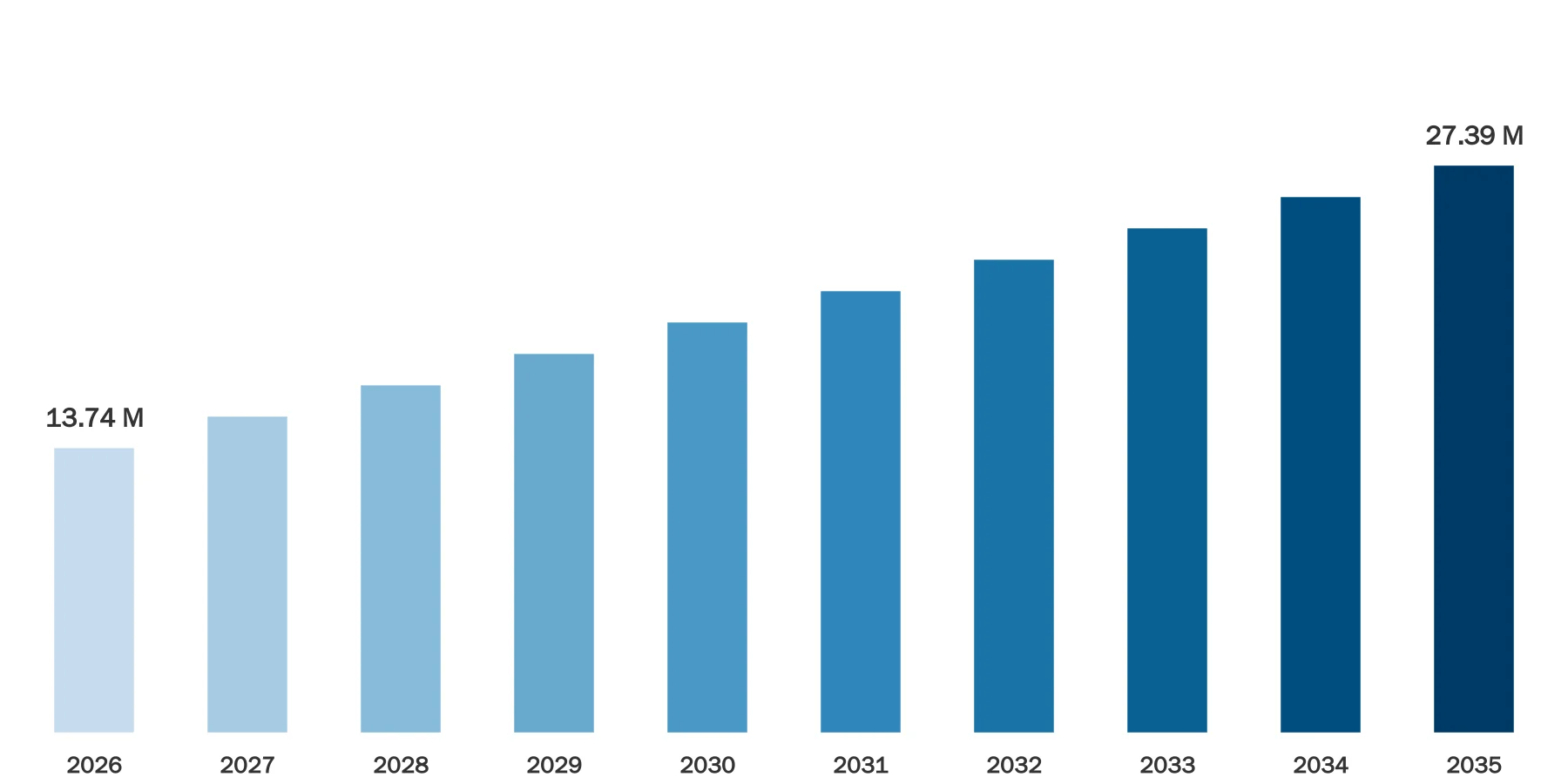
Source: Econ Market Research
The Nature Based Tourism Market is expanding rapidly, supported by over 1.8 billion international tourist arrivals recorded globally in 2024, with approximately 42% of travelers engaging in nature-related activities such as wildlife tourism, ecotourism, and Adventure Tourism-market">adventure tourism. Around 65% of global travelers now prioritize sustainable travel options, while 78% of millennials prefer destinations with natural landscapes such as forests, mountains, and coastal ecosystems. Protected areas worldwide exceed 260,000 sites, covering nearly 17% of terrestrial land, which directly supports nature-based tourism activities. Digital bookings for eco-tourism packages increased by 38% between 2022 and 2025, highlighting strong online adoption trends.
The USA Nature Based Tourism Market demonstrates strong growth with over 325 million visits annually to national parks and protected areas, including more than 63 national parks and 430 national park sites. Approximately 56% of domestic travelers in the U.S. participate in outdoor recreation activities such as hiking, camping, and wildlife viewing. The outdoor recreation economy supports over 4.5 million jobs and contributes to nearly 5% of total tourism-related employment. Additionally, around 72% of U.S. travelers prefer nature-focused destinations over urban tourism, while digital travel planning adoption has exceeded 81% among eco-tourists.
Market Latest Trends
The Nature Based Tourism Market Trends indicate strong momentum driven by sustainability, digitalization, and Experiential Travel demand. Approximately 68% of global travelers actively seek eco-friendly accommodations, while 74% prefer destinations with biodiversity conservation programs. The rise of eco-lodges has increased by 31% globally between 2021 and 2025, reflecting infrastructure growth aligned with sustainability goals. Wildlife tourism contributes to nearly 7% of global tourism activity, with over 120 million annual participants.
Technology integration is a major trend, with 83% of travelers using mobile apps for booking nature tours and 59% utilizing virtual reality previews before visiting destinations. Additionally, carbon offset programs have been adopted by 46% of tourism operators worldwide. Demand for adventure tourism such as trekking, kayaking, and сафари experiences has increased by 52% over the past 3 years. Social media influence is also evident, with 71% of travelers discovering nature destinations via digital platforms, boosting global visibility of remote ecosystems.
Market Dynamics
The Nature Based Tourism Market Analysis highlights strong demand driven by sustainability awareness, rising disposable incomes, and increased digital engagement. Over 62% of global tourists now prefer eco-tourism over traditional tourism, while government initiatives across 90+ countries promote conservation-based tourism policies. However, infrastructure limitations in developing regions impact approximately 28% of potential tourism sites. Climate change affects nearly 35% of nature destinations globally, creating both risks and opportunities for adaptation strategies.
DRIVER
Increasing Demand for Sustainable and Experiential Travel
The primary driver of Nature Based Tourism Market Growth is the rising demand for sustainable and experiential travel, with over 70% of travelers prioritizing eco-conscious trips. Approximately 55% of tourists are willing to pay higher costs for environmentally responsible tourism services. National parks and protected areas recorded over 8 billion visits globally in 2024, reflecting massive demand for nature experiences. Additionally, 60% of Travel Agencies now offer eco-tourism packages, compared to only 35% in 2018. Government-backed conservation programs in over 100 countries have increased tourist inflow by 27%, supporting biodiversity and local economies simultaneously.
RESTRAINT
Limited Infrastructure in Remote Natural Destinations
Infrastructure limitations remain a key restraint in the Nature Based Tourism Industry Analysis, affecting nearly 40% of remote eco-tourism destinations worldwide. Only 52% of protected areas have adequate transportation access, while 48% lack sufficient lodging facilities. Internet connectivity is limited in 36% of nature tourism hotspots, restricting digital booking capabilities. Additionally, safety concerns impact 29% of travelers when choosing remote destinations. Seasonal accessibility issues affect around 33% of nature-based destinations due to weather conditions, reducing year-round tourism potential and limiting overall market penetration.
OPPORTUNITY
Growth in Eco-Friendly Accommodation and Digital Platforms
The Nature Based Tourism Market Opportunities are expanding through eco-friendly accommodations and digital platforms, with eco-lodge capacity increasing by 34% globally. Online travel platforms now account for 67% of eco-tourism bookings, while mobile booking penetration has reached 79%. Sustainable tourism certifications have grown by 45% between 2020 and 2025, attracting environmentally conscious travelers. Additionally, community-based tourism initiatives have increased by 28%, enabling local economic participation. Governments are investing in over 500 new eco-tourism projects worldwide, enhancing infrastructure and boosting accessibility.
CHALLENGES
Environmental Degradation and Climate Change Impact
Environmental challenges significantly affect the Nature Based Tourism Market Outlook, with 25% of natural tourist destinations experiencing biodiversity loss. Climate change has impacted over 40% of coral reef tourism sites and 30% of mountain ecosystems. Over-tourism affects 18% of popular nature destinations, leading to habitat degradation and resource strain. Waste management issues persist in 22% of eco-tourism regions, while water scarcity affects 19% of nature-based destinations. Regulatory enforcement gaps exist in approximately 27% of countries, complicating conservation efforts and sustainable tourism management.
SWOT Analysis
Strengths
Over 65% of global travelers prefer nature-based tourism experiences
More than 260,000 protected areas support tourism activities worldwide
78% of millennials choose eco-friendly travel options
Digital bookings for eco-tourism increased by 38% between 2022–2025
Weaknesses
48% of natural destinations lack proper accommodation facilities
36% of eco-tourism sites face limited internet connectivity
Seasonal accessibility affects 33% of destinations
29% of travelers cite safety concerns in remote areas
Opportunities
Eco-lodge development increased by 31% globally
Mobile bookings account for 79% of eco-tourism reservations
45% growth in sustainability certification programs
28% increase in community-based tourism initiatives
Threats
Climate change impacts 40% of ecosystems
Biodiversity loss affects 25% of tourist destinations
Over-tourism impacts 18% of high-traffic locations
Water scarcity affects 19% of eco-tourism regions
Segmentation Analysis
The Nature Based Tourism Market Size is segmented by Type and Application, with diverse offerings catering to over 1.2 billion eco-tourists globally. Wildlife tourism, adventure tourism, and ecotourism collectively account for more than 70% of the total market activity. Applications span individual travelers, group tours, and corporate travel segments, with group tours representing approximately 45% of bookings. Increasing digital adoption and sustainable tourism preferences are driving segmentation diversification across regions.
By Type
The Nature Based Tourism Market Share by type includes ecotourism, adventure tourism, and wildlife tourism. Ecotourism accounts for approximately 38% of the total market, driven by sustainability awareness among 68% of global travelers. Adventure tourism holds around 34% share, with activities such as trekking and rafting experiencing a 52% rise in participation. Wildlife tourism contributes nearly 28%, attracting over 120 million participants annually. National parks alone host over 8 billion visits globally, supporting all three segments. Eco-tourism packages increased by 41% between 2020 and 2025, reflecting growing demand for environmentally responsible travel.
By Application
The Nature Based Tourism Industry Report segments applications into solo travelers, group travelers, and corporate travel. Group travel dominates with approximately 45% market share, supported by organized tours and eco-packages. Solo travelers account for 32%, driven by digital booking platforms and increased flexibility. Corporate travel contributes around 23%, with companies investing in nature retreats and team-building programs. Digital bookings represent 67% of all reservations, while mobile usage exceeds 79%. Corporate sustainability programs increased by 36%, promoting nature-based travel as part of employee wellness initiatives.
Regional Analysis
The Nature Based Tourism Market Insights show strong regional variation, with North America and Europe accounting for over 55% of global tourism activities. Asia-Pacific is rapidly expanding with increasing domestic travel, while Middle East & Africa offer high biodiversity potential. Over 120 countries actively promote eco-tourism initiatives, contributing to global market diversification.
North America
North America accounts for approximately 32% of the global Nature Based Tourism Market Share, supported by over 500 national parks and protected areas. The U.S. alone records more than 325 million annual visits to national parks, while Canada contributes over 20 million visits to its protected regions. Approximately 64% of travelers in North America prefer outdoor recreation activities such as hiking and camping. Digital bookings account for 82% of eco-tourism reservations in the region. Government investments in conservation exceed 150 major projects, enhancing infrastructure and accessibility. Wildlife tourism attracts over 25 million visitors annually across the region.
Europe
Europe holds nearly 28% of the Nature Based Tourism Market Size, with over 15,000 protected areas under the Natura 2000 network. Approximately 70% of European travelers prioritize sustainable tourism, while 58% prefer rural and nature-based destinations. Eco-lodges increased by 29% across Europe between 2021 and 2025. Countries like Germany, France, and Spain collectively receive over 200 million nature tourists annually. Public transportation accessibility reaches 85% of eco-tourism sites, supporting seamless travel. Digital adoption is strong, with 76% of bookings made online.
Asia-Pacific
Asia-Pacific accounts for around 25% of the Nature Based Tourism Market Growth, driven by rising middle-class populations and domestic tourism. China and India collectively contribute over 400 million domestic nature tourists annually. Approximately 62% of travelers in the region prefer eco-tourism experiences. National parks in the region exceed 1,000 sites, attracting over 300 million annual visits. Mobile bookings dominate with 81% share, reflecting high smartphone penetration. Government initiatives supporting eco-tourism exceed 250 programs, enhancing infrastructure and sustainability.
Middle East & Africa
Middle East & Africa hold approximately 15% of the Nature Based Tourism Market Share, supported by diverse ecosystems including deserts, сафари parks, and coastal reserves. Africa alone hosts over 8 million wildlife tourists annually, while сафари tourism accounts for 45% of regional activity. Protected areas exceed 1,200 sites across the region. Approximately 54% of travelers prefer guided tours due to safety considerations. Infrastructure development projects increased by 33% between 2020 and 2025. Digital bookings are growing, reaching 61% adoption among international tourists.
Competitive Landscape
The Nature Based Tourism Market Analysis reveals a highly fragmented competitive landscape with over 5,000 global operators offering eco-tourism services. Approximately 40% of companies focus on sustainable tourism certifications, while 55% invest in digital platforms for booking and customer engagement. Large travel companies manage over 60% of organized eco-tourism packages, while small and medium enterprises account for 70% of local tourism operations. Strategic partnerships increased by 35% between 2022 and 2025, enabling cross-border tourism expansion. Around 48% of companies are integrating carbon offset programs into their offerings. Customer retention rates exceed 65% among top operators, driven by personalized experiences and sustainability commitments.
List of Top Nature Based Tourism Companies
Expedia Group (USA)
Booking Holdings (USA)
China Travel (China)
China CYTS Tours Holding (China)
American Express Global Business Travel (USA)
Travel Leaders Group (USA)
JTB Corporation (Japan)
Frosch (USA)
Beyond (South Africa)
Intrepid Travel (Australia)
Leading Companies by Market Share
Expedia Group and Booking Holdings collectively account for approximately 35% of global online eco-tourism bookings, with digital platforms handling over 67% of reservations. Expedia Group processes more than 500 million booking transactions annually, while Booking Holdings lists over 28 million accommodation options globally, including thousands of eco-certified properties. Both companies invest in AI-driven recommendation systems, improving customer engagement rates by over 40%.
Market Investment Outlook
The Nature Based Tourism Market Forecast indicates strong investment activity, with over 600 eco-tourism projects funded globally between 2021 and 2025. Governments contribute to nearly 55% of total infrastructure investments, focusing on national parks and conservation areas. Private sector investment increased by 37%, particularly in eco-lodges and sustainable transport solutions. Over 45% of investors prioritize projects with sustainability certifications. Digital platform investments grew by 42%, enhancing booking systems and customer experience. Emerging markets account for 48% of new project developments, driven by biodiversity-rich regions. Renewable energy adoption in eco-tourism facilities reached 39%, reducing environmental impact and operational costs.
New Product Development
Innovation in the Nature Based Tourism Market Trends focuses on sustainability and technology integration, with over 50% of companies launching eco-friendly travel packages. Smart eco-lodges equipped with IoT systems increased by 33%, optimizing energy consumption and resource management. Virtual reality tourism previews are now used by 59% of travel companies, enhancing customer decision-making. Electric сафари vehicles adoption increased by 27%, reducing carbon emissions. Mobile apps offering personalized itineraries are used by 83% of travelers. Additionally, biodegradable travel products and zero-waste tourism packages grew by 36%, aligning with environmental sustainability goals. AI-driven chatbots handle 45% of customer queries, improving service efficiency.
Recent Developments
In 2023, over 120 new eco-lodges were launched globally, increasing accommodation capacity by 18%.
In 2024, digital eco-tourism bookings surpassed 67% of total reservations worldwide.
In 2025, more than 300 national parks implemented smart tourism technologies, improving visitor management by 25%.
In 2023, over 40 countries introduced new sustainability regulations impacting 55% of tourism operators.
In 2024, electric сафари vehicle adoption increased by 27% across Africa and Asia-Pacific regions.
Report Coverage of Nature Based Tourism Market
The Nature Based Tourism Market Research Report provides comprehensive coverage of over 120 countries and 15 major regions, analyzing more than 1,000 tourism operators and 260,000 protected areas. The report includes detailed segmentation by type and application, covering ecotourism, wildlife tourism, and adventure tourism, which collectively account for over 70% of global activity. Regional analysis highlights North America, Europe, Asia-Pacific, and Middle East & Africa, representing 100% of global market distribution. The report evaluates over 50 key trends, including digital adoption, sustainability practices, and infrastructure development. Additionally, it examines 10 major companies and their market strategies, covering approximately 35% of global bookings. Investment analysis includes over 600 projects, while innovation tracking covers 100+ new product developments.
Nature Based Tourism Market Report Scope & Segmentation
| Attributes | Details |
|---|---|
Market Size (Current) | US$ 13.74 Million in 2026 |
Market Size (Forecast) | US$ 27.39 Million in 2035 |
Growth Rate | CAGR of 9.01% from 2026 to 2035 |
Forecast Period | 2026 – 2035 |
Base Year | 2025 |
Historical Data Available | Yes |
Regional Scope | Global |
Segments Covered | By Type
By Application
|
Frequently Asked Questions
Common questions about this report
The study period covers historical insights and forecast projections for the period 2026-2035.
About the Author
Market research expert with years of industry experience

Related Reports
Explore more market insights from the same category