

Travel Agencies Market
Travel Agencies Market Size, Share, Trends, Growth, and Industry Analysis, By Service (Booking/Reservation Services, Consultancy Services, Customized Tour Planning), By Tour Type (Leisure Travel, Business Travel), Regional Analysis and Forecast Period 2026-2035
Travel Agencies Market Overview
As per Econ Market Research analysis, the Global Travel Agencies Market valuation stood at US$ 236.9 Billion in 2026 and is expected to reach US$ 873.3 Billion by 2035, growing at a steady CAGR of 15.6% from 2026 to 2035. 2025 serves as the base year.
Travel Agencies Market Size 2025-2035 (USD Billion)

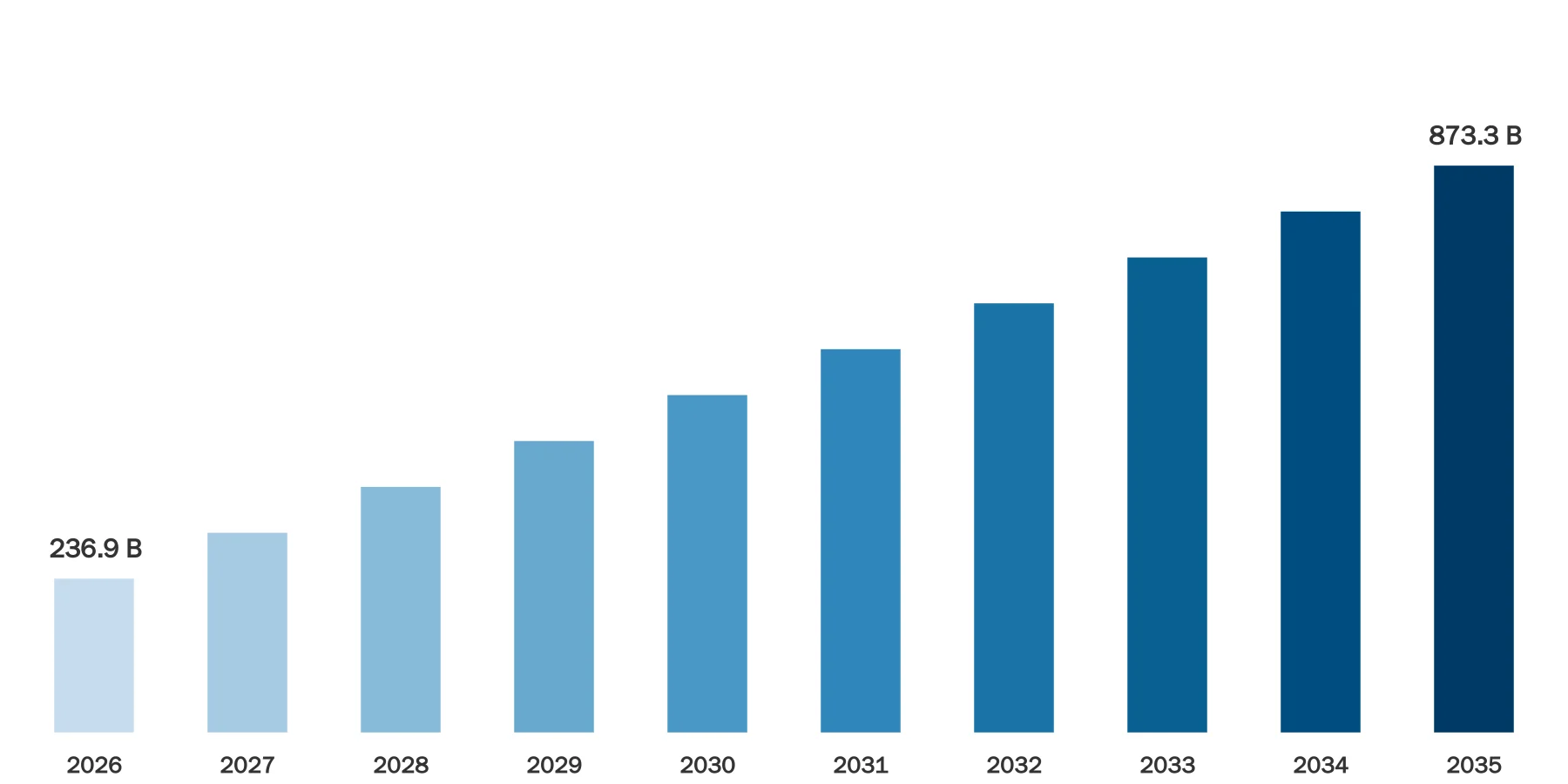
Source: Econ Market Research
Travel agencies are actually middlemen that connect the traveling public with the service providers. These include airlines, hotels, car rental firms, and tour operators. Services offered by these agencies include planning itineraries, travel insurance, visa support, and even customized travel packages. As technology advances, more travel agencies now operate online so that customers can book their needs conveniently from any location.
The market was steady in 2023. That is because of the rebound of global traveling after the easing of restrictions that were established by previous pandemics. That, of course, has been fueled further by increased demand for leisure travelling, business trips, and group tours. Moreover, personalized travel experiences and convenience through digital platforms further boost industry growth. However, geopolitical tensions and uncertainties over the future costs of traveling do have an effect on the dynamics of the market.
Travel agencies are increasingly adopting advanced technologies such as Artificial Intelligence (AI) and data analytics to enhance customer experiences and provide personalized recommendations. In addition, they focus on sustainable tourism practices in order to cater to the growing demand for eco-friendly travel options. With these trends and changing consumer preferences, the global travel agencies market is expected to continue growing in the coming years, offering diverse opportunities for traditional and online travel service providers.
Dynamic Insights
One of the key drivers is the increasing demand for personalized travel experiences, as travelers seek tailored itineraries that cater to specific interests like Adventure Tourism, cultural exploration, or wellness retreats. The proliferation of digital platforms and mobile apps has also revolutionized the way travel services are booked, enabling customers to access real-time information, compare options, and make bookings with ease. International tourism has recovered well from pandemic-related disruptions, and market activity has increased both in leisure and business travel. However, there are still headwinds for the market such as fuel prices and inflation-induced fluctuating travel costs, geopolitical uncertainty affecting the safety of travel and demand, and environmental concerns increasing as more and more travelers are seeking greener alternatives.
Travel agencies must keep abreast of the trends and use innovative solutions like AI-driven recommendations, virtual tours, and blockchain-based payment systems to ensure that the customers are satisfied and operations run smoothly. In addition, growing consumer awareness about eco-friendly travel has made agencies incorporate sustainable tourism practices into their offerings by offering green travel packages and offsetting carbon footprints. These factors collectively indicate the dynamic and ever-evolving nature of the travel agencies market, presenting both opportunities and challenges for industry players.
Drivers Insights
Growing Demand for Personalized Travel Experiences:
Modern travel consumers are more of customized travel plans. For example, where they can engage in adventure tourism, luxury getaways, or being culturally immersed in the locals. This has led to growth in the travel agencies market because the consumers require Professional Services to make memories out of their trips. Travel agencies that offer bespoke services, for instance, curated itineraries and exclusive access to local attractions are gaining an edge over competitors. The ability to combine advanced technology with human expertise allows agencies to cater to niche markets, enhance customer satisfaction and loyalty.
Digital Transformation in Travel Services:
The adoption of digital tools has revolutionized the travel agency sector. With mobile apps, AI-powered chatbots, and online booking platforms, agencies can provide real-time services and instant travel solutions. Customers can easily compare prices, read reviews, and book trips through user-friendly interfaces, significantly improving the overall travel planning experience. This digital shift has also enabled agencies to streamline operations, reduce overhead costs, and offer competitive pricing, which further drives market growth.
Restraints Insights
Economic Uncertainty and Travel Cost Fluctuations:
Global economic challenges, such as inflation and currency fluctuations, often impact travel budgets, discouraging consumers from spending on leisure or business trips. Rising fuel costs and other inflationary pressures also drive up airfares and accommodation prices, making travel less affordable. This economic volatility poses a significant challenge for travel agencies to maintain consistent revenue streams.
Geopolitical Instabilities and Travel Restrictions:
Unforeseen geopolitical events, such as conflicts, natural disasters, or sudden government-imposed travel bans, can severely disrupt travel plans. These uncertainties reduce traveler confidence and create logistical issues for agencies, especially when they have to handle mass cancellations or rebookings. Such disruptions can erode customer trust and negatively impact the industry.
Opportunities Insights
Rise of Sustainable Tourism Practices:
With growing awareness of environmental issues, consumers are increasingly opting for sustainable travel options. Travel agencies that integrate eco-friendly practices, such as offering carbon-neutral packages, supporting local communities, and promoting less-explored destinations, can tap into this emerging trend. This focus on sustainability not only addresses environmental concerns but also appeals to socially conscious travelers, opening new revenue streams for the market.
Segment Analysis
By Service Type
The travel agencies market is classified under service types. Leisure travel markets include trips based on vacationing and recreative activities. Business and corporate travels have to do with trips undertaken as part of job or career functions, which are often associated with conferencing, clients', visits, or other business training-related exercises that sometimes may require fluid scheduling of travel itineraries or accommodations and even flights. Corporate travel is actually a broader requirement of the organizations, which is employee travel management and policies that are usually carried out by professional travel agencies or departments. The two segments each serve different customers with different complexities and demands for personalization.
By Booking Mode
Travel bookings can be divided into online and offline modes. Online booking has emerged as the primary mode, given the widespread use of mobile apps and digital platforms that offer convenience, real-time updates, and competitive pricing. Travelers can browse options, compare costs, and make instant reservations. Offline bookings, however, remain significant for customers who prefer human interaction, personalized recommendations, or assistance with complex itineraries. These bookings are often carried out through physical offices or telephonic consultations, appealing to traditionalists and customers with specific needs.
By Customer Type
Based on customer type, the market serves individual and group travelers. Individual travelers, including solo adventurers or small families, typically seek customized services tailored to their specific preferences. Group travelers, on the other hand, involve larger parties such as corporate teams, student groups, or tour groups. These customers often require bulk bookings, coordinated itineraries, and cost-effective solutions, making group travel a distinct and lucrative segment.
By Tour Type
The market further bifurcates tour offerings between package tours and customized tours. Package tours feature pre-arranged services of transportation, accommodations, and guided activities to ensure convenient travel for its customers. However, customized tours enable travelers to design their tour itineraries according to special preferences, flexibility, and personally designed experiences. Both options tend to cater to different needs by package tours satisfying the convenience needs of the traveller and customized tour catering to individual desires for specifically tailored experiences.
By Travel Product
The travel products segment includes flights, hotels, car rentals, and cruise services, each forming an integral part of travel planning. Flights and hotels dominate the market, providing essential transport and accommodation services. Car rentals offer flexibility for local travel, while cruise services cater to luxury and leisure seekers. Agencies often bundle these services into packages to deliver a seamless travel experience.
By End-User Industry
The end-user industry segment comprises corporate, government, education, and others. Corporations demand extensive travel solutions for business operations, including employee travel and client hospitality. Government agencies require travel services for official trips, often involving complex protocols and bulk bookings. Educational institutions organize travel for field trips, student exchange programs, and academic conferences. Other end-users include non-profits and individuals requiring specialized travel arrangements, making this segment diverse and varied.
Regional Analysis
North America is the largest market, driven by a strong business travel sector, advanced digital booking platforms, and high disposable incomes driving leisure travel. The U.S. is the largest contributor to this region, with major players using technology to offer seamless travel solutions. Europe is another key region, driven by strong demand for cultural tourism and a well-connected transportation network. Countries such as Germany, the UK, and France lead the market, but sustainable travel practices are picking up all over the region.
The Asia-Pacific region is fast growing due to rising disposable incomes, an increasing middle class, and growing international tourism. Significant contributors in the region are now China, India, and other Southeast Asian countries, where tourism is encouraged through government initiatives and travel infrastructure improvements. Latin America and the Middle East &, Africa are gradually becoming niche markets offering unique travel experiences.
Latin America has the potential to attract more people with its diverse cultural heritage and high biodiversity. Middle East tourism profits from luxury tours and religious trips. Africa remains an under-exploited resource for adventure and eco-tourism. All these regional trends emphasize the importance of providing different travel agency services that will accommodate local tastes and trends in ensuring a sustainable increase in market demand across the world.
Competitive Landscape
Global market leaders, such as Expedia Group, Booking Holdings, American Express Global Business Travel, and CWT, dominate the market through large service portfolios, advanced digital platforms, and strong international presence. They apply technologies like AI-powered chatbots, data analytics, and virtual reality to enrich customer experiences and sustain a competitive advantage. These companies also strategically partner with airlines, hotels, and car rental companies to deliver all-inclusive travel solutions.
Regional and local travel agencies have an important role to play in fulfilling specific customer preferences and delivering personalized services. Players often carve out niches, such as luxury travel, adventure tourism, or cultural experiences, to distinguish themselves. OTAs have intensified competition, enabling smaller players to reach a larger audience through digital channels. Besides, brick-and-mortar agencies continue to cater to customers who require face-to-face interaction for complex travel planning. The competitive landscape is further influenced by the growing demand for sustainable travel solutions, pushing companies to innovate and adopt eco-friendly practices.
List of Key Players:
Flight Centre Travel Group
MakeMyTrip Ltd.
TripAdvisor
Yatra Online Inc.
Corporate Travel Management
CWT
Kesari Tours Pvt. Ltd.
American Express Global Business Travel
Booking Holdings
Expedia Group
TUI Group
Recent Developments:
On November 7, 2024, Sabre Corporation, a prominent software and technology provider for the global travel industry, announced a significant milestone in air travel distribution in India. The company has launched New Distribution Capability (NDC) content for Air India, the nation&rsquo,s flagship airline.
Travel Agencies Market Report Scope & Segmentation
| Attributes | Details |
|---|---|
Market Size (Current) | US$ 236.9 Billion in 2026 |
Market Size (Forecast) | US$ 873.3 Billion in 2035 |
Growth Rate | CAGR of 15.6% from 2026 to 2035 |
Forecast Period | 2026 – 2035 |
Base Year | 2025 |
Historical Data Available | Yes |
Regional Scope | Global |
Segments Covered | By Service
By Tour Type
|
Frequently Asked Questions
Common questions about this report
The study period covers historical insights and forecast projections for the period 2026-2035.
About the Author
Market research expert with years of industry experience

Dipali Bhingare serves as the Market Research Director at Econ Market Research. With a focus on translating complex global economic shifts into actionable business intelligence, she oversees the strategic direction of comprehensive market studies. Her work empowers organizations to navigate volatile industries through data-driven forecasting and deep-dive competitive analysis.
Related Reports
Explore more market insights from the same category