

Janitorial Service Market
Janitorial Service Market Size, Share, Trends, Growth, and Industry Analysis, By Service Type (Standard Cleaning, Damage Restoration Cleaning, Window Cleaning, Floor Care Services, Others), By Application (Residential, Commercial), By End-User Industry (Healthcare, Retail, Hospitality, Corporate Offices, Industrial), Regional Analysis and Forecast Period 2026-2035
Janitorial Service Market Overview
As per Econ Market Research analysis, the Global Janitorial Service Market was recorded at US$ 314.13 Billion in 2026 and is projected to expand to US$ 458.84 Billion by 2035, registering a CAGR of 4.30% over the forecast period. The base year used is 2025.
Janitorial Service Market Size 2025-2035 (USD Billion)

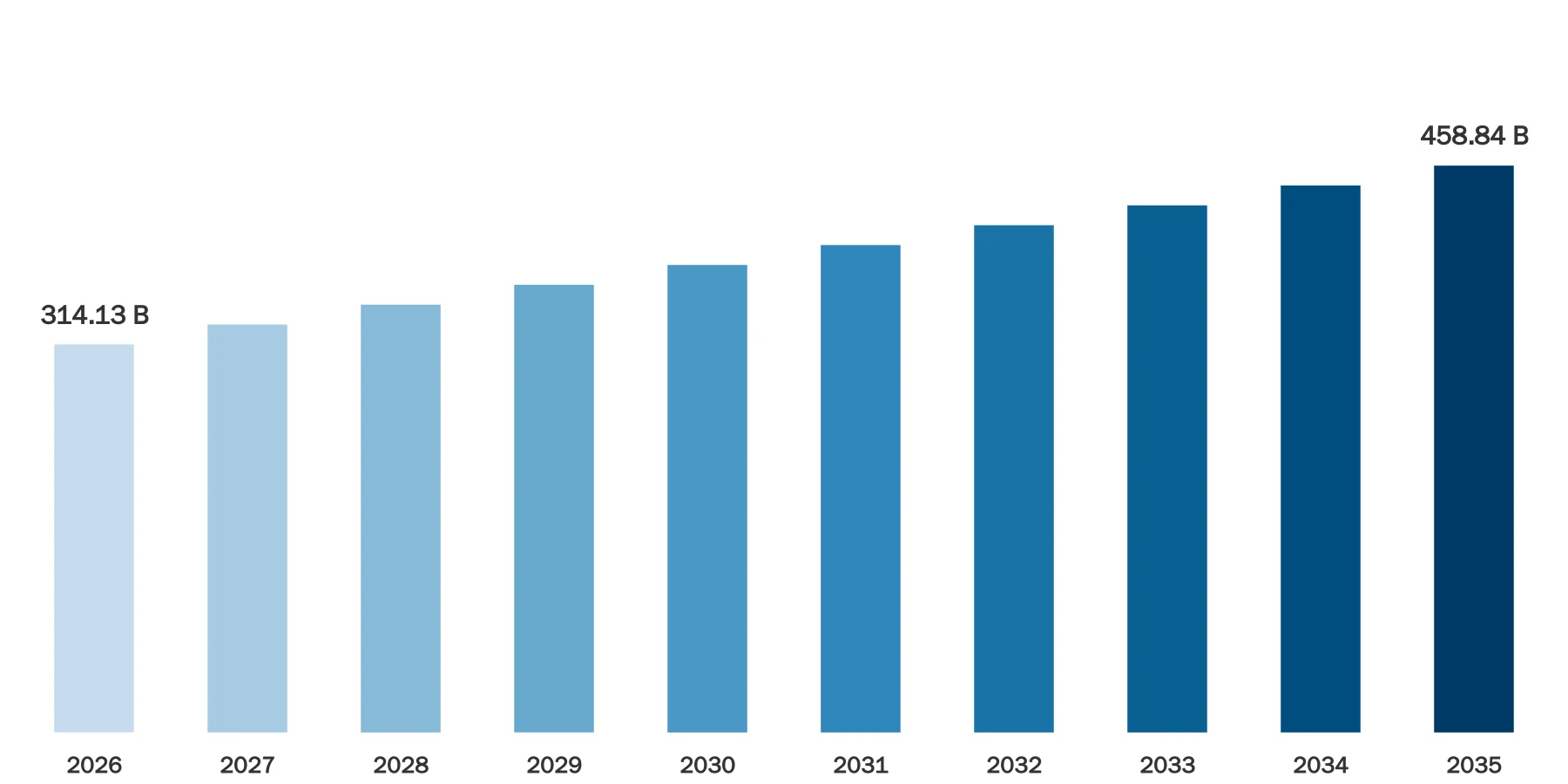
Source: Econ Market Research
The Janitorial Service Market Report highlights that over 2.8 million janitorial workers were employed globally in 2024, with more than 65% operating in commercial cleaning environments such as offices, retail spaces, and healthcare facilities. Approximately 78% of organizations outsource cleaning services to reduce operational costs and improve hygiene compliance. The Janitorial Service Industry Analysis shows that over 55% of cleaning tasks involve daily floor care, waste management, and surface disinfection. Automation is increasing, with robotic cleaning equipment adoption rising by 32% in large facilities. Additionally, more than 48% of companies now demand eco-friendly cleaning products, reflecting sustainability-driven Janitorial Service Market Trends.
The USA Janitorial Service Market Insights indicate that over 2.1 million janitors and cleaners were employed in the United States in 2024, covering more than 5.6 billion square feet of commercial space daily. Around 70% of office buildings in major metropolitan areas outsource janitorial services, while healthcare facilities account for nearly 18% of total demand. Approximately 60% of U.S. janitorial contracts include disinfection services due to heightened hygiene awareness. Green cleaning practices are adopted by nearly 42% of service providers. Additionally, over 35% of janitorial firms in the U.S. have integrated digital scheduling tools, reflecting ongoing Janitorial Service Market Growth and technological adoption.
Market Latest Trends
The Janitorial Service Market Trends are evolving rapidly with technology and sustainability driving transformation. Over 45% of janitorial companies globally have adopted automated cleaning tools such as robotic Vacuum Cleaners and floor scrubbers, increasing efficiency by up to 25%. Smart cleaning solutions using IoT sensors are implemented in nearly 30% of large commercial buildings to optimize cleaning schedules. Approximately 52% of clients now demand eco-certified cleaning products, reducing chemical usage by up to 40%.
Digital transformation is another key trend in the Janitorial Service Market Analysis, with more than 38% of service providers using mobile apps for workforce management and reporting. The Janitorial Service Industry Report shows that high-touch surface cleaning demand increased by 65% post-2020, particularly in healthcare and transportation sectors. Additionally, over 50% of contracts now include daytime cleaning services, improving visibility and accountability. Demand for specialized cleaning, including biohazard and infection control, has grown by 28%, highlighting evolving Janitorial Service Market Opportunities and customer expectations.
Market Dynamics
The Janitorial Service Market Dynamics reflect strong demand across commercial, industrial, and institutional sectors, with over 68% of businesses outsourcing cleaning services. More than 72% of large enterprises require daily cleaning services, while small businesses account for approximately 35% of weekly service contracts. Increasing awareness of hygiene has led to a 60% rise in disinfection service requests. Additionally, labor-intensive operations still account for nearly 80% of service delivery, despite automation adoption of around 30%, indicating a balance between workforce and technology in Janitorial Service Market Growth.
DRIVER
Increasing Demand for Hygiene and Sanitation Standards
The primary driver in the Janitorial Service Market Growth is the rising demand for hygiene and sanitation standards across industries. Over 75% of organizations have increased cleaning frequency since 2020, while healthcare facilities require up to 3 cleaning cycles per day in critical areas. Approximately 68% of facility managers prioritize infection control, boosting demand for professional janitorial services. Educational institutions covering more than 1.2 billion square feet globally rely on daily cleaning services. Additionally, nearly 58% of consumers prefer businesses that visibly maintain cleanliness, pushing companies to invest more in janitorial services, reinforcing Janitorial Service Market Outlook.
RESTRAINT
Labor Shortages and High Workforce Turnover
A significant restraint in the Janitorial Service Market Analysis is labor shortages, with turnover rates exceeding 45% annually in some regions. Around 62% of service providers report difficulty in hiring skilled workers, impacting service quality and operational efficiency. The average training period for new janitorial staff ranges between 2 to 4 weeks, increasing onboarding costs. Additionally, nearly 55% of companies face absenteeism issues, leading to delayed service delivery. Wage pressures have increased by 18% in the past 3 years, making cost management challenging for providers, limiting scalability in the Janitorial Service Market Size.
OPPORTUNITY
Integration of Smart Cleaning Technologies
The Janitorial Service Market Opportunities are expanding with the integration of smart cleaning technologies. Over 33% of large-scale facilities have implemented IoT-enabled cleaning systems, reducing labor requirements by up to 20%. Robotic cleaning equipment usage has grown by 30% in airports and shopping malls covering more than 500,000 square feet. Data-driven cleaning solutions improve efficiency by 25%, enabling predictive maintenance and optimized scheduling. Additionally, 47% of companies plan to increase investments in automation within the next 2 years, indicating strong growth potential in the Janitorial Service Market Forecast.
CHALLENGES
Rising Operational and Equipment Costs
The Janitorial Service Market faces challenges due to rising operational and equipment costs, with cleaning equipment prices increasing by approximately 22% over the last 4 years. Fuel and transportation costs have risen by 15%, impacting service delivery expenses. Approximately 40% of service providers report reduced profit margins due to increasing supply costs for cleaning chemicals and PPE. Maintenance costs for advanced equipment can account for 12% of operational budgets. Additionally, regulatory compliance requirements have increased by 20%, requiring additional training and certifications, making operations more complex in the Janitorial Service Industry Analysis.
SWOT Analysis
Strengths
High demand across sectors, with over 70% of businesses outsourcing cleaning services
Workforce availability exceeding 2.8 million globally supporting large-scale operations
Daily service requirements covering more than 6 billion square feet worldwide
Increasing adoption of eco-friendly products by 48% of companies
Weaknesses
Labor turnover rates exceeding 45% annually
Dependence on manual labor for nearly 80% of operations
Training time of 2–4 weeks per employee impacts productivity
Equipment maintenance costs accounting for up to 12% of budgets
Opportunities
Automation adoption increasing by 30% across large facilities
IoT-based cleaning systems used in 33% of commercial buildings
Demand for green cleaning solutions growing by 52%
Expansion in emerging markets with urbanization rates exceeding 55%
Threats
Rising labor costs increasing by 18% over recent years
Competition from in-house cleaning teams in 35% of organizations
Regulatory compliance requirements rising by 20%
Economic slowdowns reducing outsourcing budgets by up to 15%
Segmentation Analysis
The Janitorial Service Market Segmentation is categorized by service type, application, and end-user industry. Over 60% of demand comes from routine cleaning services, while specialized services account for nearly 25%. Commercial applications dominate with approximately 68% share, followed by industrial at 20% and residential at 12%. End-user industries such as healthcare, retail, and education collectively contribute over 55% of total demand, highlighting diverse usage patterns in Janitorial Service Market Research Report.
By Service Type
Service type segmentation in the Janitorial Service Market includes routine cleaning, floor care, window cleaning, and specialized services. Routine cleaning holds approximately 60% market share, covering tasks such as dusting, mopping, and waste disposal across more than 4 billion square feet daily. Floor care services account for nearly 20%, driven by demand in commercial buildings exceeding 100,000 square feet. Window cleaning services contribute around 10%, especially in high-rise buildings exceeding 20 floors.
Specialized services, including disinfection and biohazard cleaning, represent about 10% but are growing rapidly due to increased hygiene awareness. Approximately 65% of healthcare facilities require specialized cleaning services multiple times per day. Additionally, 40% of corporate offices have integrated deep cleaning services on a weekly or monthly basis. The Janitorial Service Market Share for eco-friendly cleaning services has reached 35%, reflecting sustainability trends and regulatory compliance requirements.
By Application
Application segmentation in the Janitorial Service Market Analysis includes commercial, residential, and industrial sectors. Commercial applications dominate with approximately 68% market share, driven by office spaces, retail outlets, and hospitality establishments. Over 5 billion square feet of commercial space globally require daily cleaning services. Residential applications account for nearly 12%, with demand increasing in urban areas where apartment complexes exceed 200 units.
Industrial applications represent around 20%, including factories and warehouses exceeding 50,000 square feet. These facilities require specialized cleaning services for machinery and hazardous waste management. Approximately 55% of industrial clients require weekly cleaning schedules, while 30% demand daily maintenance. The Janitorial Service Market Growth in commercial applications is supported by increasing office occupancy rates, with over 65% of buildings requiring outsourced cleaning contracts.
By End-User Industry
End-user industries in the Janitorial Service Market include healthcare, education, retail, hospitality, and manufacturing. Healthcare accounts for approximately 18% of demand, with hospitals requiring up to 3 cleaning cycles per day in critical areas. Education institutions contribute around 15%, covering more than 1 billion square feet globally. Retail sector demand stands at 12%, driven by malls and supermarkets exceeding 100,000 square feet.
Hospitality contributes nearly 10%, with hotels requiring daily room cleaning across thousands of rooms per property. Manufacturing accounts for 20%, requiring specialized cleaning for equipment and safety compliance. Corporate offices represent about 25%, with over 70% outsourcing cleaning services. The Janitorial Service Market Insights show that multi-industry demand ensures consistent service requirements throughout the year.
Regional Analysis
The Janitorial Service Market Outlook shows strong regional variation, with North America leading at approximately 35% market share, followed by Europe at 28%, Asia-Pacific at 25%, and Middle East & Africa at 12%. Urbanization rates exceeding 55% globally are driving demand, while commercial Real Estate expansion covering billions of square feet supports continuous growth in Janitorial Service Market Size.
North America
North America dominates the Janitorial Service Market Share with approximately 35%, driven by over 6 million commercial buildings requiring regular cleaning services. The United States accounts for nearly 80% of regional demand, with over 5.6 billion square feet of office and retail space cleaned daily. Approximately 70% of businesses outsource janitorial services, while healthcare facilities contribute around 20% of demand.
Canada contributes nearly 10% of the regional market, with over 500 million square feet of commercial space requiring cleaning services. Automation adoption in North America exceeds 40%, with robotic cleaners widely used in airports and malls. Approximately 50% of companies use eco-friendly cleaning products, reducing chemical usage significantly. Additionally, over 60% of contracts include disinfection services, reflecting strong hygiene standards in the Janitorial Service Industry Analysis.
Europe
Europe holds approximately 28% of the Janitorial Service Market Size, with over 4 billion square feet of commercial space requiring cleaning services. Germany, the UK, and France collectively account for nearly 60% of regional demand. Approximately 65% of European businesses outsource cleaning services, while public institutions contribute around 25% of demand.
Green cleaning adoption in Europe exceeds 55%, driven by strict environmental regulations. Approximately 35% of janitorial companies use automated equipment, improving efficiency by up to 20%. Healthcare facilities require multiple cleaning cycles daily, contributing nearly 18% of total demand. Additionally, office spaces covering more than 2 billion square feet require daily cleaning, supporting consistent demand in the Janitorial Service Market Forecast.
Asia-Pacific
Asia-Pacific accounts for approximately 25% of the Janitorial Service Market Growth, driven by rapid urbanization exceeding 60% in countries such as China and India. Over 3.5 billion square feet of commercial space requires regular cleaning services. Approximately 50% of businesses in the region outsource janitorial services, with increasing adoption in emerging economies.
Industrial facilities contribute nearly 30% of demand, particularly in manufacturing hubs. Automation adoption is lower at around 25%, but increasing rapidly in large cities. Healthcare and education sectors collectively account for 35% of demand. Additionally, over 40% of companies are adopting eco-friendly cleaning solutions, reflecting growing environmental awareness in the Janitorial Service Market Trends.
Middle East & Africa
The Middle East & Africa region holds approximately 12% of the Janitorial Service Market Share, with demand driven by commercial real estate and hospitality sectors. Over 1.2 billion square feet of commercial space requires cleaning services, particularly in urban centers. Approximately 55% of businesses outsource cleaning services, while hospitality accounts for nearly 20% of demand.
Automation adoption is around 20%, with increasing use in airports and luxury hotels. Healthcare facilities contribute approximately 15% of demand, requiring high-frequency cleaning. Additionally, construction growth exceeding 10% annually in key cities supports demand for post-construction cleaning services. The Janitorial Service Market Insights indicate steady expansion supported by infrastructure development.
Competitive Landscape
The Janitorial Service Market Competitive Landscape is highly fragmented, with over 500,000 service providers operating globally. Approximately 60% of companies are small and medium enterprises employing fewer than 50 workers. Large multinational companies account for nearly 25% of market share, offering integrated Facility Management services across multiple industries.
Competition is driven by service quality, pricing, and technological adoption, with over 40% of companies investing in automation tools. Approximately 35% of providers differentiate through eco-friendly cleaning solutions, while 30% focus on specialized services such as healthcare cleaning. Contract durations typically range from 1 to 3 years, covering facilities exceeding 50,000 square feet. Additionally, customer retention rates average around 65%, highlighting the importance of service consistency in the Janitorial Service Market Analysis.
List of Top Janitorial Service Companies
ABM Industries Inc.
ISS A/S
Sodexo
Compass Group
Aramark
Jani-King International
ServiceMaster
CleanNet USA
Stanley Steemer
Anago Cleaning Systems
Vanguard Cleaning Systems
Leading Companies by Market Share
ISS A/S and ABM Industries Inc. collectively account for approximately 15% of the global Janitorial Service Market Share. ISS operates in over 30 countries with a workforce exceeding 300,000 employees, while ABM employs more than 100,000 workers serving facilities across 350 million square feet daily. Both companies maintain contract retention rates above 70% and invest over 10% of operational budgets in technology and training.
Market Investment Outlook
The Janitorial Service Market Investment Outlook shows increasing capital allocation toward automation and sustainability. Approximately 45% of companies plan to invest in robotic cleaning equipment within the next 3 years. Investment in eco-friendly products has increased by 35%, reducing chemical usage by up to 40%.
Private equity investments in facility management companies have grown by 20%, targeting firms with operations covering more than 1 million square feet. Additionally, 50% of large service providers are investing in digital platforms for workforce management. Infrastructure expansion projects covering over 10 billion square feet globally are expected to drive demand for janitorial services. The Janitorial Service Market Opportunities are further supported by increasing outsourcing rates exceeding 65% among corporations.
New Product Development
New product development in the Janitorial Service Market focuses on automation, sustainability, and efficiency. Robotic floor cleaners with AI navigation systems can cover up to 50,000 square feet per day, reducing labor requirements by 20%. Eco-friendly cleaning solutions now account for 48% of product usage, minimizing environmental impact.
Smart dispensers and IoT-enabled cleaning tools are used in approximately 30% of commercial buildings, optimizing resource usage by 25%. Advanced disinfectants capable of eliminating 99.9% of pathogens are widely adopted in healthcare facilities. Additionally, ergonomic cleaning equipment reduces worker fatigue by 15%, improving productivity. The Janitorial Service Market Trends indicate continuous innovation aimed at improving efficiency and meeting regulatory standards.
Recent Developments
In 2023, over 40% of large janitorial firms introduced robotic cleaning systems capable of covering 30,000–50,000 square feet daily.
In 2024, approximately 55% of service providers adopted eco-friendly cleaning products, reducing chemical usage by 35%.
In 2025, digital workforce management platforms were implemented by 45% of companies, improving scheduling efficiency by 20%.
In 2023, healthcare cleaning contracts increased by 25%, with facilities requiring up to 3 cleaning cycles per day.
In 2024, automated disinfection systems capable of eliminating 99.9% of pathogens were adopted by 30% of hospitals.
Report Coverage of Janitorial Service Market
The Janitorial Service Market Report Coverage includes detailed analysis of service types, applications, and end-user industries across more than 50 countries. The report evaluates over 500,000 service providers and analyzes cleaning operations covering more than 10 billion square feet globally. It includes insights into workforce distribution exceeding 2.8 million employees and automation adoption rates of approximately 30%.
The Janitorial Service Market Research Report also examines sustainability trends, with eco-friendly product usage reaching 48%. Regional analysis covers North America, Europe, Asia-Pacific, and Middle East & Africa, accounting for 100% of global demand distribution. Additionally, the report highlights technological advancements such as IoT-enabled cleaning systems used in 30% of commercial facilities. It provides detailed segmentation analysis, competitive landscape insights, and investment trends shaping the Janitorial Service Market Outlook.
Janitorial Service Market Report Scope & Segmentation
| Attributes | Details |
|---|---|
Market Size (Current) | US$ 314.13 Billion in 2026 |
Market Size (Forecast) | US$ 458.84 Billion in 2035 |
Growth Rate | CAGR of 4.30% from 2026 to 2035 |
Forecast Period | 2026 – 2035 |
Base Year | 2025 |
Historical Data Available | Yes |
Regional Scope | Global |
Segments Covered | By Service Type
By Application
By End-User Industry
|
Frequently Asked Questions
Common questions about this report
The study period covers historical insights and forecast projections for the period 2026-2035.
About the Author
Market research expert with years of industry experience

Dipali Bhingare serves as the Market Research Director at Econ Market Research. With a focus on translating complex global economic shifts into actionable business intelligence, she oversees the strategic direction of comprehensive market studies. Her work empowers organizations to navigate volatile industries through data-driven forecasting and deep-dive competitive analysis.
Related Reports
Explore more market insights from the same category