

Medical Headlamp Market
Medical Headlamp Market Size, Share, Trends, Growth, and Industry Analysis, By Product Type (Surgical, Examination), By Technology (LED, Halogen, Others), By End-User (Hospitals, Specialty Clinics, Ambulatory Surgical Centers), Regional Analysis and Forecast Period 2026-2035
Medical Headlamp Market Overview
As per Econ Market Research analysis, the Global Medical Headlamp Market generated revenue of US$ 3.44 Billion in 2026 and is forecast to achieve US$ 4.58 Billion by 2035, at a CAGR of 3.2% during the study period 2026–2035. The base year considered is 2025.
Medical Headlamp Market Size 2025-2035 (USD Billion)

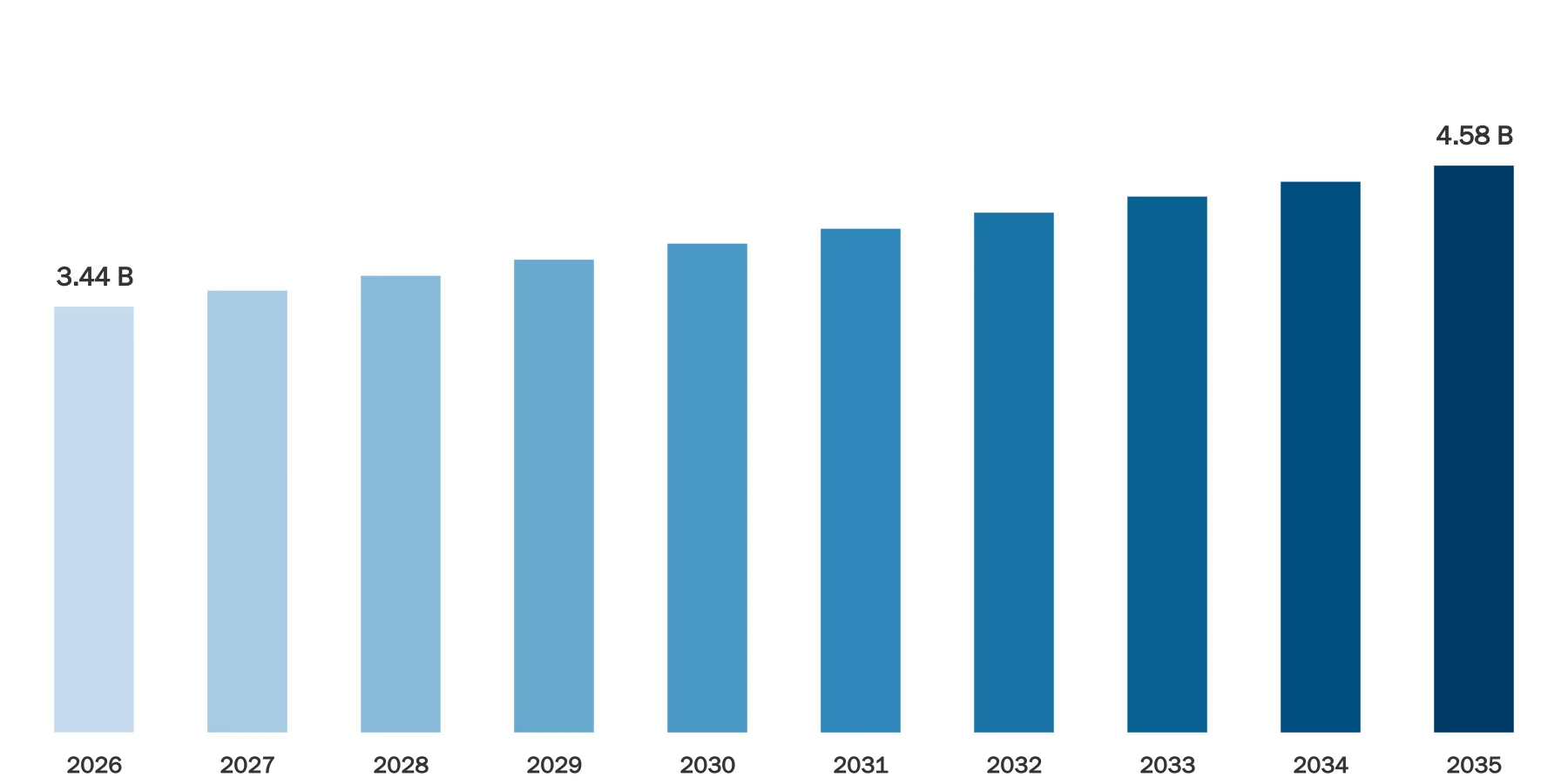
Source: Econ Market Research
Medical Headlamp are head-mounted lighting devices specifically designed for medical and healthcare professionals. Surgeons, dentists, and other medical professionals can execute treatments with more accuracy and precision because to the targeted illumination provided by these headlamps, especially in situations where direct overhead lighting may not be sufficient or practicable. There are many different types of headlamps available on the market, such as LED ones that are lightweight, have programmable brightness levels, and have comfortable headbands for extended use. The increasing emphasis on minimally invasive treatments, improvements in surgical techniques that require improved vision, and the growing popularity of outpatient surgeries are the main factors driving the demand for medical headlamps.
Medical Headlamp Dynamics
Key drivers include advancements in medical technology, such as the development of brighter and more energy-efficient LED lighting systems, which enhance the performance and versatility of medical headlamps. Moreover, the increasing prevalence of minimally invasive surgical procedures and outpatient care is driving the demand for portable and ergonomic lighting solutions, further fuelling market expansion. Medical headlamp adoption in clinics, hospitals, and ambulatory surgical centers is also being supported by investments in healthcare infrastructure development and growing healthcare spending globally.
In order to fulfil the changing needs of healthcare workers, suppliers are concentrating on innovation and working to deliver features like customizable brightness settings, lightweight designs, and improved battery life. Because Medical Devices, especially headlights, are subject to strict rules regarding their manufacture, labeling, and distribution, regulatory compliance and quality standards are also significant factors in determining market dynamics. In addition, industrial competition brought about by the existence of long-standing firms and the introduction of fresh companies influences price and product innovation.
Drivers
Technological Advancements
Medical headlamps are evolving due to ongoing technological breakthroughs, especially in the area of lighting systems. Particularly, LED technology has advanced significantly, resulting in the creation of light sources that are brighter, more energy-efficient, and have longer lifespans. These developments improve the functionality and dependability of medical headlamps, giving medical personnel improved sight and accuracy when performing surgeries. Additionally, technical advancements have made it possible to incorporate features that specifically address the needs and preferences of medical practitioners, such as lightweight designs, customizable brightness levels, and enhanced battery life.
Rising Demand for Minimally Invasive Procedures
Medical headlamp demand is being driven by a growing inclination for less intrusive surgical procedures. Compared to open surgeries, minimally invasive procedures have a number of benefits, such as quicker recovery periods, a lower chance of problems, and better patient results. By directing focused illumination directly to the surgical site, medical headlamps serve a critical role in facilitating these procedures and helping surgeons complete complex tasks more accurately and efficiently. It is anticipated that demand for premium medical headlamps will continue to rise gradually as healthcare systems around the world emphasize minimally invasive procedures to lower costs and increase patient satisfaction.
Restraints
High Cost of Advanced Technologies
Medical headlamps equipped with advanced technologies such as LED lighting systems and ergonomic designs can be costly. The high initial investment required to procure these devices may pose a barrier to adoption, particularly for smaller healthcare facilities and practitioners operating within budget constraints. Additionally, ongoing maintenance and replacement costs further contribute to the total cost of ownership, potentially limiting the affordability and accessibility of advanced medical headlamp solutions in certain regions or healthcare settings.
Regulatory Compliance Challenges
The medical device industry is subject to stringent regulatory requirements imposed by government agencies to ensure product safety, efficacy, and quality. Compliance with regulatory standards, such as those set forth by the U.S. Food and Drug Administration (FDA) and the European Medicines Agency (EMA), can be complex and time-consuming, requiring manufacturers to invest significant resources in product testing, documentation, and certification processes. Navigating these regulatory hurdles effectively can pose challenges for medical headlamp manufacturers, particularly smaller players with limited regulatory expertise and financial resources, potentially hindering market entry and expansion efforts.
Opportunities
Integration of Smart Technologies
The integration of smart technologies, such as wireless connectivity, sensor-based feedback systems, and Augmented Reality (AR) capabilities, presents new avenues for innovation and differentiation within the medical headlamp market. Smart features can enhance the functionality and usability of medical headlamps, allowing for real-time data monitoring, remote control, and interactive visualization of surgical procedures.
By incorporating smart technologies into their product offerings, manufacturers can address evolving customer needs, improve workflow efficiency, and create value-added solutions that cater to the increasingly digitized healthcare environment. Moreover, the growing adoption of Telemedicine and remote surgical assistance platforms provides opportunities for the development of interconnected medical devices, including headlamps, to support collaborative and remote healthcare delivery models.
Segment Overview
By Product Type
Medical headlamps are categorized into several types based on the lighting technology they utilize. LED medical headlamps, known for their energy efficiency, brightness, and longevity, have gained widespread popularity among healthcare professionals. They offer adjustable brightness levels and are lightweight, making them suitable for various medical procedures.
Halogen medical headlamps, although less energy-efficient compared to LEDs, still offer bright and focused illumination, often at a lower cost. Xenon medical headlamps provide intense, white light ideal for surgical procedures requiring precise visibility. Additionally, there are other types of medical headlamps, including fiber optic variants, which utilize fiber optic cables to deliver light to the surgical site. Each type of medical headlamp offers unique features and benefits, catering to the diverse needs and preferences of healthcare practitioners.
By Application
Medical headlamps find applications across a wide range of medical procedures. They are commonly used in surgical procedures to provide focused illumination, enabling surgeons to perform with precision and accuracy. In dental procedures, medical headlamps aid dentists in achieving better visibility within the oral cavity, facilitating complex dental treatments. Veterinary procedures also benefit from medical headlamps, allowing veterinarians to conduct surgeries and examinations with enhanced visibility.
Moreover, medical headlamps are utilized in various other medical applications, including examinations, ENT (Ear, Nose, Throat) procedures, dermatology, and more. Each application area requires specific lighting requirements tailored to the procedural needs, highlighting the versatility and importance of medical headlamps in modern healthcare practices.
By End-User
Medical headlamps are utilized across a diverse array of healthcare settings and institutions. Hospitals, being the primary providers of healthcare services, constitute a significant end-user segment for medical headlamps. Dental clinics rely on medical headlamps to illuminate the oral cavity during dental procedures. Veterinary clinics utilize medical headlamps for surgical interventions and examinations in animal healthcare. Ambulatory surgical centers (ASCs) often employ medical headlamps for outpatient surgeries, offering convenience and efficiency to patients.
Specialty clinics catering to specific medical disciplines, such as ophthalmology or dermatology, also utilize medical headlamps tailored to their specialized procedures. Additionally, medical headlamps are utilized in research institutes and academic institutions for medical education, training, and experimental purposes. Each end-user segment has distinct requirements and usage scenarios for medical headlamps, contributing to the overall market demand and adoption trends.
Overview by Region
North America dominates the market due to the presence of advanced healthcare infrastructure, high healthcare expenditure, and a strong focus on technological innovation. The region benefits from a large pool of healthcare professionals, driving the adoption of medical headlamps in various medical specialties. Europe follows closely, propelled by increasing surgical procedures, rising demand for minimally invasive techniques, and stringent regulatory standards ensuring product quality and safety. Asia-Pacific is witnessing significant market growth attributed to rapid urbanization, expanding healthcare infrastructure, and increasing healthcare investments.
Emerging economies in the region, such as China and India, are witnessing a surge in demand for medical headlamps, driven by improving healthcare access, growing disposable incomes, and rising awareness about advanced medical technologies. Latin America and the Middle East &, Africa regions are also experiencing market growth, albeit at a slower pace, owing to improving healthcare infrastructure, rising healthcare expenditure, and increasing focus on enhancing surgical capabilities. However, factors such as economic instability, limited access to healthcare facilities, and regulatory challenges may impede market growth in these regions.
Competitive Landscape
The competitive landscape of the global medical headlamp market is characterized by intense competition among key players striving to innovate, expand their product portfolios, and gain a competitive edge. Leading companies such as Heine Optotechnik GmbH &, Co. KG, BFW, Integra LifeSciences Corporation, and SurgiTel (GSC) dominate the market with their extensive product offerings, strong distribution networks, and brand recognition.
In order to meet the changing needs of healthcare professionals, these firms concentrate on ongoing product development and technology breakthroughs, including features like ergonomic wearables, lightweight designs, and customizable brightness levels. In addition, market participants frequently use strategic efforts like partnerships, mergers and acquisitions, and collaborations to fortify their market positions, increase their geographic reach, and improve their product offerings. In addition, the market is defined by the large number of local and regional firms that serve particular market segments and offer specialist products. These firms frequently engage in price wars, product diversification, and customer service in an effort to carve out a position in the fiercely competitive market.
Medical Headlamp Market Leading Companies:
Karl Storz
Integra LifeSciences
Steris Corporation
Stryker Corporation
Hillrom (Baxter International)
Welch Allyn
HEINE Optotechnik
Orascoptic
Sunoptic Surgical
KLS Martin Group
Medical Headlamp Market Report Scope & Segmentation
| Attributes | Details |
|---|---|
Market Size (Current) | US$ 3.44 Billion in 2026 |
Market Size (Forecast) | US$ 4.58 Billion in 2035 |
Growth Rate | CAGR of 3.2% from 2026 to 2035 |
Forecast Period | 2026 – 2035 |
Base Year | 2025 |
Historical Data Available | Yes |
Regional Scope | Global |
Segments Covered | By Product Type
By Technology
By End-User
|
Frequently Asked Questions
Common questions about this report
The study period covers historical insights and forecast projections for the period 2026-2035.
About the Author
Market research expert with years of industry experience

Related Reports
Explore more market insights from the same category