

Hollow concrete blocks Market
Hollow concrete blocks Market Size, Share, Trends, Growth, and Industry Analysis, By Product Type (Split-Faced Blocks, Smooth-Faced Blocks), By End-User (Residential, Commercial, Industrial), Regional Analysis and Forecast Period 2026-2035
Market Overview
As per Econ Market Research analysis, the Global Hollow concrete blocks Market was estimated at US$ 298.5 Billion in 2026 and is forecast to attain US$ 467.03 Billion by 2035, expanding at a CAGR of 5.1% between 2026 and 2035. The base year for the study is 2025.
Hollow concrete blocks Market Size 2025-2035 (USD Billion)

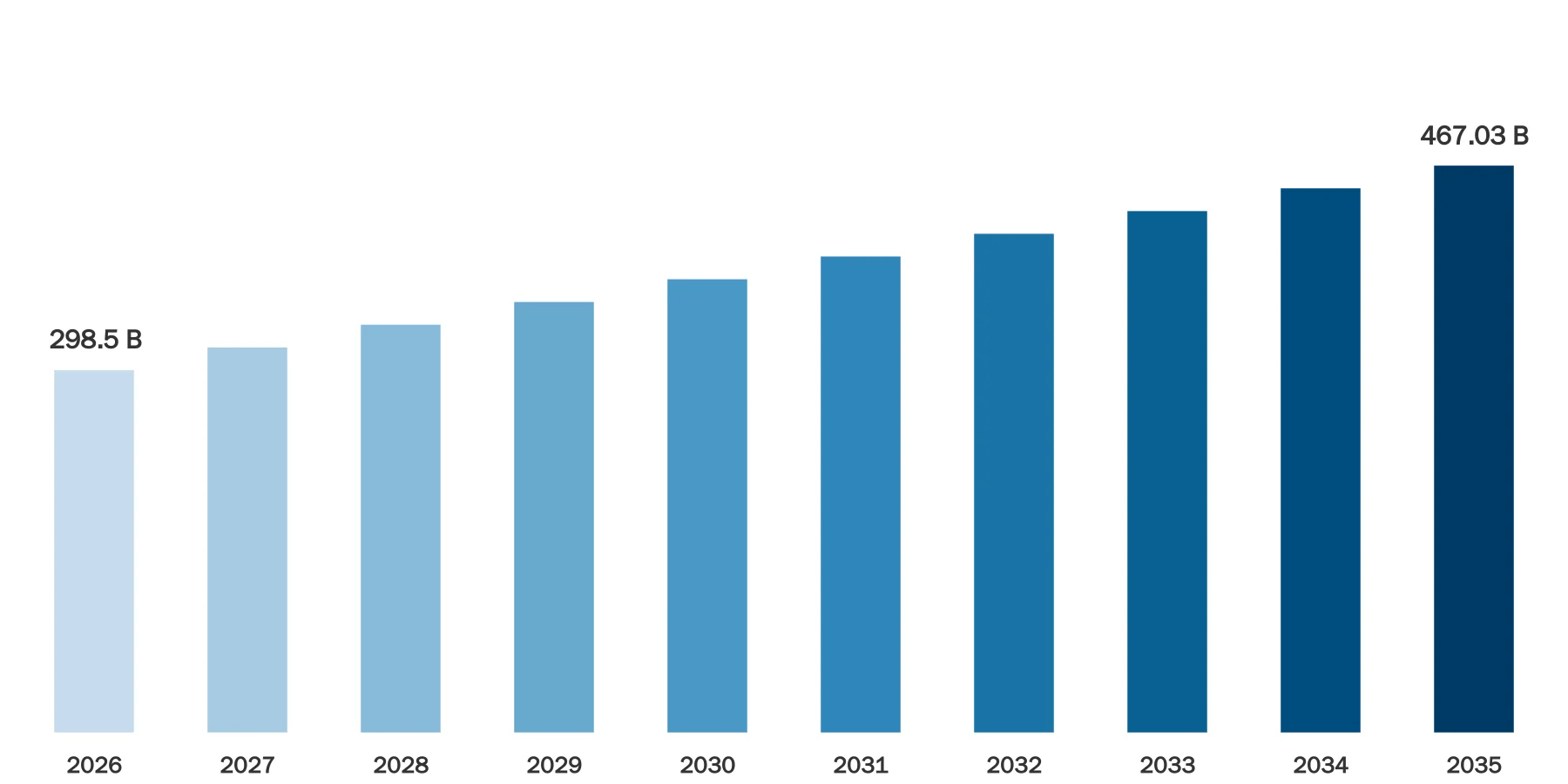
Source: Econ Market Research
Hollow concrete blocks, also known as concrete masonry units (CMUs), are precast concrete blocks with voids or hollow cores that reduce weight and improve insulation properties. These blocks find extensive use in residential, commercial, and industrial construction projects due to their versatility, durability, and thermal efficiency. The market is propelled by the increasing emphasis on green building practices and the growing awareness of energy-efficient construction solutions.
The market for hollow concrete blocks is characterised by an increase in construction activity in emerging economies due to an increase in urbanisation and infrastructure development. These blocks have a number of benefits, such as improved structural strength, quicker construction, and ease of handling. Additionally, hollow concrete blocks support environmentally friendly construction methods by using recycled materials in their manufacturing and promoting energy efficiency through enhanced thermal insulation. In order to meet the changing demands of the construction industry, major players in the market are investing in R&,D to introduce cutting-edge designs and materials.
Hollow Concrete Blocks Dynamics
The global construction industry is expanding, and this, along with rising urbanisation, infrastructure development, and government initiatives, are major factors driving the demand for affordable and environmentally friendly building materials. Hollow concrete blocks are becoming more and more popular as builders and developers look for ways to meet environmental and energy efficiency objectives. These blocks are known for their thermal insulation and structural advantages.
The market is also influenced by innovations in manufacturing processes and materials, with companies investing in research and development to enhance the performance and eco-friendliness of hollow concrete blocks. Additionally, the emphasis on green building practices and the use of recycled materials in block production contribute to the positive market outlook. Government regulations and incentives promoting energy-efficient construction and sustainable development further shape market dynamics, influencing the adoption of hollow concrete blocks in various construction projects.
Hollow Concrete Blocks Drivers
Urbanization and Infrastructure Development
The market for hollow concrete blocks is significantly driven by the world',s growing infrastructure projects and fast urbanisation. The growing size of metropolitan areas has increased demand for sustainable and effective building materials. Because of their affordability, ease of use, and ability to insulate against heat, hollow concrete blocks are increasingly being chosen by builders who are trying to fulfil the needs of growing urban populations. The continuous movement of people from rural to urban areas calls for durable and adaptable building solutions, and hollow concrete blocks are a major factor in meeting these demands.
Green Building Practices and Sustainability
The growing focus on sustainable building practices and environmental consciousness is a major driver for the hollow concrete blocks market. Hollow concrete blocks, often manufactured using recycled materials, align with green building certifications and contribute to sustainable construction. The emphasis on energy-efficient structures and reduced environmental impact drives the adoption of hollow concrete blocks, as they offer enhanced insulation properties, minimizing the overall energy consumption of buildings. Government incentives and regulations favouring green construction further amplify the demand for hollow concrete blocks, positioning them as a vital component in the sustainable development of the construction industry.
Restraints:
Fluctuating Raw Material Prices
The market for hollow concrete blocks is significantly hampered by the price volatility of raw materials. Cement, aggregates, and additives are just a few of the materials used in the production of concrete, and changes in the cost of these inputs can have an effect on production costs. Unexpected rises in the cost of raw materials can put pressure on manufacturers', profit margins and hinder the expansion of their markets. In order to lessen the effects of shifting raw material prices, businesses in the sector must traverse this uncertainty by putting into practice efficient cost management techniques and looking into alternate materials or sourcing options.
Lack of Standardized Building Codes
The absence or inconsistency of standardized building codes for hollow concrete block construction poses a restraint to the market. Variations in building codes across regions and countries can lead to uncertainties and hinder the widespread adoption of hollow concrete blocks. To capitalize on the market',s potential fully, there is a need for cohesive and standardized regulations governing the use of hollow concrete blocks in construction. Establishing clear guidelines ensures the quality, safety, and structural integrity of buildings constructed with these blocks, fostering greater confidence among builders, developers, and regulatory authorities.
Opportunities:
Technological Advancements and Innovation
The hollow concrete block market has a lot of potential due to the continuous improvements in manufacturing technologies. Hollow concrete blocks are becoming more and more appealing due to innovations like better block designs, better insulation, and the use of eco-friendly and sustainable materials. Market participants can take advantage of these opportunities by allocating resources to research and development, maintaining a leading position in technological innovation, and providing solutions that are in line with changing customer and industry demands.
Segment Overview
By Product
The hollow concrete blocks market is segmented by product into split-faced and smooth-faced blocks. Split-faced blocks are characterized by a textured and rough surface, achieved by splitting or breaking the blocks after curing. This distinctive surface finish adds an aesthetic dimension to architectural designs, making split-faced blocks a popular choice for both exterior and interior applications.
On the other hand, smooth-faced blocks have a flat and sleek surface, providing a more polished and contemporary look. Smooth-faced blocks are often preferred in applications where a clean and modern appearance is desired, contributing to a seamless finish in residential, commercial, and industrial construction projects. The choice between split-faced and smooth-faced hollow concrete blocks depends on the architectural style, design preferences, and the intended visual impact of the construction.
By Application
The market is further segmented by application into residential and non-residential categories. In the residential segment, hollow concrete blocks play a crucial role in various construction elements such as walls, partitions, and foundations. The blocks', versatility, insulation properties, and cost-effectiveness make them a popular choice for residential buildings, meeting the demands of modern housing projects. On the non-residential front, hollow concrete blocks find extensive use in commercial and industrial structures. These blocks contribute to the construction of office buildings, retail spaces, warehouses, and other non-residential facilities.
The non-residential segment benefits from the durability and structural integrity of hollow concrete blocks, ensuring the longevity and stability of the constructed infrastructure. Overall, the division into residential and non-residential applications reflects the adaptability of hollow concrete blocks across diverse construction projects, catering to the unique requirements of both residential and commercial builders. The market',s growth in each segment is influenced by factors such as economic development, population growth, and trends in architectural design, shaping the demand for hollow concrete blocks in different construction applications.
Hollow Concrete Blocks Overview by Region
Asia-Pacific stands as a dominant force in the market, driven by rapid urbanization and extensive infrastructure development in countries like China and India. The burgeoning population in these regions fuels the demand for cost-effective and sustainable construction materials, with hollow concrete blocks emerging as a preferred choice for builders aiming to meet the demands of expanding urban areas. North America and Europe also contribute significantly to the market, with a strong emphasis on green building practices and energy-efficient construction.
The adoption of hollow concrete blocks in these regions is driven by the blocks', ability to meet stringent building codes, enhance thermal efficiency, and contribute to sustainable construction practices. In the Middle East and Africa, the market is influenced by ambitious construction projects, particularly in the Gulf countries, where hollow concrete blocks play a vital role in the development of modern infrastructure. The need for durable and weather-resistant construction materials in this region propels the demand for hollow concrete blocks. Latin America showcases a growing market, buoyed by increasing construction activities and a rising awareness of the benefits offered by hollow concrete blocks.
Hollow Concrete Blocks Market Competitive Landscape
Leading companies such as CRH plc, CEMEX S.A.B. de C.V., and Boral Limited are actively engaged in research and development to introduce advanced hollow concrete block designs, improve manufacturing processes, and enhance overall product performance. These players focus on addressing evolving market demands, including increased emphasis on sustainable and eco-friendly construction practices. Market competitiveness is driven by factors such as product quality, cost-effectiveness, and the ability to meet diverse construction requirements.
Collaboration and partnerships are also prominent trends in the competitive landscape, as companies seek to leverage each other',s strengths and expand their market reach. Furthermore, mergers and acquisitions are strategic manoeuvres employed by key players to consolidate their positions, broaden product portfolios, and gain a competitive edge. For instance, collaborations between manufacturers and technology providers aim to integrate smart technologies into hollow concrete block production, enhancing efficiency and meeting the rising demand for technologically advanced construction solutions.
Hollow Concrete Blocks Market Leading Companies:
CEMEX S.A.B. de C.V.
CRH plc
Xella Group
Brampton Brick
MIDLAND BRICK
Taylor Concrete Products Inc.
Boral Limited
LafargeHolcim
Tristar Brick and Block LTD.
Verniprens
Hollow Concrete Blocks Recent Developments
June 2023, Consolis Parma, a concrete element manufacturer, and Betolar, a material technology company, have collaborated on an in-depth research and development program to create low-carbon hollow-core slabs. The project has successfully completed extensive testing and is now progressing to the production phase. YIT, Finland',s largest construction company, has expressed keen interest in conducting trials for the innovative slabs.
Global Hollow Concrete Blocks Report Segmentation
Hollow concrete blocks Market Report Scope & Segmentation
| Attributes | Details |
|---|---|
Market Size (Current) | US$ 298.5 Billion in 2026 |
Market Size (Forecast) | US$ 467.03 Billion in 2035 |
Growth Rate | CAGR of 5.1% from 2026 to 2035 |
Forecast Period | 2026 – 2035 |
Base Year | 2025 |
Historical Data Available | Yes |
Regional Scope | Global |
Segments Covered | By Product Type
By End-User
|
Frequently Asked Questions
Common questions about this report
The study period covers historical insights and forecast projections for the period 2026-2035.
About the Author
Market research expert with years of industry experience

Dipali Bhingare serves as the Market Research Director at Econ Market Research. With a focus on translating complex global economic shifts into actionable business intelligence, she oversees the strategic direction of comprehensive market studies. Her work empowers organizations to navigate volatile industries through data-driven forecasting and deep-dive competitive analysis.
Related Reports
Explore more market insights from the same category