

Waterproofing Membranes Market
Waterproofing Membranes Market Size, Share, Trends, Growth, and Industry Analysis, By Product Type (Liquid Applied Membranes, Sheet-Based Membranes), By Raw Material (Modified Bitumen, PVC, TPO, EPDM, Others), By Application (Roofing, Walls, Building Structures, Landfills andamp; Tunnels), Regional Analysis and Forecast Period 2026-2035
Market Overview
As per Econ Market Research analysis, the Global Waterproofing Membranes Market reached a valuation of US$ 8.29 Billion in 2026 and is anticipated to grow to US$ 14.92 Billion by 2035, at a CAGR of 6.76% during the forecast timeline 2026–2035. The base year considered is 2025.
Waterproofing Membranes Market Size 2025-2035 (USD Billion)

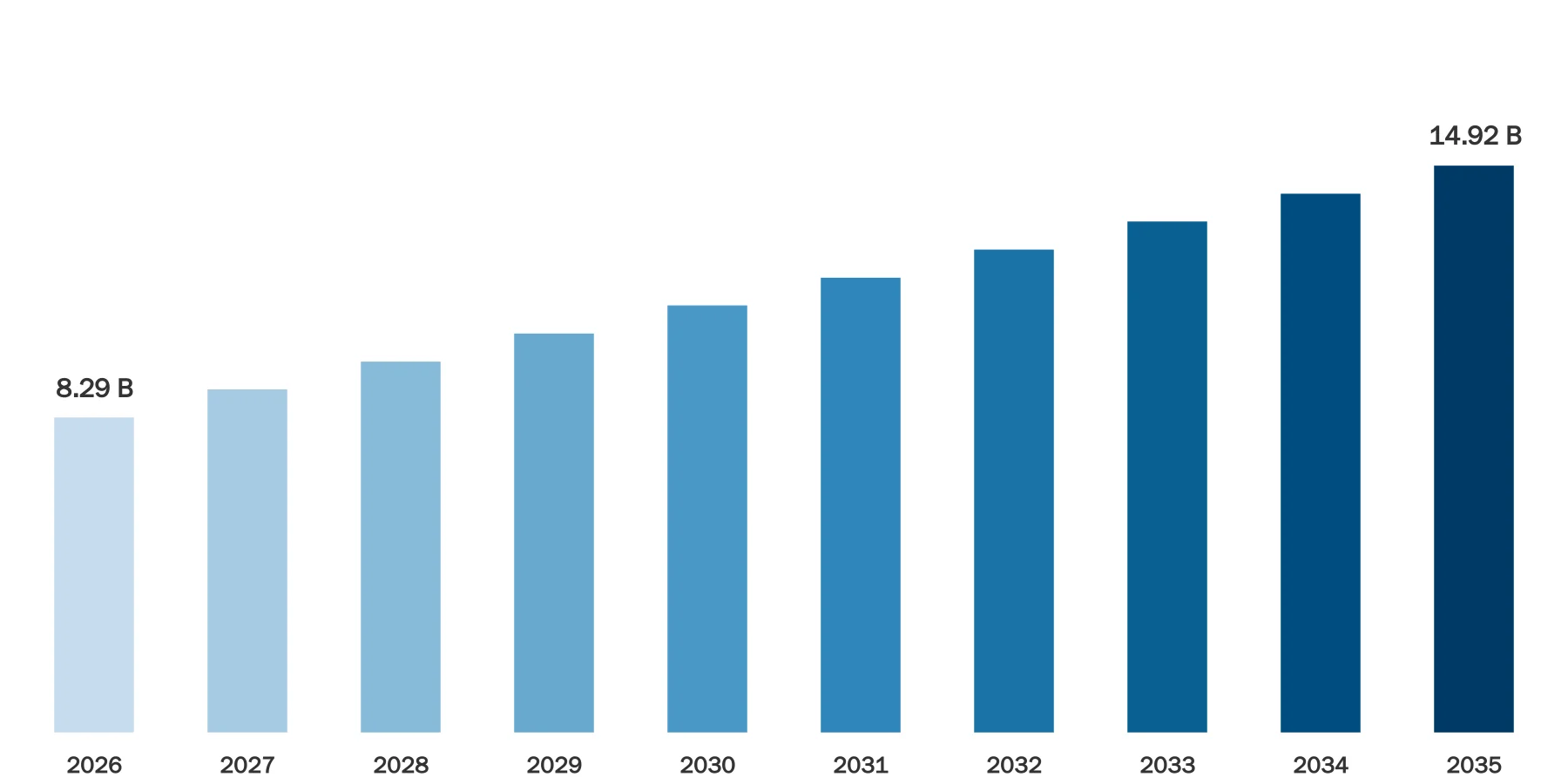
Source: Econ Market Research
Waterproofing membranes are essential components in construction projects, designed to prevent water ingress and ensure the longevity and durability of buildings. These membranes act as a barrier against water, safeguarding structures from potential leaks, moisture penetration, and corrosion. The market encompasses various types of waterproofing membranes, including bituminous, PVC, TPO, EPDM, and others, each catering to specific applications and performance requirements.
The demand for sustainable and energy-efficient buildings, along with the construction industry',s rapid expansion, has driven the market for waterproofing membranes. The need for cutting-edge waterproofing solutions in the residential and commercial sectors, along with urbanisation and infrastructure development, are factors driving the market',s steady expansion. Market adoption is also accelerated by strict laws and building codes that require the use of waterproofing membranes to improve structural integrity. Growing interest in eco-friendly and green waterproofing solutions is a result of environmental concerns becoming more pressing, which is impacting market trends.
Waterproofing Membranes Dynamics
The rapidly expanding construction industry on a global scale is one of the main catalysts. The need for waterproofing solutions grows as infrastructure development projects and urbanisation pick up speed, which in turn propels market expansion. Tight building codes and regulations that require waterproofing membranes to improve structural integrity serve as catalysts, driving the adoption of these solutions by construction stakeholders.
A further factor influencing market dynamics is the growing recognition of the importance of moisture protection in buildings. There is a growing demand for waterproofing membranes that provide environmentally friendly and green alternatives as sustainability and energy efficiency become more and more important. The introduction of novel solutions that address changing industry needs is made possible by major market players', investments in research and development, which is why technological advancements are so important. The market dynamics are further propelled by the introduction of advanced materials and application techniques, which offer end users a wide array of options tailored to specific project requirements.
Waterproofing Membranes Drivers
Rapid Urbanization and Infrastructure Development
The market for waterproofing membranes is significantly influenced by the exponential rise in urbanisation and infrastructure development. The need for residential, commercial, and industrial buildings increases as people move into urban areas. In order to maintain the durability and sustainability of these structures, there is an increasing demand for efficient waterproofing solutions, especially in developing regions such as Asia-Pacific. Waterproofing membranes are becoming more and more popular as a result of growing awareness of the damaging effects that water damage can have on buildings. This makes them essential to contemporary construction methods.
Stringent Building Codes and Regulations
Global construction codes and regulations that are increasingly strict are a major factor driving the market for waterproofing membranes. The significance of waterproofing solutions in improving the longevity and security of buildings is being emphasised by governments and regulatory agencies more and more. Construction stakeholders are strongly encouraged by these regulations to include waterproofing membranes in their projects. Strict adherence to these guidelines not only reduces the possibility of water-related damages but also promotes ethical and sustainable building methods, which advances the industry.
Restraints:
The high upfront costs of these solutions are one of the main barriers to the market for waterproofing membranes. Even though there are substantial long-term savings in terms of structural integrity and maintenance costs, some construction projects may be discouraged by the initial outlay, especially those with limited funding. The difficulty is in persuading stakeholders of the benefits of waterproofing membranes and highlighting their contribution to avoiding expensive repairs and guaranteeing the longer lifespan of structures.
Limited Awareness and Education
The expansion of the market is hampered by a lack of knowledge and instruction about the significance of waterproofing membranes. The possible effects of water damage on constructions may not be fully understood in some areas, particularly in developing economies. Because of this ignorance, poor decisions are made during the building stage, potentially ignoring the need for waterproofing. It is a challenge for industry participants to inform professionals and end users about the long-term advantages of using waterproofing membranes in construction projects.
Opportunities:
Growing Preference for Sustainable Solutions
The increasing emphasis on sustainability in construction practices presents a significant opportunity for the waterproofing membranes market. With a rising awareness of environmental concerns, there is a growing demand for eco-friendly and green alternatives in construction materials. Waterproofing membranes that align with sustainable practices, such as those made from recycled materials or with low environmental impact, have the potential to capture a substantial market share. Manufacturers and suppliers who can provide such solutions stand to benefit from this trend.
Segment Overview
By Raw Materials:
The waterproofing membranes market is characterized by a diverse range of raw materials, each contributing to the industry',s dynamic landscape. Modified Bitumen, derived from asphalt and modified with polymers or other additives, is known for its flexibility and durability. PVC (Polyvinyl Chloride) membranes offer excellent chemical resistance and are widely used in roofing applications. TPO (Thermoplastic Olefin) membranes combine the advantages of rubber and plastic, providing enhanced flexibility and heat-welding capabilities. EPDM (Ethylene Propylene Diene Monomer) membranes are synthetic rubbers known for their resilience and weather resistance. HDPE (High-Density Polyethylene) and LDPE (Low-Density Polyethylene) offer robust waterproofing solutions, with HDPE known for its high strength and LDPE for its flexibility. The choice of raw material often depends on the specific requirements of the project, such as climate conditions, installation method, and desired longevity
By Types:
The waterproofing membranes market can be classified based on application methods, with various types catering to distinct project needs. Cold Liquid-Applied Membranes involve the application of liquid coatings that cure at ambient temperatures, providing a seamless and flexible barrier against water infiltration. Hot Liquid-Applied Membranes utilize heated materials that solidify upon cooling, offering durability and adaptability to irregular surfaces. Fully Adhered Sheets are affixed directly to the substrate using adhesives, ensuring a secure and continuous membrane. Loose Laid Sheets, on the other hand, are laid over the substrate without adhesion, often held in place by ballast or other means. Each type offers unique advantages, allowing construction professionals to select the most suitable method based on factors like project scale, substrate characteristics, and installation preferences.
By Applications:
The applications segment of the waterproofing membranes market encompasses a wide range of uses across diverse industries. Roofing and Walls represent a significant application area, where membranes provide essential protection against weather elements, preventing leaks and ensuring structural integrity. Water and Waste Management involve the use of waterproofing membranes in structures such as reservoirs and wastewater treatment plants to contain liquids and prevent seepage. Building Structures, including foundations and basements, benefit from waterproofing membranes to guard against groundwater infiltration and potential damage.
Tunnel Liners utilize membranes to create a watertight barrier in underground constructions, enhancing safety and longevity. Lastly, Bridges and Highways employ waterproofing membranes to protect against water-induced corrosion and deterioration, extending the lifespan of critical infrastructure. The versatility of waterproofing membranes in addressing diverse applications underscores their integral role in ensuring the longevity and resilience of various structures across industries.
Waterproofing Membranes Overview by Region
Market expansion in Asia-Pacific is driven by fast urbanisation and infrastructural development, especially in nations like China and India. The market is expanding due in large part to rising awareness of the significance of waterproofing as well as rising demand for residential and commercial structures. Due to remodelling and retrofitting initiatives, as well as an increasing emphasis on sustainable building methods, North America and Europe are experiencing rapid growth. Waterproofing membrane use is required by strict building codes in these areas, which increases market adoption even more. Furthermore, the need for environmentally friendly waterproofing solutions is fuelled by the emphasis on energy-efficient buildings and green construction techniques.
In the Middle East and Africa, the market is influenced by extensive infrastructure projects and a need for water management solutions. The construction of large-scale developments, such as commercial complexes and public infrastructure, drives the demand for waterproofing membranes to ensure the longevity of these structures in arid climates. Latin America, while facing economic fluctuations, presents opportunities in the construction sector, particularly in residential and commercial projects.
Waterproofing Membranes Market Competitive Landscape
Major companies such as Sika AG, Carlisle Companies Inc., and GAF Materials Corporation dominate the market with a wide product portfolio and global presence. These industry leaders consistently invest in research and development to introduce advanced materials and technologies that cater to the evolving demands of the construction sector. Collaboration with architects, contractors, and other stakeholders is a common strategy to ensure the seamless integration of waterproofing membranes in diverse projects.
Additionally, regional players play a vital role in catering to specific market nuances, tailoring solutions to address regional construction practices and regulatory requirements. Companies like Fosroc, based in the Middle East, and China National Building Material Company Limited (CNBM), in Asia-Pacific, contribute significantly to the market',s regional dynamics. These regional players often leverage their local expertise and distribution networks to gain a competitive edge in their respective markets.
The industry is witnessing a growing trend towards sustainable and environmentally friendly solutions, prompting companies to incorporate recycled materials and adopt eco-friendly manufacturing processes. Market participants also engage in strategic partnerships, mergers, and acquisitions to enhance their product portfolios and extend their geographical reach. The competitive landscape is further shaped by the entry of new players offering niche and innovative solutions, fostering healthy competition and driving overall market growth.
Waterproofing Membranes Market Leading Companies:
BASF SE
Dow Inc.
Sika AG
GAF Materials Corporation
Kemper System America, Inc.
Paul Bauder GmbH &, Co. KG
CICO Technologies Ltd.
Chengdu Sinomaco Materials Technology Co., Ltd.
Tremco Incorporated
Carlisle Companies Incorporated
Waterproofing membranes Recent Developments
March 2023, SOPREMA, a prominent manufacturer of waterproofing membranes, has decided to prolong its collaboration with CME, building on the achievements of the agency',s previous efforts. CME was initially chosen in 2019 to offer marketing assistance to the global waterproofing specialist, and the partnership is set to persist as the team implements a fresh PR and content strategy for 2023. The campaign',s objective is to expand the company',s reach and ensure that its diverse product range remains a top consideration for architects, design consultants, and contractors seeking high-quality waterproofing solutions.
Oct 2023, Polyglass U.S.A., Inc., a prominent producer of roofing and below-grade waterproofing systems, unveiled its latest product for the building envelope &ndash, Mapeseal&trade, G, a new structural waterproofing membrane.
Waterproofing Membranes Report Segmentation
Waterproofing Membranes Market Report Scope & Segmentation
| Attributes | Details |
|---|---|
Market Size (Current) | US$ 8.29 Billion in 2026 |
Market Size (Forecast) | US$ 14.92 Billion in 2035 |
Growth Rate | CAGR of 6.76% from 2026 to 2035 |
Forecast Period | 2026 – 2035 |
Base Year | 2025 |
Historical Data Available | Yes |
Regional Scope | Global |
Segments Covered | By Product Type
By Raw Material
By Application
|
Frequently Asked Questions
Common questions about this report
The study period covers historical insights and forecast projections for the period 2026-2035.
About the Author
Market research expert with years of industry experience

Dipali Bhingare serves as the Market Research Director at Econ Market Research. With a focus on translating complex global economic shifts into actionable business intelligence, she oversees the strategic direction of comprehensive market studies. Her work empowers organizations to navigate volatile industries through data-driven forecasting and deep-dive competitive analysis.
Related Reports
Explore more market insights from the same category