

Underlayments Market
Underlayments Market Size, Share, Trends, Growth, and Industry Analysis, By Material (Foam, Rubber, Cork, Felt, Asphalt-Based), By Application (Tile Flooring, Laminate Flooring, Hardwood Flooring, Carpet Flooring, Vinyl Flooring), By End-User (Residential, Commercial, Industrial), Regional Analysis and Forecast Period 2026-2035
Market Overview
As per Econ Market Research analysis, the Global Underlayments Market reached a valuation of US$ 1.61 Billion in 2026 and is anticipated to grow to US$ 2.21 Billion by 2035, at a CAGR of 3.59% during the forecast timeline 2026–2035. The base year considered is 2025.
Underlayments Market Size 2025-2035 (USD Billion)

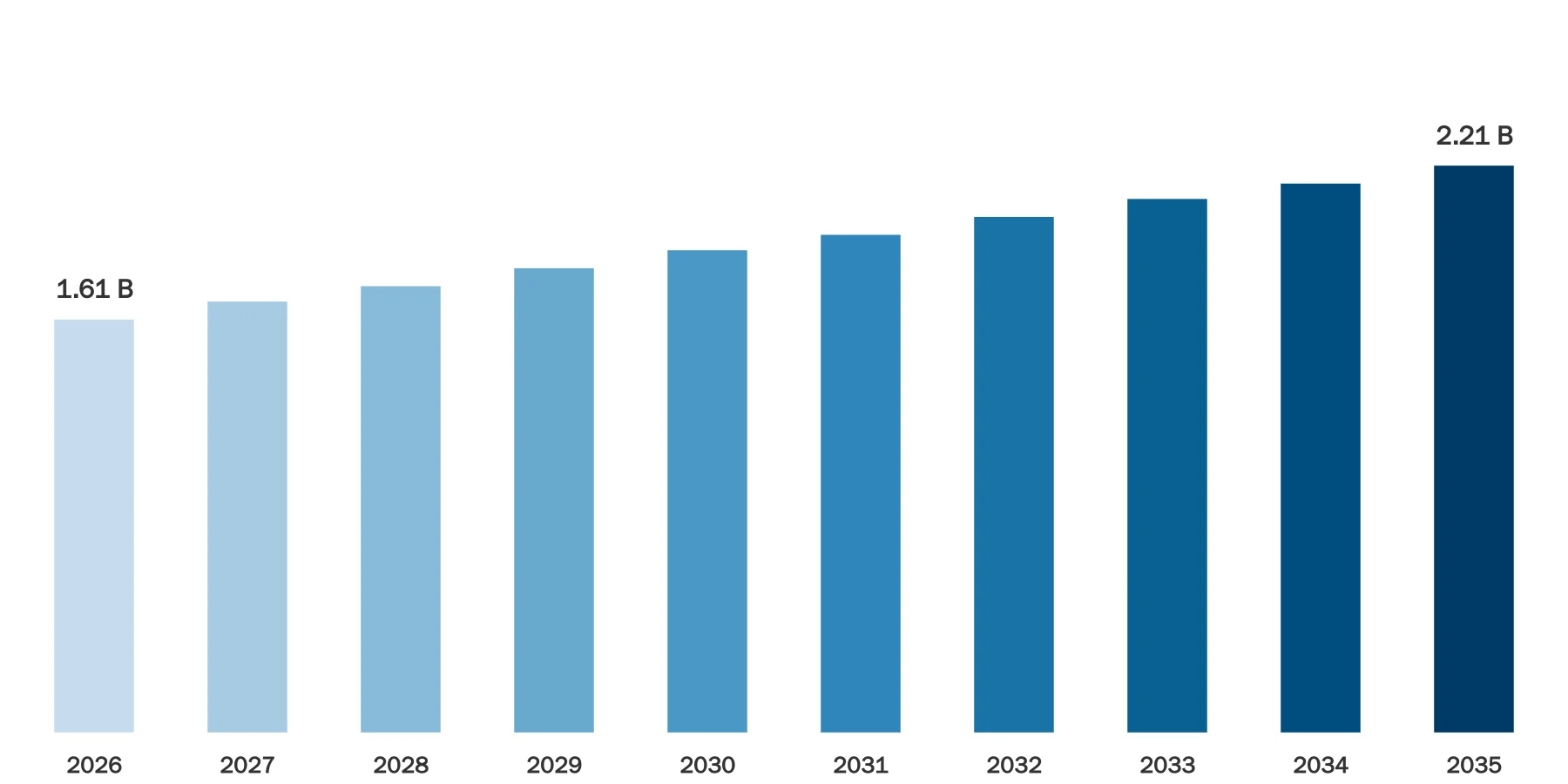
Source: Econ Market Research
The market for underlayments is vital to the construction sector because it offers a base for a range of Flooring options. Underlayments improve longevity, insulation, and sound absorption in commercial, industrial, and residential environments by acting as a protective layer. The growing need for long-lasting, visually beautiful flooring options along with developments in building technologies is driving this industry. Important companies in the underlayments market provide a range of goods, such as cork, rubber, and foam underlayments, to satisfy the changing demands of the building industry for effective, high-performance flooring solutions.
Underlayments Dynamics
Increased building activity, the need for soundproofing and thermal insulation, and technical improvements are some of the reasons that are shaping the underlayments market dynamics. Underlayment material and design innovation is driven by growing customer awareness of flooring quality. Market expansion is also fueled by urbanization and the expanding Real Estate industry.
The growing popularity of eco-friendly and sustainable underlayments can be attributed to environmental concerns. High-performance underlayment usage is also influenced by strict construction requirements and regulations. To create a landscape that is sensitive to changing consumer tastes and industry trends, competitive pricing tactics and partnerships among major market participants are essential.
Underlayments Drivers
Construction Industry Expansion
The demand for trustworthy flooring solutions is greatly increased by the ongoing expansion of construction activities around the world, which is fueled by real estate and infrastructure development projects. There is a strong need in the market for long-lasting, high-performing underlayments as construction projects grow in number. The industry',s expansion guarantees a stable and expanding market presence by positioning underlayments as crucial components for future building projects in addition to driving the present market growth.
Rising Awareness of Soundproofing and Insulation
As the effects of noise and thermal efficiency become more widely recognized, underlayments are becoming a top priority for both consumers and businesses looking to improve these aspects of flooring. This increased awareness fuels the need for underlayments that provide efficient insulation and soundproofing, spurring technological and material innovation to satisfy these particular needs in both residential and commercial building projects.
Restraints:
Installation Complexity
Certain sophisticated underlayment materials might need labor-intensive installation procedures, which would provide difficulties for contractors. Widespread adoption may be discouraged by its complexity, especially in initiatives with constrained funding or schedules. Inadequate installation can lead to less-than-ideal performance, which lowers the flooring system',s overall quality. Mitigating this constraint and improving underlayment market adoption could be accomplished by streamlining installation procedures and offering thorough training.
Global Supply Chain Disruptions
The supply of raw materials and components might be disrupted by problems like transportation bottlenecks, geopolitical unrest, or natural calamities. The ability of underlayment producers to meet demand may be impacted by this volatility, which may cause manufacturing delays, higher costs, and shortages of supplies. Companies may need to invest in resilient supply chain techniques, improve inventory management, and diversify their suppliers to lessen these constraints and handle uncertainty in the global economy.
Opportunities:
Green Building Initiatives
Environmentally and energy-efficiently friendly solutions are in greater demand as sustainability becomes a top focus in the building industry. Manufacturers of underlayments can profit from this trend by creating and marketing green building standards-compliant products that are eco-friendly. This offers a way to increase market share, satisfy consumers', growing demand for environmentally friendly building methods, and improve the industry',s environmental impact all of which promote long-term growth and market relevance.
Collaboration with Architects and Designers
Underlayment producers can have an impact on product recommendations and specifications by forming alliances with experts in the design and construction fields. Companies can portray their products as creative, high-quality solutions and increase awareness and credibility by actively collaborating with architects and designers. This tactical partnership not only makes important projects possible, but it also provides a stage on which to highlight the special qualities and advantages of underlayments, which will eventually lead to a rise in market share and adoption.
Segment Overview
By Application
Based on application, the global underlayments market is divided into tile flooring, laminate flooring, hardwood flooring, carpet flooring, vinyl flooring, and others. The tile flooring category dominates the market with the largest revenue share in 2023. The purpose of underlayments for tile flooring is to give the tiles a sturdy and smooth surface. These underlayments guarantee the longevity and functionality of tile installations by providing properties like moisture resistance and sound absorption. Underlayments for laminate flooring give laminate floors solidity and support. Hardwood flooring underlayments are essential for mitigating moisture-related problems, providing acoustic insulation, and improving walking comfort. The primary goal of vinyl flooring underlayments is to give vinyl installations a steady, even surface.
By Type
Based on the type, the global underlayments market is categorized into foam, felt, polyethylene, rubber, cork, plywood, and others. Foam underlayments offer insulation and cushioning. They are often composed of polyurethane or polyethylene. Wool or recycled fibers are frequently used to make felt underlayments. They provide a sturdy foundation for flooring, excellent thermal insulation, and sound absorption.
Underlayments made of polyethylene are renowned for their longevity and resistance to moisture. Rubber underlayments are prized for their sound-absorbing capabilities, suppleness, and resistance to impacts. Cork underlayments are renowned for their inherent ability to reduce noise and are environmentally friendly.
By End-Use
Based on end-use, the global underlayments market is segmented into residential buildings and commercial buildings. The residential buildings segment dominates the underlayments market. Residential underlayments are made to specifically address the needs of residences, apartments, and other types of residential areas. Underlayments are essential for improving the comfort, lifespan, and insulation of many types of flooring in residential settings. Business underlayments are designed to satisfy the demands and obstacles of high-traffic business settings. For these underlayments to survive the rigors of high-traffic areas like offices, shops, hotels, and medical facilities, durability, impact resistance, and sound absorption are given first priority.
Underlayments Overview by Region
The global underlayments market is categorized into North America, Europe, Asia-Pacific, and the Rest of the World. Asia-Pacific emerged as the leading region, capturing the largest market share in 2023. Significant infrastructure development is taking place in nations like China and India, which is increasing demand for dependable flooring options. The expansion of the region',s economy has stimulated consumer expenditure on high-quality living environments, which has expanded the use of underlayments in both residential and commercial buildings.
Asia-Pacific has also risen to the top due to a proactive attitude to implementing contemporary building techniques and technology, with a persistent emphasis on infrastructure development and the rising acceptance of cutting-edge flooring materials. Throughout the forecast period, North America is anticipated to post a significant CAGR. The good prognosis is attributed to a thriving construction industry, heightened remodeling activity, and an increasing inclination towards high-performance flooring solutions. The market is growing as more people become aware of how important underlayments are for improving insulation and floor durability. Furthermore, a robust economy and advancements in underlayment materials and technologies foster a conducive atmosphere for long-term market growth.
Underlayment&rsquo,s Competitive Landscape
In the global underlayment&rsquo,s market, a few major players exert significant market dominance and have established a strong regional presence. These leading companies remain committed to continuous research and development endeavors and actively engage in strategic growth initiatives, including product development, launches, joint ventures, and partnerships. By pursuing these strategies, these companies aim to strengthen their market position, expand their customer base, and capture a substantial share of the market.
Underlayment&rsquo,s Market Leading Companies:
Rubber Flooring Inc.
Amorim Cork Composites S.A
Bestlaminate
Sound Seal
Koster Baucheme AG
WE Cork Inc.
Alpha Pro Tech, Ltd.
ACG Materials
TORLYS Inc, and various others.
Underlayments Recent Developments
In September 2021, The largest roofing and waterproofing manufacturer in North America, GAF, a Standard Industries subsidiary, announced that it has finalized an acquisition deal to purchase FT Synthetics, a British Columbia-based firm that makes synthetic underlayments for the steep slope roofing market.
Underlayments Market Report Segmentation
Underlayments Market Report Scope & Segmentation
| Attributes | Details |
|---|---|
Market Size (Current) | US$ 1.61 Billion in 2026 |
Market Size (Forecast) | US$ 2.21 Billion in 2035 |
Growth Rate | CAGR of 3.59% from 2026 to 2035 |
Forecast Period | 2026 – 2035 |
Base Year | 2025 |
Historical Data Available | Yes |
Regional Scope | Global |
Segments Covered | By Material
By Application
By End-User
|
Frequently Asked Questions
Common questions about this report
The study period covers historical insights and forecast projections for the period 2026-2035.
About the Author
Market research expert with years of industry experience

Dipali Bhingare serves as the Market Research Director at Econ Market Research. With a focus on translating complex global economic shifts into actionable business intelligence, she oversees the strategic direction of comprehensive market studies. Her work empowers organizations to navigate volatile industries through data-driven forecasting and deep-dive competitive analysis.
Related Reports
Explore more market insights from the same category