

Smart Elevators Market
Smart Elevators Market Size, Share, Trends, Growth, and Industry Analysis, By Solution (Control Systems, Maintenance Systems, Communication Systems), By Application (Residential, Commercial, Industrial, Institutional), Regional Analysis and Forecast Period 2026-2035
Smart Elevators Market Overview
As per Econ Market Research analysis, the Global Smart Elevators Market accounted for US$ 18.5 Billion in 2026 and is expected to surpass US$ 40.26 Billion by 2035, witnessing a CAGR of 9.02% throughout 2026–2035. The analysis is based on 2025 as the base year.
Smart Elevators Market Size 2025-2035 (USD Billion)

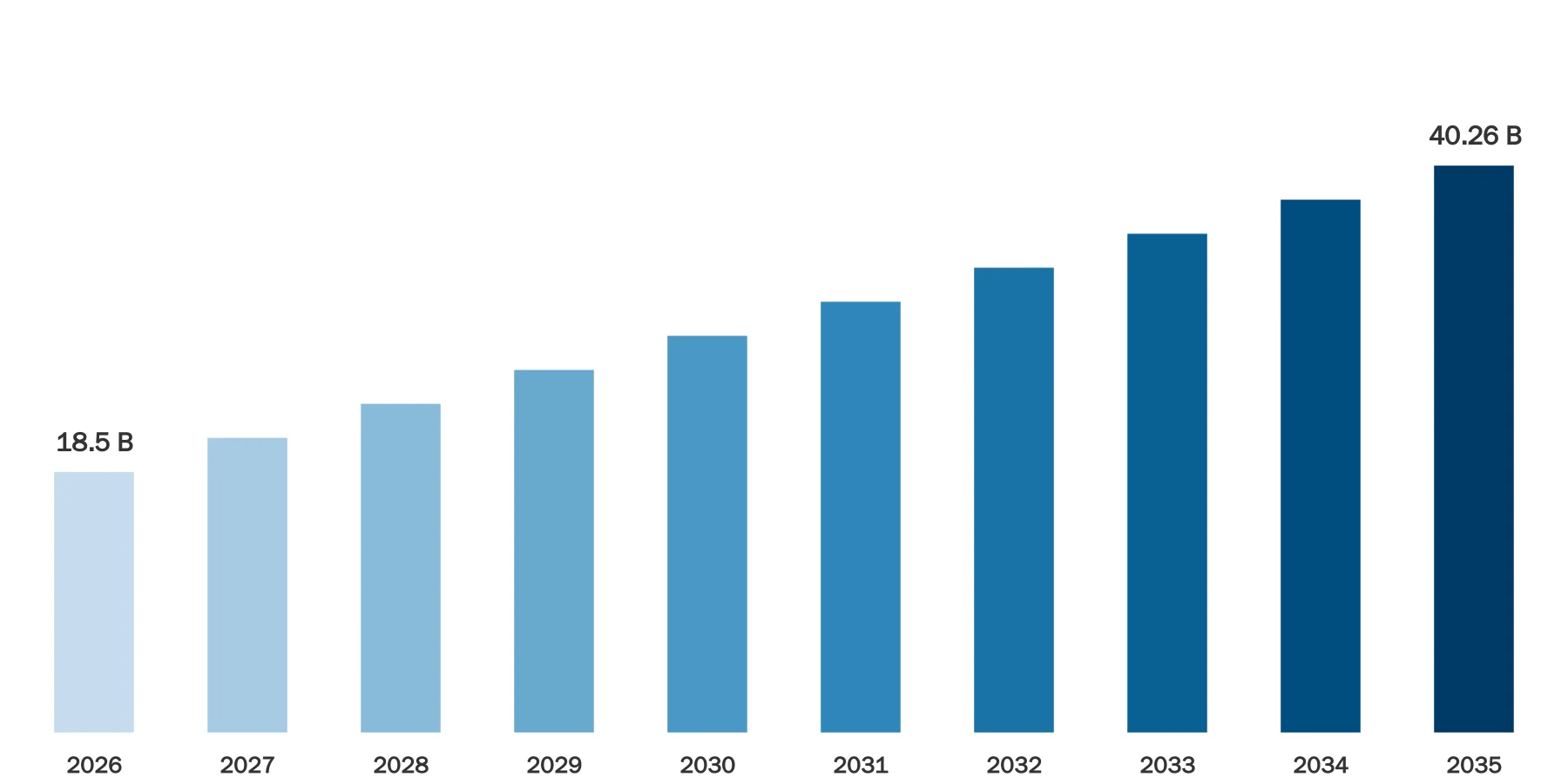
Source: Econ Market Research
Smart elevators incorporate cutting-edge features such as destination dispatch systems, Predictive Maintenance, biometric access controls, and cloud-based monitoring, which optimize performance, enhance user experience, and improve building management efficiency. These elevators utilize IoT sensors, Artificial Intelligence, and machine learning algorithms to analyse passenger traffic patterns, reduce waiting times, and minimize energy consumption, contributing to sustainable development and smart infrastructure initiatives worldwide.
The market encompasses residential, commercial, institutional, and industrial sectors, with key players continuously innovating to offer customized solutions tailored to diverse end-user requirements and regulatory standards. As smart buildings become integral components of smart cities, the global smart elevators market is poised for robust expansion, driven by rapid urbanization, burgeoning middle-class populations, and the imperative to mitigate environmental impact while ensuring seamless vertical mobility.
Smart Elevators Dynamics
Urbanization trends, particularly in emerging economies, are a primary driver as cities continue to expand vertically, creating a need for efficient vertical transportation solutions. Additionally, the growing emphasis on sustainability and energy efficiency in buildings is prompting the adoption of smart elevators equipped with features such as regenerative drives and energy-saving modes, aligning with environmental regulations and green building standards.
Technological developments also have a significant impact on market dynamics, for example, the combination of cloud computing, data analytics, and IoT sensors allows for remote monitoring, predictive maintenance, and customised user experiences. Through the analysis of passenger traffic patterns and the optimisation of lift dispatching systems to reduce wait times and increase operational efficiency, the convergence of artificial intelligence and machine learning algorithms improves lift performance. Furthermore, the integration of biometric access controls, destination control systems, and real-time communication features in smart lifts is being driven by the growing emphasis on safety and security in buildings. This is improving building security protocols and passenger safety.
Smart Elevators Drivers
Urbanization and Infrastructure Development:
One of the major factors propelling the global market for smart lifts is the speed at which urbanisation is occurring, especially in emerging markets. Effective vertical transport systems are becoming more and more necessary as cities grow vertically to accommodate expanding populations and constrained horizontal space. Smart lifts optimise space utilisation, lessen traffic, and enhance mobility within high-rise buildings, providing answers to the problems brought about by urbanisation. The need for smart lift solutions is also fuelled by infrastructure development initiatives like smart city programmes, which highlight the significance of technologically advanced and sustainable vertical transportation.
Technological Advancements and Innovation:
The market for smart lifts is driven by innovation due to ongoing technological advancements. Real-time monitoring, personalised user experiences, and predictive maintenance are made possible by the integration of artificial intelligence (AI), data analytics, and Internet of Things (IoT) sensors. These innovations support sustainability objectives and legal requirements by improving energy efficiency, enhancing safety and security features, and optimising lift performance. Furthermore, developments in materials science and engineering lead to the creation of lift components that are stronger, lighter, and more energy-efficient, making it easier to install smart lifts in both new construction and retrofit projects.
Restraints:
The high initial investment costs related to installation and integration are one of the main obstacles impeding the widespread adoption of smart lifts. Modern technologies necessitate large upfront investments in hardware, software, and infrastructure, such as cloud-based systems, IoT sensors, and AI algorithms. The labour and disruption required to retrofit existing buildings with smart lift solutions can be substantial, which raises the adoption cost overall. Therefore, financial limitations and other costs may discourage developers and building owners from investing in smart lift upgrades, particularly in areas with scarce financial resources or unstable economic conditions.
Complex Regulatory Compliance and Standards:
Compliance with complex regulatory requirements and standards poses another restraint to the smart elevators market. Building codes, safety regulations, and accessibility standards vary across different regions and jurisdictions, requiring elevator manufacturers and developers to navigate a labyrinth of regulatory frameworks. Ensuring compliance with evolving regulations and obtaining necessary certifications can add complexity to product development and deployment processes, potentially delaying time-to-market and increasing project costs. Moreover, discrepancies in regulatory requirements between countries or regions may create challenges for multinational companies operating in diverse markets, necessitating careful coordination and adaptation of smart elevator solutions to local regulatory contexts.
Opportunities:
Emerging Trends in Smart Building Integration
There are many opportunities to integrate smart lifts into larger smart building ecosystems as a result of the convergence of smart technologies and the Internet of Things (IoT). The smooth integration of lift systems with building management platforms, HVAC systems, lighting controls, and security systems is made possible by cooperative efforts between lift manufacturers, building automation providers, and software developers. Building owners and occupants alike will benefit from this integration',s increased operational efficiency, streamlined Facility Management procedures, and actionable insights into building performance.
Segment Overview
By Setup
The setup segment of the smart elevators market encompasses three distinct categories: new deployment, modernization, and maintenance. New deployment involves the installation of smart elevator systems in newly constructed buildings, meeting the demand for innovative vertical transportation solutions in modern infrastructure projects. Modernization entails the upgrading of existing elevator systems with advanced technologies to enhance performance, safety, and energy efficiency, catering to the needs of building owners seeking to optimize the value and functionality of their properties. Maintenance services focus on ensuring the smooth operation and longevity of smart elevator systems through preventive maintenance, repair, and upgrade solutions, maximizing uptime and return on investment for building operators.
By Application
Regarding installation, the market is divided into low &, mid-rise and high-rise segments. Low &, mid-rise installations are tailored for buildings with fewer floors, offering efficient vertical mobility solutions for residential complexes, educational institutions, and small commercial buildings. High-rise installations, on the other hand, address the unique challenges of tall buildings and skyscrapers, requiring advanced elevator technologies and control systems to manage passenger traffic, optimize energy usage, and ensure safety in densely populated urban environments.
By Carriage Type
In terms of carriage type, the smart elevators market includes passenger and freight segments. Passenger elevators provide convenient vertical transportation for individuals within buildings, featuring various configurations and capacities to accommodate diverse occupancy needs in residential, commercial, and institutional settings. Freight elevators, designed for the transportation of heavy goods and materials, support logistics and industrial operations by offering robust construction, high load capacities, and customizable configurations to facilitate the movement of cargo within warehouses, factories, and industrial facilities.
By Application
By Application, the market is segmented by application into residential, commercial, and industrial categories. Residential applications focus on providing comfortable and efficient vertical mobility solutions for apartment buildings, condominiums, and housing complexes. Commercial applications encompass office buildings, hotels, shopping malls, and other commercial facilities requiring reliable and high-performance elevator systems to meet the demands of occupants and visitors. Industrial applications cater to warehouses, manufacturing plants, and distribution centers, where freight elevators play a critical role in supporting material handling and logistics operations.
Smart Elevators Overview by Region
North America stands as a prominent market driven by technological innovation, stringent building codes, and a focus on sustainability. The region',s mature construction industry and high demand for smart building solutions contribute to the adoption of advanced elevator technologies, particularly in commercial and institutional sectors. Europe follows suit with a strong emphasis on energy efficiency and green building practices, fostering the integration of smart elevator systems into modern architectural designs and urban developments.
Asia-Pacific emerges as a key growth engine propelled by rapid urbanization, population growth, and infrastructure investments in emerging economies such as China, India, and Southeast Asian countries. The region',s burgeoning middle-class population and increasing urbanization rates drive demand for vertical transportation solutions, particularly in high-rise residential and commercial buildings. Moreover, government initiatives promoting smart city development and sustainable urban infrastructure further accelerate market growth in the Asia-Pacific region. In contrast, Latin America and the Middle East &, Africa exhibit untapped potential for smart elevator adoption, supported by urbanization trends, infrastructure investments, and rising awareness of energy efficiency and building safety standards.
Smart Elevators Market Competitive Landscape
Industry leaders such as Otis Elevator Company, KONE Corporation, Thyssenkrupp AG, and Schindler Group dominate the market with their extensive product portfolios, technological expertise, and global presence. These companies focus on research and development initiatives to innovate new smart elevator solutions that address evolving customer needs, enhance user experience, and improve operational efficiency. Additionally, strategic partnerships, mergers, and acquisitions are common strategies employed by market players to expand market share, enter new geographic regions, and diversify product offerings.
Emerging players and startups, fueled by advancements in IoT, artificial intelligence, and cloud computing technologies, contribute to market competitiveness by introducing innovative elevator solutions tailored to specific industry verticals and customer segments. Moreover, service providers play a crucial role in the competitive landscape by offering maintenance, repair, and modernization services to ensure the reliability, safety, and performance of smart elevator systems throughout their lifecycle.
Smart Elevators Market Leading Companies:
Otis Elevator Company
Schindler Group
KONE Corporation
Thyssenkrupp AG
Hitachi Ltd.
Mitsubishi Electric Corporation
Fujitec Co., Ltd.
Hyundai Elevator Co., Ltd.
Toshiba Elevators and Building Systems Corporation
Bosch Security Systems, LLC
Smart Elevators Recent Developments
April 2023, Bear Robotics introduced the Servi Lift, an elevator delivery robot tailored to fulfill last-mile delivery needs within multi-story buildings like hotels, senior living communities, ghost kitchens, hospitals, corporate campuses, and various high-rise commercial and residential properties.
Global Smart Elevators Report Segmentation
Smart Elevators Market Report Scope & Segmentation
| Attributes | Details |
|---|---|
Market Size (Current) | US$ 18.5 Billion in 2026 |
Market Size (Forecast) | US$ 40.26 Billion in 2035 |
Growth Rate | CAGR of 9.02% from 2026 to 2035 |
Forecast Period | 2026 – 2035 |
Base Year | 2025 |
Historical Data Available | Yes |
Regional Scope | Global |
Segments Covered | By Solution
By Application
|
Frequently Asked Questions
Common questions about this report
The study period covers historical insights and forecast projections for the period 2026-2035.
About the Author
Market research expert with years of industry experience

Dipali Bhingare serves as the Market Research Director at Econ Market Research. With a focus on translating complex global economic shifts into actionable business intelligence, she oversees the strategic direction of comprehensive market studies. Her work empowers organizations to navigate volatile industries through data-driven forecasting and deep-dive competitive analysis.
Related Reports
Explore more market insights from the same category