

Freeze Dried Fruits and Vegetables Market
Freeze Dried Fruits and Vegetables Market Size, Share, Trends, Growth, and Industry Analysis, By Type (Freeze Dried FruitsBerries, Apples, Grapes, Mango, Pineapple, Others), Freeze Dried Vegetables (Tomatoes, Peas, Beans, Corn, Carrot, Others), By Nature (Organic, Conventional), By Form (Powder & Granules, Minced & Chopped, Slice & Cubes, Others), By Distribution Channel (B2B, B2C, Hypermarkets & Supermarkets, Convenience Stores, Online, Others), Regional Analysis and Forecast Period 2026-2035
Market Overview
As per Econ Market Research analysis, Global Freeze Dried Fruits and Vegetables Market size stood at US$ 43 Billion in 2026 and is projected to reach US$ 75.29 Billion by 2035, growing at a CAGR of 6.4% over the forecast period 2026–2035. 2025 is taken as the base year.
Freeze Dried Fruits and Vegetables Market Size 2025-2035 (USD Billion)

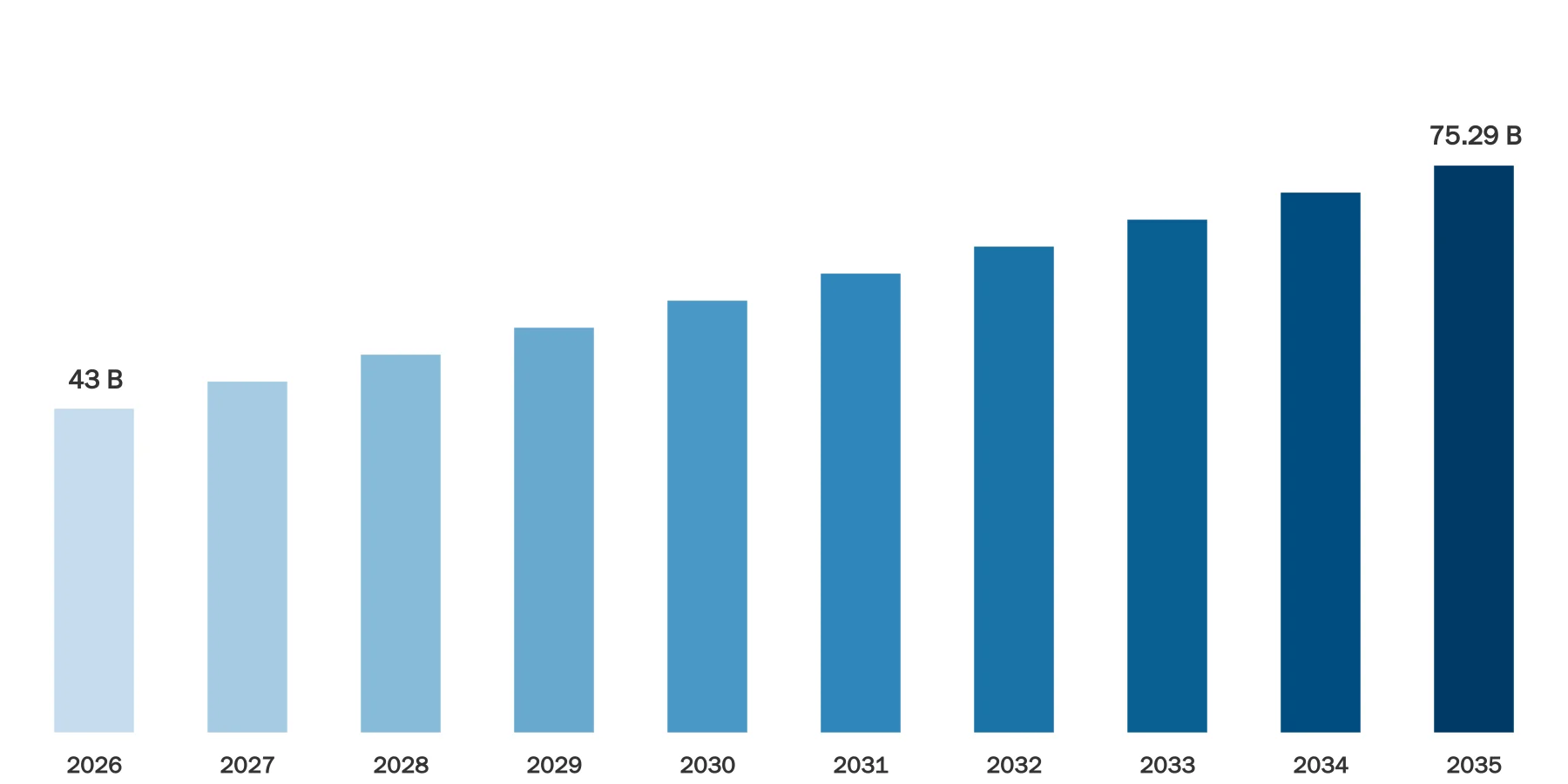
Source: Econ Market Research
The global Food Processing Technology based Freeze Dried Fruits and Vegetables Market recorded more than 52,000 metric tons of processed output in 2025, with freeze-dried fruits contributing nearly 64% of global volume demand. More than 38 countries currently operate industrial-scale freeze-drying facilities, and over 420 commercial production lines are active worldwide. Freeze-drying preserves up to 95% of vitamins, antioxidants, and minerals compared with 60%–70% retention in hot-air drying systems. Powdered and granule formats accounted for 42% of industrial ingredient demand in bakery and beverage applications. More than 58% of food manufacturers adopted freeze-dried ingredients for clean-label formulations between 2023 and 2025. Shelf life of freeze-dried products extends from 18 months to 25 years depending on packaging configuration and oxygen control systems.
The United States Freeze Dried Fruits and Vegetables Market accounts for approximately 35% of North American consumption volume, supported by over 1,200 packaged food companies using freeze-dried ingredients in cereals, snack bars, smoothies, and emergency foods. More than 72% of freeze-dried food purchases in the U.S. are linked to convenience food categories. The country operates over 85 commercial freeze-drying plants, with California, Oregon, and Washington representing nearly 48% of domestic fruit processing capacity. Online retail sales of freeze-dried snacks increased by 31% between 2023 and 2025. More than 40 million Americans participated in outdoor recreational activities in 2025, driving higher demand for lightweight freeze-dried meals and vegetables. USDA food waste reduction programs also increased adoption of shelf-stable produce technologies across institutional food supply chains.
Europe Freeze Dried Fruits and Vegetables Market represented approximately 27% of global consumption volume in 2025, with Germany accounting for nearly 26.7% of regional demand. More than 13,000 metric tons of freeze-dried fruits and vegetables are consumed annually across the European Union. Breakfast cereals, confectionery, and bakery products represent nearly 60% of industrial ingredient utilization in Europe. Organic freeze-dried product penetration exceeded 24% across Scandinavian and Western European retail chains in 2025. More than 44% of European retailers replaced synthetic additives with fruit powders derived from freeze-dried strawberries, blueberries, and raspberries. The region also reported over 150 active freeze-drying processing facilities, with Poland, Germany, France, and the Netherlands leading production capacity. Sustainability-focused packaging adoption crossed 52% among European manufacturers using freeze-dried ingredients.
Freeze Dried Fruits and Vegetables Market Latest Trends
The Freeze Dried Fruits and Vegetables Market Trends indicate rapid expansion in clean-label ingredients, plant-based formulations, and long shelf-life food solutions. More than 55% of global snack launches in 2025 included claims related to natural ingredients, while freeze-dried fruits appeared in nearly 18% of premium cereal and granola launches. Strawberry, mango, and blueberry variants represented approximately 46% of fruit-based freeze-dried product launches globally. In vegetable applications, peas, tomatoes, carrots, and corn accounted for over 51% of freeze-dried vegetable ingredient usage in soups and meal kits.
Advanced freeze-drying systems reduced energy consumption by nearly 30% compared with traditional vacuum drying systems, while hybrid infrared-assisted technologies shortened drying cycles by up to 70%. Online B2C sales of freeze-dried fruit snacks increased by 29% between 2023 and 2025, especially in North America and East Asia. Asia-Pacific accounted for nearly 38% of production capacity expansion projects during 2025, driven by China, India, Thailand, and Vietnam.
Organic freeze-dried products represented nearly 17% of total retail shelf placements in premium supermarkets during 2025. More than 62% of consumers surveyed in packaged snack categories preferred preservative-free fruit ingredients. Functional beverage manufacturers increased utilization of freeze-dried fruit powders by 33% for smoothies, protein drinks, and nutraceutical products. Emergency preparedness food kits containing freeze-dried vegetables increased procurement by 19% across government and defense agencies globally.
Freeze Dried Fruits and Vegetables Market Dynamics
The Freeze Dried Fruits and Vegetables Market Analysis shows rising adoption across packaged foods, emergency rations, Nutraceuticals, bakery products, and outdoor recreation categories. More than 72% of global freeze-dried ingredient demand originates from industrial food processing companies. Shelf stability ranging from 5 years to 25 years significantly improves inventory management for retailers and exporters. Asia-Pacific contributes nearly 38% of production capacity, while Europe accounts for approximately 27% of consumption demand. More than 65% of food manufacturers prioritize clean-label ingredients, supporting wider use of freeze-dried fruit powders and vegetable granules in beverages, snacks, and ready meals.
DRIVER
Increasing Demand for Clean-Label and Shelf-Stable Food Products
The primary Freeze Dried Fruits and Vegetables Market Growth driver is the increasing demand for preservative-free and nutrient-rich food products. Freeze-dried foods retain nearly 95% of nutrients, making them highly attractive for health-focused consumers and food manufacturers. More than 58% of packaged food companies integrated freeze-dried ingredients into reformulated product lines between 2023 and 2025. Consumer preference for shelf-stable foods increased by 34% after global supply chain disruptions impacted fresh produce availability. Breakfast cereals containing freeze-dried berries increased shelf placement by 22% across retail supermarkets in 2025. Additionally, over 40 million outdoor recreation participants in North America generated substantial demand for lightweight freeze-dried foods suitable for camping and travel applications. Food waste reduction policies in the U.S. and Europe further accelerated adoption of long-life food preservation systems.
RESTRAINT
High Energy Consumption and Processing Costs
Freeze-drying operations require advanced vacuum chambers, refrigeration units, and moisture extraction systems, creating high capital and operational costs. Industrial freeze-drying systems consume 2 to 3 times more energy than conventional hot-air drying systems. More than 48% of small food processors identified electricity and equipment maintenance costs as major barriers to adoption in 2025. Initial installation costs for medium-scale freeze-drying plants often exceed capacities affordable for regional manufacturers. Energy price fluctuations across Europe increased processing expenditures by nearly 18% between 2023 and 2025. Additionally, raw material losses during fruit sorting and pre-treatment stages can reach 12%–15%, particularly in berry processing. These factors limit market penetration among small and medium-sized food companies despite increasing demand for freeze-dried products.
OPPORTUNITY
Expansion of Functional Foods and Nutraceutical Applications
The Freeze Dried Fruits and Vegetables Market Opportunities are expanding rapidly in functional beverages, protein blends, Sports Nutrition, and nutraceutical products. More than 33% of smoothie manufacturers increased usage of freeze-dried fruit powders during 2025 due to superior nutrient retention and natural coloring properties. Freeze-dried spinach, beetroot, blueberry, and acai powders are increasingly used in antioxidant-rich formulations. Organic freeze-dried product demand increased by over 24% in premium retail chains across Europe and North America. More than 41% of nutraceutical startups launched products containing freeze-dried fruit extracts between 2024 and 2025. E-commerce sales of health-focused freeze-dried snacks rose by 31%, supported by rising vegan and plant-based food consumption. Emerging economies including India, Vietnam, and Thailand are also increasing export-oriented production capacities for freeze-dried mango, pineapple, and tropical vegetable products.
CHALLENGES
Supply Chain Volatility and Raw Material Availability
Climate variability, crop disease, and seasonal agricultural disruptions continue to challenge freeze-dried ingredient manufacturers. Fruit harvest fluctuations reduced berry processing volumes by approximately 11% in selected European regions during 2025. More than 37% of freeze-drying manufacturers depend on imported fruits and vegetables, exposing operations to logistics disruptions and freight cost volatility. Transportation delays in refrigerated supply chains increased raw material spoilage risks by nearly 9% in export-driven markets. Water scarcity and drought conditions in Southern Europe and parts of Asia affected tomato and pea cultivation volumes during recent harvest seasons. Additionally, maintaining low-moisture packaging integrity requires oxygen absorbers and multilayer barrier films, increasing packaging complexity by approximately 14% compared with standard dehydrated products.
SWOT Analysis
Strengths
Freeze-dried products retain nearly 95% of nutritional content, including vitamins and antioxidants.
Shelf life ranges between 5 years and 25 years under controlled packaging conditions.
More than 72% of industrial demand comes from packaged food manufacturers using freeze-dried ingredients.
Lightweight structure reduces transportation weight by approximately 70%–90% compared with fresh produce.
Asia-Pacific processes more than 18,000 metric tons annually, supporting global export supply chains.
Weaknesses
Industrial freeze-drying systems consume 2–3 times more energy than standard dehydration methods.
Equipment installation costs remain high for small-scale food processors.
Processing losses during fruit sorting and moisture removal can reach 15%.
Retail prices of freeze-dried snacks are often 25%–40% higher than conventional dried products.
Packaging requirements increase operational complexity due to moisture sensitivity.
Opportunities
Organic freeze-dried product demand increased by over 24% in premium retail channels.
Functional beverage applications expanded by 33% in 2025.
Online freeze-dried snack sales increased by 31% globally.
Government food waste reduction strategies support shelf-stable produce technologies.
Asia-Pacific export-oriented production expanded by nearly 49% during 2024–2025.
Threats
Climate-related crop shortages affect berry, tomato, and pea availability.
Rising electricity prices increased operational expenditures by nearly 18% in Europe.
Competing preservation technologies such as air drying and vacuum drying remain lower-cost alternatives.
Import dependency exposes manufacturers to logistics disruptions and freight volatility.
Synthetic flavor alternatives still dominate low-cost food manufacturing segments.
Segmentation Analysis
The Freeze Dried Fruits and Vegetables Industry Analysis highlights strong segmentation across product type, nature, form, and distribution channels. Fruits account for approximately 64%–80% of global volume demand, while vegetables dominate meal-kit and soup applications. Conventional products contribute more than 75% of industrial sales because of lower production costs and large-scale availability. Powder and granule formats represent over 42% of ingredient demand in beverages and bakery products. B2B channels dominate with nearly 72%–82% market participation due to high procurement volumes from packaged food manufacturers, institutional buyers, and foodservice companies.
By Type
Freeze-dried fruits dominate the Freeze Dried Fruits and Vegetables Market Share with approximately 64%–80% of total demand volume. Strawberries contribute nearly 28% of freeze-dried fruit utilization, followed by apples at 23% and mangoes at 17%. More than 25,000 metric tons of fruits were freeze dried globally during 2024. Fruit powders are extensively used in cereals, yogurt toppings, smoothies, confectionery products, and nutraceutical supplements. Tropical fruit blends experienced a 31% increase in consumer demand globally.
Freeze-dried vegetables account for approximately 36%–52% of market volume depending on regional consumption patterns. Peas contribute nearly 21% of vegetable demand, while sweet corn accounts for 15% and carrots exceed 12%. Around 14,700 metric tons of vegetables were processed into freeze-dried products during 2024. Ready-to-eat meals, soups, military rations, and emergency food kits represent major demand sectors. Tomato powders and chopped vegetables are increasingly used in sauces and seasoning formulations due to moisture stability and long storage life.
By Nature
Conventional freeze-dried products dominate the global market with approximately 75%–88% market share because of large-scale agricultural supply chains and cost-efficient processing systems. Conventional strawberries, peas, corn, and apples are widely sourced from industrial farming operations across China, the U.S., Poland, and India. More than 69% of global packaged food companies currently prefer conventional freeze-dried ingredients due to procurement stability and pricing advantages. Bulk industrial buyers account for nearly 78% of conventional ingredient purchases.
Organic freeze-dried products continue to gain traction in premium retail and nutraceutical segments. Organic product penetration exceeded 24% in premium European supermarkets during 2025. Consumer demand for pesticide-free fruit powders increased by approximately 27% in North America and Europe. Organic blueberries, raspberries, spinach, and beetroot powders are increasingly integrated into functional foods and clean-label beverages. Online sales of organic freeze-dried snacks increased by nearly 29% during 2025, supported by vegan and wellness-focused consumers.
By Form
Powder and granule formats account for approximately 42%–48% of total freeze-dried ingredient demand. Beverage powders, bakery mixes, and protein supplements are major application sectors. More than 33% of smoothie manufacturers integrated freeze-dried fruit powders into premium formulations during 2025. Strawberry, acai, blueberry, spinach, and beetroot powders are widely utilized because of color retention and antioxidant preservation.
Slices and cubes represent nearly 35% of market demand due to applications in cereals, snack packs, desserts, and retail fruit toppings. Whole and diced freeze-dried fruits are preferred for visual appeal and texture stability in packaged foods. Minced and chopped vegetable formats are increasingly used in soups, noodles, and meal kits. More than 18% of instant food manufacturers adopted chopped freeze-dried vegetables between 2023 and 2025. Flexible pouch packaging and oxygen-Barrier Systems improved product stability by approximately 22% for sliced and cubed formats.
By Distribution Channel
B2B channels dominate the Freeze Dried Fruits and Vegetables Market Size with approximately 72%–82% share. Food processing companies, bakery manufacturers, beverage producers, and institutional buyers procure freeze-dried ingredients in bulk volumes exceeding several thousand metric tons annually. More than 60% of freeze-dried fruit powder demand originates from industrial beverage and confectionery manufacturers. Foodservice and airline catering sectors also expanded freeze-dried ingredient procurement by approximately 14% during 2025.
B2C channels continue to grow because of rising online retail and health-focused snack demand. Supermarkets and hypermarkets account for nearly 55% of consumer retail distribution. Online retail platforms recorded a 31% increase in freeze-dried snack purchases between 2023 and 2025. Convenience stores expanded shelf placement of freeze-dried fruit packs by approximately 18% in urban markets. Subscription snack boxes and direct-to-consumer health brands further accelerated retail visibility of freeze-dried fruits and vegetables globally.
Regional Analysis
North America leads premium packaged food adoption and accounts for over 35% of global demand.
Europe contributes nearly 27% of consumption volume with strong clean-label food trends.
Asia-Pacific dominates production with approximately 38% market share.
Middle East & Africa remain import-dependent, accounting for nearly 7%–9% of global consumption.
North America
North America represents one of the largest Freeze Dried Fruits and Vegetables Market regions, accounting for approximately 35% of global market share in 2025. The United States contributes the majority of regional demand due to high consumption of convenience foods, cereals, meal kits, and nutraceutical products. More than 72% of freeze-dried food purchases in the region originate from packaged food applications. Outdoor recreation industries involving over 40 million participants also support substantial demand for lightweight freeze-dried meals and snacks.
More than 85 industrial freeze-drying facilities operate across the U.S. and Canada. California, Oregon, and Washington represent nearly 48% of North American fruit-processing capacity. Freeze-dried strawberries, blueberries, apples, and sweet corn dominate regional product demand. E-commerce purchases of freeze-dried snack products increased by approximately 31% between 2023 and 2025. Government-supported food waste reduction strategies also accelerated adoption of shelf-stable produce preservation technologies. Emergency food preparedness programs increased procurement volumes of freeze-dried vegetables by nearly 19% in institutional supply chains.
Europe
Europe accounts for approximately 27% of global Freeze Dried Fruits and Vegetables Market demand and consumes between 13,000 and 14,000 metric tons annually. Germany contributes around 26.7% of regional consumption, followed by France, the Netherlands, Poland, and the United Kingdom. More than 150 freeze-drying facilities currently operate across Europe. Breakfast cereals, bakery products, and confectionery applications represent nearly 60% of ingredient utilization.
Organic freeze-dried product demand remains strong across Scandinavia and Western Europe, where premium supermarkets allocate over 24% of shelf space to organic fruit and vegetable products. More than 44% of retailers replaced synthetic food coloring agents with freeze-dried fruit powders between 2023 and 2025. Sustainability-focused packaging adoption crossed 52% among manufacturers using freeze-dried ingredients. Climate-related disruptions in Southern Europe increased demand for long shelf-life vegetable products including tomatoes, peas, and carrots. Retail demand for vegan and plant-based foods also accelerated freeze-dried vegetable utilization in soups, meal kits, and ready-to-eat foods.
Asia-Pacific
Asia-Pacific dominates the Freeze Dried Fruits and Vegetables Market Outlook with approximately 38% of global production capacity. China accounts for nearly 35%–41% of regional production, followed by India at 29% and Thailand at 18%. More than 18,000 metric tons of freeze-dried products are processed annually across the region. Over 50 large-scale freeze-drying companies currently operate in Asia-Pacific.
Export-oriented manufacturing increased by approximately 49% during 2024–2025 as demand from North America, Europe, and Japan expanded. China, India, Vietnam, and Thailand continue to strengthen agricultural supply chains for mangoes, pineapples, berries, and vegetable products. Domestic demand also increased significantly due to rising urbanization and packaged food consumption. Japan and South Korea recorded approximately 31% growth in freeze-dried snack consumption. India emerged as one of the fastest-growing production hubs due to expanding fruit cultivation and lower labor costs. E-commerce penetration across urban Asian markets further accelerated sales of premium freeze-dried fruit snacks and powdered beverage ingredients.
Middle East & Africa
Middle East & Africa account for approximately 7%–9% of global Freeze Dried Fruits and Vegetables Market Share. The region consumes roughly 4,000–4,500 metric tons annually, with over 65% of products imported from Asia-Pacific and Europe. The UAE contributes nearly 41% of regional consumption, driven by premium retail, airline catering, and hospitality sectors.
Modern trade and e-commerce channels represent approximately 35% of household purchases across the region. Freeze-dried fruit blends and vegetable powders are increasingly used in bakery mixes, beverages, and ready meals. South Africa produces around 1,800 metric tons of freeze-dried vegetables annually, particularly peas and carrots. Foodservice procurement volumes increased by approximately 28% during 2025 due to growth in vegan restaurants and international tourism. Emergency food stockpiling and defense-sector procurement also contributed to regional demand growth for long shelf-life food products. Rising urban populations and increasing supermarket penetration continue to support wider adoption of freeze-dried fruit snacks and convenience foods.

Competitive Landscape
The Freeze Dried Fruits and Vegetables Market Research Report highlights strong competition among multinational food ingredient manufacturers, specialized freeze-drying companies, and regional processors. More than 420 industrial freeze-drying production lines are active globally, while over 50 large-scale manufacturers operate in Asia-Pacific alone. Companies compete through product diversification, organic certifications, energy-efficient drying technologies, and export-oriented production expansion.
Leading manufacturers prioritize freeze-dried berries, tropical fruits, vegetable powders, and customized ingredient blends for industrial food processors. More than 62% of product launches between 2023 and 2025 focused on clean-label and plant-based formulations. Companies also increased investments in oxygen-barrier packaging and nitrogen flushing systems to extend shelf life beyond 24 months. Strategic partnerships with cereal, beverage, and nutraceutical manufacturers remain a major competitive strategy.
European and North American companies dominate premium organic product segments, while Asian manufacturers lead bulk export production due to lower processing costs and agricultural availability. Technological advancements reduced energy consumption by approximately 30% in modern freeze-drying systems, enabling improved operational efficiency. Mergers, capacity expansions, and direct-to-consumer retail strategies continue to reshape competitive positioning within the Freeze Dried Fruits and Vegetables Industry Report.
List of Top Freeze Dried Fruits and Vegetables Companies
Nestlé
Asahi Group Holdings, Ltd.
European Freeze Dry
The Greenyard Group
Döhler Group
Van Drunen Farms
Wise Company (ReadyWise)
OFD Foods, Inc. (formerly Oregon Freeze Dry)
Harmony House Foods, Inc.
Mercer Foods, LLC
Paradise Fruits Solutions GmbH & Co. KG
Leading Companies by Market Share
Nestlé and Döhler Group remain among the leading companies by market share due to extensive ingredient sourcing networks, global distribution systems, and diversified freeze-dried product portfolios. Nestlé operates manufacturing and sourcing networks across more than 180 countries and utilizes freeze-dried fruit ingredients extensively in cereals, beverages, and confectionery products. Döhler Group maintains strong market penetration in natural ingredient solutions, supplying fruit powders and vegetable ingredients to more than 130 countries. Both companies continue to invest in clean-label innovation, sustainable sourcing, and advanced processing systems to support industrial-scale demand.
Market Investment Outlook
The Freeze Dried Fruits and Vegetables Market Forecast indicates strong investment activity in production expansion, automation, and export-oriented processing infrastructure. Asia-Pacific accounted for approximately 38% of new freeze-drying capacity additions during 2025. More than 50 industrial facilities expanded processing lines for mangoes, pineapples, berries, tomatoes, and peas across China, India, Thailand, and Vietnam.
Investments in energy-efficient freeze-drying technologies increased significantly as modern systems reduced power consumption by approximately 30%. Manufacturers are prioritizing hybrid infrared and ultrasound-assisted drying systems that shorten processing cycles by nearly 70%. Food ingredient suppliers also increased investments in organic certifications and traceability systems to support premium retail and nutraceutical applications.
E-commerce growth created additional opportunities for direct-to-consumer freeze-dried snack brands. Online sales expanded by approximately 31% between 2023 and 2025, especially in North America and East Asia. Governments and institutional buyers also increased procurement of freeze-dried food reserves for emergency preparedness and military applications. More than 19% growth in emergency ration purchases was recorded globally during 2025. Export-focused agricultural economies including India and Vietnam continue attracting investment due to lower labor costs and abundant fruit cultivation capacity.
New Product Development
Freeze Dried Fruits and Vegetables Market Innovations are increasingly focused on functional nutrition, clean-label ingredients, and premium snack products. More than 62% of new launches between 2023 and 2025 featured natural fruit powders, vegetable blends, or plant-based snack formulations. Freeze-dried strawberry and blueberry powders experienced approximately 33% growth in beverage applications, particularly in smoothies, protein shakes, and nutraceutical products.
Manufacturers introduced mixed tropical fruit snack packs containing mango, pineapple, dragon fruit, and banana slices to target health-conscious consumers. Vegetable ingredient companies also launched freeze-dried spinach, kale, beetroot, and carrot powders for use in sports nutrition and vegan foods. More than 18% of instant noodle and soup manufacturers adopted chopped freeze-dried vegetables during 2025 to improve shelf stability and flavor retention.
Packaging innovation remains a major development area. Oxygen-barrier pouches and resealable multilayer packaging improved product shelf life by approximately 22%. Smart moisture-control packaging systems are increasingly used in export shipments to preserve texture and nutrient stability. Companies are also developing sugar-free and additive-free snack ranges to align with clean-label consumer preferences. Freeze-dried fruit inclusions in confectionery and bakery products expanded by nearly 26% globally during 2025.
Recent Developments
In 2025, multiple Asian manufacturers expanded freeze-drying capacities by approximately 38% to support export demand from North America and Europe.
During 2024, advanced freeze-drying technologies reduced industrial energy consumption by nearly 30% and shortened drying cycles by up to 70%.
European retailers increased replacement of synthetic food additives with freeze-dried fruit powders by approximately 44% in 2025.
Online sales of freeze-dried snack products increased by approximately 31% globally between 2023 and 2025 due to rising direct-to-consumer demand.
Emergency preparedness and institutional food procurement programs increased purchases of freeze-dried vegetables and meals by nearly 19% during 2025.
Report Coverage of Freeze Dried Fruits and Vegetables Market
The Freeze Dried Fruits and Vegetables Market Report covers comprehensive analysis of production capacity, consumption patterns, technology advancements, distribution channels, and regional demand trends across North America, Europe, Asia-Pacific, and Middle East & Africa. The report evaluates more than 420 industrial production lines and over 50 large-scale processing companies operating in Asia-Pacific alone.
The study includes segmentation by type, nature, form, and distribution channel. Freeze-dried fruits account for approximately 64%–80% of total demand, while vegetables contribute significantly to meal-kit and soup applications. Conventional products dominate with over 75% market share, while organic products continue expanding in premium retail channels. Powder and granule formats represent approximately 42%–48% of industrial ingredient demand.
The report further analyzes foodservice, bakery, nutraceutical, beverage, and emergency food applications. Regional analysis highlights North America holding approximately 35% market share, Europe contributing around 27% of consumption volume, and Asia-Pacific leading production with nearly 38% share. Competitive landscape analysis profiles major manufacturers, technology adoption rates, processing efficiency improvements, export patterns, and packaging innovations shaping the Freeze Dried Fruits and Vegetables Market Outlook.
Freeze Dried Fruits and Vegetables Market Report Scope & Segmentation
| Attributes | Details |
|---|---|
Market Size (Current) | US$ 43 Billion in 2026 |
Market Size (Forecast) | US$ 75.29 Billion in 2035 |
Growth Rate | CAGR of 6.4% from 2026 to 2035 |
Forecast Period | 2026 – 2035 |
Base Year | 2025 |
Historical Data Available | Yes |
Regional Scope | Global |
Segments Covered | By Type
By Nature
By Form
By Distribution Channel
|
Frequently Asked Questions
Common questions about this report
The study period covers historical insights and forecast projections for the period 2026-2035.
About the Author
Market research expert with years of industry experience

Related Reports
Explore more market insights from the same category