

Truffle Market
Truffle Market Size, Share, Trends, Growth, and Industry Analysis, By Product (Black Truffles, White Truffles, Others), By Nature (Organic, Conventional), By Form (Fresh, Processed), By Distribution Channel (B2B, B2C), By End-Use (Food & Beverages, Cosmetics & Personal Care Products, Pharmaceuticals), Regional Analysis and Forecast Period 2026-2035
Truffle Market Overview
As per Econ Market Research analysis, the Global Truffle Market valuation stood at US$ 773.84 Million in 2026 and is expected to reach US$ 1456.66 Million by 2035, growing at a steady CAGR of 7.3% from 2026 to 2035. 2025 serves as the base year.
Truffle Market Size 2025-2035 (USD Million)

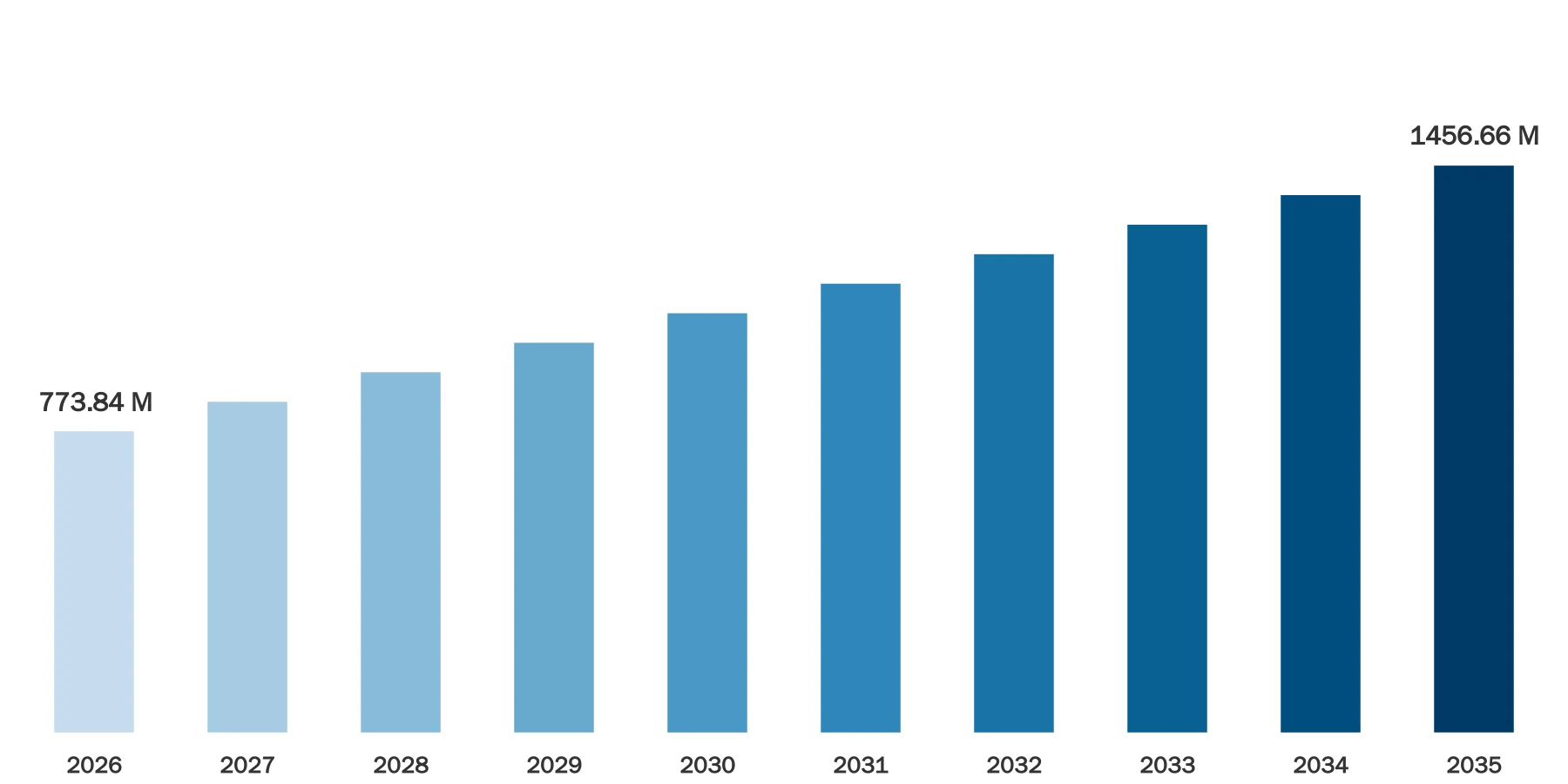
Source: Econ Market Research
The truffle market represents a niche segment of the global gourmet food industry, with approximately 1,200–1,500 metric tons of truffles harvested annually worldwide. Key producing countries include France (30%), Italy (25%), and Spain (20%), contributing nearly 75% of global supply. Black truffles (Tuber Melanos porum) account for nearly 60% of total volume, while white truffles (Tuber magnatum) contribute around 20%–25%. Truffles require specific soil pH levels between 7.5 and 8.3 and symbiotic growth with host trees like oak and hazelnut, with maturation periods ranging from 5 to 10 years.
The USA truffle market has expanded cultivation across 14 states, including Oregon, California, and North Carolina, with an estimated annual production of 20–25 metric tons. Oregon alone contributes nearly 80% of domestic production, particularly Oregon black truffles. The USA imports over 70% of its truffle consumption, mainly from Italy and France, with seasonal demand peaking between November and February. Approximately 2,500+ acres of truffle orchards have been established in the USA, with yields averaging 20–40 kg per hectare after maturity, supporting a growing domestic supply chain.
Market Latest Trends
The truffle market is witnessing evolving consumption patterns, with gourmet restaurants accounting for nearly 65% of total demand, followed by retail consumers at 25% and food processing industries at 10%. Digital sales channels have increased by approximately 35% between 2022 and 2024, driven by premium food e-commerce platforms. White truffles can reach prices exceeding $3,000 per kg during peak scarcity periods, while black truffles average between $800 and $1,500 per kg depending on quality and origin.
Sustainable cultivation practices have grown significantly, with over 40% of new truffle farms adopting organic methods. Climate-controlled truffle farming technologies are being implemented in over 18 countries, improving yield consistency by nearly 25%. Additionally, truffle-infused products such as oils, salts, and sauces have expanded their market presence by 30% in the last 3 years, targeting mid-tier consumers. The integration of AI-based soil monitoring systems has improved truffle orchard productivity by 15–20%, particularly in Europe and North America.
Market Dynamics
DRIVER
Increasing Demand for Gourmet and Luxury Foods
The primary driver of the truffle market is the increasing global demand for premium and gourmet food products, with luxury dining establishments growing by 12% annually in urban regions. Truffles are used in over 45% of Michelin-starred restaurant menus, significantly boosting demand. The global fine dining industry serves over 200 million customers annually, with truffle-based dishes accounting for nearly 8–10% of premium menu items. Rising disposable incomes in regions like Asia-Pacific have increased luxury food consumption by 18% between 2021 and 2024, supporting truffle demand. Additionally, culinary tourism has grown by 25% globally, with truffle hunting experiences attracting over 500,000 tourists annually.
RESTRAINT
Limited Supply Due to Complex Cultivation Requirements
The truffle market faces supply constraints due to its dependency on precise environmental conditions, with only 1% of global agricultural land suitable for truffle cultivation. The cultivation cycle ranges from 5 to 10 years, delaying returns and discouraging small-scale farmers. Climate variability has reduced yields by 15–20% in certain European regions over the last decade. Additionally, natural truffle production accounts for nearly 70% of supply, making the market highly vulnerable to seasonal fluctuations. Soil degradation and deforestation have impacted approximately 12% of traditional truffle-growing areas, further restricting supply availability.
OPPORTUNITY
Expansion of Cultivated Truffle Farms
The expansion of cultivated truffle farms presents a significant opportunity, with global truffle plantations increasing by 22% between 2020 and 2024. Countries such as China, Australia, and Chile have collectively developed over 10,000 hectares of truffle orchards. Australia alone produces approximately 15 metric tons annually, accounting for nearly 5% of global supply. Advances in inoculated seedlings have improved success rates from 30% to 65% over the past decade. The adoption of controlled irrigation systems has enhanced productivity by 20%, enabling year-round harvesting in some regions.
CHALLENGES
High Price Volatility and Authentication Issues
The truffle market faces challenges related to price volatility, with seasonal price fluctuations reaching up to 300% between peak and off-peak periods. Counterfeit truffle products represent nearly 15% of global trade, particularly in processed truffle oils and sauces. Authentication technologies such as DNA testing are used in less than 25% of transactions, increasing the risk of fraud. Additionally, the perishability of fresh truffles, which have a shelf life of only 7–10 days, results in post-harvest losses of approximately 10–15%. Logistics challenges further increase costs, especially for exports exceeding distances of 5,000 km.
SWOT Analysis
Strengths
High market value per kg ranging between $800 and $3,000, ensuring premium positioning
Strong demand in over 70 countries, particularly in luxury food segments
Limited global production of 1,500 metric tons annually, maintaining exclusivity
Long-term orchard productivity of up to 30 years after establishment
Weaknesses
Long cultivation cycle of 5–10 years delays profitability
Dependence on specific soil pH levels between 7.5–8.3
Limited shelf life of 7–10 days, increasing wastage
High initial investment costs exceeding $10,000 per hectare
Opportunities
Expansion into emerging markets with demand growth of 15–20%
Increase in truffle-based processed products by 30% growth rate
Adoption of technology improving yields by 20%
Rising organic farming adoption at 40% of new plantations
Threats
Climate change affecting 20% of traditional production zones
Counterfeit products accounting for 15% of market volume
Supply chain disruptions impacting 25% of exports annually
Price fluctuations exceeding 300% seasonally
Segmentation Analysis
The truffle market segmentation is primarily based on product type and nature, with black truffles dominating at approximately 60% market share, followed by white truffles at 25%, and other varieties at 15%. By nature, conventional truffles hold around 70% share, while organic truffles account for 30%, reflecting growing consumer preference for chemical-free products.
By Product
Black Truffles
Black truffles account for nearly 60% of global production, with annual volumes exceeding 800 metric tons. France produces approximately 50% of global black truffles, while Spain contributes around 35%. Black truffles are widely used in culinary applications due to their relatively stable supply and price range of $800–$1,500 per kg. Their cultivation success rate is approximately 60%, making them more accessible compared to white truffles. Demand from restaurants accounts for 70% of black truffle consumption.
White Truffles
White truffles represent around 20–25% of the market, with annual production limited to 300–350 metric tons. Italy dominates production with nearly 80% share, particularly from the Piedmont region. Prices can exceed $3,000 per kg during peak demand periods. White truffles have a shorter harvesting window of approximately 8–10 weeks, contributing to supply scarcity. Approximately 90% of white truffles are harvested from wild sources, increasing their exclusivity.
Others
Other truffle varieties, including summer truffles and burgundy truffles, account for nearly 15% of total production, with volumes of around 200 metric tons annually. These truffles are priced lower, averaging $300–$600 per kg, making them accessible to mid-tier consumers. Cultivation has expanded across 20+ countries, including China and Australia, which collectively contribute nearly 40% of this segment.
By Nature
Organic
Organic truffles represent approximately 30% of the market, with cultivation areas exceeding 5,000 hectares globally. Organic certification has increased consumer demand by 18% over the past 3 years, particularly in Europe and North America. Organic truffles command price premiums of 15–25% compared to conventional products, with yields averaging 15–25 kg per hectare.
Conventional
Conventional truffles dominate with nearly 70% market share, supported by large-scale production across 15+ countries. These truffles have higher yields of 25–40 kg per hectare due to controlled agricultural inputs. Conventional farming methods account for over 80% of exports, particularly in Europe and Asia.
Regional Analysis
The global truffle market is regionally dominated by Europe with approximately 55% market share, followed by North America at 20%, Asia-Pacific at 15%, and Middle East & Africa at 10%, reflecting production and consumption distribution.
North America
North America holds approximately 20% of the global truffle market, with the USA contributing nearly 85% of regional demand. Domestic production is estimated at 20–25 metric tons annually, while imports exceed 100 metric tons per year. Over 2,500 acres of truffle farms exist across 14 states, with Oregon producing nearly 80% of domestic output. Consumption in the foodservice sector accounts for 65%, while retail contributes 25%. Truffle-based product sales have increased by 28% between 2021 and 2024, driven by gourmet retail expansion.
Europe
Europe dominates the market with over 55% share, producing approximately 900–1,000 metric tons annually. France, Italy, and Spain collectively contribute 75% of European production. Italy alone produces around 300 metric tons, including 80% of global white truffles. France has over 20,000 hectares of truffle orchards, with annual yields averaging 30 kg per hectare. Europe exports nearly 60% of its production, supplying markets across 40+ countries. Consumption in Europe is concentrated in 5 major countries, accounting for 70% of regional demand.
Asia-Pacific
Asia-Pacific accounts for approximately 15% of the market, with China producing nearly 120–150 metric tons annually, representing 10% of global output. Australia contributes around 15 metric tons, with exports reaching over 20 countries. Japan and South Korea have seen demand growth of 18% annually, driven by luxury dining trends. Truffle imports in Asia-Pacific exceed 80 metric tons annually, with consumption concentrated in urban areas with populations exceeding 5 million.
Middle East & Africa
The Middle East & Africa region holds around 10% market share, with demand concentrated in countries like UAE and Saudi Arabia, accounting for 60% of regional consumption. Desert truffles contribute approximately 50–70 metric tons annually, primarily harvested in North Africa. Imports of European truffles have increased by 22% between 2022 and 2024, supporting luxury hospitality sectors. The region hosts over 1,000 high-end restaurants, with truffle usage present in 30% of premium menus.
Competitive Landscape
The truffle market is highly fragmented, with over 200 active companies globally involved in cultivation, distribution, and processing. Top companies collectively account for approximately 40–45% of global supply, while small-scale producers represent 55–60%. Europe hosts over 120 major truffle companies, followed by North America with around 40 companies. Vertical integration strategies have increased by 25%, with companies managing both cultivation and distribution channels. Private label truffle products have grown by 20%, particularly in retail segments. Strategic partnerships between producers and gourmet food brands have increased by 15%, enhancing global distribution networks.
List of Top Truffle Companies
Arotz, SA
Gazzarrini Tartufi
TruffleHunter, Inc.
Urbani Truffles
SABATINO NA LLC
LES FRÈRES JAUMARD
The Welsh Truffle Co.
PLANTIN Truffles
Truffle Hill
Tartufi Morra
Angellozzi Tartuficoltura
Great Southern Truffles
BLACK BOAR TRUFFLE
Trufo
OLD WORLD TRUFFLES
Leading Companies by Market Share
Urbani Truffles holds approximately 12–15% of global distribution volume, supplying truffles to over 70 countries and managing logistics across 5 continents. SABATINO NA LLC accounts for nearly 8–10% of market share, distributing products across 30+ countries and maintaining partnerships with over 500 restaurants globally.
Market Investment Outlook
Investment in the truffle market has increased significantly, with over $200 million equivalent capital deployed globally between 2020 and 2024 in plantation development and processing facilities. Approximately 10,000 hectares of new truffle farms have been established worldwide, particularly in Australia, Chile, and China. Venture capital investments in agri-tech solutions for truffle cultivation have increased by 18% annually, focusing on soil monitoring and irrigation systems. Average investment per hectare ranges between $8,000 and $15,000, with yield potential reaching 30 kg per hectare after maturity. Government subsidies in Europe support nearly 25% of truffle farm development costs, encouraging expansion.
New Product Development
New product development in the truffle market has expanded into value-added products, including truffle oils, salts, sauces, and ready-to-eat meals, which now account for approximately 30% of total product offerings. Over 200 new truffle-based products were launched globally between 2022 and 2024. Truffle-infused snacks have grown by 25% in retail sales, targeting younger consumers aged 25–40 years. Freeze-dried truffles have improved shelf life from 10 days to 12 months, reducing waste by 15%. Innovations in packaging, such as vacuum sealing, have increased freshness retention by 20%, supporting international trade across distances exceeding 10,000 km.
Recent Developments
In 2023, a European producer expanded cultivation by 500 hectares, increasing annual production capacity by 20 metric tons.
In 2024, an Australian company exported truffles to over 25 countries, increasing export volume by 30%.
In 2023, a USA-based firm introduced AI-based soil sensors, improving yield efficiency by 18%.
In 2025, a global distributor launched 50+ new truffle-based products, expanding retail presence across 15 countries.
In 2024, a French cooperative increased orchard productivity by 25% through improved irrigation systems.
Report Coverage of Truffle Market
The Truffle Market Report provides detailed insights into global production volumes of approximately 1,500 metric tons annually, covering segmentation by product type, including black truffles (60% share) and white truffles (25% share). The report includes analysis of cultivation areas exceeding 30,000 hectares globally, with yield averages ranging from 20 to 40 kg per hectare. Regional coverage spans over 50 countries, highlighting key production zones in Europe, North America, and Asia-Pacific. The Truffle Industry Analysis evaluates supply chain dynamics, including post-harvest losses of 10–15% and logistics distances exceeding 5,000 km. The Truffle Market Research Report also examines technological adoption rates of 40% in modern farms, along with product innovation trends involving 200+ new launches globally.
Truffle Market Report Scope & Segmentation
| Attributes | Details |
|---|---|
Market Size (Current) | US$ 773.84 Million in 2026 |
Market Size (Forecast) | US$ 1456.66 Million in 2035 |
Growth Rate | CAGR of 7.3% from 2026 to 2035 |
Forecast Period | 2026 – 2035 |
Base Year | 2025 |
Historical Data Available | Yes |
Regional Scope | Global |
Segments Covered | By Product
By Nature
By Form
By Distribution Channel
By End-Use
|
Frequently Asked Questions
Common questions about this report
The study period covers historical insights and forecast projections for the period 2026-2035.
About the Author
Market research expert with years of industry experience

Related Reports
Explore more market insights from the same category