

Nutraceuticals Market
Nutraceuticals Market Size, Share, Trends, Growth, and Industry Analysis, By Product Type (Dietary Supplements, Functional Foods, Functional Beverages), By Form (Capsules, Tablets, Powder, Liquid), By Distribution Channel (Specialty Stores, Supermarkets/Hypermarkets, Online Retail), Regional Analysis and Forecast Period 2026-2035
Market Overview
As per Econ Market Research analysis, the Global Nutraceuticals Market was recorded at US$ 684.92 Billion in 2026 and is projected to expand to US$ 1328.63 Billion by 2035, registering a CAGR of 7.64% over the forecast period. The base year used is 2025.
Nutraceuticals Market Size 2025-2035 (USD Billion)

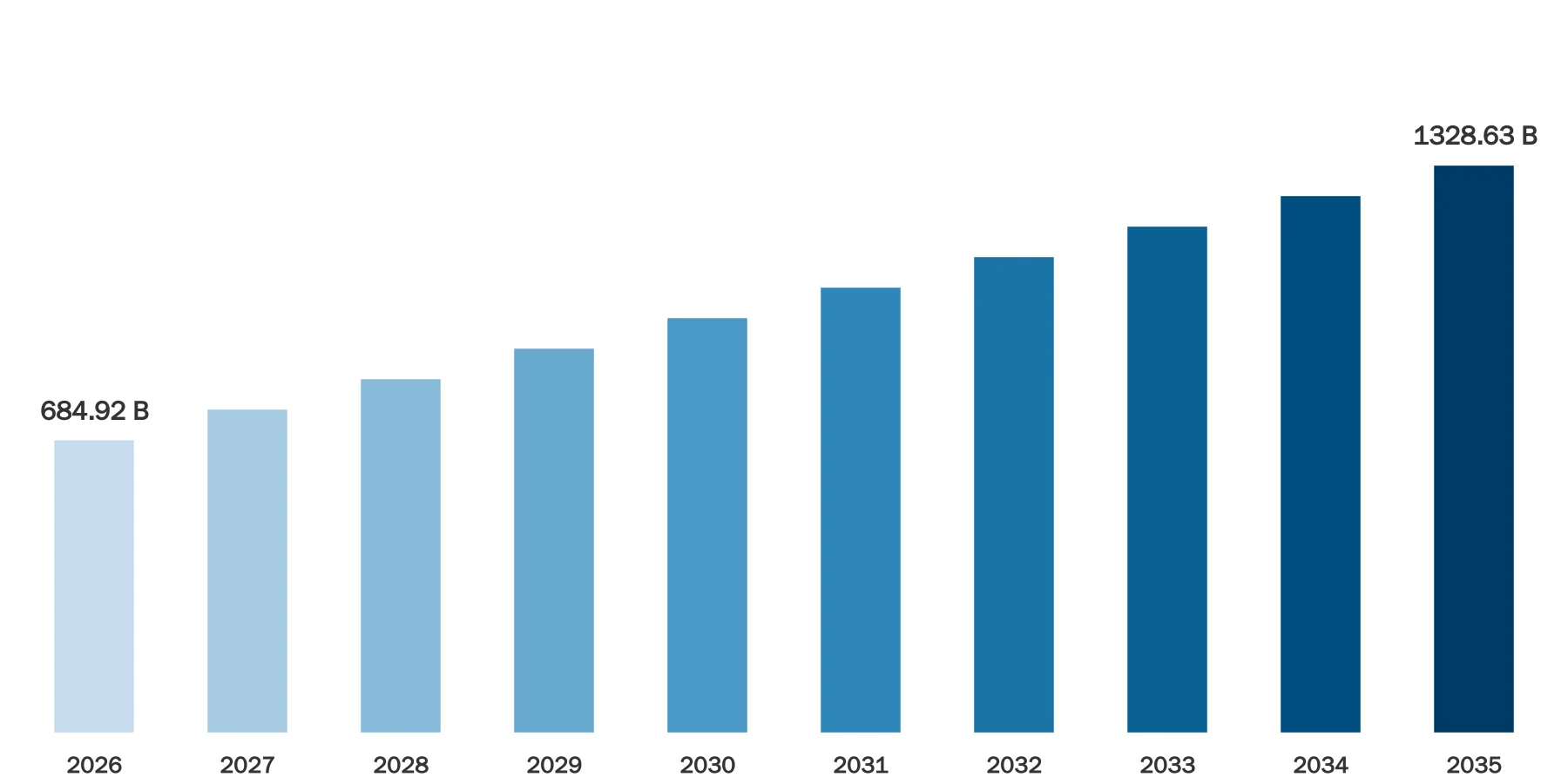
Source: Econ Market Research
Nutraceuticals products include dietary supplements, functional foods, and beverages. The market is driven by rising health consciousness among consumers seeking preventative healthcare solutions. Nutraceuticals offer various benefits such as improving digestion, boosting immunity, and promoting overall well-being. The market is predicted to develop significantly as the population ages, the prevalence of chronic diseases increases, and disposable incomes rise.
Furthermore, technological and research breakthroughs help to the development of innovative nutraceutical products, which accelerates market growth. North America and Europe now dominate the market, but emerging nations in Asia-Pacific are rapidly expanding due to shifting lifestyles and nutritional preferences. However, regulatory issues and safety concerns provide possible barriers to industry growth.
Nutraceuticals Dynamics
Consumer awareness of preventative healthcare and wellbeing has increased, driving demand for nutraceutical products. This trend in customer preferences for natural and organic products, together with the increased prevalence of lifestyle-related disorders, has fuelled market growth. Furthermore, the aging population, particularly in industrialized countries such as North America and Europe, has increased the use of nutraceuticals to address age-related health concerns and retain vitality.
Technological improvements and research in the field of nutraceuticals have resulted in the development of novel products that address specific health demands, hence boosting market growth. Furthermore, the growing middle-class population in emerging economies, along by increased disposable incomes and changing dietary patterns, creates profitable prospects for market players to capitalize on. However, regulatory challenges and safety concerns regarding the efficacy and quality of nutraceutical products remain key factors influencing market dynamics. Stricter regulations imposed by government authorities aim to ensure product safety and efficacy, but they also pose compliance challenges for manufacturers.
Nutraceuticals Drivers
Increasing Health Consciousness
The growing consumer awareness of the value of preventative healthcare and wellness is a significant driver of the nutraceuticals industry. As people become more proactive about their health, they are turning to nutraceutical products for their perceived benefits in terms of overall well-being and illness prevention. This trend is especially noticeable in developed markets such as North America and Europe, where consumers are increasingly looking for natural and organic alternatives to commercial drugs. As a result, the demand for nutraceuticals, including dietary supplements and functional foods, is gradually increasing.
Technological Advancements and Innovation
Continuous improvements in technology and research are driving innovation in the nutraceuticals market, resulting in the development of novel products with improved efficacy and functioning. From individualized nutrition solutions to innovative delivery systems like nanotechnology and encapsulation techniques, companies are continually attempting to provide products that meet the demands and tastes of their customers.
These advancements not only increase the bioavailability and effectiveness of nutraceutical substances, but they also broaden the variety of health advantages they can offer. Furthermore, technological improvements allow manufacturers to optimize manufacturing processes, cut costs, and improve product quality, thus adding to market growth.
Nutraceuticals Restraints:
Regulatory Challenges and Safety Concerns
The regulatory frameworks that regulate the nutraceuticals market vary by region and country, providing compliance and product registration problems for manufacturers. Strict laws governing labeling, claims substantiation, and ingredient safety force companies to traverse complex regulatory processes, which can delay product introductions and raise operational expenses. Furthermore, worries about the quality and safety of nutraceutical products, including issues like adulteration, contamination, and misbranding, weaken customer trust and confidence in the industry.
Limited Scientific Evidence and Standardization
Despite the increasing popularity of nutraceuticals, scientific proof for their efficacy and safety is insufficient for many products. While some components have been thoroughly researched and confirmed for their health benefits, others lack strong clinical proof to back up their claims. The lack of scientific consensus makes it difficult for consumers and manufacturers to evaluate the efficacy and value proposition of nutraceutical products. Furthermore, the lack of standardized testing methodologies and quality control mechanisms across the sector impedes efforts to maintain product consistency and reliability, raising questions regarding product efficacy and reliability.
Nutraceuticals Opportunities:
Personalized Nutrition and Functional Ingredients
The trend towards personalized nutrition presents opportunities for innovation and differentiation in the nutraceuticals market. By leveraging advances in technology, such as genetic testing, artificial intelligence, and data analytics, manufacturers can develop personalized nutrition solutions tailored to individual health profiles, genetic predispositions, and lifestyle factors.
Additionally, the growing demand for functional ingredients with specific health benefits, such as probiotics, omega-3 fatty acids, and plant-based extracts, opens up opportunities for product diversification and portfolio expansion. By incorporating these functional ingredients into their formulations, companies can cater to evolving consumer preferences for natural, clean-label products that offer targeted health benefits.
Segment Overview
By Product Type
The nutraceuticals market encompasses three main product segments: functional foods, functional beverages, and dietary supplements. Functional foods include a variety of products such as cereals, bakery and confectionary items, dairy products, snacks, and others, which are fortified with additional health-promoting ingredients to offer specific health benefits beyond basic nutrition.
Functional beverages include Energy Drinks, sports drinks, fortified juices, dairy and dairy substitute beverages, and other beverages made with nutrients or bioactive components to improve performance, energy levels, or overall health. Dietary supplements include vitamins, minerals, botanicals, enzymes, fatty acids, proteins, and other supplements that are intended to enhance the diet and address specific nutritional deficits or health issues. These product groups cater to various consumer preferences and health needs, giving a varied range of options for consumers seeking preventative healthcare solutions and wellness products.
By Distribution Channel
The nutraceuticals market is characterized by various distribution channels through which products reach consumers. Specialty stores specialize in offering a wide selection of nutraceutical products, catering to health-conscious consumers seeking specialized or niche products. Supermarkets and hypermarkets provide a convenient one-stop shopping experience, offering a range of nutraceuticals alongside other grocery items, appealing to mainstream consumers looking for convenient and accessible wellness solutions.
Convenience stores provide on-the-go solutions for consumers requiring quick and simple access to nutraceutical products, including functional beverages and snacks. Drug stores and pharmacies are trustworthy sources for health-related products such as nutritional supplements and over-the-counter drugs, and they attract customers looking for expert advice and help.
Online retail outlets have evolved as a popular channel for acquiring nutraceuticals, appealing to digitally savvy consumers looking for convenience and flexibility. They provide a diverse assortment, reasonable pricing, and home delivery. Other distribution channels may include direct sales channels, health clinics, and wellness centers, giving customers with more ways to purchase nutraceutical products.
Nutraceuticals Overview by Region
North America and Europe currently dominate the market, fuelled by a well-established health and wellness culture, high disposable incomes, and strong consumer demand for natural and organic products. The region boasts a robust infrastructure for research and development, fostering innovation and product differentiation. In contrast, the Asia-Pacific region is experiencing significant expansion, fuelled by rising health consciousness, urbanization, and rising disposable incomes in nations such as China, India, and Japan.
Changing dietary habits, combined with an aging population and rising rates of lifestyle-related disorders, are driving demand for nutraceutical products in the region. Furthermore, government initiatives to promote preventive healthcare and wellness drive market growth. Latin America and the Middle East and Africa are also witnessing consistent development, albeit at a slower rate, because to improved healthcare infrastructure, growing middle-class populations, and more knowledge of the benefits of nutraceuticals. However, regulatory constraints, lack of awareness, and affordability issues continue to be significant barriers to market penetration in these regions.
Nutraceuticals Market Competitive Landscape
Major companies such as Nestlé,, PepsiCo, Danone, and Herbalife Nutrition dominate the market with a diverse portfolio of nutraceutical products spanning functional foods, beverages, and dietary supplements. These industry giants leverage their extensive distribution networks, strong brand recognition, and significant investments in research and development to drive innovation and product development.
Furthermore, major competitors frequently use mergers, acquisitions, and strategic partnerships to increase their market presence, improve product offerings, and get access to new markets and distribution channels. Along with established players, a large number of smaller and niche players contribute to market competitiveness by catering to certain customer niches or offering unique product formulas. These companies frequently focus on organic, natural, or niche items to distinguish themselves in the market and appeal to health-conscious customers. Furthermore, the rise of start-ups and innovative start-ups employing technology and digital platforms to disrupt the traditional nutraceutical market landscape brings additional dynamism and competition to the company.
Nutraceuticals Market Leading Companies:
Nestle
Danone
Pfizer Inc.
General Mills Inc.
Tyson Foods
The Kraft Heinz Company
DSM
Amway
Nature',s Bounty
The Hain Celestial Group Inc.
Nutraceuticals Recent Developments
July 2023, Power Gummies, a manufacturer of nutraceutical products sold directly to consumers, announced an investment of approximately $2 million in establishing a manufacturing facility situated in Gurugram (India), aimed at addressing the increasing demand for its supplements. With a production capacity of 10,000 bottles per day, the newly established plant is poised to meet growing market needs. Additionally, the company introduced Power Gummies Junior, signalling its venture into products tailored for children.
Nutraceuticals Report Segmentation
Nutraceuticals Market Report Scope & Segmentation
| Attributes | Details |
|---|---|
Market Size (Current) | US$ 684.92 Billion in 2026 |
Market Size (Forecast) | US$ 1328.63 Billion in 2035 |
Growth Rate | CAGR of 7.64% from 2026 to 2035 |
Forecast Period | 2026 – 2035 |
Base Year | 2025 |
Historical Data Available | Yes |
Regional Scope | Global |
Segments Covered | By Product Type
By Form
By Distribution Channel
|
Frequently Asked Questions
Common questions about this report
The study period covers historical insights and forecast projections for the period 2026-2035.
About the Author
Market research expert with years of industry experience

Related Reports
Explore more market insights from the same category