

Barrier Systems Market
Barrier Systems Market Size, Share, Trends, Growth, and Industry Analysis, By Type (Bollards, Safety Fences, Safety Gates, Crash Barrier Systems, Drop Arms, Others), By Function (Passive Barriers, Active Barriers), By Material (Metal, Non-Metal), By Application (Roadways, Airports, Railways, Commercial, Industrial), Regional Analysis and Forecast Period 2026-2035
Barrier Systems Market Overview
As per Econ Market Research analysis, the Global Barrier Systems Market generated revenue of US$ 23.52 Billion in 2026 and is forecast to achieve US$ 33.18 Billion by 2035, at a CAGR of 3.5% during the study period 2026–2035. The base year considered is 2025.
Barrier Systems Market Size 2025-2035 (USD Billion)

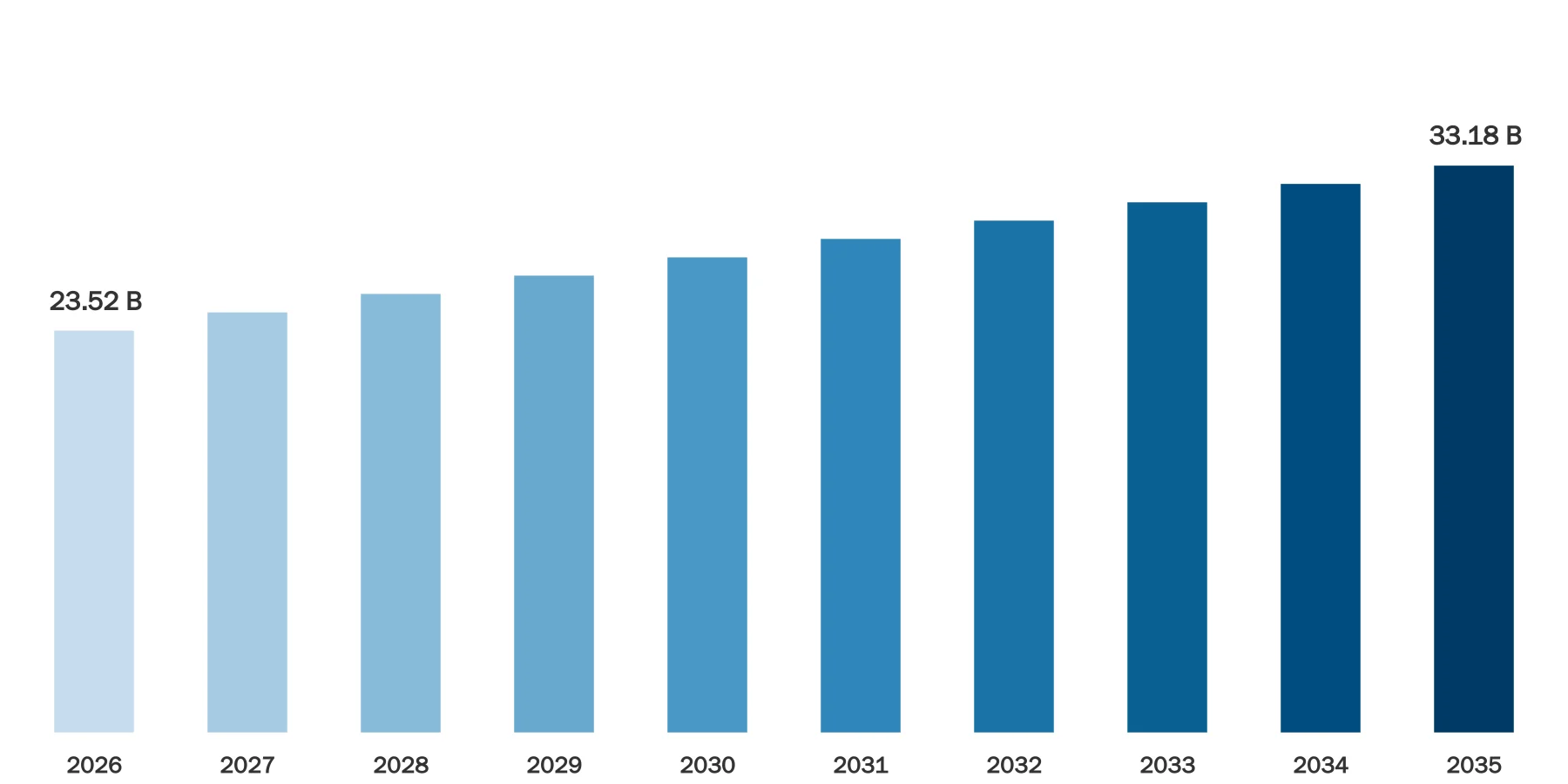
Source: Econ Market Research
Barrier systems refer to a comprehensive range of physical structures, devices, or components meticulously crafted to ensure separation, controlled access, and heightened safety within specific environments. These systems play a pivotal role in creating boundaries between distinct areas, thwarting unauthorized entry, directing traffic flow, and safeguarding both individuals and property from potential hazards. In particular, barrier systems are of utmost importance in the construction and upkeep of various infrastructure projects like bridges, tunnels, and highways. As countries continue to invest in expanding their infrastructure to facilitate seamless trade and transportation, the demand for innovative and efficient barrier systems is expected to grow in the market.
Barrier Systems Market Dynamics
The barrier systems market is influenced by several dynamic factors. Rising infrastructural development, urbanization, and increasing safety concerns drive the demand for barrier systems. The growing automotive industry and adoption of advanced technologies further propel market growth. However, high maintenance costs and legal restrictions pose restraints to market expansion. Despite challenges, the market presents opportunities driven by infrastructure projects, technological advancements, and international collaborations. The competitive landscape reflects innovation, strategic partnerships, and market expansion efforts by companies. The market's nature remains competitive, promoting continuous improvements in barrier system solutions to cater to diverse applications and safety requirements.
Barrier Systems Market Drivers
The barrier systems market is experiencing robust growth, propelled by various key drivers. One of the primary catalysts is the increasing urbanization and rapid industrialization, which have sparked a surge in infrastructural projects like highways, roadways, and railways. Moreover, the thriving automotive industry also contributes to the growing demand for barrier systems, as safety becomes a paramount concern. As governments and organizations focus on developing modern and secure urban infrastructure, the need for efficient barrier systems in bridges, tunnels, and other constructions intensifies. Additionally, stringent traffic regulations further boost the innovative and advanced barrier systems in the market.
Restraints:
While barrier systems offer indispensable safety and security advantages, their continuous functionality necessitates regular maintenance and occasional repairs, entailing significant costs. These high maintenance and repair expenses can impose a financial strain on the owners or operators of barrier systems, potentially deterring potential buyers from investing in such solutions, particularly when facing budget constraints. Consequently, this becomes a major restraining factor for the barrier systems market. The reluctance to commit to costly maintenance and repair endeavours limit the overall growth and adoption of barrier systems, impacting market expansion in various sectors.
Opportunities:
The barrier systems market is poised for substantial opportunities driven by infrastructural developments, including the construction of highways, bridges, and tunnels. The growing demand for enhanced infrastructure in urban areas to address safety concerns bolsters the need for reliable barrier systems. Advancements in automotive technology and regional development initiatives also contribute to market expansion. Moreover, international collaborations and the emphasis on sustainability propel further growth prospects. As countries worldwide invest in modernizing their infrastructure to accommodate urbanization and transportation needs, the barrier systems market stands to benefit from the increasing demand for secure and efficient safety solutions.
Segment Overview
By Material Type
The barrier systems market is segmented based on the materials used, which includes concrete, wood, metal, and plastics. Concrete barriers are durable and widely used in various infrastructure projects, offering robust protection. Wood barriers are often employed for temporary applications, offering flexibility and easy installation. Metal barriers provide a strong and long-lasting solution, suitable for high-traffic areas. Plastics barriers are lightweight, easy to transport, and ideal for temporary usage. Each material offers distinct advantages, catering to specific project requirements and varying safety needs, making the market diverse and adaptable to different applications.
By Application Type
The barrier systems market is segmented based on applications, encompassing roadways, railways, commercial, and residential sectors. Roadways extensively use barrier systems to enhance safety and regulate traffic flow, especially on highways and busy intersections. Railways implement barrier systems to safeguard passengers and prevent trespassing on tracks. In commercial settings, barrier systems are utilized to secure facilities and control access to parking lots. In residential areas, they are employed to create boundaries and protect properties. The diverse applications of barrier systems cater to various sectors', needs, driving demand and market growth in each segment.
By Type
The barrier systems market is segmented based on types, including bollards, fences, crash barrier systems, crash barrier devices, and drop arms. Bollards are commonly used as physical barriers to control traffic and secure pedestrian areas. Fences act as boundary markers and provide safety and privacy in residential and commercial settings. Crash barrier systems and devices are crucial for highways and roads, offering protection against vehicle collisions. Drop arms are employed for access control, regulating entry to restricted areas. Each type of barrier system caters to specific needs and applications, contributing to the overall growth and versatility of the market.
Barrier Systems Market Overview by Region
Asia Pacific
The barrier systems market in the Asia Pacific region is projected to witness the highest CAGR during the forecast period. This growth is primarily driven by significant investments in infrastructural projects, encompassing the development of highways, bridges, tunnels, and railway networks, which in turn spur the demand for barrier systems. The region's burgeoning automotive industries also contribute to the increased need for these safety solutions. Moreover, several governments in the region, like India, have implemented stringent traffic norms, further boosting the demand for barrier systems to enhance Road Safety and reduce accidents.
North America
North America is poised to experience a robust growth trajectory in the barrier systems market, driven by distinct factors specific to the region. The escalating investments in large-scale infrastructural projects, such as the development of extensive roadways, bridges, and rail networks, contribute significantly to the rising demand for barrier systems. Moreover, the region's advanced automotive industry, coupled with the emphasis on adopting cutting-edge safety measures, boosts the market's expansion. Additionally, stringent traffic regulations and government initiatives aimed at enhancing road safety further accelerate the adoption of barrier systems in North America. These factors collectively create a favourable landscape for the market's growth in the region
Barrier Systems Market Competitive Landscape
The barrier systems market exhibits a competitive landscape with numerous players striving to gain market share. Established companies and emerging players alike are contributing to the market's growth by offering a diverse range of barrier solutions for different applications. The competition drives innovation, as companies focus on product development, strategic partnerships, and market expansion. Additionally, regional manufacturers also play a significant role in the market',s competitiveness, introducing new products and technologies. This dynamic environment fosters continuous advancements in barrier systems to meet the evolving safety demands across various industries and applications.
Key Players
Valtir, LLC (U.S.)
Lindsay Corporation (U.S.)
Valmont Industries, Inc. (U.S.)
Tata Steel Limited (India)
Bekaert (Belgium)
Nucor Corporation (U.S.)
ArcelorMittal (Luxembourg)
Nippon Steel Corporation (Japan)
POSCO Holdings (South Korea)
JSW Steel Limited (India)
Barrier Systems Market Recent Developments
In October 2022, Bekaert opted to centralize its European ropes manufacturing operations within the UK, with a strategic emphasis on enhancing the existing lower-margin market sector.
In July 2022, Tata Steel Limited entered into a collaborative venture with WMG at the University of Warwick, aimed at the advancement of novel eco-conscious steel grades suitable for diverse applications.
In Feb 2022, Bekaert unveiled its acquisition of VisionTek Engineering Srl, marking a significant strategic move to expand its range of services provided to customers.
Barrier Systems Market Report Scope & Segmentation
| Attributes | Details |
|---|---|
Market Size (Current) | US$ 23.52 Billion in 2026 |
Market Size (Forecast) | US$ 33.18 Billion in 2035 |
Growth Rate | CAGR of 3.5% from 2026 to 2035 |
Forecast Period | 2026 – 2035 |
Base Year | 2025 |
Historical Data Available | Yes |
Regional Scope | Global |
Segments Covered | By Type
By Function
By Material
By Application
|
Frequently Asked Questions
Common questions about this report
The study period covers historical insights and forecast projections for the period 2026-2035.
About the Author
Market research expert with years of industry experience

Dipali Bhingare serves as the Market Research Director at Econ Market Research. With a focus on translating complex global economic shifts into actionable business intelligence, she oversees the strategic direction of comprehensive market studies. Her work empowers organizations to navigate volatile industries through data-driven forecasting and deep-dive competitive analysis.
Related Reports
Explore more market insights from the same category