

Road Safety Market
Road Safety Market Size, Share, Trends, Growth, and Industry Analysis, By Component (Solutions, Services), By Solution (Red Light Enforcement, Speed Enforcement, Bus Lane Enforcement, Section Enforcement, Incident Detection andamp; Response), Regional Analysis and Forecast Period 2026-2035
Market Overview
As per Econ Market Research analysis, Global Road Safety Market size stood at US$ 6.16 Billion in 2026 and is projected to reach US$ 14.25 Billion by 2035, growing at a CAGR of 9.8% over the forecast period 2026–2035. 2025 is taken as the base year.
Road Safety Market Size 2025-2035 (USD Billion)

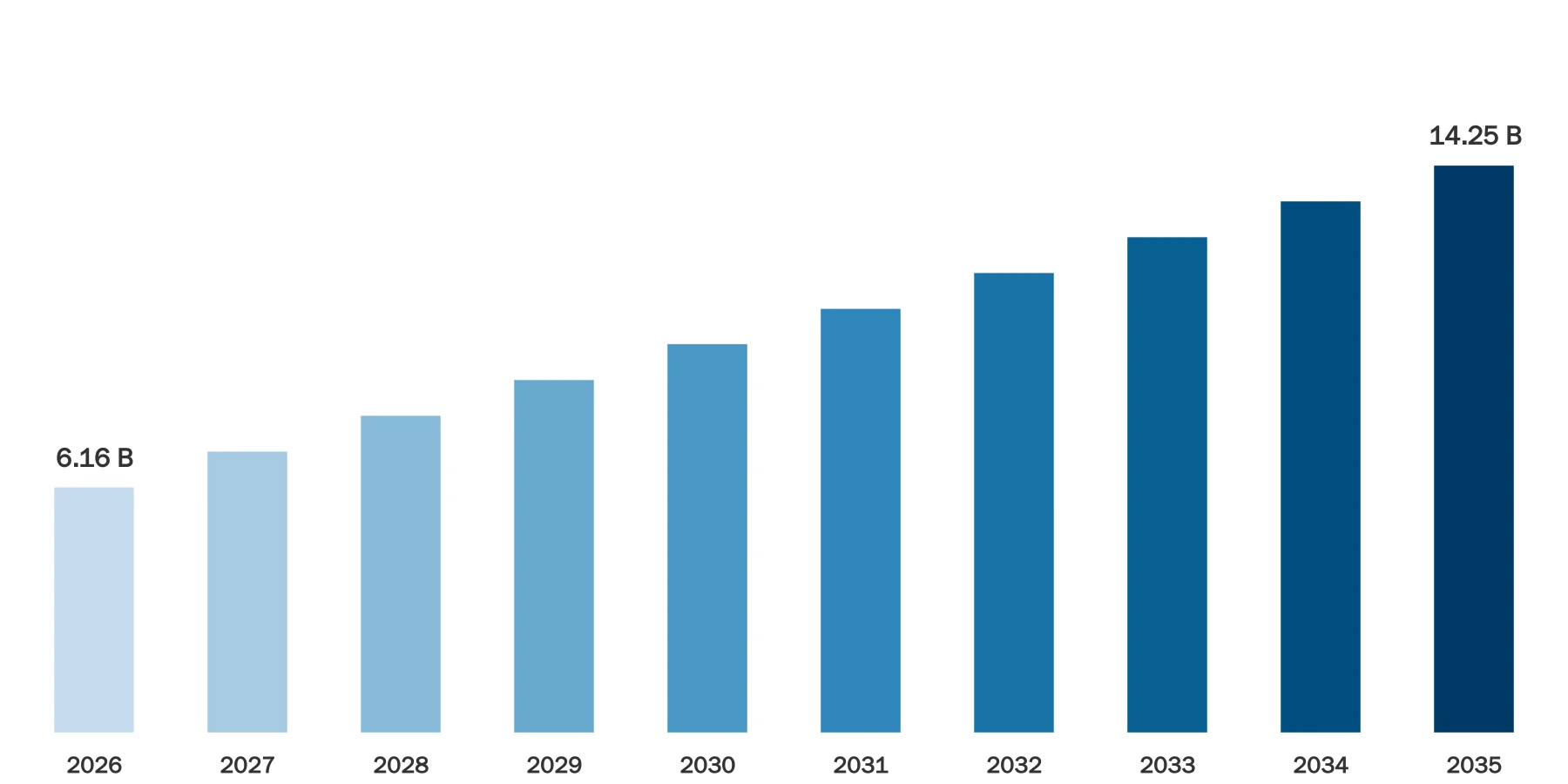
Source: Econ Market Research
The Global Road Safety Market includes a wide variety of products, services, and solutions that are meant to improve safety on roads and highways globally. This includes technologies, infrastructure upgrades, and education programs all geared towards reducing accidents, injuries, and fatalities on roads. Some examples of these solutions are traffic management systems, safety features in vehicles, road signs, and awareness campaigns. The market covers different areas of road safety, such as preventing accidents and congestion, and promoting safe driving habits among drivers, pedestrians, and bikers.
The need for road safety solutions has greatly increased in recent years, as there are more road accidents causing harm to people and economies. Governments, transportation authorities, and private organizations are investing more in new technologies and strategies to reduce risks and enhance road safety standards. The market is experiencing rapid growth, due to innovations in smart transportation systems like intelligent traffic management, connected vehicles, and autonomous driving. Urbanization, more vehicles on the road, and stricter regulations are also driving the adoption of road safety solutions globally. Overall, the Global Road Safety Market plays a crucial role in safeguarding lives, reducing traffic congestion, and promoting sustainable mobility in communities globally.
Road Safety Dynamics
The Global Road Safety Market is influenced by a variety of factors that impact the need for, creation of, and acceptance of road safety solutions on a global scale. One of the main reasons for this is the growing focus on decreasing road accidents and deaths, driven by a higher awareness of the societal and financial consequences linked to traffic-related injuries and fatalities. Governments and regulatory agencies are enforcing stricter safety rules and guidelines, encouraging the use of cutting-edge technologies and improvements in infrastructure to improve road safety.
Advancements in technology are key in influencing the way markets operate, with breakthroughs like artificial intelligence, the Internet of Things (IoT), and data analytics paving the way for smarter and more effective road safety solutions. Intelligent transportation systems (ITS) are becoming increasingly popular, providing real-time monitoring of traffic, predictive analysis, and adaptive control methods to efficiently manage roads and intersections. Additionally, the increasing number of connected vehicles and autonomous driving technologies is supporting the incorporation of safety measures such as collision avoidance systems, lane departure warnings, and automatic emergency braking systems, enhancing market growth even further.
Road Safety Drivers
Increasing Regulatory Emphasis on Road Safety
Countries around the world are placing more emphasis on decreasing road accidents and fatalities through strict regulations and standards. These rules require the use of advanced road safety technologies, which is boosting the growth of the market. For example, laws that require vehicles to include safety features like electronic stability control and advanced driver assistance systems are increasing the need for safer cars. Similarly, efforts to modernize infrastructure with technologies such as intelligent traffic management systems and smart signage are becoming more popular to improve overall road safety.
Technological Advancements
Technology, specifically artificial intelligence, IoT, and data analytics, is rapidly changing the way road safety is approached. Innovations such as connected vehicles and autonomous driving are transforming transportation systems, providing new ways to enhance safety. Connected vehicle technology allows for instant communication between vehicles and infrastructure, giving early warnings about potential dangers and allowing for preventative action to be taken. Additionally, the use of AI-powered predictive analytics in traffic management systems improves decision-making, leading to smoother traffic flow and reducing the chances of accidents.
Restraints:
High Implementation Costs
One major obstacle to the growth of the market is the expensive initial expenses required for implementing road safety solutions. Utilizing cutting-edge technologies, upgrading infrastructure, and ensuring compliance with strict regulations all require significant financial investments. This can be particularly challenging for developing countries with limited funds. The high costs often discourage governments and organizations, causing a delay in the implementation of road safety measures.
Interoperability Challenges
Interoperability in road safety solutions is a big problem that is holding back market growth. There are many different technologies and systems being used by various parties, which makes it hard to integrate and communicate effectively. The lack of standards and compatibility between these systems makes road safety initiatives less effective and can result in gaps in safety measures. To solve these interoperability issues, everyone involved - industry players, policymakers, and standardization bodies - need to work together to create consistent frameworks and protocols for compatible solutions.
Opportunities:
Emergence of Connected and Autonomous Vehicles
The rise of connected and autonomous vehicles (CAVs) is a game-changer for road safety. CAV technologies provide cutting-edge solutions to prevent accidents and lower risks on the roads. With features like vehicle-to-vehicle (V2V) communication, collision avoidance systems, and autonomous emergency braking, the possibility of reducing crashes is immense. Furthermore, the introduction of autonomous vehicles could greatly improve road safety by eliminating human errors, a key factor in many accidents. As CAV technology continues to mature and gain acceptance, it opens up new avenues for the development and adoption of advanced road safety solutions, presenting lucrative opportunities for market players.
Segment Overview
By Solution
By Solution market is segmented into, speed enforcement, red light enforcement, bus lane enforcement, section enforcement, automatic license plate recognition (ALPR)/automatic number plate recognition (ANPR), incident detection and response, and other innovative strategies. Speed enforcement solutions use radar and laser technology to monitor and enforce speed limits, aiming to decrease accidents caused by speeding and enhance overall road safety.
Traffic enforcement systems use cameras and sensors to catch vehicles breaking the rules, making sure drivers follow traffic laws and prevent accidents. Bus lane enforcement systems help keep buses running smoothly by catching unauthorized vehicles using bus lanes. Section enforcement technologies keep an eye on certain road areas for violations like changing lanes improperly, promoting safer driving habits and decreasing accidents. Automatic license plate recognition (ALPR/ANPR) systems enable real-time identification of vehicles through their license plates, facilitating law enforcement efforts and enhancing security on the roads
By Services
By services the market is segmented into, integration and deployment, consulting, as well as support and maintenance. Integration and deployment services consist of installing, configuring, and integrating road safety solutions into current infrastructure or transportation systems. Consulting services offer expert guidance and advisory support to governments, transportation authorities, and organizations looking to develop and execute thorough road safety strategies.
Support and maintenance services include ongoing technical assistance, troubleshooting, and software updates to ensure the optimal performance and reliability of safety systems over time. These services play a crucial role in maximizing the effectiveness and longevity of road safety investments, helping stakeholders navigate complex technological landscapes and achieve their safety objectives efficiently.
Road Safety Overview by Region
Emerging economies in Asia-Pacific, Latin America, and the Middle East are experiencing rapid urbanization and increasing vehicle ownership rates, leading to growing concerns about road safety. Governments in these regions are increasingly recognizing the importance of investing in road safety infrastructure and initiatives to address rising accident rates and traffic congestion. Global road safety varies significantly by region.
High-income countries generally have lower fatality rates due to better infrastructure and enforcement of regulations. However, low- and middle-income regions face greater challenges with higher rates of accidents and fatalities, often attributed to factors like inadequate infrastructure, lack of safety measures, and insufficient enforcement of traffic laws. Consequently, there is a growing demand for cost-effective and scalable solutions tailored to the unique challenges and requirements of these regions. Collaborations between public and private sectors, along with global partnerships and funding initiatives, are playing a crucial role in driving market growth and improving road safety outcomes in these regions.
Road Safety Market Competitive Landscape
Key players such as Jenoptik AG, Kapsch TrafficCom AG, and Redflex Holdings Limited dominate the market with a diverse portfolio of solutions spanning speed enforcement, red light enforcement, and automatic license plate recognition. These companies leverage their extensive experience, technological expertise, and global presence to cater to the evolving needs of governments, transportation authorities, and private organizations seeking to enhance road safety.
Meanwhile, a growing number of startups and niche players are entering the market with specialized offerings, focusing on areas such as incident detection, pedestrian safety, and predictive analytics. These newcomers bring fresh perspectives and disruptive technologies to the table, challenging incumbents and driving innovation in the industry. Strategic collaborations, mergers, and acquisitions are common strategies employed by players to strengthen their market position, expand their product offerings, and capitalize on emerging opportunities.
Road Safety Market Leading Companies:
Jenoptik AG
Kapsch TrafficCom AG
Redflex Holdings Limited
Sensys Gatso Group
Verra Mobility Corporation
SWARCO AG
IDEMIA Group
Cubic Corporation
Siemens AG
FLIR Systems, Inc.
3M Company
TomTom NV
Conduent Incorporated
Trifoil
Xerox Corporation
Road Safety Market Recent Developments
May 2023, Nokia made strides in the realm of public safety and utility field networks by launching new Core network software solutions tailored for these specific needs. This expansion of Nokia',s portfolio demonstrates its commitment to pioneering private wireless solutions for large-scale enterprises and governments, highlighting its dedication to advancing technology in the industry.
Mar 2022, Melbourne just revealed a new traffic management system on Nicholson Street that spans 2.5 kilometers. This system utilizes advanced technology like sensors, cloud-based AI, and machine learning algorithms to create a smarter road corridor. The main goals are to decrease congestion, improve safety, and lower emissions for all types of road users, from drivers to pedestrians to cyclists.
Mar 2022, Sensys Gatso Group has signed a deal to offer traffic enforcement products and services to the Belgian Walloon government. Their subsidiary, Sensys Gatso Netherlands, will be supplying T-series systems and related services to help improve traffic safety and compliance. This new agreement highlights Sensys Gatso',s dedication to delivering creative solutions for traffic management and safety globally.
Road Safety Report Segmentation
Road Safety Market Report Scope & Segmentation
| Attributes | Details |
|---|---|
Market Size (Current) | US$ 6.16 Billion in 2026 |
Market Size (Forecast) | US$ 14.25 Billion in 2035 |
Growth Rate | CAGR of 9.8% from 2026 to 2035 |
Forecast Period | 2026 – 2035 |
Base Year | 2025 |
Historical Data Available | Yes |
Regional Scope | Global |
Segments Covered | By Component
By Solution
|
Frequently Asked Questions
Common questions about this report
The study period covers historical insights and forecast projections for the period 2026-2035.
About the Author
Market research expert with years of industry experience

Dipali Bhingare serves as the Market Research Director at Econ Market Research. With a focus on translating complex global economic shifts into actionable business intelligence, she oversees the strategic direction of comprehensive market studies. Her work empowers organizations to navigate volatile industries through data-driven forecasting and deep-dive competitive analysis.
Related Reports
Explore more market insights from the same category