

Automotive Natural Gas Vehicle Market
Automotive Natural Gas Vehicle Market Size, Share, Trends, Growth, and Industry Analysis, By Fuel Type (CNG, LNG), By Vehicle Type (Passenger Vehicles, Light Commercial Vehicles, Heavy Commercial Vehicles, Three-Wheelers), Regional Analysis and Forecast Period 2026-2035
Automotive Natural Gas Vehicle Market Overview
As per Econ Market Research analysis, Global Automotive Natural Gas Vehicle Market size stood at US$ 12.01 Billion in 2026 and is projected to reach US$ 23.19 Billion by 2035, growing at a CAGR of 7.59% over the forecast period 2026–2035. 2025 is taken as the base year.
Automotive Natural Gas Vehicle Market Size 2025-2035 (USD Billion)

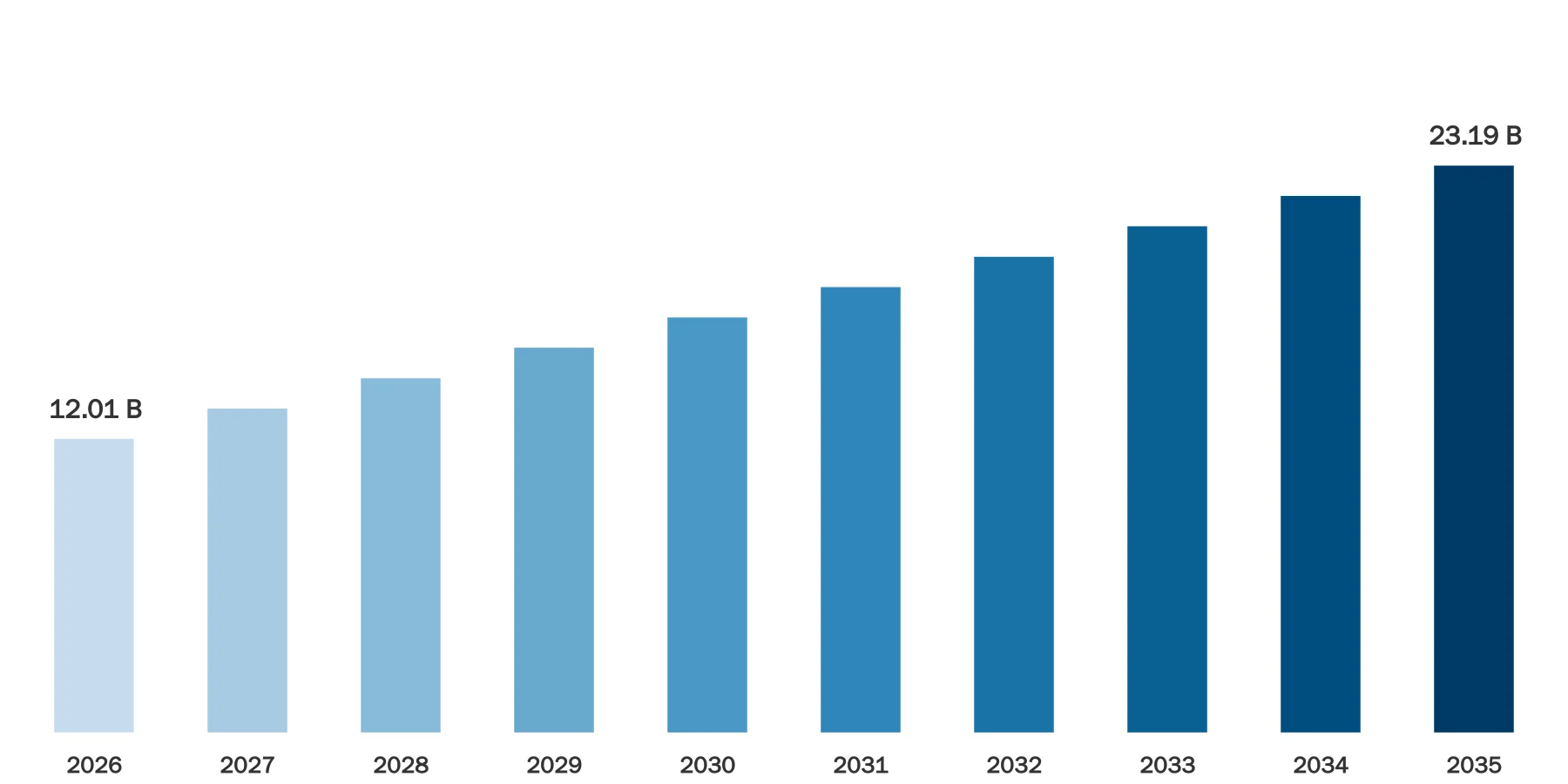
Source: Econ Market Research
An automotive natural gas vehicle, or NGV, is a vehicle that uses liquefied natural gas (LNG) or Compressed Natural Gas (CNG) as its main fuel source instead of traditional gasoline or diesel. NGVs, which include cars, trucks, buses, and other commercial vehicles, are renowned for having lower emissions. The global market for natural gas vehicles (NGVs) in the automotive industry is on the rise, fuelled by the growing need for eco-friendly and sustainable transportation choices. As the worries about environmental contamination and climate change increase, governments across the globe are encouraging the use of NGVs by offering incentives and implementing policies. Technology advancements have made NGVs more efficient and reliable, making them a popular choice for consumers and fleet companies.
The market is projected to grow as the infrastructure for natural gas refuelling stations expands, and automakers release more NGV models to meet the increasing demand.Natural Gas Vehicles (NGVs) are becoming increasingly popular as a cleaner alternative to traditional gasoline or diesel vehicles. Compressed Natural Gas (CNG) and Liquefied Natural Gas (LNG) are the main types of natural gas used to power these vehicles.
The global market for NGVs is growing as more people are concerned about the environment and want to reduce greenhouse gas emissions. Governments are also supporting the adoption of NGVs by offering tax benefits and subsidies to encourage individuals and businesses to make the switch to cleaner transportation options. Over recent years, improvements in NGV technology have played a significant role in driving market growth by improving vehicle efficiency and performance. With the ongoing development of natural gas refuelling stations, the availability of NGVs is set to increase, supporting further expansion of the market.
Automotive Natural Gas Vehicle Dynamics
The market for natural gas vehicles (NGVs) in the automotive industry is influenced by a variety of factors. Government regulations and policies are important factors, as many countries around the world are implementing stricter emissions standards and providing incentives to encourage the use of cleaner transportation options. These regulations also impact consumer choices and encourage car manufacturers to develop NGV technology. Economic factors, such as fluctuating oil prices and concerns about energy security, also play a significant role in shaping the NGV market dynamics. Natural gas is often seen as a more reliable and budget-friendly fuel option, which is why people and companies can lean towards using natural gas vehicles (NGVs) when the oil market is unpredictable.
Advances in technology also play a role in shaping the market, with continual efforts being made to enhance the effectiveness, quality, and affordability of NGVs. Despite these improvements, obstacles like the lack of refuelling stations for natural gas and the initial costs involved still hinder widespread acceptance. Partnerships between governments, automakers, and energy companies are essential for speeding up the expansion of the automotive NGV market. Although there are hurdles to overcome, the growing focus on environmental sustainability and the pressing demand to decrease greenhouse gas emissions will likely fuel ongoing progress and creativity in the NGV industry.
Automotive Natural Gas Vehicle Drivers
Government Regulations and Incentives
Government regulations requiring reduced emissions and supporting eco-friendly transportation options play a vital role in the automotive natural gas vehicle (NGV) market. Numerous nations have enforced stringent emissions criteria and provide benefits like tax exemptions, subsidies, and refunds to promote the usage of NGVs. These rules not only establish a positive atmosphere for customers to select NGVs but also encourage car manufacturers to dedicate resources to meet legal mandates. With global governments placing more emphasis on decreasing air pollution and greenhouse gas emissions, the demand for NGVs is projected to rise, propelling market expansion.
Technological Advancements
The continuous progress in natural gas vehicle (NGV) technology is a significant factor driving the market forward. Enhancements in engine efficiency, storage systems, and overall vehicle performance are making NGVs increasingly appealing to consumers and fleet operators. These improved technologies are also addressing issues like limited range and refuelling infrastructure, making NGVs more practical and convenient compared to traditional gasoline or diesel vehicles.
Furthermore, research into alternative fuel sources and hybrid NGV systems is opening up new opportunities for cleaner and more sustainable transportation choices. As technology continues to evolve, NGVs are likely to become even more competitive in terms of cost, performance, and environmental impact, driving increased adoption in the automotive market.
Restraints:
Infrastructure Limitations
The automotive market for natural gas vehicles (NGVs) continues to face challenges due to a lack of infrastructure for refuelling stations. Despite the environmental advantages that NGVs bring, consumers are often deterred from buying these vehicles because of the limited access to refuelling stations, which raises concerns about convenience and availability.
The expansion of the refuelling network is hindered by the need for significant investment and collaboration among governments, energy companies, and other stakeholders. This can be a slow and complex process. Until refuelling infrastructure becomes more widespread, the growth of the NGV market can be limited, especially in areas where natural gas refuelling stations are scarce.
Higher Initial Costs
One challenge facing the automotive natural gas vehicle (NGV) market is the higher initial costs of purchasing NGVs compared to traditional gasoline or diesel vehicles. Although NGVs can save money in the long run due to lower fuel expenses, the upfront price can deter some buyers, especially in areas with limited incentives or subsidies. Moreover, there can be fewer NGV options available, limiting consumer choices. As car manufacturers strive to lower production costs and increase efficiency, the price difference between NGVs and conventional vehicles is projected to decrease, making NGVs more attainable for a wider audience.
Opportunities:
Environmental Awareness and Sustainability
As people become more aware of environmental issues and the importance of addressing climate change, there are exciting opportunities for the automotive natural gas vehicle (NGV) market. With a growing focus on sustainability from both consumers and governments, there is a higher demand for cleaner transportation solutions like NGVs. These vehicles produce fewer emissions and have a smaller environmental footprint compared to traditional vehicles, which makes them an appealing choice for environmentally-conscious individuals and companies with large fleets. By promoting NGVs as a sustainable option, car manufacturers can take advantage of this trend and grow their market presence in the automotive sector.
Segment Overview
By Fuel Type
By Fuel Type, market is segmented into, Liquefied Petroleum Gas, commonly referred to as propane or butane, is a favoured fuel choice for NGVs. It is kept in liquid form at moderate pressure, enabling convenient storage and transport. Vehicles powered by LPG produce lower emissions than traditional gasoline or diesel vehicles, which supports environmental sustainability. LPG',s adaptability as a fuel, combined with its wide accessibility and compatibility with current infrastructure, makes it an appealing option for both commercial and personal vehicles.
Compressed Natural Gas (CNG) is another prominent fuel in the NGV sector, primarily composed of compressed methane at high pressure. CNG-powered cars are famous for their cleaner emissions and lower environmental impact compared to regular gas cars. Because of technological advancements, CNG engines perform just as well as gasoline or diesel engines, making them a great option for many uses. However, using CNG vehicles means needing special refuelling stations, which can be tricky. Fortunately, governments and private investors are working to make this easier.
By Vehicle Type
By Vehicle Type transportation and logistics industry is segmented into a variety of vehicles such as trucks, buses, and vans. Many companies are turning to natural gas vehicles (NGVs) in order to save money and help the environment. By using NGVs, fleet operators can lower their operating costs and meet strict emission standards. These vehicles perform just as well as traditional vehicles, making them an ideal choice for long-distance travel and city deliveries. With a focus on sustainability and reducing carbon emissions, the demand for NGVs in the commercial sector is predicted to rise.
Natural gas vehicles (NGVs) are now an option for consumers looking for a more eco-friendly and sustainable choice in the passenger car market. NGV passenger cars offer the same level of comfort, performance, and range as traditional gasoline or diesel vehicles, but with less pollution. Individuals who prioritize air quality and environmental impact can choose NGVs as a greener mode of transportation. Government support for clean energy vehicles is also helping to increase the use of NGV passenger cars.
Automotive Natural Gas Vehicle Overview by Region
The automotive natural gas vehicle (NGV) market shows different levels of adoption and growth in various regions. Europe has seen a strong uptake of NGVs due to strict emissions regulations and a focus on environmental sustainability, especially in countries like Italy, Germany, and the United Kingdom. Government incentives and a well-developed refuelling infrastructure also contribute to market growth in Europe. In Asia Pacific, countries like China, India, and Thailand are experiencing a significant increase in NGV adoption due to concerns about air pollution and energy security. Government initiatives to promote clean energy vehicles, along with investments in infrastructure development, contribute to the increasing popularity of NGVs in the region.
North America also demonstrates notable potential for NGV adoption, with the United States and Canada implementing policies to reduce greenhouse gas emissions and promote alternative fuels. However, market growth in North America is somewhat constrained by the abundance of domestically produced oil and the relatively lower fuel prices compared to other regions. In Latin America, countries like Argentina, Brazil, and Colombia exhibit a strong interest in NGVs due to their abundant natural gas reserves and efforts to diversify their energy sources.
Automotive Natural Gas Vehicle Market Competitive Landscape
In the world of natural gas vehicles (NGVs), many big players are competing to be the best and grab the most customers by offering the latest technology. Major automakers such as Fiat Chrysler Automobiles, Volkswagen Group, and General Motors have introduced NGV models across their product portfolios, leveraging their manufacturing capabilities and brand reputation to capture market demand.
Additionally, dedicated NGV manufacturers and suppliers like Westport Fuel Systems, Landi Renzo, and Clean Energy Fuels play a crucial role in providing NGV conversion kits, refuelling infrastructure, and support services. Collaboration between automakers, energy companies, and government agencies is common in this sector to address challenges such as infrastructure development and regulatory compliance.
Emerging players focusing on innovation and sustainability, such as Tesla with its electric vehicles and start-ups like Nikola Corporation with hydrogen fuel cell technology, also contribute to the competitive landscape by offering alternative solutions to traditional NGVs. Overall, the competitive landscape of the automotive NGV market is dynamic and diverse, with companies vying to meet the growing demand for cleaner and more sustainable transportation options while navigating regulatory, technological, and market challenges.
Automotive Natural Gas Vehicle Market Leading Companies:
Fiat Chrysler Automobiles
Volkswagen Group
General Motors
Westport Fuel Systems
Landi Renzo
Clean Energy Fuels
Tesla
Nikola Corporation
Honda Motor Co., Ltd.
Toyota Motor Corporation
Ford Motor Company
BMW Group
Daimler AG
Cummins Inc.
Volvo Group
Automotive Natural Gas Vehicle Market Recent Developments
Oct 2022, Volvo teamed up with CMB.TECH to develop dual-fuel hydrogen-powered technologies for land and sea use, aiming to reduce greenhouse gas emissions. The partnership will include small-scale industrialization and pilot projects, providing access to hydrogen solutions.
Aug 2021, Hexagon Agility partnered with Power Solutions International (PSI), a supplier of emissions-certified power systems and engines based in Illinois. The collaboration aimed to provide additional alternate fuel system options to OEMs, supporting their need for low-emission vehicle products. This initiative enables fleet-owning customers to achieve sustainability goals and lower fuel costs.
Nov 2020, Cummins and Navistar International joined forces to develop a class 8 truck using hydrogen fuel cells, aiming to pave the way for hydrogen technology in line haul trucks. The collaboration focused on incorporating cutting-edge fuel cell configurations and increasing accessibility of hydrogen-powered vehicles for fleets, while also reducing fuel costs.
Automotive Natural Gas Vehicle Report Segmentation
Automotive Natural Gas Vehicle Market Report Scope & Segmentation
| Attributes | Details |
|---|---|
Market Size (Current) | US$ 12.01 Billion in 2026 |
Market Size (Forecast) | US$ 23.19 Billion in 2035 |
Growth Rate | CAGR of 7.59% from 2026 to 2035 |
Forecast Period | 2026 – 2035 |
Base Year | 2025 |
Historical Data Available | Yes |
Regional Scope | Global |
Segments Covered | By Fuel Type
By Vehicle Type
|
Frequently Asked Questions
Common questions about this report
The study period covers historical insights and forecast projections for the period 2026-2035.
About the Author
Market research expert with years of industry experience

Related Reports
Explore more market insights from the same category