

Surface Inspection Market
Surface Inspection Market Size, Share, Trends, Growth, and Industry Analysis, By Component (Cameras, Frame Grabbers, Optics, Lighting Equipment, Processors, Software, Others), By Surface Type (2D, 3D), By Deployment (Traditional Systems, Robotic Cells), By Vertical (Semiconductor, Automotive, Electrical andamp; Electronics, Glass andamp; Metal, Food andamp; Packaging, Medical andamp; Pharmaceuticals, Others), Regional Analysis and Forecast Period 2026-2035
Market Overview
As per Econ Market Research analysis, the Global Surface Inspection Market accounted for US$ 5.69 Billion in 2026 and is expected to surpass US$ 11.59 Billion by 2035, witnessing a CAGR of 8.21% throughout 2026–2035. The analysis is based on 2025 as the base year.
Surface Inspection Market Size 2025-2035 (USD Billion)

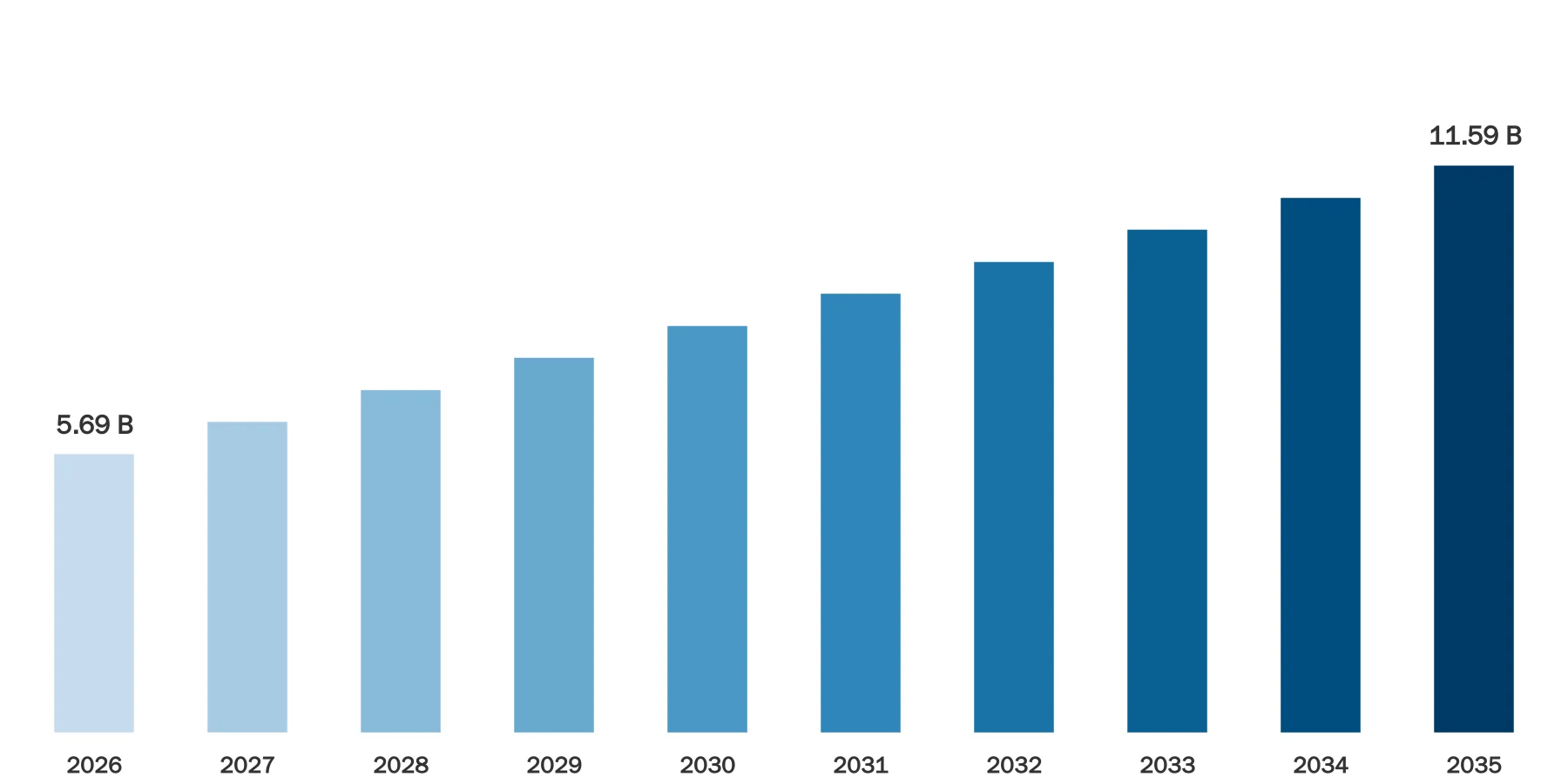
Source: Econ Market Research
In order to assure the dependability and integrity of products, surface inspection is a critical technique used in manufacturing and quality control. In order to find flaws, inconsistencies, or blemishes that might influence an object',s operation or look, one must inspect the object',s outside surface. Depending on the material and amount of scrutiny required, several surface inspection methods are used. Common techniques include a visual examination, automated imaging systems, and cutting-edge technology like Artificial Intelligence and machine vision. With the use of these methods, faults like scuffs, dents, fractures, or color differences may be quickly and precisely identified.
Surface Inspection Market Dynamics
The growing requirement for quality control and assurance in industrial processes drives the demand for dependable surface inspection solutions. Furthermore, the use of surface inspection systems is driven by severe government regulations and quality requirements placed on sectors like as automotive, electronics, and pharmaceuticals. Imaging technology improvements, such as machine vision and artificial intelligence, play a vital role in improving inspection accuracy and efficiency. In addition, the increasing emphasis on lowering manufacturing costs, decreasing waste, and increasing productivity drives businesses to invest in surface inspection systems to discover and resolve surface flaws early on.
Surface Inspection Market Drivers
Increasing Technological Advancements
Technological advancements in machine vision, artificial intelligence (AI), and deep learning algorithms have significantly enhanced the capabilities of surface inspection systems. These advancements have led to improved accuracy, speed, and efficiency in defect detection, allowing manufacturers to identify and rectify flaws at an early stage, reducing wastage and increasing productivity.
Restraints:
Complex Implementation and Integration
Integrating surface inspection systems into existing manufacturing processes can be complex and challenging. It requires expertise in machine vision technology and may involve modifying the production line, which can disrupt operations and increase downtime. The complexity of implementation acts as a barrier to adoption, especially for companies with limited technical resources.
Opportunities:
Growing Adoption in Emerging Industries
The surface inspection market presents significant growth opportunities in emerging industries such as solar energy, 3D printing, and robotics. These industries require precise surface inspection to ensure the quality and performance of their products. As these industries continue to expand, the demand for surface inspection systems is expected to rise.
Segment Overview
By Surface Type
Based on the surface type, the global surface inspection market is divided into 2D and 3D. The 2D category dominates the market with the largest revenue share of around 56.4% in 2022. Technologies for 2D surface inspection provide an economical and effective way to find flaws and imperfections on an object',s surface. They analyze 2D pictures and spot faults like scratches, dents, and color changes using high-resolution cameras and image processing algorithms.
By Industry Vertical
Based on industry vertical, the global surface inspection market is divided into semiconductors, automotive, electrical &, electronics, food &, packaging, pharmaceutical, and others. The Semiconductor category dominates the market with the largest revenue share of around 34.6% in 2022, because semiconductors are vital components in a wide range of electronic products, including smartphones, laptops, and industrial equipment and Automotive Electronics. The rising demand for these gadgets drives up the price of semiconductors, which in turns bolstering the growth of surface inspection market during the forecast period.
By System Type
Based on system type, the global surface inspection market is divided into computer-based systems and camera-based systems. The computer-based systems category is anticipated to grow at a higher CAGR of 8.6% during the forecast period. This expansion may be ascribed to a number of things, including advances in computing technology, such as increased processing power and better algorithms, which have enabled more complex and precise surface inspection capabilities.
By Deployment
Based on deployment, the global surface inspection market is divided into traditional and robotic cell. The robotic cell category is anticipated to grow at a higher CAGR of 8.5% during the forecast period. The need for robotic cells is driven by rising automation demands and robotics usage in sectors including manufacturing, automotive, and electronics. Surface inspection is only one of the many jobs that robotic cells may do by combining robotic arms, sensors, and other automation components.
Surface Inspection Market Overview by Region
By Region, the global surface inspection market has been segmented into North America, Europe, Asia-Pacific, and the Rest of the World. Asia-Pacific held 36.5%, of the market share of global market in 2022. This growth can be ascribed to various factors such as the proximity to some of the world',s greatest industrial economies, such as China, Japan, and South Korea. These nations have a large presence in industries that need substantial surface inspection procedures, such as automotive, electronics, and semiconductor production. Furthermore, rising industrialization and urbanization in emerging nations such as India, Indonesia, and Vietnam have boosted manufacturing activity and the need for quality control systems.
Surface Inspection Market Competitive Landscape
In the global surface inspection market, several major players exert significant market dominance and maintain a strong regional presence. These key players are dedicated to ongoing research and development activities. Additionally, they actively participate in strategic growth initiatives such as developing new products, launching product offerings, forming joint ventures, and establishing partnerships. The primary objective of these organizations is to strengthen their market position, expand their customer base, and capture a considerable share of the market.
Key Players
Dark Field Technologies
AMETEK, Inc.
Matrox Imaging
Datalogic S.p.A.
Teledyne Technologies Incorporated
Keyence Corporation
Cognex Corporation
OMRON Corporation
Basler AG
Baumer Holding AG
Panasonic Corporation
ISRA Vision AG (Atlas Copco Group)
Vitronic GmbH
Hexagon AB
Surface Inspection Market Recent Developments
In October 2022, In Louisville, Kentucky (US), Vitronic (Germany) has increased the size of its facilities. With this development, we hope to increase the capacity of our innovation-focused regional engineering and customer cooperation centers.
Surface Inspection Market Report Scope & Segmentation
| Attributes | Details |
|---|---|
Market Size (Current) | US$ 5.69 Billion in 2026 |
Market Size (Forecast) | US$ 11.59 Billion in 2035 |
Growth Rate | CAGR of 8.21% from 2026 to 2035 |
Forecast Period | 2026 – 2035 |
Base Year | 2025 |
Historical Data Available | Yes |
Regional Scope | Global |
Segments Covered | By Component
By Surface Type
By Deployment
By Vertical
|
Frequently Asked Questions
Common questions about this report
The study period covers historical insights and forecast projections for the period 2026-2035.
About the Author
Market research expert with years of industry experience

Dipali Bhingare serves as the Market Research Director at Econ Market Research. With a focus on translating complex global economic shifts into actionable business intelligence, she oversees the strategic direction of comprehensive market studies. Her work empowers organizations to navigate volatile industries through data-driven forecasting and deep-dive competitive analysis.
Related Reports
Explore more market insights from the same category