

Enriched Biochar Market
Enriched Biochar Market Size, Share, Trends, Growth, and Industry Analysis, By Technology (Pyrolysis, Gasification), By Feedstock (Woody Biomass, Agricultural Residues, Animal Manure), By Application (Agriculture, Animal Farming, Industrial), Regional Analysis and Forecast Period 2026-2035
Market Overview
As per Econ Market Research analysis, the Global Enriched Biochar Market was recorded at US$ 2.71 Billion in 2026 and is projected to expand to US$ 4.3 Billion by 2035, registering a CAGR of 5.25% over the forecast period. The base year used is 2025.
Enriched Biochar Market Size 2025-2035 (USD Billion)

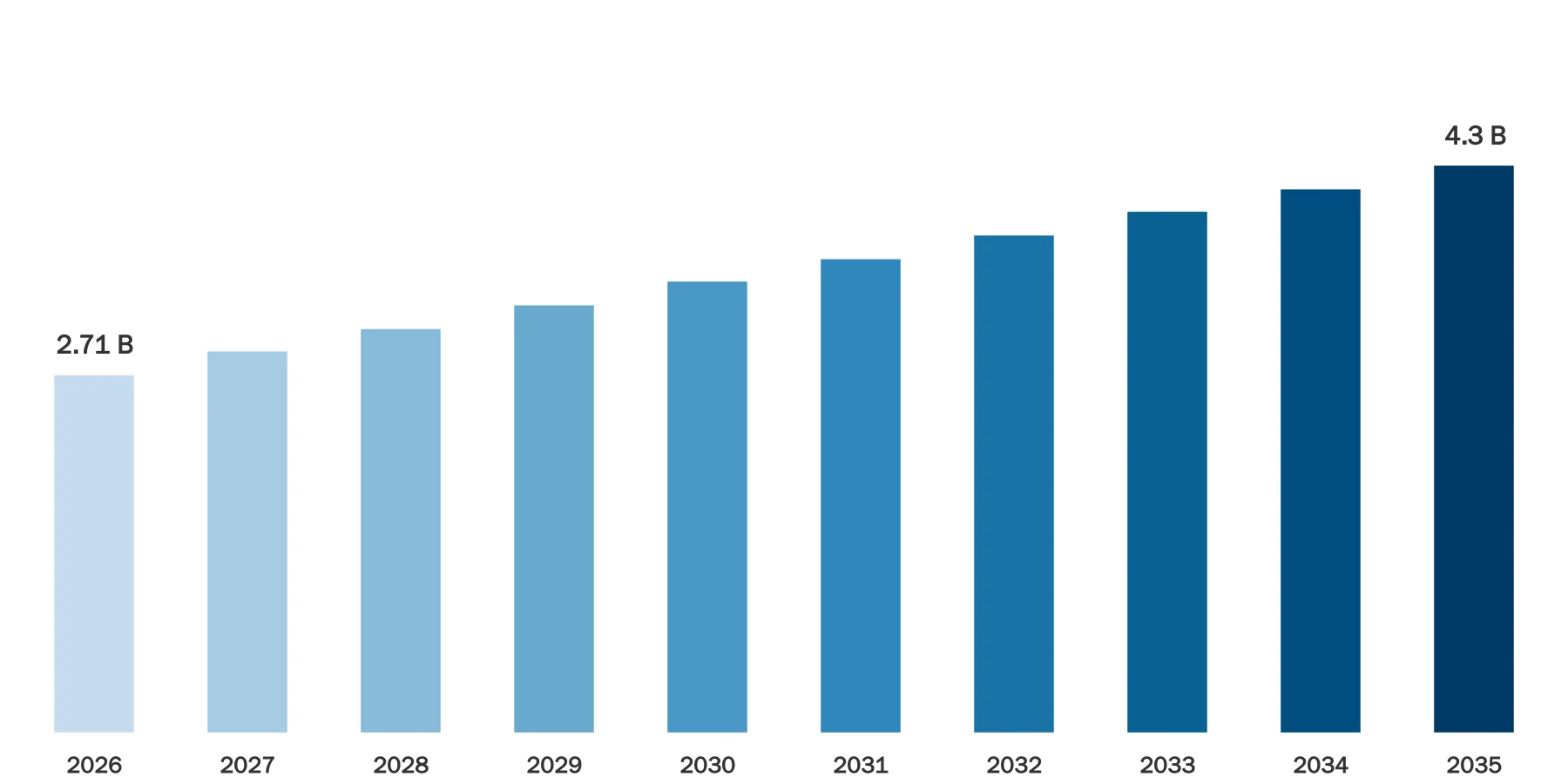
Source: Econ Market Research
Enriched biochar, a form of charcoal derived from organic materials, is processed to enhance its properties for various applications including soil amendment, water filtration, and carbon sequestration. Its porous structure and high carbon content make it an effective tool for improving soil fertility, moisture retention, and nutrient uptake, thus promoting sustainable agriculture practices and mitigating climate change impacts.
The market is propelled by rising awareness about the benefits of enriched biochar in improving soil health, increasing crop productivity, and reducing greenhouse gas emissions. Additionally, government initiatives promoting biochar utilization, coupled with growing investments in research and development activities to enhance product efficiency and application scope, are expected to drive market expansion. However, challenges such as lack of standardized regulations, high production costs, and limited awareness among end-users may hinder market growth to some extent. Nonetheless, collaborations between industry players, research institutions, and government bodies to address these challenges and explore innovative applications are anticipated to unlock new opportunities and foster market growth in the coming years.
Enriched Biochar Dynamics
The growing demand for environmentally friendly soil management techniques and sustainable agricultural practices worldwide is a major motivator. The market is expanding as a result of a shift towards biochar brought about by growing awareness of the detrimental effects that traditional farming practices have on the environment and soil health. The market is growing as a result of strict government initiatives and environmental regulations that support carbon sequestration and mitigate climate change.
The acceptance of enriched biochar is accelerated by its adaptability, which goes beyond agriculture to include uses in industrial processes and water filtration. Nonetheless, there are obstacles facing the market, such as the absence of uniform laws controlling the manufacture and use of biochar. Lack of a universal framework can result in a wide range of product efficacy and quality, which will impede market expansion. A further difficulty is worries about the large-scale biochar production process',s economic feasibility because of the substantial upfront expenditures. Despite these challenges, continued research and development efforts are addressing these issues and fostering innovations in the production of biochar, increasing its scalability and cost-effectiveness.
Enriched Biochar Drivers
Growing Demand for Sustainable Agriculture:
The market for enriched biochar is significantly driven by the growing awareness of the harmful effects of conventional farming methods on soil health and the environment. By increasing nutrient retention, raising soil fertility, and lowering the need for chemical fertilisers, biochar provides a sustainable solution. The growing demand for sustainable agriculture by consumers and governments is anticipated to propel the biochar market. Furthermore, biochar',s capacity to sequester carbon dioxide increases its allure as a climate-smart agricultural input, propelling market growth.
Government Initiatives and Environmental Regulations:
The market for enriched biochar is also driven by strict environmental laws and government programmes that support sustainable practices and lower carbon emissions. Policies encouraging the use of biochar in agriculture and carbon sequestration projects have been put in place in many nations. Funding initiatives and subsidies for R&,D projects pertaining to the production and use of biochar also support market expansion. The demand for biochar is anticipated to rise as governments throughout the world step up their efforts to combat climate change and achieve sustainability goals, resulting in advantageous market conditions.
Restraints:
Lack of Standardized Regulations:
One major obstacle to the growth of the biochar market is the lack of uniform regulations governing the production and application of biochar. Consumer trust and adoption are hampered by inconsistent product quality, efficacy, and safety standards resulting from a lack of consistent guidelines. Furthermore, the lack of defined regulatory frameworks makes it difficult for new businesses to enter the market and discourages investment in the infrastructure needed to produce biochar. To meet this challenge, policymakers and industry stakeholders must work together to create comprehensive regulatory frameworks that guarantee environmental sustainability, product quality, and safety.
The production of biochar comes with high initial costs, which limit market expansion. The procurement of feedstock, pyrolysis, and activation are among the intricate production processes that necessitate a large initial capital investment and ongoing operating costs. The total cost of production also includes components like transportation, equipment upkeep, and energy usage. These high costs can limit the scalability of biochar production operations and pose challenges to market competitiveness, particularly in regions with limited financial resources.
Opportunities:
Technological Advancements and Innovation:
Technological advancements and innovations in biochar production processes present significant opportunities for market growth. Continuous research and development efforts aim to enhance production efficiency, optimize feedstock utilization, and improve product quality. Novel techniques such as microwave pyrolysis, hydrothermal carbonization, and biochar activation hold promise for reducing production costs, increasing yields, and enhancing biochar properties. Investing in research and innovation can unlock new opportunities for market expansion and drive the development of tailored biochar products for diverse applications, including agriculture, environmental remediation, and industrial processes.
Segment Overview
By Application
In the enriched biochar market, the agriculture segment stands out as the primary application area, encompassing the largest share of demand. Biochar',s effectiveness in enhancing soil fertility, moisture retention, and nutrient availability makes it a valuable input for sustainable agricultural practices. Farmers utilize biochar to improve crop yields, reduce the need for chemical fertilizers, and mitigate soil degradation, thereby promoting long-term soil health and productivity.
The gardening segment represents another significant application domain, where biochar is utilized to enrich potting soils, enhance plant growth, and improve overall soil structure in home gardens, nurseries, and landscaping projects. Turfs, including sports fields, golf courses, and recreational areas, benefit from biochar',s ability to promote healthy turf growth, improve soil aeration, and reduce water runoff. Additionally, biochar finds application in various other sectors such as environmental remediation, livestock farming, and wastewater treatment, highlighting its versatility and potential across diverse industries.
Enriched Biochar Overview by Region
In agriculture, biochar plays a pivotal role in enhancing soil health, promoting crop productivity, and reducing environmental impact. Farmers incorporate biochar into Soil Amendments to improve soil structure, water retention, and nutrient availability, fostering sustainable agricultural practices and mitigating soil degradation. The gardening segment represents a diverse range of applications, including home gardening, landscaping, and nursery operations. Biochar is utilized to enrich potting mixes, improve soil fertility, and enhance plant growth, catering to the needs of gardening enthusiasts and professionals alike.
Turfs, comprising sports fields, golf courses, and recreational areas, benefit from biochar',s ability to promote healthy turf growth, reduce compaction, and enhance soil resilience. Biochar amendments contribute to turf sustainability by improving soil aeration, moisture retention, and nutrient uptake, resulting in lush, resilient playing surfaces. Furthermore, biochar finds application across various other sectors, including environmental remediation, livestock farming, and wastewater treatment.
In environmental remediation projects, biochar aids in soil remediation, groundwater filtration, and contaminant immobilization, offering sustainable solutions for land and water restoration efforts. Livestock farmers utilize biochar as a feed supplement to enhance animal health, improve nutrient absorption, and reduce methane emissions, supporting sustainable livestock management practices. In wastewater treatment facilities, biochar-based filtration systems effectively remove contaminants, organic pollutants, and heavy metals from wastewater streams, contributing to water quality improvement and resource recovery initiatives.
Enriched Biochar Market Competitive Landscape
In North America, the market benefits from robust agricultural sectors, stringent environmental regulations, and increasing adoption of sustainable farming practices. The region',s well-established research infrastructure and strong emphasis on innovation drive technological advancements in biochar production and application, fostering market growth. Europe represents another key market for enriched biochar, characterized by a growing emphasis on organic farming, soil conservation, and carbon sequestration initiatives. Government support for biochar research and development, coupled with rising environmental awareness among consumers, fuels market expansion in the region.
Asia Pacific emerges as a rapidly growing market, driven by the region',s large agricultural base, escalating food demand, and increasing focus on soil health and productivity. Countries like China and India witness significant adoption of biochar in agriculture to address soil degradation, enhance crop yields, and mitigate environmental pollution. Moreover, government initiatives promoting sustainable agriculture and environmental conservation further propel market growth in the region. Latin America and the Middle East &, Africa regions present untapped opportunities for market players, driven by expanding agricultural sectors, growing awareness of environmental issues, and increasing investment in sustainable development projects.
Enriched Biochar Market Leading Companies:
Carbon Gold Ltd
The Natural Charcoal Company
The Dorset Charcoal Company
Swiss Biochar GmbH
CharGrow
SymSoil
Engrow Carbon Energy Private Limited
SoilFixer
Bio365
Biochar Now LLC
Pacific Biochar Production
Sitos Group
Bio Bloom
Biochar Supreme LLC
Global Enriched Biochar Report Segmentation
Enriched Biochar Market Report Scope & Segmentation
| Attributes | Details |
|---|---|
Market Size (Current) | US$ 2.71 Billion in 2026 |
Market Size (Forecast) | US$ 4.3 Billion in 2035 |
Growth Rate | CAGR of 5.25% from 2026 to 2035 |
Forecast Period | 2026 – 2035 |
Base Year | 2025 |
Historical Data Available | Yes |
Regional Scope | Global |
Segments Covered | By Technology
By Feedstock
By Application
|
Frequently Asked Questions
Common questions about this report
The study period covers historical insights and forecast projections for the period 2026-2035.
About the Author
Market research expert with years of industry experience

Related Reports
Explore more market insights from the same category