

Integrated Pest Management Pheromones Market
Integrated Pest Management Pheromones Market Size, Share, Trends, Growth, and Industry Analysis, By Product Type (Sex Pheromones, Aggregation Pheromones, Alarm Pheromones, Trail Pheromones), By Mode of Application (Traps, Dispensers, Sprayers), By Function (Mating Disruption, Detection andamp; Monitoring, Mass Trapping), By Crop Type (Field Crops, Vegetable Crops, Orchard Crops), Regional Analysis and Forecast Period 2026-2035
Market Overview
As per Econ Market Research analysis, the Global Integrated Pest Management Pheromones Market size amounted to US$ 5.06 Billion in 2026 and is anticipated to grow to US$ 9.09 Billion by 2035, recording a CAGR of 6.72% during 2026–2035. The base year taken for analysis is 2025.
Integrated Pest Management Pheromones Market Size 2025-2035 (USD Billion)

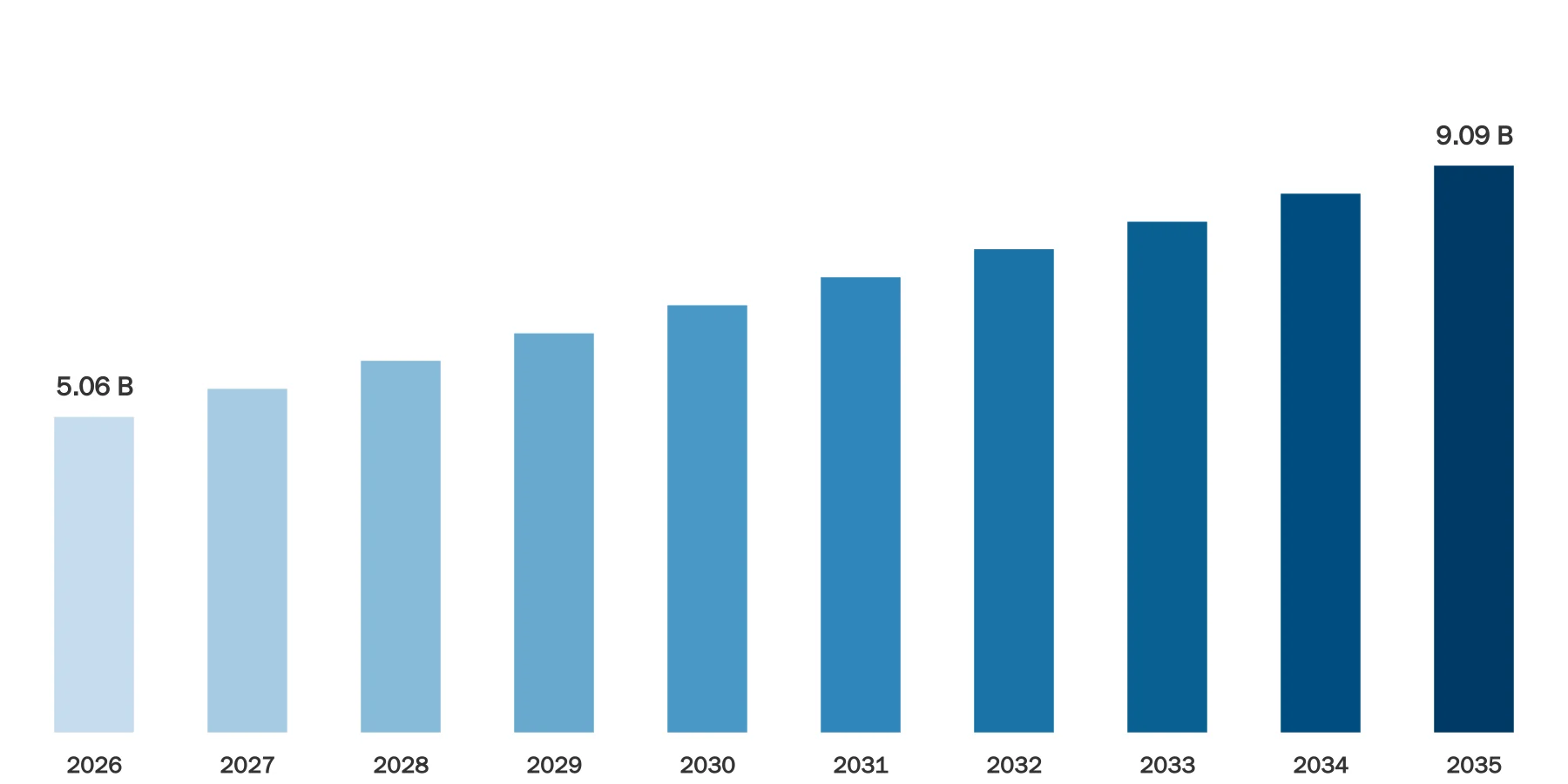
Source: Econ Market Research
Integrated Pest Management refers to a holistic approach that combines biological, cultural, physical, and chemical tools to minimize the impact of pests while ensuring minimal harm to humans, non-target organisms, and the environment. Pheromones, which are chemical substances emitted by insects to communicate with each other, play a pivotal role in IPM strategies by disrupting mating patterns, thereby reducing pest populations without resorting to conventional pesticides.
In recent years, the IPM Pheromones market has witnessed substantial expansion owing to the growing awareness among farmers and agricultural stakeholders about the adverse effects of synthetic pesticides on human health and the environment. Additionally, stringent regulatory frameworks aimed at reducing chemical residues in agricultural products have propelled the adoption of IPM practices, further driving the demand for pheromone-based pest control solutions. The market encompasses a wide range of pheromone products tailored to control various pest species across diverse agricultural and horticultural crops, including fruits, vegetables, grains, and ornamentals.
Key market players are increasingly focusing on research and development initiatives to introduce innovative pheromone formulations and delivery systems that enhance efficacy, prolong activity, and improve user-friendliness. Furthermore, strategic collaborations, partnerships, and mergers and acquisitions are prevalent strategies adopted by companies to expand their market presence and strengthen their product portfolios. Geographically, North America and Europe dominate the IPM Pheromones market, driven by stringent regulations promoting sustainable agricultural practices and the presence of established players and research institutions specializing in pest management solutions.
Integrated Pest Management Pheromones Dynamics
One of the primary drivers is the increasing global emphasis on sustainable agriculture and environmentally friendly pest management practices. As awareness grows regarding the adverse effects of synthetic pesticides on human health and the environment, farmers and agricultural stakeholders are increasingly turning to IPM solutions, including pheromone-based technologies, to minimize chemical usage while effectively controlling pest populations.
Regulatory initiatives aimed at reducing chemical residues in food products have also played a significant role in shaping the market dynamics. Stringent regulations and guidelines regarding pesticide usage and residue limits have prompted agricultural producers to adopt alternative pest control methods, thus driving the demand for IPM pheromone solutions. Additionally, the rising demand for organic and pesticide-free produce among consumers has further accelerated the adoption of IPM practices, creating a favourable market environment for pheromone-based pest control products.
Furthermore, technological advancements and innovations in pheromone formulation and delivery systems have enhanced the efficacy and usability of IPM pheromones, contributing to market expansion. Companies are investing in research and development to develop novel formulations that offer improved performance, longer duration of activity, and enhanced specificity in targeting pest species. Strategic partnerships and collaborations between industry players and research institutions are also fostering innovation and driving market growth by facilitating knowledge exchange and technology transfer.
Integrated Pest Management Pheromones Drivers
Growing Demand for Sustainable Agriculture
With increasing concerns about the environmental and health impacts of conventional pesticide usage, there',s a growing demand for sustainable agricultural practices. Integrated Pest Management (IPM) techniques, including pheromone-based solutions, offer environmentally friendly alternatives. These methods minimize the reliance on synthetic chemicals while effectively controlling pest populations. The rising awareness among farmers, consumers, and regulatory bodies about the benefits of sustainable agriculture is a significant driver propelling the demand for IPM pheromone products.
Stringent Regulatory Policies
Regulatory policies aimed at reducing chemical residues in agricultural products are driving the adoption of IPM pheromones. Governments worldwide are implementing stringent regulations on pesticide usage, residue limits, and environmental safety standards. These policies encourage farmers to explore alternative pest control methods, such as pheromone-based technologies, to comply with regulatory requirements. The increasing enforcement of these regulations creates a favourable market environment for IPM pheromone products, as they offer effective pest control while minimizing chemical residues in food products, thereby meeting regulatory standards and consumer preferences.
Restraints:
Limited Consumer Awareness
Despite the benefits of IPM pheromones, a significant challenge is the limited awareness among consumers about these technologies. Many farmers and agricultural stakeholders may not fully understand the effectiveness and benefits of pheromone-based pest control solutions compared to conventional pesticides. This lack of awareness could hinder the widespread adoption of IPM pheromones and limit market growth in certain regions or sectors.
Another restraint facing the market is the high initial investment costs associated with transitioning to IPM pheromone-based solutions. Implementing these technologies often requires upfront investments in infrastructure, equipment, and training. For small-scale farmers and growers with limited financial resources, the initial costs of adopting IPM pheromones may act as a barrier to entry. Additionally, uncertainties regarding the return on investment and efficacy of these solutions may further deter potential adopters, especially in regions with limited access to financial resources and technical support.
Opportunities:
Technological Advancements
Rapid advancements in pheromone formulation and delivery systems present significant opportunities for market growth. Ongoing research and development efforts are focused on improving the efficacy, specificity, and longevity of pheromone-based products. Innovations such as microencapsulation, controlled-release formulations, and novel delivery mechanisms enhance the performance and usability of IPM pheromones, expanding their applications across diverse crops and pest species.
Segment Overview
By Product
By product segmentation, the Integrated Pest Management (IPM) Pheromones market distinguishes various types of chemical compounds used to manage pest populations effectively. Sex pheromones, the most common type, disrupt mating patterns by mimicking female insects', natural scents, thus confusing males and reducing reproduction rates. Aggregation pheromones, on the other hand, exploit pests', instinct to cluster by luring them into traps or targeted areas, aiding in monitoring and control efforts.
Alarm pheromones trigger defensive responses among pests, deterring foraging behaviors or inducing dispersal. The ",Others", category encompasses specialized compounds tailored for specific pests or unique applications, such as trail pheromones for guiding pests, aggregation disruptors, or synergistic compounds that boost the efficacy of other pheromones.
By Mode of Application
Mode of application segmentation in the IPM Pheromones market refers to the methods used to deploy pheromone-based solutions for pest management. Monitoring and detection involve deploying traps or devices to assess pest populations and activity levels, providing valuable data for decision-making. Mating disruption techniques saturate the environment with synthetic pheromones, disrupting pests', ability to locate mates and reproduce effectively. Mass trapping utilizes pheromone-baited traps strategically placed to capture large numbers of pests, reducing populations and crop damage. The ",Others", category may include innovative delivery systems or integrated approaches combining multiple pheromone-based tactics for enhanced efficacy.
By End-Users
End-user segmentation identifies the primary industries or sectors employing IPM pheromones for pest control purposes. In agriculture, pheromone-based solutions are widely used by farmers, growers, and agricultural professionals to protect crops from pest damage while promoting sustainable farming practices. This segment encompasses a broad range of crops and agricultural settings, reflecting the diverse applications of pheromone technology in crop protection.
The ",Others", category extends beyond traditional agriculture to include non-agricultural applications, such as forestry, urban pest management, food processing, and public health programs targeting disease vectors or invasive species. These diverse end-users demonstrate the versatility and potential impact of pheromone-based pest management strategies across various industries and contexts.
Integrated Pest Management Pheromones Overview by Region
North America and Europe stand out as key markets, driven by stringent regulatory policies promoting sustainable agriculture and reducing chemical residues in food products. These regions boast established infrastructures, robust research institutions, and a strong emphasis on environmental stewardship, making them fertile grounds for the adoption of IPM pheromone technologies. In North America, the United States leads the market, supported by initiatives promoting integrated pest management practices and increasing investments in agricultural research and development.
Similarly, European countries like Germany, France, and the Netherlands prioritize eco-friendly farming methods, creating opportunities for IPM pheromone products to thrive. Asia Pacific emerges as a region of immense potential, fuelled by the expanding agricultural sector, growing population, and rising awareness of food safety and environmental sustainability. Countries like China, India, and Japan witness surging demand for IPM solutions as farmers seek alternatives to conventional pesticides and embrace sustainable farming practices.
Moreover, government initiatives aimed at enhancing agricultural productivity while minimizing environmental impacts further accelerate the adoption of IPM pheromones in the region. Latin America and the Middle East &, Africa exhibit nascent but promising markets for IPM pheromones, driven by increasing investments in agriculture, rising awareness of pesticide-related health hazards, and evolving regulatory landscapes. These regions present untapped opportunities for market players to introduce innovative pheromone solutions tailored to local pest pressures and agricultural practices.
Integrated Pest Management Pheromones Market Competitive Landscape
Companies such as BASF SE, Syngenta AG, Bayer CropScience, and Shin-Etsu Chemical Co., Ltd., are among the prominent players leveraging their research and development capabilities to develop advanced pheromone formulations and delivery systems. These industry leaders focus on expanding their product portfolios, enhancing product efficacy, and strengthening their market presence through strategic collaborations, partnerships, and acquisitions. Moreover, investments in marketing and distribution networks enable companies to penetrate new markets and capitalize on emerging opportunities in regions witnessing increasing demand for sustainable pest management solutions.
Alongside established players, numerous smaller and niche companies contribute to the competitive landscape by offering specialized pheromone products targeting specific pest species or applications. These companies often emphasize product innovation, customization, and customer service to carve out their niche in the market. Additionally, research institutions and academic organizations play a vital role in driving innovation and advancing the scientific understanding of pheromone-based pest control strategies. Collaborations between industry players and research institutions facilitate knowledge exchange, technology transfer, and the development of cutting-edge solutions tailored to address evolving pest pressures and regulatory requirements.
Integrated Pest Management Pheromones Market Leading Companies:
Russell IPM
Shin-Etsu Chemical Co., Ltd.
BASF SE
Biobest Group NV
Suterra LLC
Provivi, Inc.
ISCA Technologies
Tré,cé,, Inc.
Pherobank
Koppert Biological Systems
Gowan Company
Mitsui &, Co., Ltd.
The Wonderful Company LLC
Bayer
Global Integrated Pest Management Pheromones Report Segmentation
Integrated Pest Management Pheromones Market Report Scope & Segmentation
| Attributes | Details |
|---|---|
Market Size (Current) | US$ 5.06 Billion in 2026 |
Market Size (Forecast) | US$ 9.09 Billion in 2035 |
Growth Rate | CAGR of 6.72% from 2026 to 2035 |
Forecast Period | 2026 – 2035 |
Base Year | 2025 |
Historical Data Available | Yes |
Regional Scope | Global |
Segments Covered | By Product Type
By Mode of Application
By Function
By Crop Type
|
Frequently Asked Questions
Common questions about this report
The study period covers historical insights and forecast projections for the period 2026-2035.
About the Author
Market research expert with years of industry experience

Dipali Bhingare serves as the Market Research Director at Econ Market Research. With a focus on translating complex global economic shifts into actionable business intelligence, she oversees the strategic direction of comprehensive market studies. Her work empowers organizations to navigate volatile industries through data-driven forecasting and deep-dive competitive analysis.
Related Reports
Explore more market insights from the same category