

Emotion AI Market
Emotion AI Market Size, Share, Trends, Growth, and Industry Analysis, By Component (Solution, Services), By Technology (Machine Learning, Natural Language Processing (NLP), Computer Vision, Others), By Application (Customer Experience Monitoring, Human-Computer Interaction, Health & Wellness Monitoring, Driver Monitoring Systems, Emotion-Based Advertising & Marketing, Others), Regional Analysis and Forecast Period 2026-2035
Market Overview
As per Econ Market Research analysis, the Global Emotion AI Market was recorded at US$ 3.23 Billion in 2026 and is projected to expand to US$ 20.24 Billion by 2035, registering a CAGR of 22.9% over the forecast period. The base year used is 2025.
Emotion AI Market Size 2025-2035 (USD Billion)

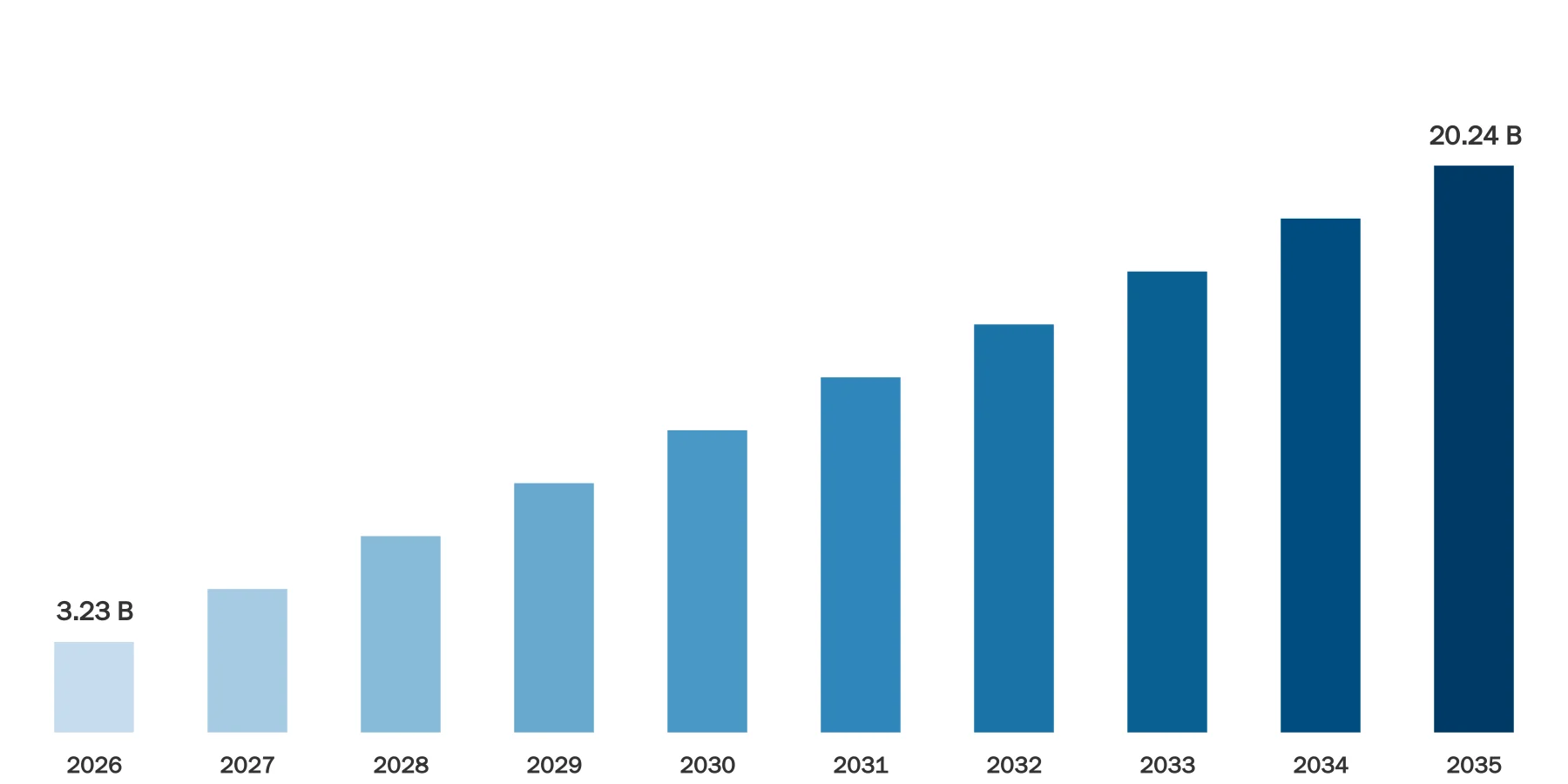
Source: Econ Market Research
The Emotion AI Market is expanding rapidly due to increasing deployment of Artificial Intelligence systems capable of analyzing facial expressions, speech patterns, and physiological signals. More than 7.9 billion connected devices globally generate behavioral and emotional data used for AI-based analytics. Emotion recognition algorithms now analyze over 60 facial micro-expressions and 40 voice tonal parameters to detect human emotions with accuracy levels reaching 85% to 90% in controlled environments. In 2024, more than 55% of customer experience platforms integrated emotion detection tools for sentiment analysis. The Emotion AI Industry Analysis shows adoption across 20+ industries, including healthcare, automotive, retail, and education, where emotional analytics supports real-time decision systems operating within 300 milliseconds.
The USA Emotion AI Market represents one of the most advanced ecosystems for emotional analytics technology. In 2024, the United States accounted for approximately 35% of global AI research laboratories, with over 1,200 AI-focused startups developing advanced behavioral analytics systems. More than 65% of Fortune 500 companies implemented AI-based customer sentiment analysis tools across digital platforms. The U.S. healthcare sector alone utilizes emotion recognition tools in over 2,000 telehealth platforms, monitoring patient stress levels and facial cues during virtual consultations. Additionally, 70% of AI patents filed in emotion recognition technologies between 2020 and 2024 originated from U.S.-based companies, highlighting the country’s strong leadership in the Emotion AI Market Analysis and technological innovation.
Market Latest Trends
The Emotion AI Market Trends reveal a significant increase in demand for technologies capable of interpreting human emotions in digital interactions. As of 2024, more than 4.5 billion smartphone users interact with AI-powered systems capable of voice or facial recognition. Emotion AI algorithms are integrated into over 30% of smart devices, including wearable health monitors, driver monitoring systems, and digital assistants. In the automotive sector, approximately 40% of advanced driver monitoring systems now incorporate facial emotion detection to identify driver fatigue and stress levels using infrared cameras operating at 60 frames per second.
Another important trend in the Emotion AI Industry Report is the integration of multimodal emotion recognition systems. Modern platforms analyze facial data, vocal tone, body posture, and biometric signals simultaneously, increasing detection accuracy by 15% to 25% compared with single-input models. Retail companies deploy emotion analytics in more than 18,000 physical stores globally, using cameras and behavioral analytics software to monitor customer engagement and dwell time. Similarly, the advertising sector utilizes emotion AI platforms capable of analyzing 10,000 viewer responses per campaign to optimize digital marketing performance.
Healthcare adoption is also accelerating within the Emotion AI Market Outlook. More than 1,500 hospitals globally deploy AI-driven behavioral monitoring systems that track emotional indicators in patients with neurological disorders such as autism and depression. These systems analyze 50+ behavioral markers, including eye movement, speech cadence, and facial muscle activity. As digital interactions increase globally, Emotion AI Market Growth continues to be supported by data analytics infrastructure processing over 2.5 quintillion bytes of data daily, enabling real-time emotion recognition applications across industries.
Market Dynamics
DRIVER
Increasing Demand for Human-Centric AI Systems
One of the strongest drivers in the Emotion AI Market Growth is the growing demand for AI systems capable of understanding human emotions. Digital customer interactions exceeded 5.3 billion online users in 2024, with businesses handling more than 120 million customer service interactions daily across AI-powered platforms. Emotion AI technologies help companies analyze emotional sentiment in real time within 200–500 milliseconds, enabling adaptive customer responses.
Customer experience management platforms integrated emotion recognition algorithms in over 58% of enterprise communication systems by 2024. Retail brands deploying emotional analytics reported improvements in customer engagement metrics across 25 digital touchpoints, including chatbots, voice assistants, and video analytics. Additionally, emotion recognition algorithms process over 100 facial landmarks per image frame, allowing systems to interpret micro-expressions that last only 0.04 seconds.
Healthcare systems also contribute to the Emotion AI Market Analysis. Emotional monitoring tools assist psychologists and therapists by analyzing speech patterns across 40 acoustic parameters to detect stress or depression indicators. Telemedicine platforms in 30+ countries incorporate emotional analytics to evaluate patient behavior during consultations. As industries continue adopting human-centric AI systems, Emotion AI Market Insights indicate that emotional intelligence will become a fundamental capability within next-generation AI applications deployed across more than 70 enterprise sectors.
RESTRAINT
Data Privacy and Ethical Concerns
Data privacy and ethical concerns remain major restraints affecting the Emotion AI Market Forecast. Emotion recognition systems rely on biometric data, including facial images, voice recordings, and behavioral patterns, which raises concerns regarding privacy compliance and user consent. Currently, more than 130 countries have implemented biometric data protection regulations that restrict large-scale collection of facial recognition data.
In Europe, strict data governance laws regulate the storage of biometric identifiers, requiring companies to maintain encryption protocols exceeding 256-bit security standards. In 2024, approximately 45% of consumers surveyed globally expressed concerns regarding emotional surveillance technologies used in workplaces and retail environments. Additionally, emotion detection systems analyzing facial expressions require access to high-resolution images containing more than 2 megapixels, increasing data storage requirements and security vulnerabilities.
Accuracy limitations also impact market adoption. Emotion AI algorithms trained on limited datasets may produce bias rates exceeding 10% in cross-cultural facial recognition tests, particularly when analyzing expressions from diverse populations. These limitations challenge large-scale deployment in sensitive sectors such as law enforcement and healthcare. As governments introduce stricter AI governance frameworks across 70+ jurisdictions, regulatory compliance costs continue to affect the expansion of the Emotion AI Market Opportunities.
OPPORTUNITIES
Integration with Healthcare and Mental Health Monitoring
A significant opportunity in the Emotion AI Market Opportunities lies in healthcare and mental health monitoring applications. Globally, more than 970 million individuals live with mental health conditions, including anxiety and depression. Emotion AI platforms capable of analyzing voice tone, facial expressions, and behavioral signals help clinicians detect emotional distress earlier.
Hospitals deploy emotion recognition systems that track 20+ behavioral indicators, including eye contact frequency, blink rate, and speech pauses. AI-assisted therapy tools monitor patient engagement levels during 45-minute therapy sessions, providing clinicians with real-time emotional analytics dashboards. In digital mental health platforms, emotion AI systems process over 5,000 patient interactions daily, identifying emotional trends that support treatment planning.
Wearable health devices also contribute to the Emotion AI Market Size expansion. Modern wearable sensors monitor physiological signals such as heart rate variability, skin temperature, and stress levels using biometric sensors operating at sampling rates above 100 Hz. These devices generate behavioral datasets used to train emotional recognition algorithms. As telehealth adoption increases globally with more than 300 million virtual consultations annually, Emotion AI solutions integrated with healthcare platforms represent a high-growth opportunity across medical diagnostics, therapy monitoring, and patient care optimization.
CHALLENGES
Increasing Operational and Development Costs
A major challenge affecting the Emotion AI Industry Analysis is the high cost associated with developing and deploying advanced emotional recognition systems. Training deep learning models requires large datasets containing millions of labeled facial images and voice samples. For example, modern emotion recognition datasets contain more than 5 million annotated images representing 8 to 12 emotional categories, including happiness, anger, sadness, and surprise.
Developing high-accuracy models also requires substantial computational resources. Training large neural networks capable of processing emotional signals may require thousands of GPU processing hours, consuming energy equivalent to several hundred kilowatt-hours per training cycle. In enterprise deployments, emotion analytics platforms process video streams captured at 30 to 60 frames per second, generating massive data processing requirements.
Infrastructure costs also increase when deploying real-time emotion recognition across large environments such as airports or retail chains. Surveillance systems with emotion recognition capabilities require high-resolution cameras, edge computing devices, and cloud storage systems exceeding terabyte-level capacity. These technical and operational costs present challenges for small and medium enterprises attempting to adopt emotion AI technologies within customer analytics systems.
SWOT Analysis
Strengths
Emotion AI systems can analyze 100+ facial landmarks within 0.03 seconds, enabling real-time emotional insights.
Multimodal emotion recognition platforms increase detection accuracy to 85–90% when combining facial, voice, and behavioral signals.
Emotion AI technologies are deployed across 20+ industries, including automotive, retail, healthcare, and entertainment.
AI-driven sentiment analysis tools process millions of customer interactions daily, improving business intelligence and decision-making.
Weaknesses
Emotion recognition accuracy can decrease by 10–15% when analyzing diverse cultural facial expressions.
High-quality datasets require millions of labeled images, increasing training complexity and cost.
Real-time video analysis requires cameras capturing 30–60 frames per second, increasing infrastructure requirements.
Emotion AI models rely heavily on biometric data, creating privacy concerns for more than 40% of global consumers.
Opportunities
More than 970 million people worldwide require mental health monitoring tools supported by AI analytics.
Over 4.5 billion smartphone users create opportunities for emotion-based mobile applications.
Driver monitoring systems integrated into 40% of advanced vehicles include emotional detection capabilities.
Digital marketing campaigns analyze emotional responses from 10,000+ viewers per advertisement.
Threats
Over 130 national data privacy laws regulate biometric data collection and emotional analytics.
Bias in emotion recognition datasets may cause error rates exceeding 10% across demographic groups.
Cybersecurity risks increase as biometric databases grow beyond petabyte-scale storage systems.
Ethical debates around emotional surveillance influence regulations in 70+ countries worldwide.
Segmentation Analysis
Emotion AI Market Segmentation includes various components and technologies that enable emotional recognition systems. The Emotion AI Market Analysis categorizes solutions based on software platforms and Professional Services, while technologies include machine learning, natural language processing, computer vision, and other behavioral analytics tools. These technologies collectively analyze facial expressions, voice signals, physiological data, and text sentiment across millions of digital interactions daily. As industries adopt AI-based analytics tools, segmentation helps businesses deploy emotion recognition systems tailored for customer engagement, healthcare monitoring, and automotive safety applications.
By Component
Solution
Emotion AI solutions dominate the Emotion AI Market Share, accounting for approximately 65% of technology deployments across enterprise applications. These solutions include facial recognition software, voice sentiment analysis platforms, and behavioral analytics engines capable of processing thousands of emotional signals simultaneously. Facial emotion detection systems analyze over 100 facial landmarks and detect 8 basic emotional states such as happiness, sadness, anger, and fear.
Large-scale enterprise solutions process emotional data across millions of digital interactions daily, including chatbot conversations, video conferencing sessions, and customer support calls. Retail companies deploy emotion analytics software in over 18,000 global retail outlets, enabling real-time analysis of customer engagement and behavioral patterns. Advanced solutions also incorporate deep learning models trained on datasets exceeding 5 million facial images, improving recognition accuracy and enabling predictive emotional insights across customer experience platforms.
Services
Emotion AI services represent approximately 35% of the Emotion AI Industry Analysis, including consulting, integration, and maintenance services. Organizations implementing emotional analytics platforms require specialized support for deploying AI models, integrating sensors, and ensuring regulatory compliance. Global consulting firms provide emotion AI implementation services for more than 2,500 enterprise clients, covering sectors such as healthcare, automotive, and financial services.
Professional services teams manage deployment of emotion recognition systems across infrastructures processing terabytes of behavioral data daily. Integration services also involve configuring cameras, microphones, and biometric sensors that capture emotional signals at sampling frequencies exceeding 100 Hz. Managed services further assist organizations in monitoring system performance, optimizing algorithm accuracy, and maintaining compliance with biometric privacy laws across more than 100 regulatory jurisdictions worldwide.
By Technology
Machine Learning
Machine learning technology accounts for approximately 40% of the Emotion AI Market Share due to its role in training emotion recognition models using large datasets. Machine learning algorithms analyze facial images containing 100+ facial landmarks and detect emotional states based on geometric facial patterns. These models process millions of training samples, enabling systems to classify emotional expressions with accuracy levels approaching 90% in controlled datasets.
Machine learning also powers predictive behavioral analytics platforms used in marketing and customer engagement. AI models analyze thousands of voice recordings daily, extracting emotional features such as pitch, tone variation, and speech intensity. Retail and advertising platforms deploy machine learning models capable of analyzing emotional reactions from over 10,000 viewers simultaneously during digital marketing campaigns.
Natural Language Processing (NLP)
Natural Language Processing contributes approximately 25% of Emotion AI technology deployments, focusing on analyzing emotional sentiment in text-based communications. NLP algorithms process billions of text messages and customer service transcripts, identifying emotional intent through semantic and linguistic patterns.
Sentiment analysis models evaluate over 50 linguistic indicators, including word frequency, sentence structure, and emotional vocabulary. Customer support platforms integrated with NLP systems process more than 100 million chat interactions per day, detecting frustration, satisfaction, or confusion within seconds. NLP technologies also support voice assistants used by over 3 billion smartphone users globally, enabling AI systems to respond to emotional cues during conversations.
Computer Vision
Computer vision technologies represent approximately 30% of the Emotion AI Market Size, focusing on facial recognition and visual emotion detection. Computer vision systems analyze facial images captured by cameras operating at 30 to 60 frames per second, enabling real-time emotional monitoring.
Advanced facial recognition algorithms detect micro-expressions lasting less than 0.05 seconds, providing detailed emotional analysis in security systems and marketing analytics platforms. Automotive driver monitoring systems also utilize computer vision technologies to track eye movement patterns and facial fatigue indicators during driving sessions exceeding 2 hours.
Others
Other technologies contribute approximately 5% of the Emotion AI Industry Report, including biometric sensors, physiological signal analysis, and wearable health monitoring systems. These technologies measure emotional indicators such as heart rate variability, skin conductance, and breathing patterns using sensors sampling data at 100–250 Hz frequencies.
Wearable emotion detection devices generate behavioral datasets containing thousands of physiological readings per hour, supporting mental health monitoring and stress detection. Sports training programs also use physiological emotion analytics to evaluate athlete stress levels during training sessions lasting 90 minutes or more, improving performance analysis and mental resilience strategies.
Regional Analysis
The Emotion AI Market Outlook varies across regions due to differences in AI infrastructure, regulatory frameworks, and technological adoption rates. North America leads global adoption due to strong AI research ecosystems and enterprise deployments across 20+ industry sectors. Europe emphasizes ethical AI governance and biometric data protection, influencing the deployment of emotional recognition technologies. Asia-Pacific experiences rapid adoption driven by digital transformation initiatives across large population markets exceeding 4 billion people. Meanwhile, the Middle East & Africa region demonstrates increasing interest in AI innovation hubs and smart city initiatives integrating emotional analytics technologies.
North America
North America dominates the Emotion AI Market Share with approximately 40% of global deployments. The region hosts more than 2,000 AI research laboratories and technology startups developing emotional recognition systems. In the United States alone, over 1,200 AI-focused companies are involved in behavioral analytics and emotional recognition technologies.
Large technology corporations deploy emotion recognition algorithms in cloud platforms used by millions of enterprise customers worldwide. The automotive sector integrates emotion detection systems into advanced driver monitoring technologies used in over 15 million vehicles. Healthcare adoption is also significant, with emotional analytics platforms implemented in over 2,000 telemedicine services.
Retail companies across North America deploy emotion AI systems in more than 12,000 physical stores, analyzing consumer behavior through camera-based analytics systems capable of processing 30 video frames per second. Additionally, universities and research institutes across the region publish thousands of AI research papers annually, contributing to continuous innovation in emotion recognition technologies.
Europe
Europe accounts for approximately 25% of the global Emotion AI Market Size, supported by strong AI research programs and advanced data protection regulations. The region hosts more than 700 AI research institutions and innovation laboratories working on behavioral analytics technologies.
European automotive manufacturers integrate emotion detection systems into driver monitoring technologies installed in over 8 million vehicles. These systems monitor driver fatigue, stress, and distraction by analyzing facial expressions and eye movements captured through infrared cameras.
Retail companies across Europe utilize emotion analytics tools in over 6,000 commercial locations, enabling behavioral analysis and customer engagement monitoring. Additionally, healthcare institutions across 20+ European countries deploy emotion AI technologies to assist in diagnosing neurological conditions and mental health disorders.
European governments also support AI innovation through national programs funding hundreds of AI research projects annually, focusing on ethical AI deployment and responsible data governance.
Asia-Pacific
Asia-Pacific represents approximately 28% of the global Emotion AI Industry Analysis, driven by large digital populations and rapid technological adoption. The region includes more than 4.3 billion internet users, generating massive datasets used to train AI emotion recognition systems.
China, Japan, South Korea, and India lead regional innovation, collectively hosting more than 1,500 AI research centers and technology startups focused on emotional analytics. Smart city projects across Asia deploy emotion recognition cameras in thousands of public locations, analyzing crowd behavior and safety patterns.
Education institutions across Asia also use emotion AI platforms in over 3,000 digital classrooms, analyzing student engagement through facial recognition technologies. Additionally, customer experience platforms across the region process millions of emotional sentiment analyses daily, improving digital marketing and e-commerce performance.
Middle East & Africa
The Middle East & Africa region represents approximately 7% of global Emotion AI Market Share, with growing adoption driven by digital transformation initiatives. Countries such as the United Arab Emirates and Saudi Arabia have established AI innovation centers supporting hundreds of AI startups.
Smart city initiatives across the Middle East integrate emotion analytics technologies into public transportation systems, airports, and commercial centers. Surveillance systems capable of analyzing facial expressions process video feeds captured by thousands of cameras operating continuously.
Healthcare systems across the region also experiment with emotional recognition tools in dozens of hospitals, supporting mental health monitoring and telemedicine services. African technology hubs are also expanding AI research capabilities, with over 100 AI startups emerging between 2022 and 2024 focusing on data analytics and behavioral intelligence.
Competitive Landscape
The Emotion AI Market Competitive Landscape includes global technology corporations, specialized AI startups, and research-driven companies developing emotional recognition algorithms. More than 150 companies globally focus on emotion detection technologies across facial recognition, voice analysis, and behavioral analytics. Leading companies invest heavily in AI infrastructure capable of processing millions of emotional data points daily.
Technology giants deploy emotion AI capabilities through cloud platforms used by thousands of enterprise clients worldwide. These platforms support real-time emotion detection in video streams captured at 30 to 60 frames per second, enabling advanced analytics for marketing, security, and healthcare applications. Startups in the market develop specialized emotion detection software trained on datasets containing millions of annotated images and voice recordings.
The competitive environment also includes collaborations between technology firms and academic research institutions. Universities publish thousands of AI research studies annually, contributing to improved emotion recognition accuracy and algorithm efficiency. Companies compete by developing multimodal AI systems capable of analyzing facial expressions, voice tone, body language, and physiological signals simultaneously, increasing detection reliability and expanding the commercial applications of emotional intelligence technologies.
List of Top Emotion AI Companies
IBM
Google
Microsoft
AWS
Smart Eye
Emotient (Apple)
Realeyes
Affectiva (Smart Eye Group)
Tobii
Cogito Corp
Top Two Companies with Highest Market Share
Microsoft – Emotion AI capabilities integrated into cloud AI platforms used by more than 10,000 enterprise customers globally, processing millions of sentiment analysis interactions daily.
IBM – AI analytics platforms deployed across 170+ countries, analyzing emotional sentiment in large-scale enterprise datasets and customer experience platforms.
Market Investment Outlook
The Emotion AI Market Investment Outlook reflects growing financial interest in emotional analytics technologies across artificial intelligence ecosystems. Between 2022 and 2024, global venture capital firms funded over 200 AI startups specializing in behavioral analytics and emotion recognition technologies. These investments focus on developing AI models trained on datasets exceeding millions of facial images, voice samples, and behavioral signals.
Large technology corporations allocate significant budgets for AI research infrastructure, including data centers equipped with thousands of GPU processors used for deep learning model training. Research initiatives supported by technology companies and universities involve hundreds of AI research projects annually, focusing on improving emotional recognition accuracy and reducing algorithm bias.
Healthcare startups developing emotion detection systems for mental health monitoring have attracted attention from investors due to the global prevalence of 970 million individuals affected by mental health conditions. Telehealth platforms integrating emotional analytics tools process millions of patient interactions annually, demonstrating the commercial potential of emotion AI applications.
Corporate investments also focus on integrating emotional analytics into smart vehicles, digital assistants, wearable devices, and virtual reality environments. These technologies generate massive behavioral datasets, creating opportunities for companies developing advanced AI models capable of analyzing emotional responses across digital and physical environments.
New Product Development
New product development in the Emotion AI Market focuses on improving emotional recognition accuracy through multimodal AI systems. Recent innovations include emotion detection platforms capable of analyzing facial expressions, voice signals, physiological indicators, and behavioral data simultaneously. These systems process hundreds of emotional signals per second, improving detection reliability compared to earlier single-input models.
Wearable emotion monitoring devices represent another emerging innovation. These devices incorporate biometric sensors capable of measuring heart rate variability, skin conductance, and breathing patterns, generating emotional health insights based on thousands of physiological readings per day. Wearable devices designed for mental health monitoring can detect stress levels during continuous monitoring sessions lasting 24 hours.
Automotive manufacturers are also developing advanced driver monitoring systems integrating emotion recognition technologies. These systems analyze eye movement patterns, facial fatigue indicators, and head positioning to detect driver distraction and emotional stress during long driving sessions.
Additionally, software developers introduce AI-based customer analytics platforms capable of analyzing emotional responses from thousands of consumers simultaneously during digital marketing campaigns. These platforms provide businesses with emotional engagement metrics across video content, advertisements, and online interactions.
Recent Developments
In 2024, Smart Eye expanded its emotion recognition platform to analyze more than 100 facial landmarks in real-time automotive driver monitoring systems.
In 2023, Affectiva introduced an AI-based emotion detection platform capable of analyzing 12 emotional states using multimodal facial and voice analytics.
In 2024, Microsoft integrated emotional sentiment analysis tools into enterprise AI platforms used by thousands of organizations across more than 100 countries.
In 2025, Realeyes launched a marketing analytics platform capable of analyzing 10,000 viewer emotional reactions simultaneously during digital advertising campaigns.
In 2023, IBM expanded its AI behavioral analytics tools to analyze millions of customer interaction datasets daily, improving sentiment detection in enterprise customer experience platforms.
Emotion AI Market Report Scope & Segmentation
| Attributes | Details |
|---|---|
Market Size (Current) | US$ 3.23 Billion in 2026 |
Market Size (Forecast) | US$ 20.24 Billion in 2035 |
Growth Rate | CAGR of 22.9% from 2026 to 2035 |
Forecast Period | 2026 – 2035 |
Base Year | 2025 |
Historical Data Available | Yes |
Regional Scope | Global |
Segments Covered | By Component
By Technology
By Application
|
Frequently Asked Questions
Common questions about this report
The study period covers historical insights and forecast projections for the period 2026-2035.
About the Author
Market research expert with years of industry experience

Related Reports
Explore more market insights from the same category