

Electric insulators Market
Electric insulators Market Size, Share, Trends, Growth, and Industry Analysis, By Material (Porcelain, Glass, Composite), By Voltage (Low Voltage, Medium Voltage, High Voltage), By Application (Transmission Lines, Switchgears, Transformers, Bus Bars), Regional Analysis and Forecast Period 2026-2035
Market Overview
As per Econ Market Research analysis, the Global Electric insulators Market valuation stood at US$ 14.47 Billion in 2026 and is expected to reach US$ 21.42 Billion by 2035, growing at a steady CAGR of 4.46% from 2026 to 2035. 2025 serves as the base year.
Electric insulators Market Size 2025-2035 (USD Billion)

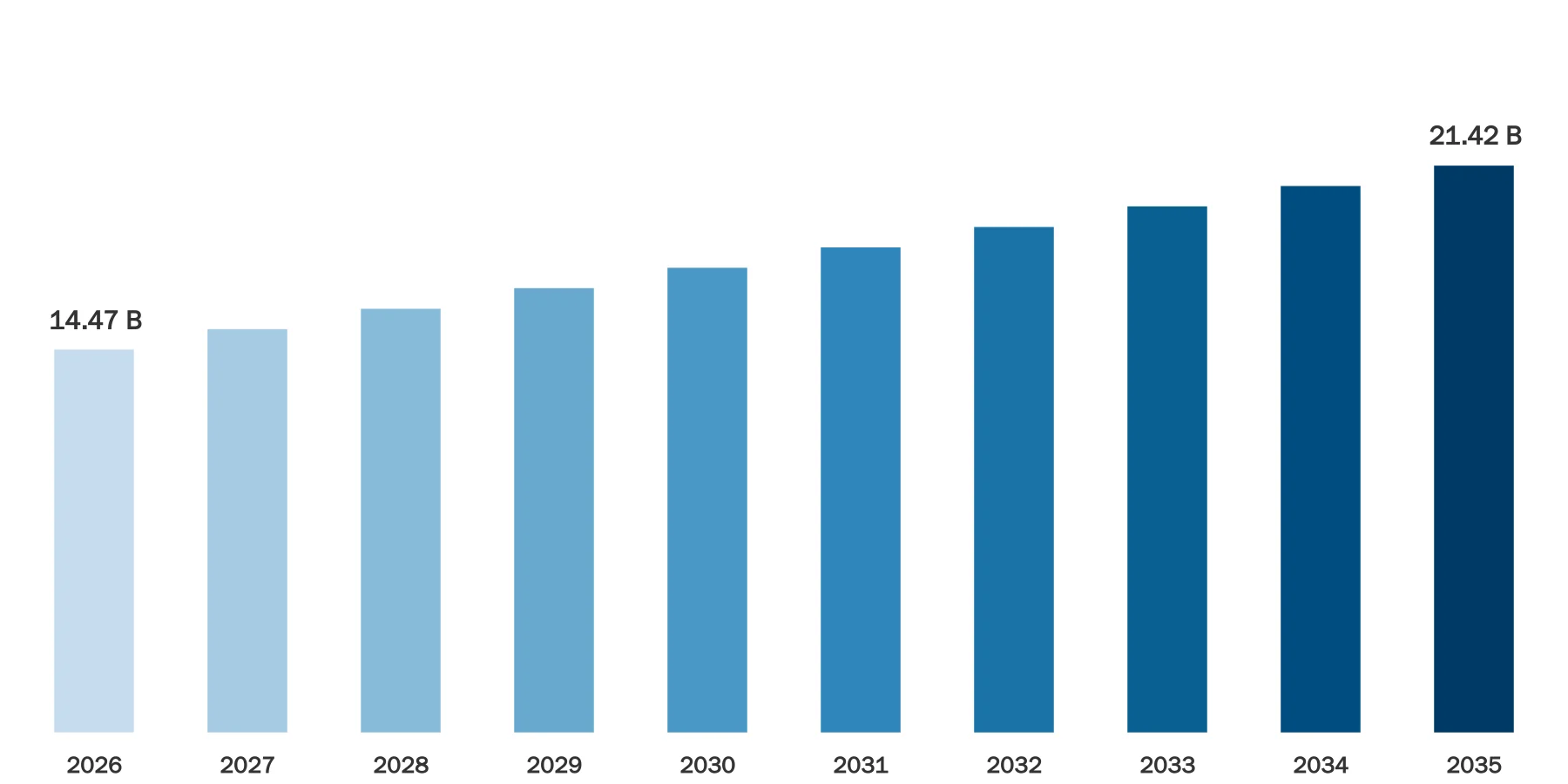
Source: Econ Market Research
Electric insulators serve as barriers to prevent the flow of electric current and are designed to withstand high voltages while maintaining electrical isolation. These components play a fundamental role in power generation, transmission, and distribution systems, ensuring operational safety and reliability by preventing electrical leakage and minimizing power losses.
The increasing demand for electricity globally, along with rising investments in infrastructure development and Power Grid modernization, is propelling a steady growth in the electric insulators market. The increasing focus on integrating renewable energy sources and the development of smart grid technologies is driving up demand for sophisticated insulating materials that can withstand extreme weather and sustain higher voltage levels. Further promoting market expansion are the growing investments in electrification projects in emerging economies.
Adoption of novel materials and manufacturing processes targeted at improving insulator performance, durability, and cost-effectiveness are important market trends. Compared to conventional porcelain or glass insulators, composite insulators in particular are becoming more and more popular because of their increased mechanical strength, reduced weight, and resistance to pollution-induced flashovers. Furthermore, proactive maintenance strategies are becoming easier to implement thanks to developments in insulation monitoring and diagnostic technologies, which maximise operational effectiveness and prolong the life of electrical assets.
Electric insulators Dynamics
Technological innovations play a pivotal role in driving market growth, with continuous research and development efforts focusing on enhancing insulator performance, durability, and efficiency. The adoption of advanced materials such as polymer composites and silicone rubber, along with the integration of smart monitoring and diagnostic technologies, is revolutionizing the insulator landscape, enabling utilities and industries to achieve higher levels of operational reliability and safety while optimizing asset management strategies.
Government initiatives and regulatory requirements also have a big impact on market dynamics. Tight safety requirements and environmental laws are what make environmentally friendly and sustainable insulation solutions popular. Furthermore, grid modernization and renewable energy integration policies are driving demand for high-voltage insulators that can handle increasingly intricate power transmission and distribution networks. Furthermore, the electric insulators market is highly competitive, with major players vying for market share by developing novel products, forming strategic alliances, and expanding through mergers and acquisitions. As markets grow quickly, companies are putting more and more emphasis on diversifying their product lines and going global in order to take advantage of new opportunities and meet the changing needs and preferences of their customers.
Electric insulators Drivers
Renewable Energy Integration:
The market for electric insulators is significantly influenced by the growing integration of renewable energy sources, such as solar and wind power, into the electrical grid. Specialised insulating materials that can withstand high voltage levels and adverse environmental conditions are frequently needed for renewable energy projects. Electric insulators are predicted to become more in demand as governments throughout the world support the switch to clean energy sources in an effort to slow down global warming and lessen dependency on fossil fuels. Manufacturers have an opportunity to capitalise on this trend by creating cutting-edge insulating solutions specifically designed to meet the demands of renewable energy infrastructure, such as offshore wind farms and solar power plants.
Grid Modernization Initiatives:
The need for advanced electric insulators is being driven by grid modernization initiatives that aim to improve the electrical infrastructure',s resilience, efficiency, and dependability. Many regions', ageing power grids need to be upgraded and improved in order to handle changing energy demands, integrate distributed energy resources, and lessen the effects of extreme weather and cyber threats. To guarantee smooth operation and avoid electrical failures, smart grid technologies like sophisticated metering infrastructure and real-time monitoring systems depend on durable insulating materials.
As a result, high-performance insulators that can support contemporary grid architectures and facilitate the smooth integration of automation and digital communication technologies are being purchased by utilities and grid operators. Manufacturers of insulators now have the chance to profit from the rising demand for cutting-edge insulating materials designed for smart grid applications.
Restraints:
Fluctuating Raw Material Prices:
For companies that make electric insulators, price fluctuations in raw materials present a serious problem since they affect production costs and profit margins. Numerous insulating materials, such as glass, porcelain, and composite polymers, depend on inputs like petrochemical Derivatives, silica, and alumina, the prices of which are prone to fluctuations in the market and disruptions in the supply chain. Because of this, sourcing raw materials and controlling production costs are more uncertain and risky for manufacturers, which can impede R&,D spending and stifle innovation in the insulator sector.
Intense Competitive Pressures:
The electric insulators market is highly competitive, characterized by the presence of numerous global and regional players vying for market share and profitability. Intense competitive pressures stemming from price competition, technological innovation, and customer service requirements pose challenges for insulator manufacturers seeking to differentiate their offerings and maintain competitive advantage. Moreover, consolidation within the industry through mergers and acquisitions further intensifies competition, leading to market consolidation and pricing pressures.
As a result, smaller manufacturers and new entrants may face barriers to entry and struggle to compete effectively against larger, established players with greater financial resources and economies of scale. This competitive landscape underscores the importance of strategic differentiation, product innovation, and customer relationship management as key success factors for insulator companies seeking to thrive in the global marketplace.
Opportunities:
Technological Advancements and Innovation:
Innovation and technological progress are causing revolutionary shifts in the electric insulators industry, giving producers new chances to create and market next-generation insulating products. Innovations in materials science, manufacturing techniques, and design principles are making it possible to create insulators with better mechanical strength, electrical insulation qualities, and resistance to environmental influences. Additionally, real-time condition monitoring and predictive maintenance are made easier by the integration of smart sensors and Internet of Things-enabled monitoring systems into insulator designs. This enables utilities and grid operators to improve grid reliability and asset management strategies.
Segment Overview
By Type
By type, electric insulators are categorized into ceramic, composites, and glass. Ceramic insulators, traditionally made from porcelain, offer excellent electrical insulation properties and mechanical strength, making them suitable for high-voltage transmission and distribution lines. Composites, such as polymer-based insulators, combine materials like fiberglass and epoxy resin to achieve superior performance characteristics, including lightweight design, resistance to pollution, and enhanced durability. Glass insulators, although less common in modern applications, exhibit good electrical properties and resistance to temperature fluctuations, often used in specialized industrial and niche applications.
By End-Use
Regarding end-use, the electric insulators market serves utilities, industrial sectors, and other applications. Utilities, including electric power companies and grid operators, represent a significant end-user segment for electric insulators, relying on these components to ensure the safe and reliable transmission of electricity across vast networks. In the industrial sector, electric insulators find applications in various industries such as manufacturing, petrochemicals, and mining, where they play a critical role in powering machinery, equipment, and industrial processes. Other applications encompass a broad spectrum of specialized uses, including railway electrification systems, telecommunications infrastructure, and renewable energy projects, highlighting the versatility and adaptability of electric insulators across diverse applications and industries.
Electric Insulators Overview by Region
In Asia-Pacific, rapid urbanization and industrial growth, particularly in countries like China and India, are driving significant demand for electric insulators to support the expansion of power transmission and distribution networks. Moreover, increasing investments in renewable energy projects and grid modernization initiatives across the region are fuelling the adoption of advanced insulating solutions. In North America and Europe, mature markets with established infrastructure, the emphasis is on upgrading aging power grids, integrating renewable energy sources, and enhancing grid reliability through the deployment of innovative insulator technologies.
Stringent environmental regulations and sustainability goals are also shaping market dynamics, driving demand for eco-friendly insulating materials and solutions. Meanwhile, in the Middle East and Africa, ongoing investments in power infrastructure expansion and electrification efforts are driving demand for electric insulators to support economic development and meet rising energy demands. The region',s vast renewable energy potential, particularly in solar and wind power, presents opportunities for insulator manufacturers to cater to emerging markets and support the transition towards cleaner and more sustainable energy systems.
Electric Insulators Market Competitive Landscape
Leading companies such as ABB Ltd., Siemens AG, General Electric Company, and Toshiba Corporation dominate the market with extensive product portfolios, diversified geographical presence, and robust research and development capabilities. These industry giants leverage their technological expertise and financial resources to develop innovative insulating solutions tailored to the evolving needs of utilities, industries, and infrastructure projects worldwide. Moreover, strategic partnerships, mergers, and acquisitions are common strategies employed by key players to expand market reach, enhance product offerings, and gain a competitive edge.
Regional players, on the other hand, often specialize in niche segments or cater to specific regional markets, leveraging their agility and local expertise to serve customer needs effectively. Additionally, the electric insulators market is witnessing increasing competition from new entrants and start-ups leveraging disruptive technologies such as advanced materials, Additive Manufacturing, and IoT-enabled solutions to offer novel insulating products and services. With intensifying competition and evolving customer preferences, differentiation through product innovation, quality assurance, and customer service excellence is becoming imperative for companies seeking to maintain relevance and competitiveness in the dynamic electric insulators market landscape.
Electric Insulators Market Leading Companies:
ABB Ltd.
NGK Insulators Ltd.
Aditya Birla Insulators
Siemens AG
General Electric Company
Hubbell Incorporated
Bharat Heavy Electricals Limited (BHEL)
Toshiba Corporation
LAPP Insulators GmbH
MacLean-Fogg Company
TE Connectivity Ltd.
Pfisterer Group
Seves Group
Hitachi Energy
Schneider Electric SE
Global Electric Insulators Report Segmentation
Electric insulators Market Report Scope & Segmentation
| Attributes | Details |
|---|---|
Market Size (Current) | US$ 14.47 Billion in 2026 |
Market Size (Forecast) | US$ 21.42 Billion in 2035 |
Growth Rate | CAGR of 4.46% from 2026 to 2035 |
Forecast Period | 2026 – 2035 |
Base Year | 2025 |
Historical Data Available | Yes |
Regional Scope | Global |
Segments Covered | By Material
By Voltage
By Application
|
Frequently Asked Questions
Common questions about this report
The study period covers historical insights and forecast projections for the period 2026-2035.
About the Author
Market research expert with years of industry experience

Dipali Bhingare serves as the Market Research Director at Econ Market Research. With a focus on translating complex global economic shifts into actionable business intelligence, she oversees the strategic direction of comprehensive market studies. Her work empowers organizations to navigate volatile industries through data-driven forecasting and deep-dive competitive analysis.
Related Reports
Explore more market insights from the same category