

GPS Anti-Jamming Market
GPS Anti-Jamming Market Size, Share, Trends, Growth, and Industry Analysis, By Receiver Type (Military andamp; Government Grade, Commercial Transportation Grade), By Technique (Nulling Technique, Beam Steering Technique, Civilian Technique), By Application (Flight Control, Surveillance andamp; Reconnaissance, Position, Navigation andamp; Timing (PNT), Targeting, Casualty Evacuation), Regional Analysis and Forecast Period 2026-2035
Market Overview
As per Econ Market Research analysis, the Global GPS Anti-Jamming Market was valued at approximately US$ 5.54 Billion in 2026 and is predicted to reach US$ 8.72 Billion by 2035, expanding at a CAGR of 5.2% over the forecast duration. The base year is 2025.
GPS Anti-Jamming Market Size 2025-2035 (USD Billion)

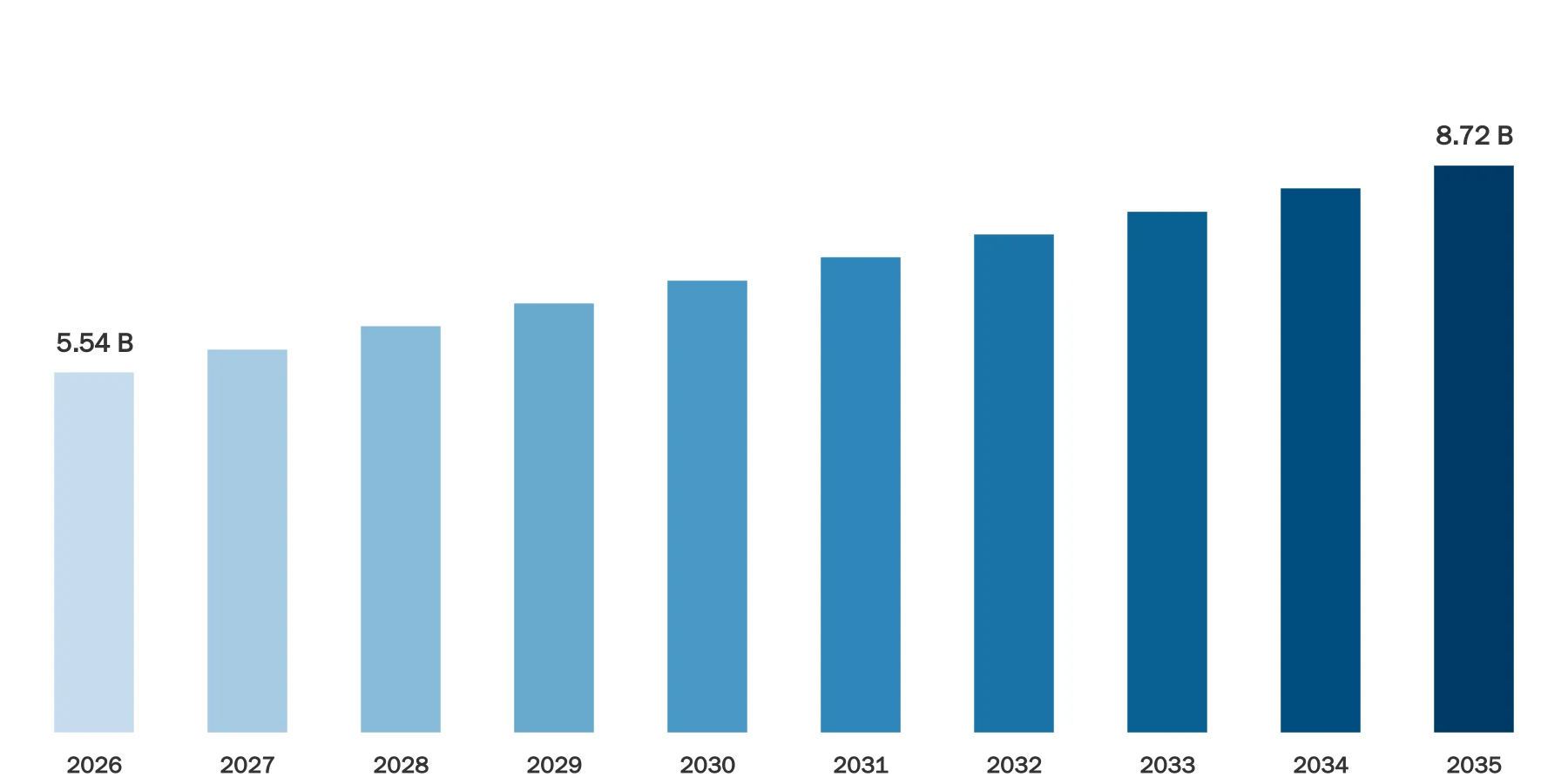
Source: Econ Market Research
The market for GPS anti-jamming has expanded quickly as a result of the growing use of GPS technology in some industries, including telecommunications, transportation, and defense. To safeguard GPS signals against deliberate interference or efforts at jamming, anti-jamming systems are essential. Strong anti-jamming solutions are becoming more and more in demand as a result of technological improvements and the growing threat of jamming attacks. Global market growth is being propelled by industry players', innovative efforts to create anti-jamming technologies that are incredibly effective, robust, and flexible.
GPS ANTI-JAMMING MARKET:
GPS Anti-Jamming Dynamics
Growing worries about GPS signals being susceptible to spoofing and jamming attacks, especially in defense, critical infrastructure, and autonomous car applications, are driving the GPS anti-jamming market. Government rules requiring anti-jamming procedures to be implemented further fuel market expansion. Technological developments that improve competitiveness in the market include the creation of multi-constellation receivers and the incorporation of anti-jamming capabilities into GPS receivers. Significant obstacles are presented by issues including the high price of anti-jamming technologies and the requirement for ongoing innovation to combat changing threats. Market participants frequently use strategic alliances, mergers, and acquisitions to increase the scope of their product offerings and market share.
GPS Anti-Jamming Drivers
Increasing Reliance on GPS Technology
The growing dependence on GPS technology is a result of its widespread adoption in a number of industries, including telecommunications, logistics, transportation, and agriculture. GPS is essential for asset tracking, timing synchronization, navigation, and precision agriculture for both consumers and businesses. Furthermore, the Internet of Things (IoT) and the growth of location-based services highlight how essential GPS is. Strong anti-jamming solutions are needed to guarantee the continuous and precise operation of GPS-enabled devices and services, which is driven by this growing dependence.
Growing Threat of Jamming and Spoofing Attacks
Both the frequency and the intensity of these attacks are rising as a result of the more sophisticated actions of malevolent actors. Jamming and spoofing have the potential to harm lives, undermine national security, and interfere with vital infrastructure. The increasing danger highlights the pressing need for efficient anti-jamming solutions to protect GPS-enabled services and systems from deliberate interference, guaranteeing their uninterrupted and safe operation.
Restraints:
High Cost of Anti-Jamming Solutions
Investing heavily in specialized hardware, software, and infrastructure is frequently necessary to implement effective anti-jamming solutions. To add to the overall financial burden are continuous maintenance and support charges. Despite the urgent need for protection against jamming threats, the cost-effectiveness of anti-jamming solutions becomes a crucial concern for organizations with limited budgets, particularly in sectors like transportation and agriculture. This could lead to a delay or limitation in their implementation.
Complexity of Anti-Jamming Implementation
Adding anti-jamming features to current GPS systems frequently calls for a high level of technical proficiency. Compatibility problems, interoperability difficulties, and the requirement for customisation add to the implementation process',s complexity. Complicating matters further is the need to guarantee flawless functioning on a variety of platforms and environments. Despite the awareness of the need to mitigate jamming threats, companies are discouraged from investing in anti-jamming solutions due to its complexity, which increases deployment time, resource allocation, and associated costs.
Opportunities:
Development of Multi-Constellation Receivers
A major opportunity in the GPS anti-jamming sector is the development of multi-constellation receivers. By utilizing signals from many satellite constellations, including GPS, GLONASS, Galileo, and BeiDou, these receivers improve positioning precision, dependability, and resistance to jamming attempts. Multi-constellation receivers enhance performance in demanding conditions and lessen their susceptibility to signal interference by spreading out their signal sources. This technology drives demand for sophisticated receiver systems by improving navigational capabilities and increasing the efficacy of anti-jamming technologies.
Expansion of Satellite Navigation Systems
In the GPS anti-jamming sector, the growth of satellite navigation systems offers a profitable opportunity. Strong anti-jamming technologies are becoming more and more necessary to shield satellite constellations like GPS, GLONASS, Galileo, and BeiDou from interference as they become more widely deployed. The increasing prevalence of satellite navigation systems across diverse industries such as transportation, agriculture, and defense has LED to a growing demand for dependable and robust anti-jamming technology. This has in turn stimulated industry expansion and innovation within this domain.
Segment Overview
By Type
Based on type, the global GPS anti-jamming market is divided into nulling technique, beam steering technique, and others. The nulling technique category dominates the market with the largest revenue share in 2023. In order to attenuate jamming signals, nulling techniques entail creating nulls or voids in the radiation pattern of the antenna. This is accomplished by modifying the antenna elements', phase and amplitude to cancel out distracting signals.
Using beam steering techniques, the main radiation beam of the antenna is electrically steered to reduce or eliminate interference from jamming signals. Beam steering techniques increase the resistance of GPS receivers against jamming attempts by dynamically guiding the beam towards the desired signal while steering away from the jamming source.
By Application
Based on the application, the global GPS anti-jamming market is categorized into unmanned platforms, ground platforms, naval platforms, and airborne platforms. The unmanned platforms category leads the global GPS anti-jamming market with the largest revenue share in 2023. Drones, unmanned aerial vehicles (UAVs), and other Autonomous Vehicle types that depend on GPS for operation and navigation are examples of unmanned platforms. Unmanned platforms that use anti-jamming solutions are shielded against deliberate interference and attempted jamming, which could compromise their navigational systems and jeopardize their safety during use in both military and civilian contexts.
Ground platforms include a broad variety of terrestrial vehicles and equipment, such as base stations, automobiles used for military purposes, and commercial cars and cellphones. Surface ships, submarines, and other watercraft that use GPS for target acquisition, navigation, and location are examples of naval platforms. Deployed on naval platforms, anti-jamming technologies guard against at-sea jamming threats, guaranteeing precise and dependable navigation in demanding maritime situations and preserving naval operations.
GPS Anti-Jamming Overview by Region
The global GPS anti-jamming market is categorized into North America, Europe, Asia-Pacific, and the Rest of the World. North America emerged as the leading region, capturing the largest market share in 2023. Due to the region',s robust defense industry and excellent technological skills, substantial investments in anti-jamming solutions are being made. Furthermore, there are many security risks in North America, which makes strong GPS security essential for homeland security, military operations, and vital infrastructure. Further bolstering the region',s supremacy is the presence of important research institutions and market participants.
North America continues to lead the global GPS anti-jamming market in terms of innovation, implementation, and market share due to the strong demand for state-of-the-art anti-jamming technology across a range of industries. The area',s economy is expanding quickly, which has prompted more spending in the infrastructure, transportation, and defense sectors. The need for sophisticated anti-jamming solutions to protect vital assets and activities is developing as a result of escalating geopolitical tensions and security concerns. Additionally, GPS technology adoption across a range of industries and technical developments fuel market expansion in Asia-Pacific.
GPS Anti-Jamming Competitive Landscape
In the global GPS anti-jamming market, a few major players exert significant market dominance and have established a strong regional presence. These leading companies remain committed to continuous research and development endeavors and actively engage in strategic growth initiatives, including product development, launches, joint ventures, and partnerships. By pursuing these strategies, these companies aim to strengthen their market position, expand their customer base, and capture a substantial share of the market.
GPS Anti-Jamming Market Leading Companies:
Hexagon/NovAtel
Chemring Group
Cobham
Raytheon
Rockwell Collins
Thales Group
Harris
FURUNO ELECTRIC CO
Tallysman
BAE, and various others.
GPS Anti-Jamming Recent Developments
In December 2023, Israel Aerospace Industries (IAI) said in a statement that it has entered into a contract with Korea Aerospace Industries (KAI) to supply its ADA GPS anti-jamming systems for the Light Armed Helicopter (LAH) 2nd Phase Production.
In July 2023, The Ministry of Defence has acquired its 1000th Landshield®, unit, according to Raytheon UK, which is the most recent achievement in the company',s defense of vital GPS signals. An industry-leading anti-jam system is Landshield. Landshield is as little as a hockey puck, but its light weight, compact design, and low power consumption make it incredibly versatile&mdash,it may be used on land, in the water, or in the air.
GPS Anti-Jamming Market Report Segmentation
GPS Anti-Jamming Market Report Scope & Segmentation
| Attributes | Details |
|---|---|
Market Size (Current) | US$ 5.54 Billion in 2026 |
Market Size (Forecast) | US$ 8.72 Billion in 2035 |
Growth Rate | CAGR of 5.2% from 2026 to 2035 |
Forecast Period | 2026 – 2035 |
Base Year | 2025 |
Historical Data Available | Yes |
Regional Scope | Global |
Segments Covered | By Receiver Type
By Technique
By Application
|
Frequently Asked Questions
Common questions about this report
The study period covers historical insights and forecast projections for the period 2026-2035.
About the Author
Market research expert with years of industry experience

Dipali Bhingare serves as the Market Research Director at Econ Market Research. With a focus on translating complex global economic shifts into actionable business intelligence, she oversees the strategic direction of comprehensive market studies. Her work empowers organizations to navigate volatile industries through data-driven forecasting and deep-dive competitive analysis.
Related Reports
Explore more market insights from the same category