

Speaker Market
Speaker Market Size, Share, Trends, Growth, and Industry Analysis, By Product Type (Soundbar, Subwoofer, In-wall, Floor-standing / Tower, Bookshelf / Satellite, Outdoor, Others), By Connectivity (Wired, Wireless), By Driver Type (Active, Passive), By Application (Communication, Home Entertainment, Automotive, Events and Outdoor Entertainment, Commercial Sound Reinforcement), By End-User (Residential, Commercial and Institutional, Automotive OEM), Regional Analysis and Forecast Period 2026-2035
Market Overview
As per Econ Market Research analysis, the Global Speaker Market reached a valuation of US$ 67.7 Billion in 2026 and is anticipated to grow to US$ 217.09 Billion by 2035, at a CAGR of 13.8% during the forecast timeline 2026–2035. The base year considered is 2025.
Speaker Market Size 2025-2035 (USD Billion)

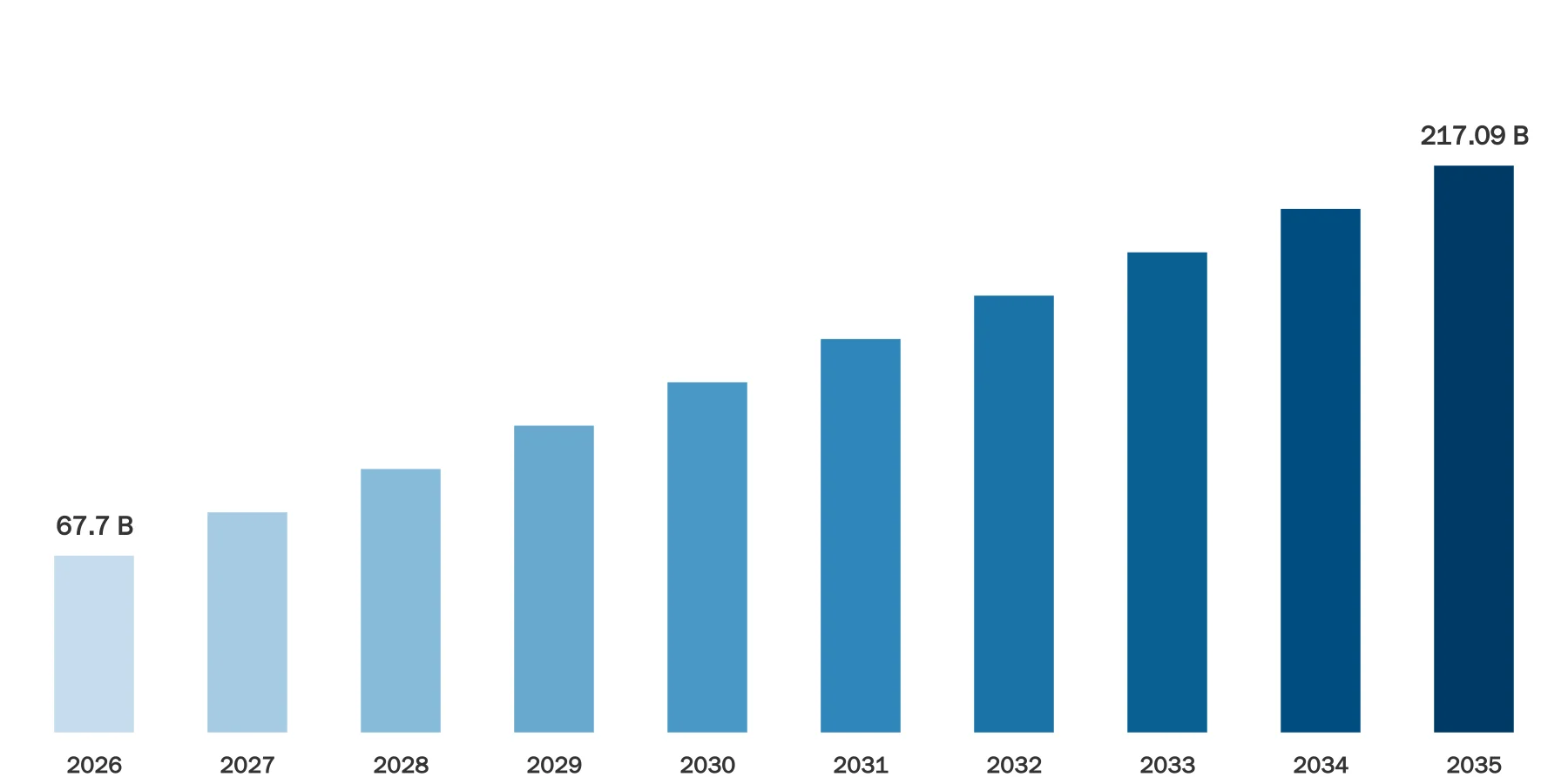
Source: Econ Market Research
Aside from improved music quality and wireless connectivity, modern speakers also come equipped with intelligent capabilities like voice control and Virtual Assistant integration. Both well-known companies and niche startups compete for market share by differentiating their products and employing diverse marketing approaches. Furthermore, the industry has grown due to the popularity of durable and portable speakers, which appeal to explorers and outdoor lovers. As it accepts new technology and adjusts to changing lifestyles, the speaker market is expanding overall and providing customers throughout the world with rich audio experiences.
Speaker Dynamics
Product differentiation is fueled by quick advancements, and attributes like portability, smart capabilities, and wireless connectivity are becoming more and more important. The market is growing because of consumer demand for immersive audio experiences, and decisions to buy are influenced by brand reputation and pricing. In order to increase their reach and maintain their competitiveness, market participants also participate in strategic alliances, acquisitions, and marketing initiatives. The market environment is also shaped by new trends like eco-friendly procedures and sustainable materials.
Speaker Drivers
Technological Advancements
The speaker market is primarily driven by technological improvements, which also foster creativity and improve user experiences. The way people engage with speakers has been completely transformed by innovations like Bluetooth connectivity, AI integration, and enhanced sound processing capabilities, which provide smooth wireless connectivity, customized voice control, and excellent audio quality. These developments not only meet but also surpass consumer expectations, creating a need for speaker products with greater features and sophistication, which in turn fuels the industry',s growth and competition.
Rise of Wireless Solutions
Wireless speakers provide seamless communication to smartphones and other devices, doing away with the limitations of cords and wires in response to the growing desire for convenience and mobility. This change reflects the demands of contemporary living by offering consumers on the go portable and adaptable audio experiences. Because of this, the use of wireless speaker solutions is increasing dramatically, spurring innovation and influencing the direction of the sector.
Restraints:
Competition from Alternative Audio Solutions
Compact, portable, and personal audio experiences provided by headphones, earbuds, and soundbars have shifted consumer tastes away from traditional speakers. The adaptability of these options in different contexts, like traveling or watching TV at home, also lessens the allure of separate speaker systems. In order to be competitive in the market, speaker firms must therefore work even harder to develop and adjust to changing consumer demands.
Supply Chain Disruptions
Geopolitical conflicts, logistical difficulties, and component shortages are a few examples of factors that can impede the movement of raw materials and completed goods. These disruptions affect corporate margins by raising operating costs and impeding timely product delivery. Furthermore, supply chain instability can undermine customer trust and loyalty, potentially costing businesses market share if they are unable to handle these difficulties.
Opportunities:
Growing Demand for Smart Speakers
As virtual assistants like Google Assistant and Amazon Alexa become more and more ingrained in daily life, there is a big opportunity in the market for smart speakers. Voice-activated information access, hands-free convenience, and seamless interaction with smart homes are all provided by smart speakers. This trend provides opportunities for businesses to provide cutting-edge features, increase ecosystem interoperability, and improve user experiences. Additionally, the information gathered by smart speakers allows for targeted marketing and personalized services, which increase consumer engagement and loyalty.
Expanding IoT Ecosystem
Speakers are essential for directing and coordinating voice instructions for these smart devices as more and more gadgets are linked. This integration increases automation and convenience in homes and offices, increasing demand for IoT-compatible smart speakers. In order to build seamless and coherent smart environments, businesses should take advantage of this trend by creating interoperable speaker solutions, broadening the scope of their product offerings, and forming collaborations within the larger IoT ecosystem.
Segment Overview
By Product Type
Based on product type, the global speaker market is divided into smart speakers, home audio speakers, portable speakers, and true wireless stereo (TWS). The smart speaker category dominates the market with the largest revenue share in 2023. Virtual assistants like Apple',s Siri, Google Assistant, and Amazon Alexa are integrated into smart speakers. They provide hands-free voice control for a number of functions, such as weather monitoring, music playback, reminder setting, and smart home device control. High-quality sound is intended to be delivered by home audio speakers to provide immersive listening environments. Because they are lightweight and portable, portable speakers are perfect for use while traveling.
By Size
Based on the size, the global speaker market is categorized into small, medium, and large. The medium category leads the global speaker market with the largest revenue share in 2023. Though smaller than huge speakers, medium speakers are still larger than small speakers. Their ability to balance size, power, and sound quality makes them appropriate for a variety of uses. Tiny speakers are small in size and frequently made to be portable and adaptable. Large speakers can create high-quality sound at larger volumes and are distinguished by their size and power output.
By Technology
Based on technology, the global speaker market is segmented into wireless and wired. The wireless segment dominates the speaker market. Without the need for physical wires, wireless speakers can receive audio signals from a source device such as a smartphone, tablet, or computer by utilizing wireless technologies like Bluetooth, Wi-Fi, or proprietary wireless protocols. The source device is connected to wired speakers by physical cords, which are usually made of speaker wire connections, 3.5mm auxiliary, or RCA audio cables. There is no need for wireless transmission because these speakers are directly connected to the source device',s audio output, guaranteeing a steady and dependable connection.
By End Use
Based on end use, the global speaker market is divided into personal and commercial. The commercial category dominates the market with the largest revenue share in 2023. Commercial speakers are meant to be used in public or commercial settings, like public address (PA) systems, retail establishments, restaurants, hotels, conference rooms, and event spaces. These speakers can handle a variety of audiovisual applications, such as live performances, announcements, background music, and presentations, and they are made to provide high-quality audio to larger audiences. Personal speakers are intended for use by one person or alone, usually in domestic spaces like houses, apartments, and private offices. For personal amusement, these speakers are utilized for playing games, watching movies, listening to music, and using other multimedia apps.
Speaker Overview by Region
The global speaker market is categorized into North America, Europe, Asia-Pacific, and the Rest of the World. Asia-Pacific emerged as the leading region, capturing the largest market share in 2023. The demand for consumer electronics, especially speakers, has increased due to factors such as rapid urbanization, rising disposable incomes, and a growing population that is digital savvy. In addition, the area is home to some of the biggest suppliers and manufacturers of electronics in the world, which strengthens the supply chain infrastructure.
The market is also developing as a result of rising investments in entertainment and leisure activities, growing e-commerce platforms, and rising smart home device adoption. Numerous variables are responsible for this prediction, such as a sizable and well-adjusted consumer base with high levels of disposable income, a strong market for high-end audio equipment, and a tech-savvy populace eager to embrace the newest advancements. In addition, the area has a developed retail sector, widely accessible internet platforms, and a culture that places a premium on top-notch entertainment experiences.
Speaker Competitive Landscape
In the global speaker market, a few major players exert significant market dominance and have established a strong regional presence. These leading companies remain committed to continuous research and development endeavors and actively engage in strategic growth initiatives, including product development, launches, joint ventures, and partnerships. By pursuing these strategies, these companies aim to strengthen their market position, expand their customer base, and capture a substantial share of the market.
Speaker Market Leading Companies:
Bose Corporation
Sony
Beats Inc
Harman International
Yamaha Corporation of America
Audiovox Corporation
Poineer
Logitech
Sennheiser
Polk Audio
Sonos, Inc., and various others.
Speaker Recent Developments
In September 2023, One of the top producers of loudspeakers for professional audio applications, B&,C Speakers, with headquarters in Florence, Italy, recently revealed that it has acquired all of Kentucky-based Eminence Speaker, LLC, a company that makes loudspeakers for professional audio and guitar amplification, along with its production facilities in Dongguan, China..
In September 2022, The Bose QuietComfort®, Earbuds II are the company',s next generation of totally wireless noise-canceling earphones. The world',s greatest noise cancellation from any headset, whether headband or in-ear, is achieved by the QC Earbuds II thanks to Bose CustomTuneTM sound calibration technology, which cleverly tailors audio and noise cancellation performance to each ear',s unique shape.
Speaker Market Report Segmentation
Speaker Market Report Scope & Segmentation
| Attributes | Details |
|---|---|
Market Size (Current) | US$ 67.7 Billion in 2026 |
Market Size (Forecast) | US$ 217.09 Billion in 2035 |
Growth Rate | CAGR of 13.8% from 2026 to 2035 |
Forecast Period | 2026 – 2035 |
Base Year | 2025 |
Historical Data Available | Yes |
Regional Scope | Global |
Segments Covered | By Product Type
By Connectivity
By Driver Type
By Application
By End-User
|
Frequently Asked Questions
Common questions about this report
The study period covers historical insights and forecast projections for the period 2026-2035.
About the Author
Market research expert with years of industry experience

Related Reports
Explore more market insights from the same category