

Electric Highway Market
Electric Highway Market Size, Share, Trends, Growth, and Industry Analysis, By Charger Type (Slow Chargers, Fast Chargers), By Technology (Overhead Catenary, Inductive Charging, Rail Charging), By Station Type (Solar Powered, Grid Powered), Regional Analysis and Forecast Period 2026-2035
Electric Highway Market Overview
As per Econ Market Research analysis, the Global Electric Highway Market was valued at US$ 68.51 Billion in 2026 and is expected to reach US$ 226.2 Billion by 2035, registering a CAGR of 14.2% during the forecast period 2026–2035. The base year considered is 2025.
Electric Highway Market Size 2025-2035 (USD Billion)

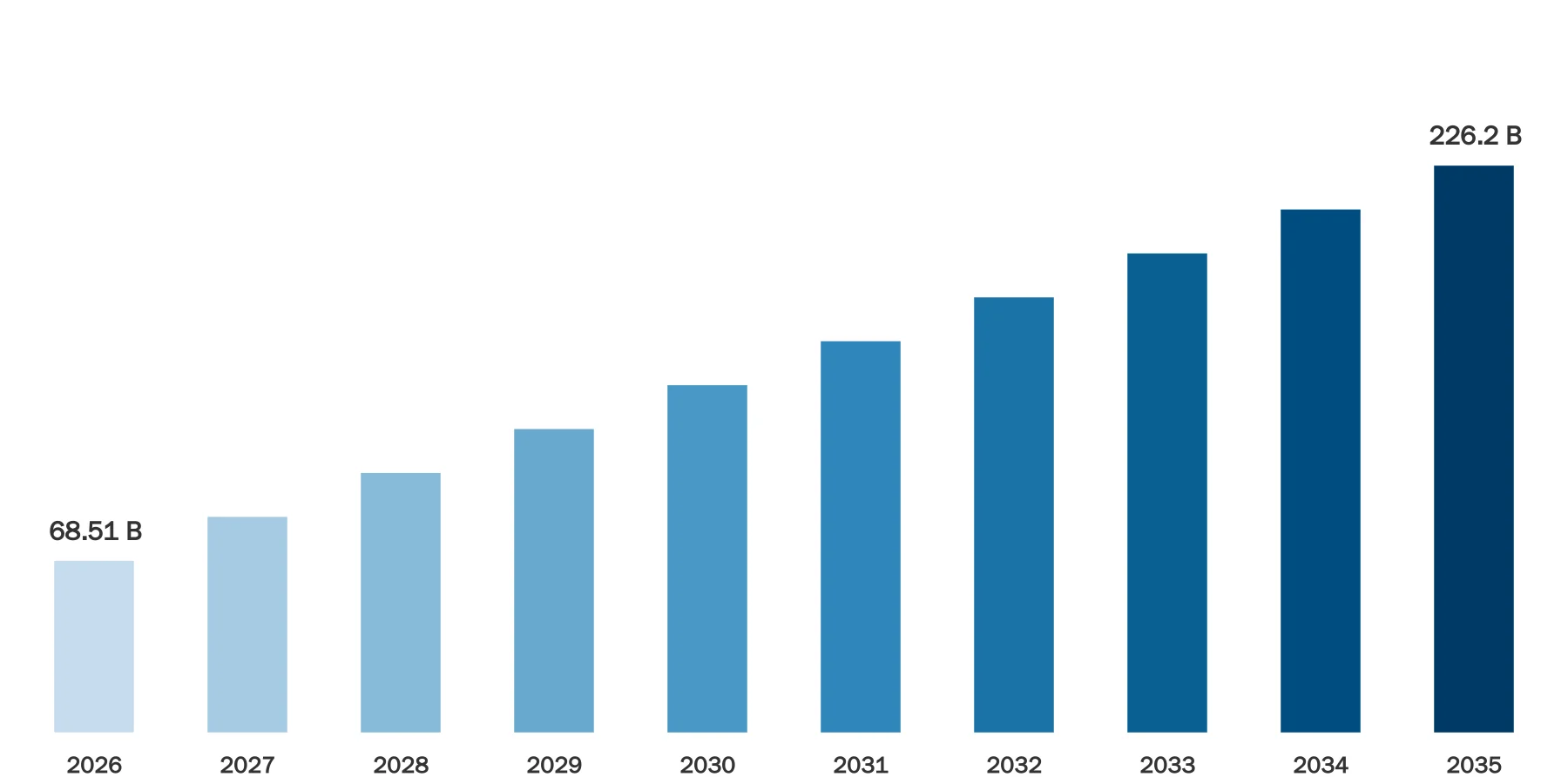
Source: Econ Market Research
The market for electric highways is a growing industry that is concentrated on creating and establishing infrastructure to facilitate the broad usage of electric cars (EVs). These highways include charging stations arranged thoughtfully beside important thoroughfares, making it possible for EVs to travel large distances without difficulty. The objective is to expedite the shift to electric mobility, alleviate range anxiety, and advance sustainable transportation. The future of efficient and sustainable travel is greatly influenced by the electric highway market because to the growing desire for eco-friendly transportation options and technological improvements.
Electric Highway Market Dynamics
The market dynamics for electric highways are propelled by the escalating need for environmentally friendly transportation options, the growing uptake of electric cars (EVs), and the encouragement of policymakers. Market expansion is facilitated by investments in infrastructure for charging, technological developments in fast-changing technologies, and partnerships between automakers and charging infrastructure providers. The market for electric highways is growing because to factors like less carbon emissions, increased environmental consciousness, and advancements in battery technology. Regulatory frameworks, standardization, and filling in any infrastructure shortages are obstacles, nevertheless.
Electric Highway Market Drivers
Growing Demand for Sustainable Transportation
There is a growing need for sustainable transportation on a worldwide scale due to increased environmental consciousness and the pressing need to reduce carbon emissions. The increasing preference of customers for environmentally sustainable options has made the adoption of Electric Vehicle-market/\"">electric vehicles and the construction of associated infrastructure, such as electric highways, essential. Governments and businesses embrace this trend by putting policies and programs that support clean mobility into place, which feeds back positively into the growing demand for environmentally friendly transportation options.
Accelerating Adoption of Electric Vehicles (EVs)
Electric car affordability and battery efficiency have increased due to advancements in EV technology. Customer choices are influenced by growing environmental consciousness and a move toward sustainable methods. Governments all across the world provide tax advantages, incentives, and stringent pollution restrictions, which accelerate the transition to electric vehicles. The rapid adoption of electric vehicles is fueled by the collective momentum created by major automakers making significant investments in electric vehicle research.
Restraints:
Limited Standardization and Interoperability
Integration is hampered by compatibility problems between different electric car manufacturers and providers of charging infrastructure when there are no widely recognized charging protocols. Infrastructure development is made more difficult by this lack of standards, which results in disjointed networks and slower overall development. Establishing common standards that guarantee interoperability and a more cohesive ecosystem for the electric highway sector is necessary to overcome these limitations.
High upfront costs
Equipment, technology, and installation costs must be heavily capitalized upon when establishing a charging infrastructure. The network',s ability to expand as an electric highway may be restricted by this financial obstacle, which could discourage both public and private companies from making significant development commitments. Strategic finance approaches, collaborations, and government incentives are necessary to overcome this limitation and hasten the installation of affordable electric roadway infrastructure while reducing economic difficulties.
Opportunities:
Smart Grid Integration and Vehicle-to-Grid Systems
The potential is in incorporating vehicle-to-grid (V2G) systems and smart grid technologies into the network of electric highways. Electric automobiles are transformed into dynamic energy assets by utilizing these innovations. Energy distribution can be optimized by smart grid integration, and electric vehicles can return excess energy to the grid through vehicle-to-grid (V2G) systems. By reducing electricity demand during peak hours and offering users potential revenue sources, this dual functionality improves grid stability and promotes a more sustainable and effective ecology for electric highways.
Urban and Suburban Integration
Adapting charging options to suburban and urban populations', various demands promotes the wider use of electric vehicles. While suburban integration caters to the needs of individuals who commute over longer distances, urban integration encourages easy access for EV users who live in cities. Through the smooth integration of electric highways into both settings, there is a chance to develop an all-encompassing and easily accessible infrastructure for charging that meets the diverse needs of both suburban and urban people.
Segment Overview
By Scale
Based on scale, the global electric highway market is divided into long-distance electrified roads and local electrified roads. The long-distance electrified roads category dominates the market with the largest revenue share in 2023. Long-distance electrified roads are a subset of the market for electric highways that are intended to enable longer trips for electric cars (EVs). Fast-charging stations are usually positioned thoughtfully along important thoroughfares and intercity routes on these roadways. Local electrified highways are designed to meet the needs of urban and suburban electric vehicle users in terms of charging. The infrastructure for charging on these roadways is designed to accommodate daily traffic within city limits and shorter commutes.
By Technology
Based on the technology, the global electric highway market is categorized into overhead lines, rail, and inductive. The overhead lines category leads the global electric highway market with the largest revenue share in 2023. In order to supply moving cars with electricity, power wires above the roadway are installed in overhead lines, commonly referred to as catenary systems. This technique is frequently connected to electric vehicles and buses.
Pantographs and other contact systems that take power from the overhead lines are installed on vehicles. In rail-based electrification, the road surface is covered in conductive rails or electrified tracks. As they travel along the road, electric cars with appropriate equipment can immediately draw electricity from these tracks. With inductive charging, power is wirelessly transferred from a receiving coil on the underside of an electric vehicle to a charging pad buried in the road using electromagnetic fields.
Electric Highway Market Overview by Region
The global electric highway market is categorized into North America, Europe, Asia-Pacific, and the Rest of the World. North America emerged as the leading region, capturing the largest market share in 2023. The adoption of electric cars (EVs) has been driven by the region',s strong commitment to sustainability, strict emissions laws, and increased environmental consciousness.
The development of an extensive network of strategically positioned charging stations along key highways is the result of large investments made by both public and private entities in the construction of an electric highway infrastructure. Throughout the forecast period, Europe is anticipated to post a significant CAGR. Many factors, such as government subsidies, strict environmental rules, and a focus on sustainable transportation, are blamed for this increase. European nations have invested heavily in creating infrastructure for electric vehicles, such as a vast network of charging stations and regulations encouraging the use of EVs.
Electric Highway Market Competitive Landscape
In the global electric highway market, a few major players exert significant market dominance and have established a strong regional presence. These leading companies remain committed to continuous research and development endeavors and actively engage in strategic growth initiatives, including product development, launches, joint ventures, and partnerships. By pursuing these strategies, these companies aim to strengthen their market position, expand their customer base, and capture a substantial share of the market.
Electric Highway Market Leading Companies:
ALE International
ABB Ltd.
Honeywell International Inc
AT&,T Inc
Cisco Systems Inc
Huawei Technologies Co. Ltd
LG CSN
IBM Corporation
Schneider Electric SE
Siemens AG, and various others.
Electric Highway Market Recent Developments
In September 2022, The National Highway for Electric Vehicles (NHEV) started the technology trial run for E-vehicles on the 270-kilometer Delhi Jaipur Expressway as part of the Ease of Doing Business (EoDB) project.
In September 2022, according to the Indian Union Minister, work is being done on creating electrified or electric roadways suitable for heavy-duty trucks and buses.
Electric Highway Market Report Segmentation
Electric Highway Market Report Scope & Segmentation
| Attributes | Details |
|---|---|
Market Size (Current) | US$ 68.51 Billion in 2026 |
Market Size (Forecast) | US$ 226.2 Billion in 2035 |
Growth Rate | CAGR of 14.2% from 2026 to 2035 |
Forecast Period | 2026 – 2035 |
Base Year | 2025 |
Historical Data Available | Yes |
Regional Scope | Global |
Segments Covered | By Charger Type
By Technology
By Station Type
|
Frequently Asked Questions
Common questions about this report
The study period covers historical insights and forecast projections for the period 2026-2035.
About the Author
Market research expert with years of industry experience

Related Reports
Explore more market insights from the same category