Carry Deck Crane Market Overview
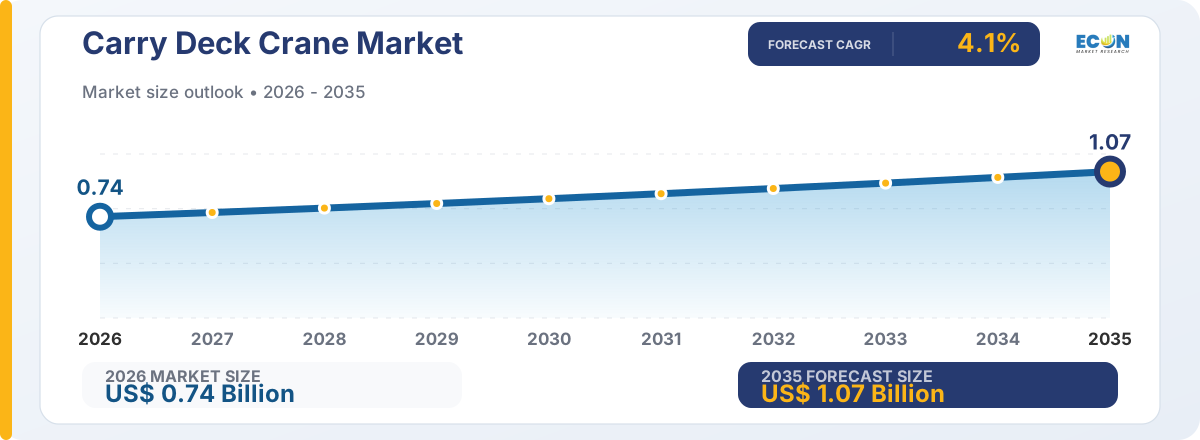
As per Econ Market Research analysis, the Global Carry Deck Crane Market was recorded at US$ 0.74 Billion in 2026 and is projected to expand to US$ 1.07 Billion by 2035, registering a CAGR of 4.1% over the forecast period. The base year used is 2025.
Carry Deck Cranes are versatile machines that are widely used in industrial settings, construction sites, and other areas where heavy lifting is required. They are identified by their compact design, which allows them to navigate tight spaces and transport loads both indoors and outdoors. Carry deck cranes are driven by a number of factors, including increased global construction and infrastructure development projects, rising demand for efficient Material Handling Equipment, and advancements in crane technology. Additionally, safety regulations, environmental concerns, and the need for dependable equipment all contribute to market growth. Manufacturers, suppliers, distributors, and service providers are key players in the global carry deck crane market, working together to meet demand for these essential lifting machines.
Carry Deck Crane Dynamics
One significant driver is the growing demand for versatile material handling equipment in industries such as construction, manufacturing, and logistics. Carry deck cranes, which can navigate tight spaces and lift heavy loads indoors and outdoors, are ideal for meeting this demand. Furthermore, the global increase in infrastructure development projects, combined with urbanization trends, fuels the demand for efficient lifting solutions, accelerating market growth.
Technological advancements have a significant impact on market dynamics. Innovations in crane design, such as improved safety features, enhanced lifting capacities, and better fuel efficiency, influence purchasing decisions and drive the adoption of newer models. Moreover, the integration of smart technologies, such as IoT (Internet of Things) and telematics, is enabling remote monitoring, predictive maintenance, and data-driven decision-making, enhancing the overall efficiency and productivity of carry deck cranes.
However, market dynamics are also influenced by challenges such as stringent regulatory standards, particularly regarding safety and environmental concerns. Compliance with these regulations adds to the operational costs for manufacturers and users alike. Additionally, economic uncertainties, geopolitical tensions, and fluctuations in raw material prices can impact market dynamics, influencing investment decisions and market trends.
Carry Deck Crane Drivers
Increasing Demand for Versatile Material Handling Equipment
The growing demand for versatile material handling equipment in a variety of industries, including construction, manufacturing, and logistics, is a major driver of the carry deck crane market. Carry deck cranes have unique benefits such as manoeuvrability in tight spaces and the ability to lift heavy loads both indoors and outdoors, making them indispensable for a wide range of applications. As industries strive to improve operational efficiency and productivity, the demand for such versatile lifting solutions continues to rise, driving the growth of the carry deck crane market.
Rise in Infrastructure Development Projects
Another major factor driving the carry deck crane market is the global increase in infrastructure development projects, which is being driven by urbanization, population growth, and government initiatives. Roads, bridges, airports, and buildings all require efficient material handling equipment, such as carry deck cranes, to lift and move heavy construction materials and equipment. As countries invest in modernizing their infrastructure to support economic growth and improve living standards, demand for carry deck cranes is expected to surge, providing significant growth opportunities for manufacturers and suppliers in the market.
Carry Deck Crane Restraints:
Stringent Regulatory Standards
One of the primary challenges on the carry deck crane market is the presence of stringent regulatory standards, particularly in terms of safety and environmental compliance. Carry deck crane manufacturers and users must follow a variety of regulations and standards imposed by government agencies and industry bodies to ensure the machines', safety and reduce their environmental impact. Compliance with these regulations often requires significant investment in equipment upgrades, training, and certification, increasing the operational costs for market participants.
Economic Uncertainties and Fluctuating Raw Material Prices
Economic uncertainties, geopolitical tensions, and fluctuations in raw material prices all pose significant challenges to the carry deck crane market. Global economic volatility and commodity prices can have an impact on investment decisions, project timelines, and market demand for carry deck cranes. Furthermore, fluctuations in raw material prices, such as steel and aluminum, have a direct impact on the manufacturing costs of carry deck cranes, reducing profit margins for both manufacturers and suppliers. These uncertainties and price fluctuations create challenges for market players to plan production, pricing strategies, and manage supply chain risks.
Carry Deck Crane Opportunities:
Technological Advancements and Innovation
Technological advancements and innovation have created significant opportunities for the carry deck crane market. Manufacturers are constantly investing in R&,D to introduce new and improved crane models with better capabilities, safety features, and operational efficiency. Remote monitoring, predictive maintenance, and automation are reshaping the landscape of material handling equipment, allowing market players to differentiate their offerings and gain a competitive advantage. Furthermore, the integration of smart technologies such as IoT (Internet of Things) and AI (Artificial Intelligence) allows for data-driven insights and optimization of crane performance, opening up new avenues for market growth and customer value.
Segment Overview
By Type
The carry deck crane market is divided into four types: mobile cranes, telescopic cranes, tower cranes, and truck-mounted cranes. Mobile cranes are versatile machines known for their mobility and flexibility, making them ideal for a variety of lifting tasks across multiple job sites. Telescopic cranes are distinguished by their extendable boom, which allows for greater reach and lifting capacity, making them ideal for applications that require precision and efficiency.
Tower cranes are widely used in construction projects to lift heavy materials to great heights while providing exceptional stability and lifting capabilities. Truck-mounted cranes are mounted on trucks for easy transportation and deployment, providing a convenient solution for lifting and moving loads in various environments. Each type of crane offers unique features and advantages, catering to specific requirements and applications within the material handling industry.
By Capacity
The carry deck crane market is categorized by capacity into various tonnage ranges, including less than 5 tons, 5 to 10 tons, 11 to 15 tons, 16 to 20 tons, 21 to 50 tons, and above 50 tons. These capacity ranges cater to a wide range of lifting needs, from light-duty to heavy-duty applications. Cranes with capacities less than 5 tons are suitable for smaller projects and tasks requiring precise lifting.
In contrast, cranes with capacities above 50 tons are designed for heavy-duty lifting in large-scale construction and industrial projects. The diverse range of capacity options allows end-users to select cranes that match their specific lifting requirements, ensuring optimal performance and efficiency on the job site.
By Application
The carry deck crane market is divided into four application segments: construction and infrastructure, manufacturing, mining, and oil and gas. Construction and infrastructure are the most common applications for carry deck cranes, owing to the growing global demand for infrastructure development projects. These cranes are widely used on construction sites to lift and move materials like steel beams, concrete panels, and prefabricated structures.
Carry deck cranes are essential in material handling and assembly processes in the manufacturing industry, allowing heavy machinery and components to move more easily within production facilities. Carry deck cranes are used in the mining and oil &, gas industries for a variety of tasks, such as equipment maintenance, material handling, and rigging operations, to support efficient operations in challenging environments.
Carry Deck Crane Overview by Region
North America dominates the market, owing to the presence of established construction and infrastructure sectors, stringent safety regulations, and technological advances in crane design and manufacturing. Europe follows suit, with countries such as Germany, France, and the United Kingdom contributing significantly to market growth, aided by ongoing urbanization and infrastructure modernization efforts.
Rapid industrialization, urban development projects, and transportation infrastructure investments are driving demand for carry deck cranes in Asia Pacific, particularly in China, India, and Japan. Furthermore, emerging economies in Southeast Asia, such as Vietnam, Indonesia, and Thailand, offer lucrative opportunities for market expansion due to increased construction activities and infrastructure investments.
Latin America showcases steady growth prospects, driven by infrastructure development projects in countries like Brazil, Mexico, and Argentina, supported by government initiatives and private investments. The Middle East &, Africa region also offers growth opportunities for the carry deck crane market, fuelled by investments in construction, mining, and oil &, gas projects, particularly in countries like the United Arab Emirates, Saudi Arabia, and South Africa.
Carry Deck Crane Market Competitive Landscape
Major market players include Terex Corporation, Manitex International, Inc., Tadano Ltd., Liebherr Group, and Manitowoc Company, Inc., among others. To meet the diverse needs of their customers, these companies focus on developing advanced crane models with enhanced features such as higher lifting capacities, improved safety systems, and increased operational efficiency. Furthermore, strategic partnerships with distributors, rental companies, and end-users allow market players to broaden their customer base and strengthen their global presence.
Furthermore, investments in research and development activities to introduce eco-friendly and energy-efficient crane solutions align with sustainability goals and regulatory requirements, which enhance market competitiveness. Furthermore, partnerships with technology providers to integrate smart technologies such as IoT (Internet of Things) and telematics into crane systems enable remote monitoring, predictive maintenance, and data-driven insights, offering added value to customers and enhancing competitive positioning.
Carry Deck Crane Key Players:
Liebherr
Manitowoc Cranes
Grove
Tadano
Kato Works
Hiab
Fassi
Zoomlion
XCMG
DMW Marine Group
M-W Marine, Inc
MacGregor
Appleton Marine Inc
Sany Heavy Industry Co. Ltd.
Carry Deck Crane Report Segmentation
Carry Deck Crane Market Report Scope & Segmentation
| Attributes | Details |
|---|---|
| Market Size (Current)Current market valuation | US$ 0.74 Billion in 2026 |
| Market Size (Forecast)Projected market valuation | US$ 1.07 Billion in 2035 |
| Growth RateCompound Annual Growth Rate | CAGR of 4.1% from 2026 to 2035 |
| Forecast PeriodAnalysis timeline | 2026 – 2035 |
| Base YearReference year for analysis | 2025 |
| Historical Data AvailablePast market data availability | Yes |
| Regional ScopeGeographical coverage | Global |
| Segments CoveredMarket segments analyzed | By Capacity
By Application
|
Leading companies covered in this report
- Broderson Manufacturing
- Manitowoc (Grove)
- Terex
- Tadano
- Liebherr
- Sany Group
- Action Construction Equipment (ACE)
Frequently Asked Questions
Common questions about this report
The study period covers historical insights and forecast projections for the period 2026-2035.
About the Author
Market research expert with years of industry experience