

Automated Material Handling Equipment Market
Automated Material Handling Equipment Market Size, Share, Trends, Growth, and Industry Analysis, By Product Type (Robotic Systems, AS/RS, Conveyors andamp; Sortation Systems, AGV), By System Type (Unit Load, Bulk Load), By Application (E-commerce, Automotive, Food andamp; Beverage, Healthcare), Regional Analysis and Forecast Period 2026-2035
Market Overview
As per Econ Market Research analysis, the Global Automated Material Handling Equipment Market size amounted to US$ 275.37 Billion in 2026 and is anticipated to grow to US$ 470.82 Billion by 2035, recording a CAGR of 6.14% during 2026–2035. The base year taken for analysis is 2025.
Automated Material Handling Equipment Market Size 2025-2035 (USD Billion)

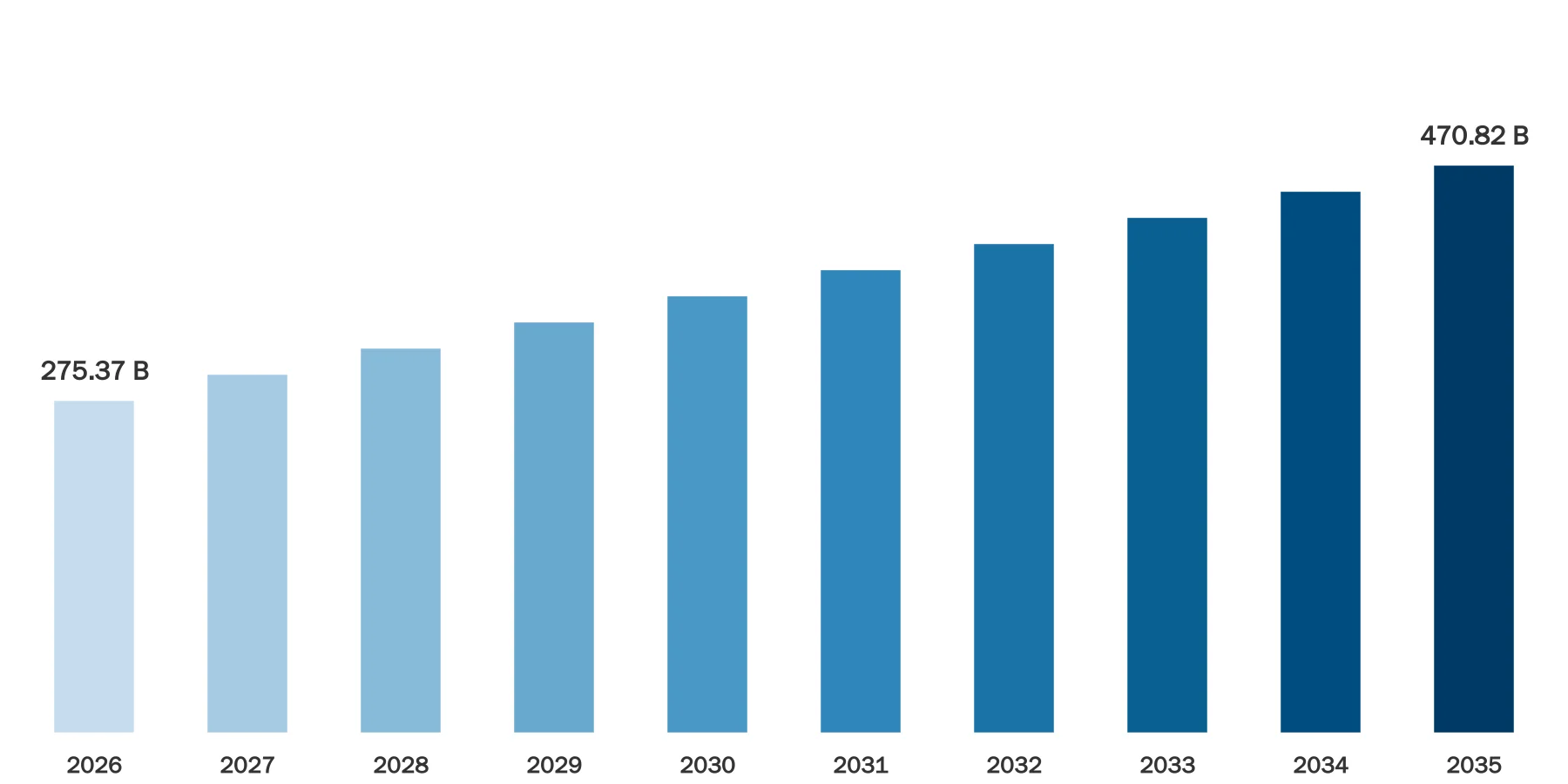
Source: Econ Market Research
Automated Material Handling Equipment streamlines processes, reduces manual labor, and improves efficiency in warehouses, factories, and distribution centers around the world. AMHE includes a diverse set of technologies, such as conveyor systems, robotic arms, automated guided vehicles (AGVs), and warehouse management software. With the rise of e-commerce and manufacturing automation, demand for AMHE continues to rise as businesses seek to optimize their supply chains and meet rising customer expectations for faster delivery and greater accuracy.
The market is characterized by innovation and fierce competition among key players striving to develop advanced solutions that cater to diverse industrial needs while also addressing concerns such as safety, scalability, and sustainability. As businesses increasingly embrace automation to stay competitive in today',s fast-paced global economy, the AMHE market is poised for continued growth and evolution in the years to come.
Automated Material Handling Equipment Dynamics
The growing demand for automation in various industries to improve operational efficiency, lower labor costs, and improve supply chain management is a significant driver. To meet rising consumer expectations for fast and accurate order fulfilment, businesses are investing in AMHE solutions such as robotic systems, conveyor belts, and automated guided vehicles (AGVs) to streamline warehouse and distribution operations.
Furthermore, technological advancements play an important role in shaping the AMHE market dynamics. Innovations in robotics, Artificial Intelligence (AI), and Internet of Things (IoT) are enabling the development of more sophisticated and adaptable automation solutions that can handle complex tasks and adapt to changing operational requirements. Moreover, the integration of advanced software solutions for warehouse management and control further enhances the efficiency and effectiveness of AMHE systems.
In addition, regulatory requirements, industry standards, and environmental considerations all have an impact on AMHE market dynamics. As governments implement regulations to ensure workplace safety and product quality, manufacturers and operators of AMHE systems must comply, resulting in the adoption of advanced safety features and risk mitigation strategies. Furthermore, growing concerns about sustainability and carbon emissions prompt businesses to seek AMHE solutions that are energy-efficient and environmentally friendly, resulting in the development of eco-friendly technologies and practices within the industry.
Automated Material Handling Equipment Drivers
Rising Demand for Automation
The growing demand for automation across industries is a major driver of the Automated Material Handling Equipment (AMHE) market. Businesses are looking for ways to increase efficiency, lower labor costs, and improve supply chain management by implementing automated solutions. With the rise of e-commerce and the need for faster order fulfilment, businesses are relying on AMHE technologies like robotic systems, conveyor belts, and automated guided vehicles (AGVs) to streamline warehouse and distribution operations. This demand for automation is expected to continue growing as businesses strive to remain competitive in a rapidly evolving market landscape.
Technological Advancements
Continuous technological advancements drive innovation in the AMHE market, allowing it to grow and evolve. Robotics, artificial intelligence (AI), and the Internet of Things (IoT) are driving the development of more sophisticated and adaptable automation solutions. These advancements enable AMHE systems to handle more complex tasks, adapt to changing operational requirements, and boost overall efficiency and productivity.
Furthermore, the addition of advanced software solutions for warehouse management and control expands the capabilities of AMHE systems, giving businesses greater visibility and control over their operations. As technology advances, the AMHE market is expected to see further growth, with new and improved solutions entering the market to meet the changing needs of businesses.
Automated Material Handling Equipment Restraints:
High Initial Investment Costs
One of the primary restraints for the AMHE market is the high initial investment costs associated with implementing automated solutions. While these technologies offer long-term benefits such as increased efficiency and productivity, the upfront costs can be prohibitive for some businesses, particularly smaller enterprises with limited budgets. Additionally, the complexity of integrating AMHE systems into existing infrastructure can further drive up implementation costs, posing a barrier to adoption for some companies.
Concerns About Job Displacement
Another constraint on the AMHE market is concern about job displacement as a result of increased automation. As businesses invest in AMHE technologies to automate manual tasks, there is concern that jobs previously performed by humans will be replaced by machines. This concern affects not only the workforce, but also the ethical and social implications of automation. To address these concerns, businesses and policymakers should implement workforce reskilling and upskilling strategies to ensure that employees can transition to new roles that complement automated technologies.
Automated Material Handling Equipment Opportunities:
Expansion of E-commerce
The continued expansion of e-commerce creates significant opportunities for the AMHE market. As more people shop online, businesses are under pressure to meet the growing demand for fast and accurate order fulfilment. This necessitates advanced AMHE solutions capable of managing the complexities of e-commerce logistics, such as rapid order processing, inventory management, and last-mile delivery. This growing market opportunity will benefit companies that can provide innovative AMHE technologies tailored to the needs of e-commerce retailers.
Segment Overview
By Product
The segmentation by product includes a wide range of automated material handling equipment (AMHE) including robots, automated storage and retrieval systems (ASRS), conveyor and sortation systems, cranes, autonomous mobile robots (AMR), automated guided vehicles (AGV), tow vehicles, unit load carriers, pallet trucks, forklift trucks, hybrid vehicles, and others.
Each product category serves a specific function within the material handling process, from the movement and storage of goods to the loading and unloading of materials. These products are designed to cater to diverse industry needs, offering solutions for tasks such as assembly, packaging, transportation, distribution, storage, and waste handling.
By Function
AMHE is segmented by function according to their primary operational roles within the supply chain. These functions include assembly, packaging, transportation, distribution, storage, and waste management. Each function is an important step in the material handling process, and automated solutions are intended to streamline operations and increase efficiency in each area. Whether it',s automating assembly lines, optimizing packaging processes, or improving transportation and distribution operations, AMHE systems play a vital role in improving productivity and lowering costs across various industries.
By System Type
AMHE is segmented based on system type into unit load and bulk load material handling systems. Unit load systems are designed to handle single items or loads, such as pallets or containers, whereas bulk load systems are designed to handle larger volumes of materials, such as grains, liquids, or raw materials. Each system type provides distinct capabilities tailored to specific material handling requirements, such as the efficient movement of standardized loads or the handling of bulk materials in large quantities. AMHE providers can address diverse industry needs and operational requirements by providing a variety of system types.
By Industry
Segmentation by industry identifies the diverse sectors that rely on AMHE solutions to optimize their material handling processes. These industries include automotive, food and beverages, metals and heavy machinery, chemicals, Semiconductor and electronics, healthcare, aviation, e-commerce, and others. Each industry has its own unique material handling challenges and requirements, from the high-volume production lines of automotive manufacturing to the strict hygiene standards of food and beverage processing. AMHE providers must understand the specific needs and regulations of each industry to develop tailored solutions that address their unique challenges and improve operational efficiency.
Automated Material Handling Equipment Overview by Region
North America is a significant market due to the widespread adoption of automation in industries such as e-commerce, automotive, and food and beverage. The region benefits from advanced technological capabilities and a strong logistics infrastructure, which drives demand for AMHE solutions. Similarly, Europe has a mature market with strict regulations and a focus on sustainability, resulting in the adoption of eco-friendly AMHE technologies.
Asia Pacific emerges as a profitable market, propelled by rapid industrialization, urbanization, and the growing e-commerce sector in countries like China, Japan, and India. These countries are witnessing significant investments in AMHE infrastructure to support the expanding manufacturing and logistics sectors. Latin America and the Middle East &, Africa regions exhibit growing demand for AMHE solutions driven by infrastructure development initiatives and increasing industrialization. However, market growth in these regions may be tempered by economic challenges and political instability.
Automated Material Handling Equipment Market Competitive Landscape
Major companies such as Daifuku Co., Ltd., Dematic Corporation, and Honeywell International Inc. dominate the market with a diverse range of AMHE solutions and a global footprint. These industry leaders are constantly investing in R&,D to innovate and improve their product offerings, focusing on technologies like robotics, AI, and IoT to meet changing customer demands for automation and efficiency.
Furthermore, strategic partnerships, mergers, and acquisitions are common strategies used by these companies to broaden their market reach, diversify their product portfolios, and improve their competitive position. Alongside these industry giants, a multitude of smaller and niche players contribute to the competitive landscape by offering specialized AMHE solutions tailored to specific industries or applications. However, these smaller players often face challenges such as limited resources and brand recognition, requiring them to focus on niche markets or technological innovation to compete effectively.
Automated Material Handling Equipment Key Players:
Anhui Heli Co., Ltd.
HAULOTTE GROUP
Ingersoll-Rand
SSAB
Zoomlion Heavy Industry Science&,Technology Co., Ltd.
Hyster-Yale Materials Handling, Inc.
PALFINGER AG
Cargotec Corporation
Columbus McKinnon Corporation
TOYOTA INDUSTRIES CORPORATION
KITO Corp.
XCMG Group
Linamar
Terex Corporation
Jungheinrich AG
Automated Material Handling Equipment Recent Developments
Jan 2022, Toyota Material Handling (TMH) is solidifying its status as the leading innovator in material handling product manufacturing and warehousing solutions with its most extensive product launch to date. Toyota Material Handling has unveiled 22 new electric products, further expanding its already impressive array of top-tier material handling solutions.
Automated Material Handling Equipment Report Segmentation
Automated Material Handling Equipment Market Report Scope & Segmentation
| Attributes | Details |
|---|---|
Market Size (Current) | US$ 275.37 Billion in 2026 |
Market Size (Forecast) | US$ 470.82 Billion in 2035 |
Growth Rate | CAGR of 6.14% from 2026 to 2035 |
Forecast Period | 2026 – 2035 |
Base Year | 2025 |
Historical Data Available | Yes |
Regional Scope | Global |
Segments Covered | By Product Type
By System Type
By Application
|
Frequently Asked Questions
Common questions about this report
The study period covers historical insights and forecast projections for the period 2026-2035.
About the Author
Market research expert with years of industry experience

Dipali Bhingare serves as the Market Research Director at Econ Market Research. With a focus on translating complex global economic shifts into actionable business intelligence, she oversees the strategic direction of comprehensive market studies. Her work empowers organizations to navigate volatile industries through data-driven forecasting and deep-dive competitive analysis.
Related Reports
Explore more market insights from the same category