

Battery Storage Inverter Market
Battery Storage Inverter Market Size, Share, Trends, Growth, and Industry Analysis, By Type (Single-Phase Electric Power, Three-Phase Electric Power), By Application (Utility-Scale, Commercial, Residential), By End-User (Energy andamp; Utilities, Industrial, Government), Regional Analysis and Forecast Period 2026-2035
Battery Storage Inverter Market Overview
As per Econ Market Research analysis, the Global Battery Storage Inverter Market valuation stood at US$ 9.35 Billion in 2026 and is expected to reach US$ 17.54 Billion by 2035, growing at a steady CAGR of 8.18% from 2026 to 2035. 2025 serves as the base year.
Battery Storage Inverter Market Size 2025-2035 (USD Billion)

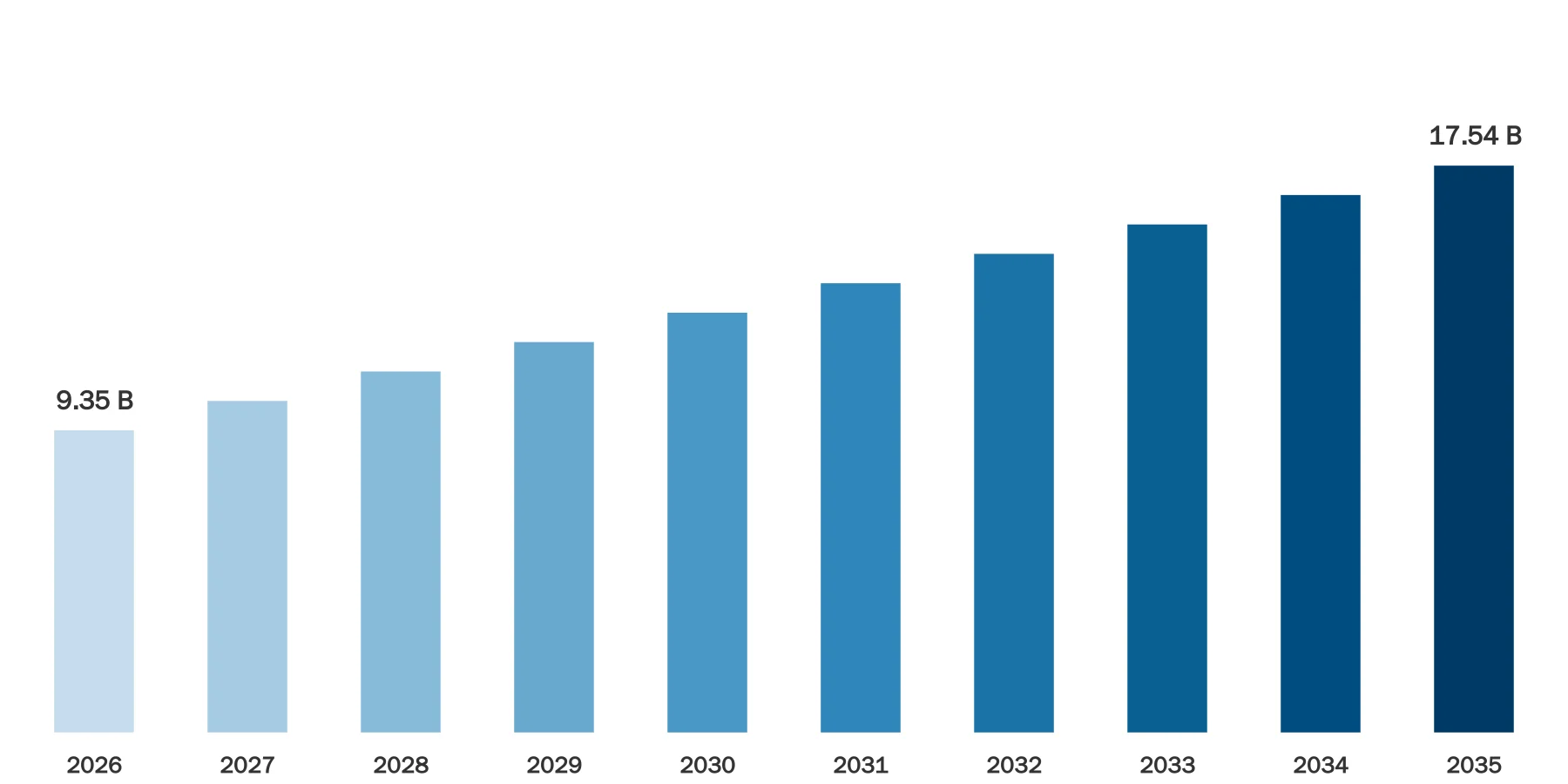
Source: Econ Market Research
Because they effectively regulate the flow of electricity between the grid, batteries, and renewable energy systems, these inverters are essential to the integration of renewable energy sources, including solar and wind power. Battery storage inverters were introduced as a way to store extra energy produced during times of low demand or high renewable output. This was done in response to the intermittent nature of renewable energy sources. In order to maintain grid stability and lessen dependency on fossil fuels, this stored energy can be used during periods of high demand or when renewable sources are less productive.
As technology has developed over time, battery storage inverters have become more complex and effective. They now have improved features like the ability to construct grids, transfer electricity in both directions, and have intelligent control systems. These developments have led to a thriving industry with a wide range of products from several manufacturers, extending the uses of these advances beyond home settings to commercial, industrial, and utility-scale installations. The market for battery storage inverters is anticipated to keep growing as more and more governments and businesses place a higher priority on sustainability and decarbonization. This will help to create a more resilient and cleaner energy infrastructure globally.
Market Dynamics
Technology is a key factor that drives innovation in battery storage inverters. The market scenario is always changing due to advancements including increased smart features, longer lifespans, higher power densities, and improved efficiency. Government incentives and regulations have a significant impact on market dynamics as well. Battery storage inverter demand is significantly impacted by mandates, tax credits, and subsidies that encourage the use of renewable energy sources and system upgrading. In addition, as utilities look for ways to improve energy efficiency and maintain grid stability, the industry is driven by changing grid architecture and growing integration of renewable energy sources.
The industry',s growth trajectory is heavily influenced by manufacturer-supplier strategic relationships as well as market competition. Battery storage inverters are becoming more widely available and reasonably priced due to the rise of new competitors, partnerships, and mergers, which also encourage innovation and reduce costs. Additionally, the market is expanding due to rising consumer awareness of and need for sustainable energy solutions. The increasing demand for dependable and efficient battery storage inverters is driving manufacturers to accommodate a wide range of client preferences and needs as people and organizations place a higher priority on energy independence and resilience. The market for battery storage inverters is shaped by these complex dynamics, which also propel innovation and industry expansion.
Market Drivers
Rising Demand for Renewable Energy Integration
The efficient integration of intermittent energy generators such as solar and wind power into the grid is becoming increasingly important due to the rapid use of these sources of energy. When demand peaks or renewable power declines, battery storage inverters play a crucial role by storing excess energy during times of strong renewable output and releasing it. This force is propelled by the desire to slow down climate change and the worldwide movement towards greener energy sources. Grid stability is threatened by the unpredictability and fluctuation of renewable energy sources.
Battery storage inverters provide a more consistent and dependable power supply by allowing for flexible energy flow management, hence mitigating these difficulties. Furthermore, laws and regulations supporting the use of renewable energy are what propel the integration of renewable energy. Regulations and incentives encourage the integration of renewable energy sources into the grid, therefore battery storage inverters and other storage solutions are necessary to optimize their performance. This dynamic is further amplified by the continuous technological developments in energy storage and renewable energy, which are encouraging advances in battery storage inverters that improve their capacity, efficiency, and capacities.
Grid Modernization Initiatives
Initiatives to modernize power grids seek to improve and upgrade the infrastructure as these systems become older and find it more difficult to handle the increasing complexity of energy production, transmission, and consumption. The need to effectively integrate a variety of energy sources, including renewables, and to strengthen grid resilience against demand swings and disturbances is what motivates this. In these activities, battery storage inverters are essential because they provide solutions for better grid management and balancing. They facilitate the grid',s ability to store excess energy during times of high generation and low demand. Furthermore, by enabling the implementation of smart grid and microgrid technologies, these inverters enhance overall grid stability and assist decentralized energy distribution. Governmental investments and policies that prioritize grid resilience, stability, and efficiency serve as further catalysts for Grid Modernization Initiatives. Innovative technologies that optimize grid operations and energy consumption, such as battery storage inverters, are being deployed as a result of these activities.
Restraints:
The purchase of the storage inverter systems as well as the costs associated with installation, integration, and maintenance are included in these upfront costs. The large initial cost of battery storage inverters can be a barrier to adoption for residential, commercial, or industrial organizations looking to implement sustainable energy solutions. This can affect the viability and affordability of this technology. Additionally, the high expenses of these systems provide a special problem for smaller-scale applications, in which the benefits of economies of scale can be less pronounced. This can make battery storage inverters less accessible, especially to people or businesses with tight budgets or looking for quick returns on investment.
Furthermore, even while there are clear long-term advantages in terms of energy savings and grid stability, the large upfront costs can prevent these technologies from being quickly adopted, particularly in areas or markets with little financial incentives or supportive regulations. The creation of financing models that make these systems more accessible and affordable for a wider range of consumers and businesses, government incentives or subsidies to offset initial investments, and coordinated efforts in technological innovation to lower manufacturing costs are all necessary to address this constraint.
Integration Challenges
The intricacies stem from the requirement to synchronize these inverters with various energy sources, grid arrangements, and regulatory policies. The compatibility of battery storage inverters with different grid systems, particularly older infrastructure built for unidirectional energy transfer, is one of the main obstacles. The integration of bidirectional power flow capabilities, which are necessary for energy storage systems, necessitates expensive and time-consuming upgrades or adjustments. Furthermore, another level of complication is added by guaranteeing interoperability between battery storage inverters and renewable energy sources like solar or wind.
Technical difficulties arise when attempting to balance the intermittent nature of renewable energy sources with the inverters', capacity for energy storage. Complex control mechanisms are needed to achieve this. Integration problems are often exacerbated by obstacles related to regulations and standards. Inconsistencies in grid connectivity protocols might arise from different legislation or standards in different countries, which can impede the smooth integration of systems. In order to address these issues, industry players, legislators, and technology developers must work together to create uniform standards, expedite grid interconnection protocols, and allocate funds for the development of standardized solutions.
Opportunities:
Advancements in Energy Storage Technologies
Energy storage system performance, efficiency, and safety could be greatly enhanced by ongoing advancements in battery chemistries, materials, and designs. These developments lead to longer battery lifespans and faster charging times in addition to improving energy density and storage capacity. Battery storage inverters immediately benefit from this advancement since it makes it possible for them to interface with more effective and capacious storage units. Improved battery technologies make it possible for inverters to handle higher energy capacity, increasing their adaptability and usefulness in a range of industries and scales.
Furthermore, improvements in safety features reduce the dangers related to battery operation, which increases the confidence in using these systems for both home and grid-scale applications. Moreover, advancements in energy storage technologies enable the development of more affordable solutions, lowering the total cost of battery storage inverter charges. Better performance at a lower cost makes adoption more widely possible, allowing for increased grid stability, the integration of renewable energy sources, and the support of projects centered on energy sustainability and resilience.
Electric Vehicle (EV) Charging Infrastructure
The need for effective and dependable charging solutions is growing as the EV market expands. By connecting with EV charging stations and providing bidirectional power flow capabilities that allow for both EV charging and the usage of EV batteries to store surplus energy, battery storage inverters play a crucial role in this situation. There are two opportunities presented by this integration. First off, by controlling the demand spikes brought on by simultaneous EV charging, it makes grid integration easier and relieves load on the system during peak hours. Secondly, by using EV batteries as a storage asset, it enables the most efficient use of energy resources.
During times of high demand or grid instability, battery storage inverters allow electric vehicles (EVs) to not only draw energy but also return stored electricity to the grid. In addition to improving the grid',s dependability and stability, this integration advances the energy ecosystem',s overall sustainability and efficiency. By creating a symbiotic link between EVs, charging infrastructure, and grid stability, utilizing battery storage inverters within the EV Charging Infrastructure promotes a smarter, more flexible energy network that benefits the transportation and energy sectors.
Segment Overview
By Type
Based on type, the global battery storage inverter market is divided into single-phase electric power, three-phase electric power. The three-phase electric power category dominates the market with the largest revenue share in 2022. Three-phase electric power involves distributing electrical power using three alternating current waveforms with a phase difference of 120 degrees between each. This system utilizes three wires typically labeled as phases (L1, L2, L3) and a neutral wire. Three-phase power is prevalent in larger commercial and industrial settings due to its ability to handle higher power capacities efficiently.
Battery storage inverters designed for three-phase systems are capable of handling larger loads and higher energy capacities, making them suitable for industrial-scale energy storage, large commercial installations, and utility-scale applications. Single-phase electric power refers to a system where electrical power is distributed using a single alternating current (AC) waveform. This system typically consists of two wires hot and neutral and is commonly used in residential settings and smaller commercial applications. Battery storage inverters designed for single-phase systems are tailored to handle lower power capacities and are suitable for smaller-scale energy storage needs, such as in households or small businesses.
By End-Use Industry
Based on end-use industry, the global battery storage inverter market is segmented into residential, commercial, utility scale. The utility scale segment dominates the battery storage inverter market. The utility-scale segment involves large-scale energy storage projects deployed by utilities or independent power producers. Battery storage inverters in this segment are designed for massive energy capacities and high-power applications. They play a crucial role in grid stabilization, renewable energy integration, and providing grid services like frequency regulation and peak demand management for utility-scale installations.
Battery storage inverters in the residential segment cater to individual households and small-scale energy storage requirements. These inverters are designed to complement residential solar PV systems or other renewable energy sources, allowing homeowners to store surplus energy generated during periods of low consumption and use it when needed, such as during peak hours or in the absence of sunlight.
Residential battery storage inverters typically have lower power capacities and are focused on optimizing self-consumption and providing backup power during grid outages. In the commercial segment, battery storage inverters are deployed in businesses, offices, and larger-scale installations. These inverters are designed to manage higher energy loads and provide energy optimization solutions for commercial buildings or industrial applications. They enable peak shaving, demand charge management, and can offer backup power, contributing to energy cost savings and grid stability for medium-sized to larger commercial entities.
Market Overview by Region
The global battery storage inverter market is categorized into North America, Europe, Asia-Pacific, and the Rest of the World. Asia-Pacific emerged as the leading region, capturing the largest market share in 2022. Asia-Pacific countries including China, Japan, India, South Korea, and Australia have experienced fast industrialization and urbanization, which has resulted in a surge in energy consumption and the need for dependable and effective energy storage solutions.
The widespread use of battery storage inverters in residential, commercial, and utility-scale applications has been fueled by this growing need. Moreover, the market',s growth in the area has been greatly aided by favorable government policies and programs that boost the adoption of renewable energy sources and improve energy security. Battery storage inverter implementation has expanded due to significant expenditures in renewable energy projects, such as solar and wind power, as well as advantageous regulatory frameworks and financial incentives.
Furthermore, strong research and development efforts in nations like South Korea and Japan have propelled technological breakthroughs and developments in energy storage systems and inverters, which have further accelerated market expansion. Because of these developments, battery storage inverters with higher capacities, more efficiency, and lower costs have been available, drawing substantial investments from local and foreign companies operating in the area.
Competitive Landscape
In the global battery storage inverter market, a few major players exert significant market dominance and have established a strong regional presence. These leading companies remain committed to continuous research and development endeavors and actively engage in strategic growth initiatives, including product development, launches, joint ventures, and partnerships. By pursuing these strategies, these companies aim to strengthen their market position, expand their customer base, and capture a substantial share of the market.
Key Players:
Guangdong Zhicheng Champion Group Co., Ltd.
Ingeteam S.A.
SolaX Power Network Technology (Zhejiang) Co., Ltd.
Eaton Corporation plc
Poweroneups
SMA Solar Technology AG
Sensata Technologies, Inc.
KACO new energy GmbH
GoodWe Technologies Co., Ltd.
Sungrow Power Supply Co., Ltd.
Huawei Technologies Co., Ltd.
Schneider Electric SE
Siemens AG
Delta Electronics, Inc.
ABB Ltd.
Recent Developments
In May 2023, POMCube battery and inverter package is acquired by Savant Systems. Savant use the new technology it has acquired to improve its current power system. The Savant Power System can supply backup power for days to any size home because to its scalable inverter, which can operate between 7.5 and 125 kW, and its scalable battery storage, which can run from 10 to 200 kWh of LFP batteries.
In October 2023, Spanish Power Electronics and energy management system maker Eks Energy (EKS) was purchased by Hitachi Energy from battery storage system integrator Powin.
Battery Storage Inverter Market Report Scope & Segmentation
| Attributes | Details |
|---|---|
Market Size (Current) | US$ 9.35 Billion in 2026 |
Market Size (Forecast) | US$ 17.54 Billion in 2035 |
Growth Rate | CAGR of 8.18% from 2026 to 2035 |
Forecast Period | 2026 – 2035 |
Base Year | 2025 |
Historical Data Available | Yes |
Regional Scope | Global |
Segments Covered | By Type
By Application
By End-User
|
Frequently Asked Questions
Common questions about this report
The study period covers historical insights and forecast projections for the period 2026-2035.
About the Author
Market research expert with years of industry experience

Dipali Bhingare serves as the Market Research Director at Econ Market Research. With a focus on translating complex global economic shifts into actionable business intelligence, she oversees the strategic direction of comprehensive market studies. Her work empowers organizations to navigate volatile industries through data-driven forecasting and deep-dive competitive analysis.
Related Reports
Explore more market insights from the same category