

Power Quality Equipment Market
Power Quality Equipment Market Size, Share, Trends, Growth, and Industry Analysis, By Equipment (UPS, Harmonic Filters, Surge Protection Devices, Voltage Regulators, Others), By Phase (Single Phase, Three Phase), By End-User (Industrial, Commercial, Residential, Utilities), Regional Analysis and Forecast Period 2026-2035
Market Overview
As per Econ Market Research analysis, Global Power Quality Equipment Market size stood at US$ 41.4 Billion in 2026 and is projected to reach US$ 71.7 Billion by 2035, growing at a CAGR of 7.1% over the forecast period 2026–2035. 2025 is taken as the base year.
Power Quality Equipment Market Size 2025-2035 (USD Billion)

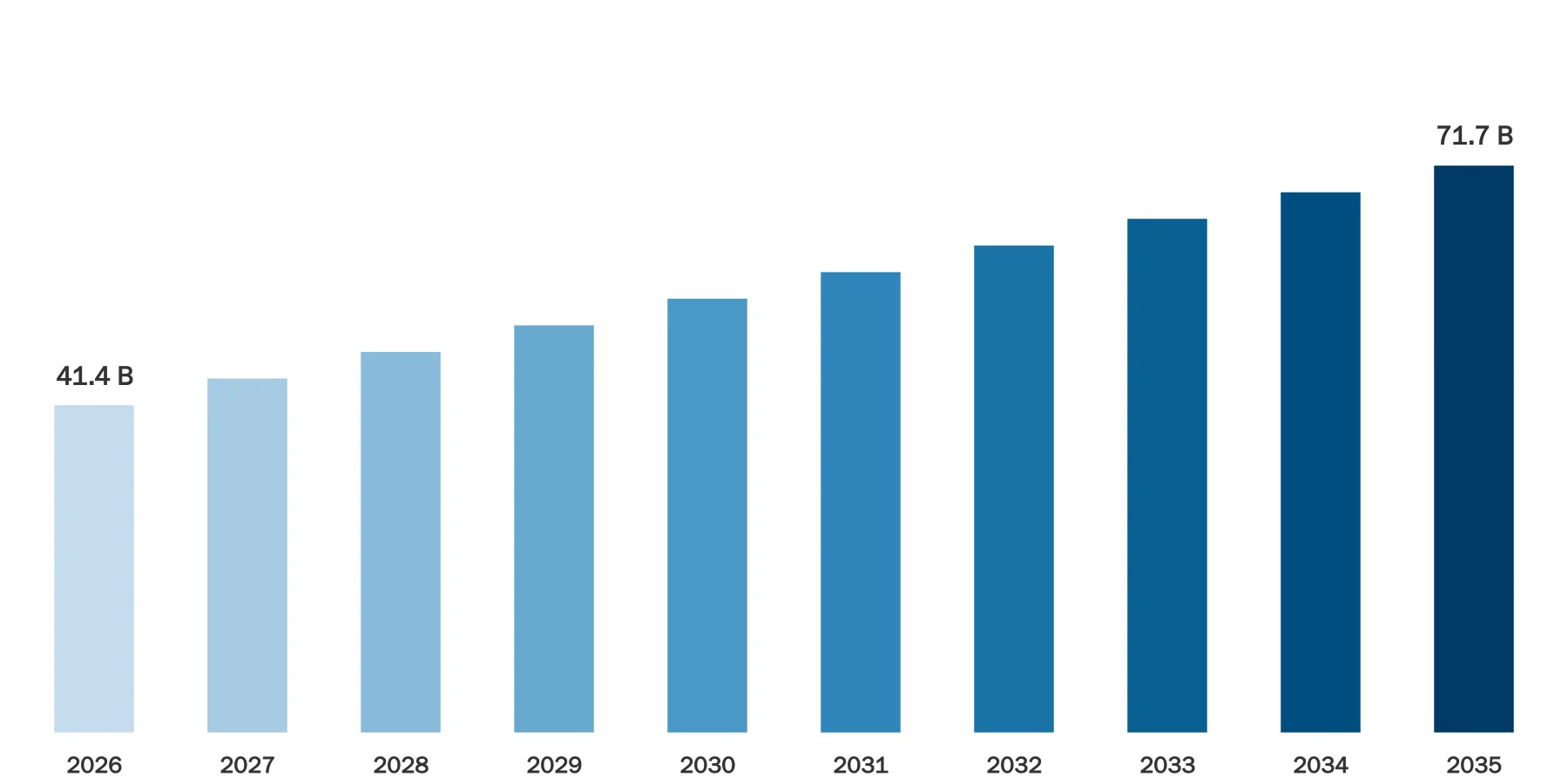
Source: Econ Market Research
The market for power quality equipment has grown significantly as a result of the growing need for reliable, high-quality power supply in a variety of industries. These devices are essential for maintaining the stability, dependability, and effectiveness of electrical systems because they reduce problems like harmonics, sags, surges, and interruptions as well as variations in voltage. These solutions are used by a variety of industries, including manufacturing, healthcare, IT, telecommunications, and more, to protect delicate equipment and minimize downtime, guaranteeing continuous operations.
Significant technological breakthroughs in the industry have resulted in the development of creative and efficient power quality equipment, such as voltage regulators, power conditioners, surge protectors, and uninterruptible power supplies (UPS). The market is continuing to grow due to factors such rising Industrial Automation, more integration of renewable energy, and strict regulatory regulations that emphasize power quality standards. The market for power quality equipment is expected to have consistent growth and innovation in the near future due to the increasing focus on sustainable energy solutions and the growing significance of a dependable power supply.
Market Dynamics
Technological developments in various industries worldwide have increased the requirement for power quality equipment by driving the demand for a steady and dependable power supply. The market for devices such as voltage regulators, UPS systems, and surge suppressors has increased due to the increased sensitivity of electrical systems to power disturbances caused by increased digitization, automation, and integration of renewable energy sources. Furthermore, the implementation of these solutions has increased due to strict government restrictions requiring diverse sectors to conform to power quality requirements.
Industries that depend on sensitive equipment, such manufacturing, healthcare, data centers, and telecommunications, give priority to power quality equipment in order to avoid expensive equipment damage and downtime. Market participants constantly innovate to provide technologically sophisticated and more efficient solutions, which promotes competitiveness and diversification of products. Furthermore, the incorporation of power quality equipment with the goal of minimizing energy waste and optimizing power consumption has been spurred by the growing awareness of sustainability and energy efficiency.
The need for dependable electricity infrastructure is rising as a result of emerging nations', fast industrialization and infrastructure development. This is driving the market',s expansion. In general, industry demands, sustainability concerns, legal requirements, and technical innovation will all continue to influence how the power quality equipment market develops.
Market Drivers
Rising Demand for Stable Power Supply
Any power outage can have a major negative impact on today',s digitally connected world, where automation is the norm in many industries, data centers handle massive amounts of information, and households rely largely on electronics. This increased susceptibility to power outages therefore fuels the demand for power quality devices. Power fluctuations are especially dangerous for industries like IT, manufacturing, healthcare, and telecommunications. For these industries to continue operating, safeguard delicate equipment, and avoid any losses from unavailability, steady power supply is essential.
Furthermore, as smart technologies and the Internet of Things (IoT) proliferate, there is an exponential increase in the need for reliable electricity to run these systems. Beyond just being convenient, finding a reliable power source is now essential for efficiency and economic expansion. Companies want to guarantee consistent output and lower the possibility of monetary losses due to power outages.
Integration of Renewable Energy Sources
The emphasis on sustainability and lowering carbon footprints is causing a noticeable shift in the world',s energy sources, such as hydroelectric, solar, and wind power. However, because these energy sources rely on natural factors, they add unpredictability and intermittency to the power supply. Grid stability and consistent power quality are hampered by this unpredictability. Power quality equipment is essential for controlling the integration of renewable energy sources in order to address this.
Energy storage systems, sophisticated inverters, and voltage regulators are a few examples of devices that help to control frequency variations, stabilize voltage swings, and maintain steady power flow across the grid. Furthermore, as renewable energy systems frequently work in tandem with traditional power infrastructure, the requirement for flawless interoperability and integration increases the need for advanced power quality solutions. The integration of renewable energy by utilities and industries aims to guarantee regularity and dependability in their energy supply in addition to utilizing sustainable power.
Restraints:
Lack of Awareness and Education
Many customers, companies, and even entire sectors still lack enough knowledge about the vital role power quality equipment plays in guaranteeing a steady, dependable, and effective supply of electricity. This ignorance also includes an inability to recognize the possible dangers of low power quality, including broken equipment, lost productivity, and higher operating expenses. The technical complexities of power quality solutions and the complexity of power systems also play a role in the low level of knowledge. Decision-makers could undervalue these gadgets or be reluctant to invest in them if they don',t fully comprehend how they work and the benefits they provide.
Organizations can occasionally place a higher priority on short-term financial savings than the advantages power quality equipment can offer in the long run. Reluctance to proactively address power quality issues is another effect of inadequate knowledge and awareness, which makes electrical system management more reactive than preventive. To overcome this limitation, extensive public awareness efforts, educational programs, and unambiguous messaging regarding the advantages and requirements of power quality equipment are needed.
Reluctance to Replace Existing Infrastructure
Many businesses and institutions have constructed electrical infrastructure that is functional enough, but it may not have access to contemporary power quality solutions. The reluctance to replace or upgrade current systems is exacerbated by the perceived complexity and expenses involved. Companies frequently put off overhauling their current configurations because they worry about unplanned downtime, possible operational disruptions, and the challenging integration of new equipment.
Furthermore, decision-makers might not fully appreciate the long-term cost reductions or other advantages that sophisticated power quality equipment could provide. This resistance to change, particularly when it comes to crucial infrastructure elements like power supply, might impede the implementation of more dependable and effective power quality solutions. Furthermore, industries that operate in highly regulated environments may find it difficult to replace infrastructure because of standards adherence and compliance obligations. Overcoming this limitation necessitates a thorough assessment and dissemination of the benefits that contemporary power quality equipment can offer, highlighting not just the short-term expenses but also the long-term rewards in terms of efficiency, decreased downtime, and improved operational reliability.
Opportunities:
Rapid Technological Innovations
Power quality devices are becoming increasingly complex and intelligent as a result of the continuous advancement of technologies like Data Analytics, Artificial Intelligence, and the Internet of Things. With the help of these advancements, equipment that is more intelligent, responsive, and capable of predictive maintenance, real-time monitoring, and dynamic power quality optimization can be developed. More resilient and effective power quality solutions are also made possible by developments in materials science and engineering.
It is now possible to produce gadgets that are not only more cost-effective and energy-efficient, but also more durable thanks to innovative materials and manufacturing processes. Digitalization and connection are integrated into power quality equipment to provide remote monitoring and control, proactive management, and quick reactions to power quality problems. Furthermore, power quality solutions and renewable energy technologies coming together opens the door for hybrid systems that effectively handle variable power inputs from renewable sources.
Demand for Hybrid Power Quality Solutions
To produce adaptable and durable systems, these solutions combine different power quality devices, energy storage systems, and renewable energy sources. Hybrid solutions effectively integrate renewable sources while meeting the changing needs of sectors needing consistent power. The combination of conventional power quality equipment with integration of renewable energy presents a significant possibility.
Hybrid solutions may successfully minimize power fluctuations, voltage sags, and harmonics while providing a sustainable power supply. They do this by integrating devices such as voltage regulators, UPS systems, and inverters with energy storage and renewable sources like solar or wind. Hybrid systems also provide flexibility and adaptability to changes in the energy supply and demand. When energy storage systems are cleverly incorporated into these solutions, they allow for peak shaving and effective load balancing, which lessens reliance on the grid during times of high demand. To increase overall reliability, these systems can also serve as standby power sources in the event of a grid outage.
Segment Overview
By Equipment
Based on equipment, the global power quality equipment market is divided into UPS, harmonic filters, surge protection devices, voltage regulators, static VAR compensators, and others. The UPS category dominates the market with the largest revenue share in 2022. UPS systems are crucial in providing backup power during mains power failures. They offer immediate and temporary power to connected devices or systems, preventing downtime, data loss, and equipment damage. Harmonic filters minimize harmonic distortion caused by nonlinear loads, such as variable frequency drives or electronic equipment.
Harmonic filters ensure that unwanted harmonics are suppressed, maintaining cleaner power flow and preventing disruptions to sensitive equipment. Surge protectors shield electrical systems from sudden voltage spikes or surges caused by lightning strikes, power grid fluctuations, or switching events. They redirect excess voltage to the ground, safeguarding connected devices from damage. Voltage regulators maintain a stable output voltage despite fluctuations in input voltage. They ensure a consistent and regulated voltage supply, protecting devices from under-voltage (sags) or over-voltage conditions. SVCs help regulate the voltage and reactive power flow in electrical systems. They improve the power factor, stabilize voltage levels, and enhance system efficiency by dynamically adjusting reactive power.
By Phase
Based on the phase, the global power quality equipment market is categorized into single phase, three phase. The three phase category leads the global power quality equipment market with the largest revenue share in 2022. Three-phase systems utilize three AC waveforms, each phase being 120 degrees apart from the others. These systems are prevalent in industrial and commercial settings where higher power requirements exist.
Three-phase power delivery is more efficient and capable of handling heavier loads compared to single-phase systems. It is commonly used in industrial machinery, large motors, data centers, manufacturing facilities, and other high-power-demand applications. Three-phase systems typically involve three conductors for power transmission along with a neutral wire or ground. Single-phase systems are designed to handle electrical power using a single alternating current (AC) waveform. They are commonly used in residential settings, small businesses, and applications where the power demand is relatively low. Devices connected to single-phase systems typically operate with two conductors: one for power transmission (hot wire) and one for the return path (neutral wire).
By End-User
Based on end-user, the global power quality equipment market is segmented into residential, commercial, industrial. The industrial segment dominates the power quality equipment market. The industrial segment involves heavy-duty machinery, manufacturing facilities, large-scale production units, and critical infrastructure. Power quality equipment in this sector is designed to handle high power demands and ensure the smooth operation of industrial equipment. This includes advanced solutions like static VAR compensators (SVCs) to manage reactive power, power factor correction systems, and sophisticated monitoring and control systems. These devices aim to optimize power usage, improve efficiency, and mitigate the impact of power disturbances on industrial processes.
Power quality equipment in the residential sector caters to households and individual consumers. This includes devices such as surge protectors, voltage regulators, and uninterruptible power supplies (UPS) designed for home use. These devices safeguard sensitive electronics, appliances, and other residential equipment from power surges, fluctuations, and interruptions. They ensure a stable power supply, protect against damage, and minimize the risk of data loss in electronic devices.
The commercial segment comprises businesses, offices, retail establishments, and small to medium-sized enterprises. Power quality equipment in this sector includes more sophisticated solutions catering to larger-scale operations. This could involve UPS systems for critical business applications, harmonic filters to maintain clean power for sensitive equipment, and voltage regulators to ensure stable power for commercial machinery.
Market Overview by Region
The global power quality equipment market is categorized into North America, Europe, Asia-Pacific, and the Rest of the World. Asia-Pacific emerged as the leading region, capturing the largest market share in 2022. The fast-paced industrialization, urbanization, and economic expansion of the region have resulted in a notable rise in electricity consumption across multiple industries.
The need to provide steady and dependable power has increased due to the recent spike in energy consumption, which has prompted the use of equipment with higher power quality. Moreover, the implementation of power quality solutions has been accelerated by the rising investments in infrastructure development, especially in Southeast Asian and Chinese nations. These regions', industries which include IT, telecommunications, automotive, and manufacturing all mostly depend on a steady supply of power to be operational, which creates a high demand for devices like UPS systems, surge protectors, and voltage regulators.
Furthermore, the Asia-Pacific area has taken the initiative to include renewable energy sources in its power mix. The demand for power quality equipment, such as sophisticated inverters and energy storage solutions, has increased due to the necessity of managing the intermittent and variable nature of renewable energy sources. The market has grown as a result of government initiatives promoting energy efficiency and strict laws guaranteeing power quality requirements.
Competitive Landscape
In the global power quality equipment market, a few major players exert significant market dominance and have established a strong regional presence. These leading companies remain committed to continuous research and development endeavors and actively engage in strategic growth initiatives, including product development, launches, joint ventures, and partnerships. By pursuing these strategies, these companies aim to strengthen their market position, expand their customer base, and capture a substantial share of the market.
Key Players:
General Electric Company
Legrand SA
Piller Power Systems GmbH
Eaton Corporation plc
MTE Meter Test Equipment AG
Honeywell International Inc.
AMETEK, Inc.
Leviton Manufacturing Co., Inc.
Emerson Electric Co.
ABB Ltd.
Siemens AG
Schneider Electric SE
Mitsubishi Electric Corporation
Toshiba Corporation
Recent Developments
In April 2021, Eaton, a power management company, stated that it has reached a deal to purchase a 50% share in Jiangsu YiNeng Electric',s busway division. Jiangsu YiNeng Electric is a Chinese manufacturer and marketer of busway goods, with $60 million in sales.
Power Quality Equipment Market Report Scope & Segmentation
| Attributes | Details |
|---|---|
Market Size (Current) | US$ 41.4 Billion in 2026 |
Market Size (Forecast) | US$ 71.7 Billion in 2035 |
Growth Rate | CAGR of 7.1% from 2026 to 2035 |
Forecast Period | 2026 – 2035 |
Base Year | 2025 |
Historical Data Available | Yes |
Regional Scope | Global |
Segments Covered | By Equipment
By Phase
By End-User
|
Frequently Asked Questions
Common questions about this report
The study period covers historical insights and forecast projections for the period 2026-2035.
About the Author
Market research expert with years of industry experience

Dipali Bhingare serves as the Market Research Director at Econ Market Research. With a focus on translating complex global economic shifts into actionable business intelligence, she oversees the strategic direction of comprehensive market studies. Her work empowers organizations to navigate volatile industries through data-driven forecasting and deep-dive competitive analysis.
Related Reports
Explore more market insights from the same category