

Antimicrobial Coatings Market
Antimicrobial Coatings Market Size, Share, Trends, Growth, and Industry Analysis, By Product (Antimicrobial Powder Coatings, Surface Modifications andamp; Coatings), By Application (Sanitary Facilities andamp; Kitchen, Air Conditioning andamp; Ventilation Systems, Food Processing andamp; Packaging, Antimicrobial Textiles, Mold Remediation, Construction, Others), Regional Analysis and Forecast Period 2026-2035
Market Overview
As per Econ Market Research analysis, the Global Antimicrobial Coatings Market size amounted to US$ 16.91 Billion in 2026 and is anticipated to grow to US$ 48.96 Billion by 2035, recording a CAGR of 12.57% during 2026–2035. The base year taken for analysis is 2025.
Antimicrobial Coatings Market Size 2025-2035 (USD Billion)

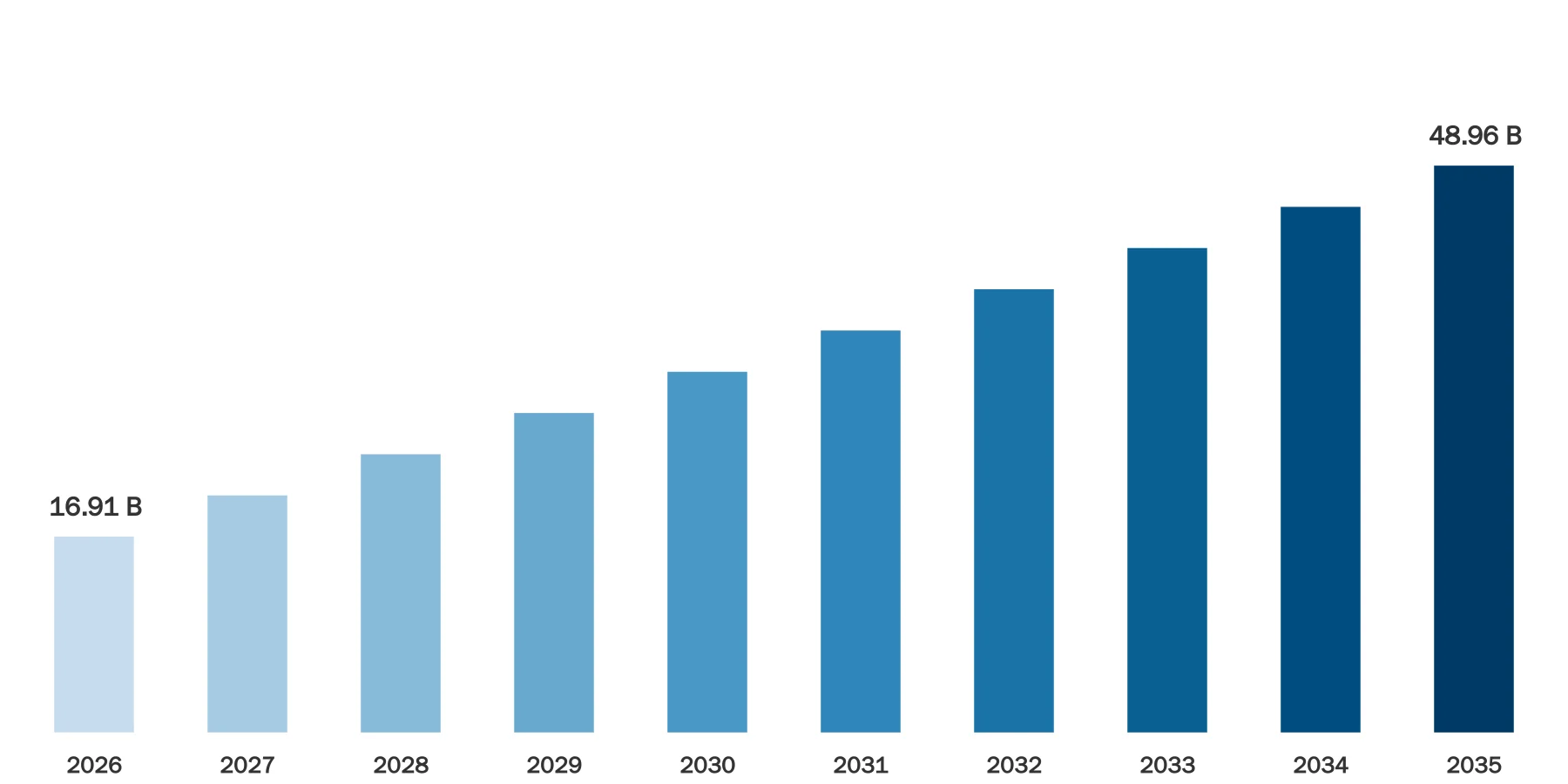
Source: Econ Market Research
Antimicrobial coatings are advanced surface treatments that aim to hinder the growth and transmission of microorganisms, such as bacteria, viruses, and fungi. These coatings are administered on diverse materials and surfaces, encompassing metals, plastics, textiles, and ceramics, to establish a protective shield against harmful pathogens. By integrating antimicrobial agents like silver ions, copper, or organic compounds into the coating, these surfaces become unfavorable for microorganisms, preventing their survival and reproduction. Antimicrobial coatings bring forth a range of advantages, including a decreased risk of infections in healthcare environments, enhanced hygiene in public spaces, and durable protection on frequently touched surfaces. They are employed in hospitals, schools, public transportation, food processing facilities, and other busy areas where microbial contamination poses a concern.
Antimicrobial Coatings Market Dynamics
The antimicrobial coatings market is influenced by various factors. One significant driver is the increasing awareness regarding hygiene and the necessity to control the spread of infections across different sectors, including healthcare, food processing, and packaging. The growing concerns surrounding healthcare-associated infections and the need for effective preventive measures specifically boost the demand for antimicrobial coatings in healthcare facilities. Moreover, the desire for improved hygiene and cleanliness drives the rising demand for antimicrobial coatings in consumer goods like textiles, electronics, and household appliances. The market is further propelled by the enforcement of strict regulations and guidelines by government bodies, particularly in healthcare settings, regarding the usage of antimicrobial coatings. Additionally, the market benefits from the emergence of novel antimicrobial technologies and ongoing research and development endeavors aimed at enhancing the effectiveness and durability of these coatings.
Antimicrobial Coatings Market Drivers
Increasing Awareness and Need for Hygiene
There is a growing awareness about hygiene and the need to control the spread of infections in various sectors, such as healthcare, food processing, and packaging. This awareness drives the demand for antimicrobial coatings as they provide an additional layer of protection against harmful microorganisms.
Restraints
Environmental Concerns
Antimicrobial coatings can be more expensive compared to traditional coatings due to the incorporation of antimicrobial agents. The higher cost can be a restraint for some end-users, limiting the widespread adoption of these coatings, especially in cost-sensitive industries.
Opportunities
Expansion in Healthcare Infrastructure
The growing healthcare infrastructure, especially in emerging economies, presents significant opportunities for the antimicrobial coatings market. The incorporation of antimicrobial coatings in new healthcare facilities and renovation projects provides a potential market for these coatings.
Segment Overview
By Product Type
Based on the product type, the global antimicrobial coatings market is segmented into antimicrobial Powder Coatings and surface modifications & coatings. The surface modification & coatings segment is dominating the market with the largest revenue share of around 51.6% in 2022. The demand for surface modification and coating technologies that provide improved functionality, durability, and protection for various materials and surfaces is on the rise. Industries such as automotive, aerospace, electronics, and healthcare are increasingly embracing surface modification and coatings to enhance performance, minimize wear and tear, and strengthen resistance against corrosion, chemicals, and microbial contamination.
By Application
Based on the application, the global antimicrobial coatings market is segmented into sanitary facilities &, kitchens, air conditioning & ventilation systems, food processing & packaging, antimicrobial Textile, mold remediation, construction, Medical Devices, and others. The medical devices segment is dominating the market with the largest revenue share of around 37.5% in 2022. The demand for antimicrobial coatings on medical devices is driven by the healthcare industry's heightened attention to infection control and patient safety. These coatings play a crucial role in preventing microbial contamination and mitigating the risk of healthcare-associated infections. Moreover, the increasing volume of surgeries, advancements in medical technology, and the expanding aging population all contribute to the growing demand for medical devices integrated with antimicrobial coatings.
Antimicrobial Coatings Market Overview by Region
By Region, the global antimicrobial coatings market has been divided into North America, Europe, Asia-Pacific, and the Rest of the World. North America held the largest share, of around 40.3%, of the global market in 2022. The demand for antimicrobial coatings in healthcare settings is driven by the region's well-developed healthcare infrastructure and strict regulations pertaining to infection control. Furthermore, the growing focus on hygiene and cleanliness in public spaces, including schools, commercial buildings, and transportation, serves as an additional catalyst for market growth. The presence of prominent market players and continuous research and development efforts in the region also contribute to its significant market share. Moreover, North America's robust manufacturing sector, encompassing electronics, textiles, and food processing, generates a strong demand for antimicrobial coatings to ensure product safety and hygiene.
Antimicrobial Coatings Market Competitive Landscape
In the global antimicrobial coatings market, a small number of prominent players hold significant market dominance and have established a strong regional presence. These key participants are committed to ongoing research and development initiatives. Additionally, they actively engage in strategic growth endeavors such as product development, product launches, joint ventures, and partnerships. By pursuing these strategies, these companies aim to strengthen their market position and expand their customer base to capture a substantial share of the market.
Key Players
AkzoNobel N.V.
AK Steel Corp.
Lonza
Diamond Vogel
DuPont
Axalta Coating Systems
Nippon Paint Holdings Co., Ltd.
PPG Industries, Inc.
RPM International Inc.
Koninklijke DSM N.V.
Burke Industrial Coatings
The Sherwin-Williams Company
Antimicrobial Coatings Market Recent Developments
In February 2022, Nippon Paint Holdings Co. Ltd. increased its product line with the introduction of Protection Floor VK Clear, an antiviral and antibacterial paint created exclusively for interior and semi-exterior floors. Nippon Paint Holdings Co. Ltd. also released Protection Interior Wall VK Coat, a new product for interior wall applications.
Antimicrobial Coatings Market Report Scope & Segmentation
| Attributes | Details |
|---|---|
Market Size (Current) | US$ 16.91 Billion in 2026 |
Market Size (Forecast) | US$ 48.96 Billion in 2035 |
Growth Rate | CAGR of 12.57% from 2026 to 2035 |
Forecast Period | 2026 – 2035 |
Base Year | 2025 |
Historical Data Available | Yes |
Regional Scope | Global |
Segments Covered | By Product
By Application
|
Frequently Asked Questions
Common questions about this report
The study period covers historical insights and forecast projections for the period 2026-2035.
About the Author
Market research expert with years of industry experience

Dipali Bhingare serves as the Market Research Director at Econ Market Research. With a focus on translating complex global economic shifts into actionable business intelligence, she oversees the strategic direction of comprehensive market studies. Her work empowers organizations to navigate volatile industries through data-driven forecasting and deep-dive competitive analysis.
Related Reports
Explore more market insights from the same category