

Fire Resistant Fabrics Market
Fire Resistant Fabrics Market Size, Share, Trends, Growth, and Industry Analysis, By Type (Treated Fire-Resistant Fabrics, Inherent Fire-Resistant Fabrics), By Application (Apparel, Non-Apparel), By End-Use Industry (Industrial, Defense andamp; Public Safety Services, Transport, Others), Regional Analysis and Forecast Period 2026-2035
Market Overview
As per Econ Market Research analysis, the Global Fire Resistant Fabrics Market was recorded at US$ 4.76 Billion in 2026 and is projected to expand to US$ 8.15 Billion by 2035, registering a CAGR of 6.1% over the forecast period. The base year used is 2025.
Fire Resistant Fabrics Market Size 2025-2035 (USD Billion)

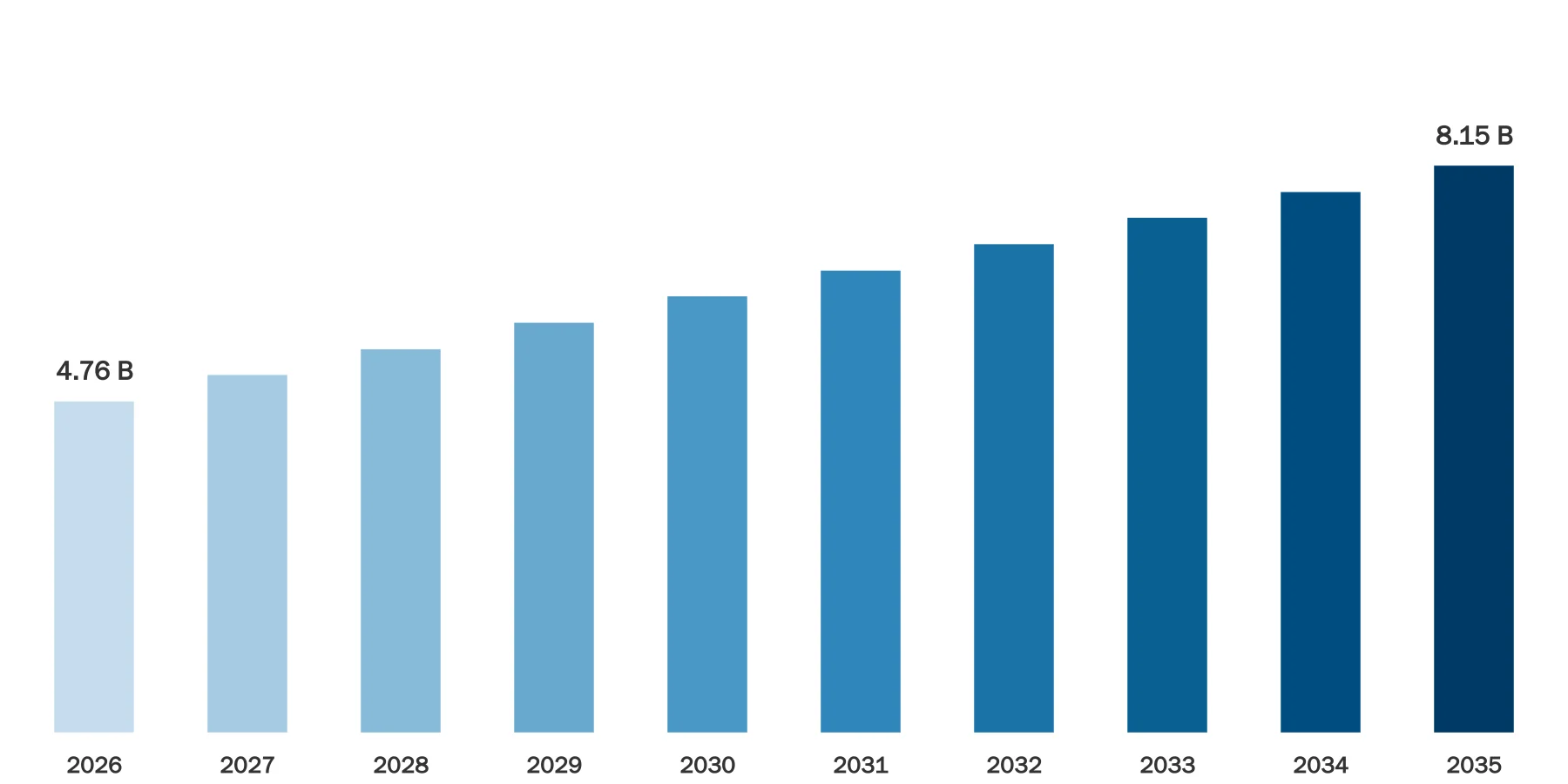
Source: Econ Market Research
Fire-resistant fabrics are textiles specifically created to minimize flammability by undergoing treatment or employing specific construction techniques. They possess the ability to resist ignition or burn at a slower pace when exposed to heat or flames. Fire-resistant fabrics find wide application in protective garments for firefighters, military uniforms, industrial workwear, and Home Furnishings. These fabrics can be crafted from either natural or synthetic fibers and undergo stringent testing to ensure compliance with established safety standards. Engineered to impede the propagation of fire and decrease the likelihood of severe burns, they offer an additional layer of protection in environments prone to fire hazards.
Fire-Resistant Fabrics Market Dynamics
The growth of the global fire-resistant fabrics market is propelled by multiple factors, including heightened awareness regarding fire safety, stringent safety regulations, expansion in end-use industries, technological advancements, emphasis on Personal Protective Equipment (PPE), and increasing consciousness about environmental sustainability. These combined factors contribute to the rising demand for fire-resistant fabrics across various applications, such as firefighting, military applications, industrial workwear, and home furnishings. The increasing recognition of fire-related risks, the implementation of strict regulations necessitating the use of flame-resistant textiles, advancements in textile technologies, and the growing focus on safeguarding workers through PPE are primary drivers of this market.
Fire-Resistant Fabrics Market Drivers
Increasing Awareness of Fire Safety
There is a growing recognition of the importance of fire safety across various industries and sectors, leading to an increased demand for fire-resistant fabrics. Organizations and individuals are becoming more conscious of the risks associated with fire-related accidents and are taking proactive measures to mitigate those risks.
Restraints
Limited Breathability and Comfort
Fire-resistant fabrics are often more expensive compared to regular textiles due to their specialized properties and manufacturing processes. The higher cost can act as a barrier for some industries or individuals, limiting the widespread adoption of fire-resistant fabrics.
Opportunities
Integration of Smart Technologies
The integration of smart technologies into fire-resistant fabrics, such as sensors for heat detection or communication capabilities, presents opportunities for innovation and differentiation in the market. These advancements can enhance safety features and provide real-time monitoring and data collection, opening up new avenues for application and market expansion.
Segment Overview
By Type
Based on the type, the global fire-resistant fabrics market is segmented into treated fire-resistant fabrics and inherent fire-resistant fabrics. The treated fire-resistant fabrics segment is dominating the market with the largest revenue share of around 52.7% in 2022, due to its cost-effectiveness and simplicity of manufacture. Treated textiles go through a chemical procedure that renders them flame resistant. This treatment may be given to a variety of materials, including cotton, polyester, and nylon. Treated fire-resistant textiles provide a number of advantages, including strong fire-retardant characteristics, long durability, and resilience to wear and strain.
By application
Based on application, the global fire-resistant fabrics market is segmented into apparel and non-apparel. The apparel segment is dominating the market with the largest revenue share of around 68.7% in 2022, because of the growing need for protective apparel in numerous areas such as firefighting, military, industrial, and oil and gas. To defend against fire dangers, fire-resistant materials are widely utilized in the manufacture of flame-resistant gear such as jackets, pants, coveralls, and gloves. The growing emphasis on worker safety and adherence to safety requirements has increased demand for fire-resistant clothing.
By End-User
Based on the end-user, the global fire-resistant fabrics market is segmented into industrial, defense &, public safety services, and transport. In 2022, the transport category emerged as the dominant segment in the fire-resistant fabrics market, capturing the largest market share with around 52.4%. This is owing to the transportation industry',s increased emphasis on passenger safety and regulatory regulations. Fire-resistant textiles are widely employed in the transportation industry to fulfil severe fire safety requirements and standards, protecting passengers in the case of a fire. Furthermore, advances in fire-resistant fabric technologies, such as better flame retardancy and smoke suppression qualities, have accelerated their acceptance in the transportation sector, contributing to their dominant market position.
Fire-Resistant Fabrics Market Overview by Region
By Region, the global fire-resistant fabrics market has been divided into North America, Europe, Asia-Pacific, and the Rest of the World. Asia-Pacific dominated the market with the largest revenue share of around 32.5% of the global market in 2022. Several factors have contributed to Asia-Pacific becoming as the largest market for fire-resistant materials. Rapid industrialization and urbanisation in countries such as China and India have raised demand for fire-resistant textiles in a variety of end-use sectors, including oil and gas, building, and manufacturing. Furthermore, the tight implementation of fire safety rules and standards in these locations has spurred the use of fire-resistant materials in a variety of applications, such as protective apparel for workers and firefighting equipment.
Fire-Resistant Fabrics Market Competitive Landscape
In the global fire-resistant fabrics market, a notable people of leading players held the significant market dominance and maintains a strong regional presence. These key participants demonstrate a steadfast commitment to ongoing research and development initiatives. Moreover, they actively pursue strategic growth opportunities such as new product development, launches, collaborations, and partnerships. Through these strategic endeavors, these companies aim to fortify their market position, expand their customer base, and secure a substantial share of the market.
Key Players
Nemours Inc.
Teijin Limited
Milliken & Company
Solvay S.A.
Kaneka Corporation
TenCate Protective Fabrics
PBI Performance Products, Inc.
Glen Raven Inc.
Huntsman Corporation
Arvind Limited
Lenzing AG
W.L. Gore & Associates, Inc.
Carrington Textiles Ltd.
Mount Vernon Mills Inc.
Fire-Resistant Fabrics Market Recent Developments
In January 2023, Nishat Mills, announced its intention to acquire Wernerfelt A/S, a fabric manufacturer based in Denmark. In a recent statement, Nishat Mills', board of directors has approved the purchase of the entire issued share capital of Wernerfelt A/S. As part of the agreement, Lars Lauridsen Holding ApS will transfer full managerial control of Wernerfelt A/S to Nishat Mills or its Affiliate, Nishat International FZE in Dubai, for a total payment of up to $4.5 million. This acquisition has been expanded the product portfolio as well as the customer base of the company.
Fire Resistant Fabrics Market Report Scope & Segmentation
| Attributes | Details |
|---|---|
Market Size (Current) | US$ 4.76 Billion in 2026 |
Market Size (Forecast) | US$ 8.15 Billion in 2035 |
Growth Rate | CAGR of 6.1% from 2026 to 2035 |
Forecast Period | 2026 – 2035 |
Base Year | 2025 |
Historical Data Available | Yes |
Regional Scope | Global |
Segments Covered | By Type
By Application
By End-Use Industry
|
Frequently Asked Questions
Common questions about this report
The study period covers historical insights and forecast projections for the period 2026-2035.
About the Author
Market research expert with years of industry experience

Related Reports
Explore more market insights from the same category