

Material Informatics Market
Material Informatics Market Size, Share, Trends, Growth, and Industry Analysis, By Technique (Deep Learning, Digital Annealer, Statistical Analysis, Genetic Algorithm), By Application (Chemical andamp; Pharmaceutical, Materials Science, Manufacturing, Food Science, Others), By End-Use Industry (Chemicals, Electronics, Automotive, Aerospace andamp; Defense, Energy), Regional Analysis and Forecast Period 2026-2035
Material Informatics Market Overview
As per Econ Market Research analysis, the Global Material Informatics Market valuation stood at US$ 0.37 Billion in 2026 and is expected to reach US$ 2.33 Billion by 2035, growing at a steady CAGR of 22.58% from 2026 to 2035. 2025 serves as the base year.
Material Informatics Market Size 2025-2035 (USD Billion)

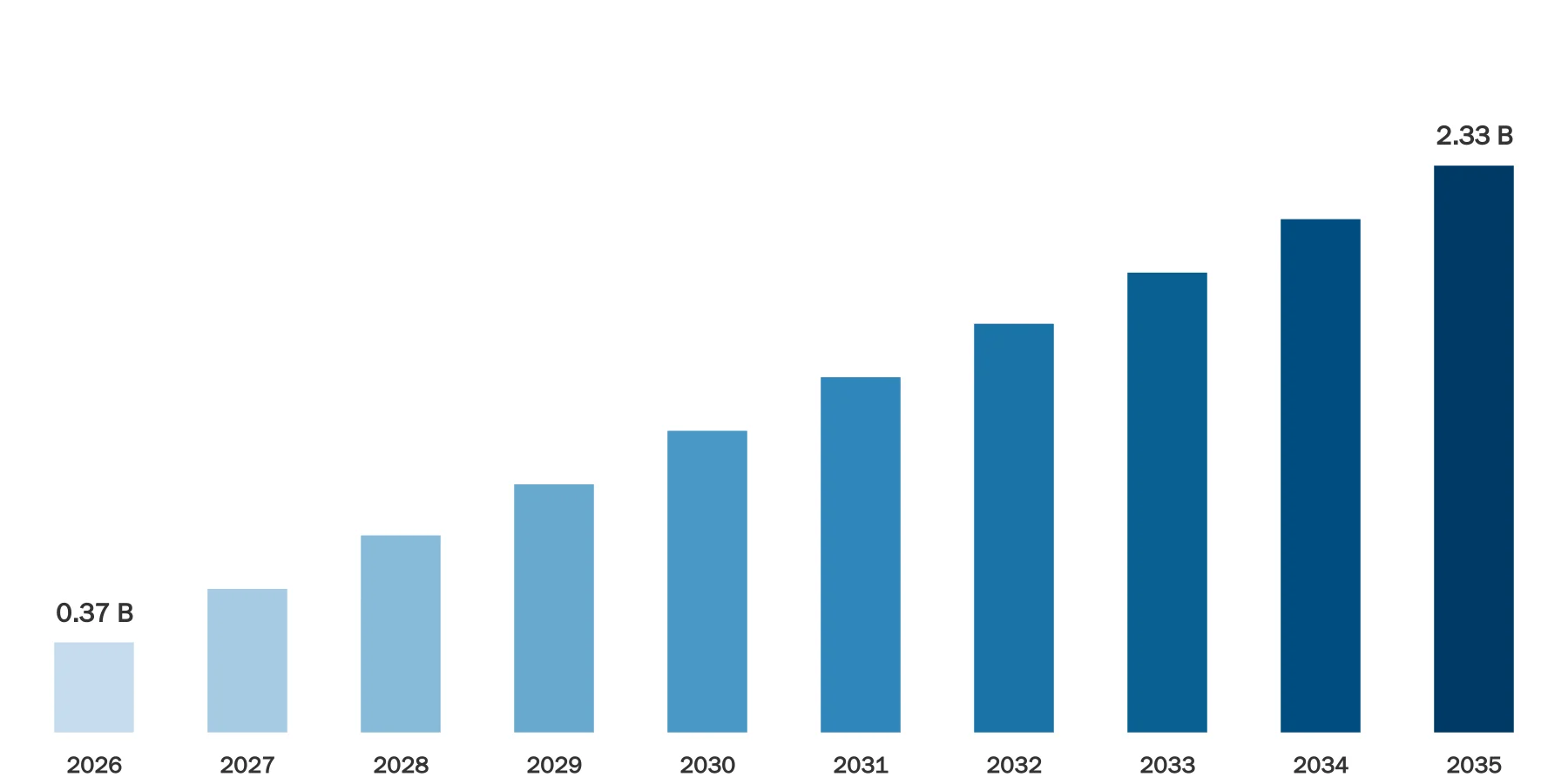
Source: Econ Market Research
Material informatics is an interdisciplinary discipline that integrates materials science, computer science, and data science to speed the discovery, design, and development of novel materials. It analyses and predicts the characteristics, performance, and behavior of materials using sophisticated computational methodologies, machine learning algorithms, and Data Analytics. Material informatics helps researchers to reveal hidden patterns, develop novel materials with desired features, and optimize current materials for specific applications by exploiting massive databases of materials data, including their structures, compositions, and behaviors. This data-driven approach to materials research minimizes the time and expense involved with traditional trial-and-error approaches, opening up new avenues for breakthroughs in industries such as energy, electronics, healthcare, and manufacturing.
Material Informatics Market Dynamics
A primary driver is the growing need for sophisticated materials in industries such as automotive, aerospace, electronics, and healthcare. Material informatics facilitates the development of novel materials with improved qualities and performance, fulfilling these industries', changing demands. Furthermore, the increasing availability of large data, as well as advances in computer power and machine learning methods, are accelerating the development of material informatics. The capacity to rapidly handle and analyze massive volumes of materials data and derive meaningful insights is critical for speeding materials research. Furthermore, the growing emphasis on sustainability, as well as the demand for ecologically friendly materials, is boosting the development of material informatics, since it facilitates the finding of environmentally favorable alternatives.
Material Informatics Market Drivers
Increasing Demand for Efficient Materials
The growing need for high-performance materials across various industries such as automotive, aerospace, electronics, and healthcare is driving the demand for material informatics. Companies are leveraging advanced analytics and data-driven approaches to discover and develop new materials with enhanced properties, leading to improved product performance and durability.
Restraints:
Lack of Standardized Data Formats and Interoperability
The availability of diverse material data from different sources often poses challenges in terms of data standardization and interoperability. The lack of standardized data formats hinders the seamless integration and analysis of data, limiting the effectiveness of material informatics solutions. Efforts are being made to establish data standards and develop interoperable platforms to address this challenge.
Opportunities
Integration with Additive Manufacturing
Additive manufacturing, also known as 3D printing, offers new possibilities in material design and production. Integrating material informatics with additive manufacturing technologies can unlock opportunities for on-demand, customized materials with tailored properties. This synergy can revolutionize various industries by enabling rapid prototyping, cost-effective production, and design optimization.
Segment Overview
By Material Type
Based on material type, the global material informatics market is divided into elements and chemicals. The element category dominates the market with the largest revenue share of around 47.6% in 2022. The element category has the biggest market share for numerous reasons, including the fact that elements are the fundamental building blocks of materials, making them indispensable in material informatics research and development. Elements have distinct chemical and physical properties that have a direct impact on the features and behavior of materials. As a result, knowing element characteristics and interactions is critical in the design and optimization of novel materials.
By Application
Based on application, the global material informatics market is divided into chemical &, pharmaceutical, materials science, manufacturing, food science, energy, and others. The manufacturing category dominates the market with the largest revenue share of around 29.5% in 2022. Advanced materials are significantly used in manufacturing industries such as automotive, aerospace, electronics, and consumer products to improve product performance and functionality. Material informatics is critical in hastening the discovery and development of such materials. Furthermore, material informatics supports the discovery of sustainable and eco-friendly materials, which aligns with the growing emphasis on environmental rules and customer desire for greener products.
Material Informatics Market Overview by Region
By Region, the global material informatics market has been segmented into North America, Europe, Asia-Pacific, and the Rest of the World. North America accounted for 30.8% of the revenue share in the global market in 2022. The region has a diverse industrial base, including aerospace, automotive, electronics, and energy, which drives the need for new materials and the use of material informatics. Furthermore, the region has been at the forefront of technical advances, notably in computational approaches and machine learning algorithms, both of which are critical for material informatics.
Material Informatics Market Competitive Landscape
In the global material informatics market only, few major players dominated the market and have a strong regional presence. These significant players are devoted to continued research and development efforts. They also actively participate in strategic growth initiatives like as product creation, product launches, joint ventures, and partnerships. These organizations intend to pursue these tactics in order to increase their market position and develop their client base in order to acquire a significant portion of the market.
Key Players
Mat3ra
Schrödinger, Inc.
Dassault Systèmes
Citrine Informatics
Phaseshift Technologies
Alpine Electronics Inc.
Nutonian Inc.
BASF SE
Materials Zone Ltd.
Kebotix
Intel Corporation
IBM Corporation
Google DeepMind
Accelrys (BIOVIA – Dassault brand)
Siemens Digital Industries Software
Ansys, Inc.
Material Informatics Market Recent Developments
In January 2022, Schrodinger has finalized the acquisition of XTAL BioStructures, Inc., a privately held structural biology services firm. This strategic purchase strengthens Schrodinger's ability to develop superior target structures for its drug discovery programs while also broadening its service portfolio to include sophisticated and unique products that provide clients with access to protein structures.
Material Informatics Market Report Scope & Segmentation
| Attributes | Details |
|---|---|
Market Size (Current) | US$ 0.37 Billion in 2026 |
Market Size (Forecast) | US$ 2.33 Billion in 2035 |
Growth Rate | CAGR of 22.58% from 2026 to 2035 |
Forecast Period | 2026 – 2035 |
Base Year | 2025 |
Historical Data Available | Yes |
Regional Scope | Global |
Segments Covered | By Technique
By Application
By End-Use Industry
|
Frequently Asked Questions
Common questions about this report
The study period covers historical insights and forecast projections for the period 2026-2035.
About the Author
Market research expert with years of industry experience

Dipali Bhingare serves as the Market Research Director at Econ Market Research. With a focus on translating complex global economic shifts into actionable business intelligence, she oversees the strategic direction of comprehensive market studies. Her work empowers organizations to navigate volatile industries through data-driven forecasting and deep-dive competitive analysis.
Related Reports
Explore more market insights from the same category