

Airplane Machmeters Market
Airplane Machmeters Market Size, Share, Trends, Growth, and Industry Analysis, By Type (Analog, Digital), By Application (Commercial Aircraft, Military Aircraft, General Aviation), By Fit (Line Fit, Retrofit), Regional Analysis and Forecast Period 2026-2035
Airplane Machmeters Market Overview
As per Econ Market Research analysis, the Global Airplane Machmeters Market reached a valuation of US$ 2 Billion in 2026 and is anticipated to grow to US$ 2.99 Billion by 2035, at a CAGR of 4.56% during the forecast timeline 2026–2035. The base year considered is 2025.
Airplane Machmeters Market Size 2025-2035 (USD Billion)

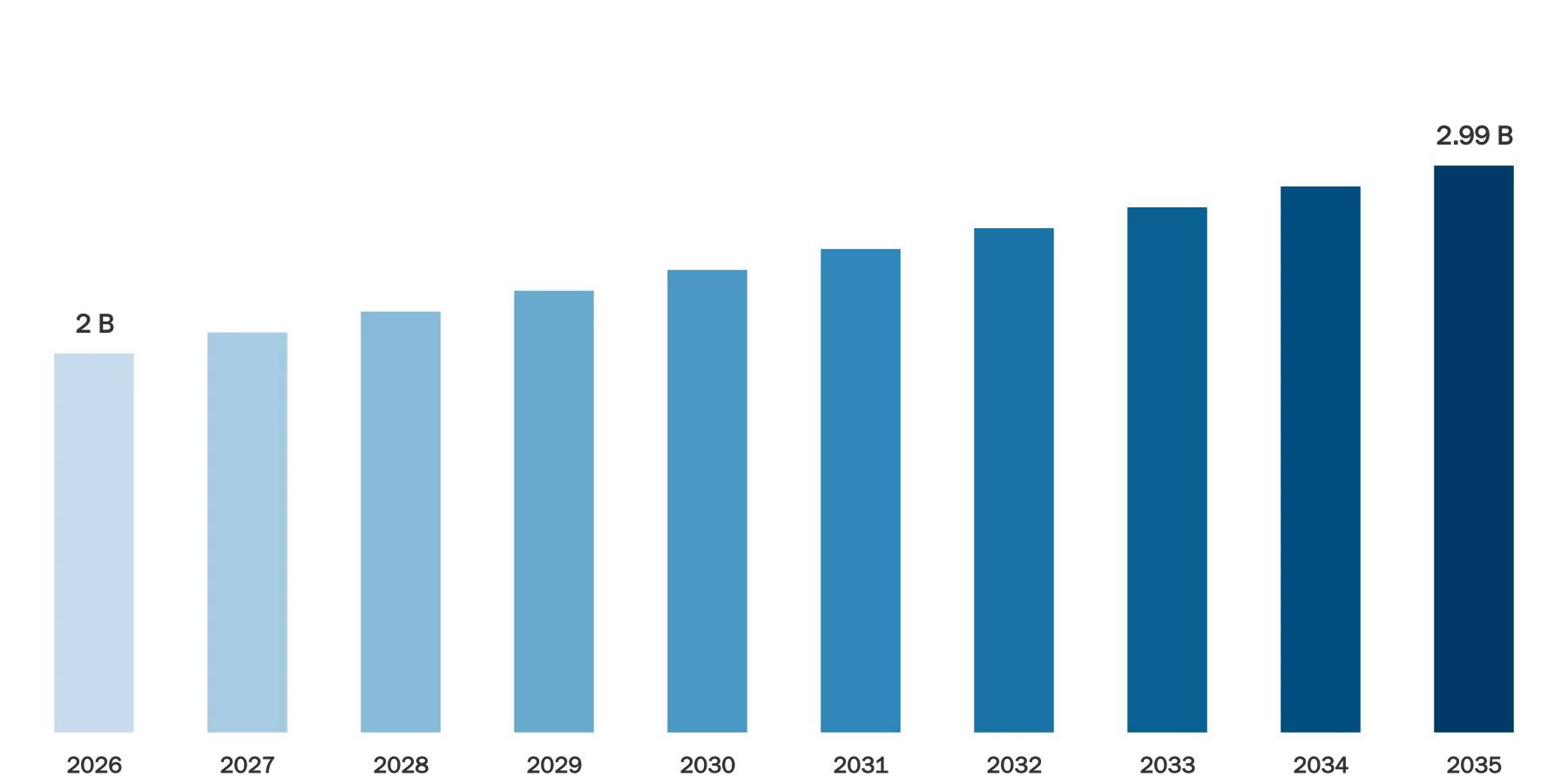
Source: Econ Market Research
The development of aircraft machmeters represents a significant breakthrough in aviation equipment. These advanced instruments calculate the speed of an aircraft about the speed of sound, giving pilots vital information they need to maintain safe and ideal flying conditions. Machmeters are equipped with state-of-the-art technology that provides accurate readings in real-time, improving navigation and flight control. Machmeters transform flight operations with their accuracy and dependability, empowering pilots to navigate successfully and adapt to changing flight conditions. This invention highlights the aviation industry',s dedication to ongoing safety standards development and represents a substantial technological advancement.
Airplane Machmeters Dynamics
Demand is driven by technological developments as newer, more precise machmeters are created. Adoption rates and market trends are significantly influenced by safety regulations and standards. The market is also being driven by factors including fleet expansion, modernization projects for aircraft, and the growing demand for safety and efficiency in aviation operations. Furthermore, purchasing decisions are influenced by economic issues such as changes in fuel prices and airline profitability. All things considered, the market for aviation Machmeters is driven to continue growing and evolving by a blend of technological innovation, regulatory compliance, and economic concerns.
Airplane Machmeters Drivers
Technological Advancements in Aerospace Industry
Aerospace technological breakthroughs are propelled by an unwavering pursuit of more advanced, safe, and effective flight systems. Innovations in digital displays, materials science, and sensor technology are what are driving this effort. Modern aircraft depend on improved instrumentation precision and dependability, such as machmeters, which is why advanced avionics are being used. Innovations in fuel efficiency, sustainability, and overall passenger experience are made possible by these breakthroughs in aviation, which also enhance flight performance.
Increasing Demand for Commercial Aircraft
The consistent increase in air traveler traffic around the globe is the main driver of the rising demand for commercial airplanes. Urbanization, globalization, and growing disposable incomes are some of the driving forces behind this trend. To keep up with the increasing demand, airlines are enlarging their fleets, which raises the need for aircraft in all market categories. Furthermore, the desire to replace outdated aircraft with newer, more fuel-efficient ones fuels the aerospace industry',s growth by adding to the spike in demand for commercial jets.
Restraints:
High Development and Manufacturing Costs
Costs are rising due to the necessity for specialized materials, strict regulatory compliance requirements, and research and development charges for cutting-edge technology. Expenses are further increased by the intricacy of aircraft production procedures and the need for precise engineering. These high costs limit client affordability, impede innovation and market entry for smaller businesses, and provide difficulties for maintaining profitability in the face of fierce competition, all of which eventually limit the expansion of the industry.
Dependency on Aerospace Industry Cycles
Aircraft demand is directly impacted by changes in airline profitability, geopolitical events, and economic conditions. Reduced consumer spending and falling airline revenues during recessions cause manufacturers and suppliers to experience delayed or canceled aircraft orders. Furthermore, because decisions about aircraft procurement are cyclical, market volatility is heightened, which makes it difficult for businesses to precisely predict demand and schedule long-term investments. This dependency impedes the aerospace sector',s ability to grow and operate sustainably by introducing risk and unpredictability.
Opportunities:
Rise in Military Aviation Expenditure
Global defense budget increases fuel expenditures in cutting-edge avionics, weapons, and aircraft. This increases the need for specialist instruments and machmeters made for tracking the performance of military aircraft. Contract awards and opportunities for technological development are provided through partnerships with government organizations and defense contractors. Furthermore, diversifying income streams and boosting competitiveness by expansion into defense industries positions businesses to benefit from the rising need for military aviation solutions.
Emergence of Electric and Hybrid Aircraft
Innovative instrumentation designed for electric propulsion systems is becoming more and more in demand as the aviation industry shifts to sustainable solutions. By creating specific machmeters and flight performance monitoring systems tailored for electric and hybrid aircraft, businesses may profit from this trend. Establishing partnerships with manufacturers and research centers facilitates the development of innovative technology, placing businesses in the vanguard of the electric aircraft revolution.
Segment Overview
By Type
Based on type, the global airplane machmeters market is divided into analog type and digital type. The digital type category dominates the market with the largest revenue share in 2023. Digital machmeters show airspeed data using digital displays, like LCD or LED panels. Compared to analog counterparts, they provide many benefits, such as improved accuracy, flexibility, and integration potential. Beyond just velocity, digital machmeters can show other aircraft characteristics like heading, altitude, and navigation data. Analog machmeters show airspeed data using conventional analog gauges. Usually, they are made up of a mechanical needle or pointer that indicates the speed of the aircraft by moving along a scale.
By Application
Based on the application, the global airplane machmeters market is categorized as military aircraft, commercial aircraft, business jets, and civil aviation. The commercial aircraft category leads the global airplane machmeters market with the largest revenue share in 2023. Airlines operate passenger airliners with commercial aircraft machmeters equipped for the purpose of transporting both passengers and cargo. For commercial airplanes to operate safely and effectively, machmeters are essential.
Military aircraft are equipped with machmeters to meet defense forces', requirements. These aircraft include of military transports, fighter jets, helicopters, and reconnaissance aircraft. Business Jet machmeters are designed specifically for corporate and executive travel. Business travelers, VIPs, and charter services use these planes for private aviation. In civil aviation, machmeters refer to a wide variety of aircraft that are utilized for aerial firefighting, general aviation, training, and air ambulance services, among other uses.
Airplane Machmeters Overview by Region
The global airplane machmeters market is categorized into North America, Europe, Asia-Pacific, and the Rest of the World. North America emerged as the leading region, capturing the largest market share in 2023. Much of the global aerospace sector is based in the region, including important suppliers, manufacturers, and research centers. Second, there is a sizable fleet of business, military, and commercial aircraft in North America, together with a strong aviation infrastructure. Machmeters and other advanced avionics systems are also being adopted because of the region',s concentration on technological innovation and strict safety requirements.
Furthermore, the need for machmeters in military aircraft is fueled by significant defense spending by North American nations. All of these elements put North America at the forefront of the market for aviation machmeters. Rapid economic growth in nations like China, India, and Southeast Asia raises demand for air travel, which in turn raises the price of buying new aircraft and growing the fleet. Second, there is a growing need for military aircraft and related equipment, such as machmeters, due to the region',s growing defense spending. Further driving market expansion are rising investments in aeronautical infrastructure, technical developments, and regulatory changes.
Airplane Machmeters Competitive Landscape
In the global airplane machmeters market, a few major players exert significant market dominance and have established a strong regional presence. These leading companies remain committed to continuous research and development endeavors and actively engage in strategic growth initiatives, including product development, launches, joint ventures, and partnerships. By pursuing these strategies, these companies aim to strengthen their market position, expand their customer base, and capture a substantial share of the market.
Airplane Machmeters Market Leading Companies:
Mid-Continent Instruments and Avionics
J.D.C. ELECTRONIC
Kollsman
Mikrotechna Praha
LX navigation
MAV Avionics
REVUE THOMMEN
Suzhou Changfeng Instruments, and various others.
Airplane Machmeters Recent Developments
In April 2022, The award-winning pioneer and world leader in electrically propelled aircraft, Pipistrel, together with its three companies, PipistEL d.o.o., PipistEL VERTICAL SOLUTIONS d.o.o., and PipistEL ITALIA S.R.L., have been acquired by Textron Inc.
Airplane Machmeters Market Report Segmentation
Airplane Machmeters Market Report Scope & Segmentation
| Attributes | Details |
|---|---|
Market Size (Current) | US$ 2 Billion in 2026 |
Market Size (Forecast) | US$ 2.99 Billion in 2035 |
Growth Rate | CAGR of 4.56% from 2026 to 2035 |
Forecast Period | 2026 – 2035 |
Base Year | 2025 |
Historical Data Available | Yes |
Regional Scope | Global |
Segments Covered | By Type
By Application
By Fit
|
Frequently Asked Questions
Common questions about this report
The study period covers historical insights and forecast projections for the period 2026-2035.
About the Author
Market research expert with years of industry experience

Related Reports
Explore more market insights from the same category