

Aircraft Fasteners Market
Aircraft Fasteners Market Size, Share, Trends, Growth, and Industry Analysis, By Aircraft Type (Commercial Aircraft, Regional Aircraft, Helicopter, Military Aircraft, General Aviation), By Product Type (Bolts, Rivets, Nuts, Screws, Pin Fastening Systems, Other Product Types), By Fastener Type (Specialty Fasteners, Non-Specialty Fasteners), By Material (Titanium, Steel, Other Materials), By Application (Airframe, Flight Control Surfaces, Interiors, Other Applications), Regional Analysis and Forecast Period 2026-2035
Market Overview
As per Econ Market Research analysis, the Global Aircraft Fasteners Market valuation stood at US$ 119.18 Billion in 2026 and is expected to reach US$ 167.4 Billion by 2035, growing at a steady CAGR of 3.85% from 2026 to 2035. 2025 serves as the base year.
Aircraft Fasteners Market Size 2025-2035 (USD Billion)

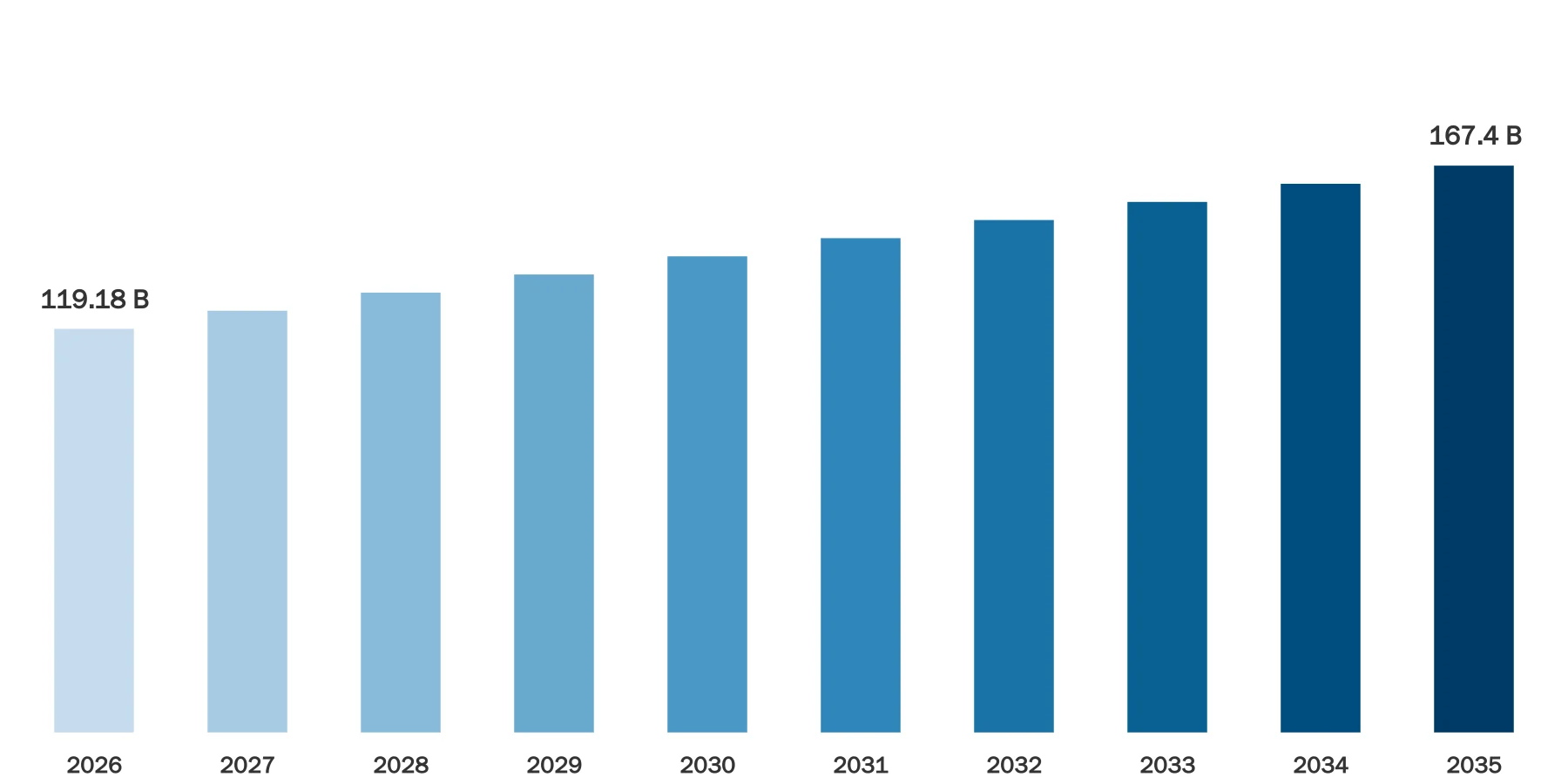
Source: Econ Market Research
The market for aircraft fasteners, which includes a wide variety of specialized hardware required for aircraft assembly and maintenance, is an essential part of the aerospace manufacturing industry. These fasteners, which include nuts, bolts, rivets, and screws, are essential to maintaining the efficiency, safety, and structural integrity of airplanes. Innovations to achieve strict performance criteria and lightweight requirements are being seen in the market because of materials and manufacturing techniques developments. The need for dependable, high-quality fastening solutions is anticipated to increase as the aerospace sector grows internationally, creating growth and opportunity in the aviation fasteners market.
Aircraft Fasteners Dynamics
The dynamics of the aviation fasteners market are influenced by a number of variables, including industry trends, legal requirements, and technical developments. Growth in the market is driven by the expanding aircraft sector, improved safety regulations, and rising demand for lightweight materials. Market expansion is also influenced by variables like the increase in air traveler traffic and fleet expansions.
Obstacles include, but are not limited to, supply chain interruptions, volatile raw material prices, and strict quality standards. In order to fulfill changing industry needs and address these problems, fastener design, material, and manufacturing process innovations are being pursued. In general, the market for aircraft fasteners shows potential and durability in the face of a changing and cutthroat environment.
Aircraft Fasteners Drivers
Advancements in Aircraft Design
The need for specialty fasteners is being driven by developments in aircraft design, such as the growing use of Composite Materials and unique structural layouts. Modern aviation components require fasteners with special qualities like corrosion resistance, lightweight, and high strength in order to be securely fastened. The airplane fasteners market is expected to increase as a result of designers pushing the limits of efficiency and aerodynamics and fastener makers having to constantly innovate to satisfy the changing needs of next-generation aircraft.
Rising Defense Expenditure
Growing defense spending around the world boosts the market for military aircraft, which in turn raises the requirement for specialty fasteners. Fasteners for military aircraft must be made to endure harsh environments and demanding operational requirements in order to maintain structural integrity and safety. The acquisition of cutting-edge aircraft by countries looking to bolster their defense capabilities is fueling the need for dependable and high-performing fastening solutions. As manufacturers provide novel and long-lasting fastening technologies to meet the demanding requirements of the defense industry, this trend drives the aviation fasteners market ahead.
Restraints:
It takes a significant financial commitment to materials research, testing, and certification procedures to create sophisticated fasteners that adhere to strict aviation regulations. Further driving up R&,D costs are the intricacy of aeronautical engineering and the demand for ongoing innovation to meet changing industry requirements. The market expansion may be hindered by these high prices, which can also limit the ability of current players to launch new products and technologies and discourage smaller manufacturers from entering the industry.
Stringent Regulatory Standards
Manufacturers of fasteners must undergo stringent testing, certification, and documentation procedures in order to comply with the strict restrictions established by aviation authorities. Fulfilling these requirements takes a lot of time and money out of product creation, which prevents smaller businesses from entering the market or from innovating. Further pressuring producers to maintain tight compliance and limiting market expansion is the possibility of expensive recalls or fines for noncompliance with regulations.
Opportunities:
Growing Demand for Lightweight Fasteners
There is a big potential for the airplane fasteners market due to the rising demand for lightweight fasteners. Lightweight materials are more important than ever to reduce aircraft weight as the aerospace industry focuses more and more on environmental sustainability and fuel efficiency. Reducing weight without sacrificing strength or safety is possible with fasteners composed of cutting-edge lightweight materials like titanium alloys and composite composites. Producing such fasteners gives manufacturers the opportunity to take a large portion of the market and propel industry growth.
Increasing Focus on Urban Air Mobility (UAM)
The market for aviation fasteners has a significant opportunity due to the growing emphasis on Urban Air Mobility (UAM). There',s a growing need for specialty fasteners that work with cutting-edge platforms like electric vertical takeoff and landing (eVTOL) aircraft as cities investigate new transportation options. By creating goods specifically designed to meet the needs of UAM cars, such as vibration-resistant, lightweight, and sturdy fasteners, fastener makers may take advantage of this trend and establish themselves as leaders in this rapidly growing sector.
Segment Overview
By Product Type
Based on product type, the global aircraft fasteners market is divided into screws, rivets, nuts &, bolts. The rivets category dominates the market with the largest revenue share in 2023. Permanent fasteners known as rivets are used to firmly attach two or more components by generating a deformed rivet body. Typically composed of steel, titanium, or aluminum, aircraft rivets are inserted using specialized riveting equipment.
Threaded fasteners, such as aircraft screws, are meant to be screwed into pre-drilled holes and tightened with a screwdriver or other similar instrument. Machine screws, self-tapping screws, and captive screws are among the several sizes and types of these screws. When two or more components are fastened together, nuts and bolts are paired fasteners made up of a matching nut and a threaded bolt.
By Material Based
Based on the material based, the global aircraft fasteners market is categorized into aluminum, steel, titanium, superalloys. The superalloys category leads the global aircraft fasteners market with the largest revenue share in 2023. High-performance materials called superalloys are designed to endure high pressure, temperatures, and mechanical stress. In applications with harsh operating conditions, including as turbine components, exhaust systems, and aircraft engines, they are frequently utilized.
Titanium fasteners are perfect for aircraft applications where durability and weight reduction are crucial because of their combination of high strength, low density, and resistance to corrosion. Because of its exceptional strength and longevity, steel fasteners are a good choice for structural applications in airplanes, where severe loads and stress are present. Because they are corrosion-resistant and lightweight, aluminum fasteners are appropriate for non-structural aircraft applications where weight reduction is crucial.
Aircraft Fasteners Overview by Region
The global aircraft fasteners market is categorized into North America, Europe, Asia-Pacific, and the Rest of the World. North America emerged as the leading region, capturing the largest market share in 2023. Fasteners are in high demand in the manufacturing of both commercial and military aircraft because the area is home to some of the biggest aerospace manufacturers in the world, such as Boeing and Lockheed Martin. Furthermore, North America has a strong aerospace ecosystem with cutting-edge research centers, tech startups, and skilled labor, which supports ongoing product development and innovation in the fastener manufacturing industry.
The area',s economy is expanding quickly, which is driving up demand for air travel and, in turn, manufacturing of aircraft. Secondly, there is a growing market for military aircraft and associated parts, such as fasteners, due to growing defense spending in nations like China and India. Further supporting the projected expansion of the aviation fasteners market in Asia-Pacific is the region',s increasing concentration of aerospace suppliers and manufacturers, as well as expenditures in aerospace infrastructure and supportive government policies.
Aircraft Fasteners Competitive Landscape
In the global aircraft fasteners market, a few major players exert significant market dominance and have established a strong regional presence. These leading companies remain committed to continuous research and development endeavors and actively engage in strategic growth initiatives, including product development, launches, joint ventures, and partnerships. By pursuing these strategies, these companies aim to strengthen their market position, expand their customer base, and capture a substantial share of the market.
Aircraft Fasteners Market Leading Companies:
Bombardier
Embraer
Comac
Stanley Black &, Decker Inc.
LISI Aerospace
3M Fasteners
Precision Castparts Corp
Alcoa Fastening Systems &, Rings
B&,B Specialities Inc
Bufab Group
Boeing and various others.
Aircraft Fasteners Recent Developments
In January 2024, the acquisition of Pilgrim Screw Corp., d.b.a. Pilgrim Aerospace Fasteners, was announced by MEIDOH Co. Ltd., a global leader in the manufacturing of automotive fasteners. Pilgrim is a prominent aerospace fastener producer, having manufacturing facilities in Chandler, Arizona, and a small office in Providence, Rhode Island. Pilgrim produces screws, bolts, rivets, clevis pins, and other fasteners.
In March 2021, the acquisition of The Young Engineers, Inc. (TYE) was recently announced by Novaria, a precision component supplier to the aerospace and defense industry. With an emphasis on fasteners and inserts, TYE is a leading manufacturer of aircraft and aerospace hardware.
Aircraft Fasteners Market Report Segmentation
Aircraft Fasteners Market Report Scope & Segmentation
| Attributes | Details |
|---|---|
Market Size (Current) | US$ 119.18 Billion in 2026 |
Market Size (Forecast) | US$ 167.4 Billion in 2035 |
Growth Rate | CAGR of 3.85% from 2026 to 2035 |
Forecast Period | 2026 – 2035 |
Base Year | 2025 |
Historical Data Available | Yes |
Regional Scope | Global |
Segments Covered | By Aircraft Type
By Product Type
By Fastener Type
By Material
By Application
|
Frequently Asked Questions
Common questions about this report
The study period covers historical insights and forecast projections for the period 2026-2035.
About the Author
Market research expert with years of industry experience

Dipali Bhingare serves as the Market Research Director at Econ Market Research. With a focus on translating complex global economic shifts into actionable business intelligence, she oversees the strategic direction of comprehensive market studies. Her work empowers organizations to navigate volatile industries through data-driven forecasting and deep-dive competitive analysis.
Related Reports
Explore more market insights from the same category