

Transdermal Drug Delivery System Market
Transdermal Drug Delivery System Market Size, Share, Trends, Growth, and Industry Analysis, By Type (Transdermal Patches, Transdermal Semisolids), By Application (Pain Management, Hormonal Applications, Central Nervous System Disorders, Cardiovascular Diseases), By End-User (Hospitals andamp; Clinics, Home Care Settings), Regional Analysis and Forecast Period 2026-2035
Market Overview
As per Econ Market Research analysis, the Global Transdermal Drug Delivery System Market reached a valuation of US$ 43.78 Billion in 2026 and is anticipated to grow to US$ 114.98 Billion by 2035, at a CAGR of 11.2% during the forecast timeline 2026–2035. The base year considered is 2025.
Transdermal Drug Delivery System Market Size 2025-2035 (USD Billion)

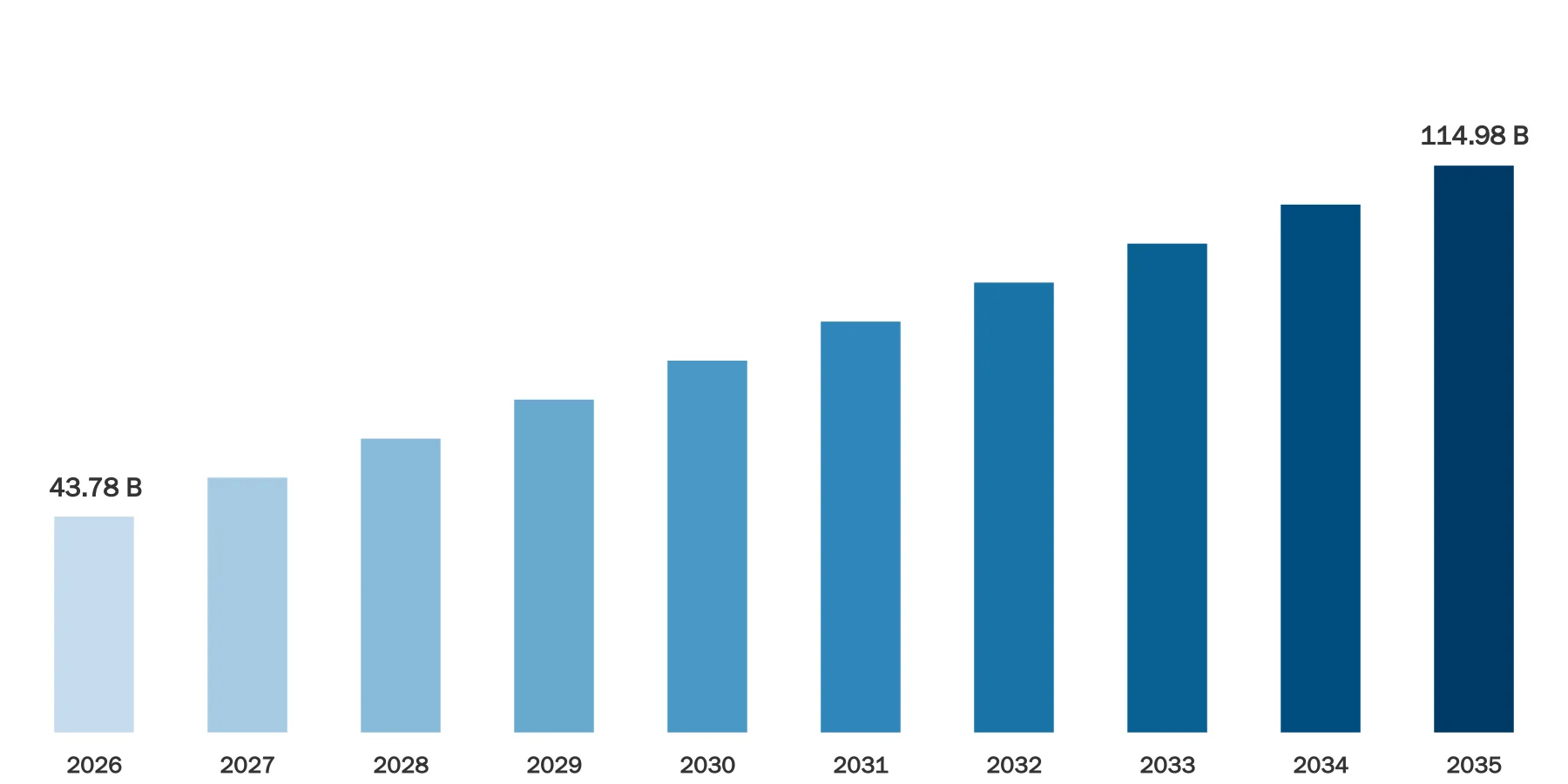
Source: Econ Market Research
Transdermal drug delivery circumvents the digestive system by distributing medications through the skin to the entire body. Patients who are needle-phobic or who need long-term medication may find this approach particularly appealing as it provides a convenient and painless substitute for more conventional delivery methods like oral or injectable medication.
Chronic diseases like diabetes, heart disease, and pain-related disorders are becoming more common in the market, which has LED to the development and use of novel drug delivery techniques. Transdermal patches, gels, and creams have become popular choices for regulated drug release because they minimise side effects and don',t require frequent dosing. The creation of new medications appropriate for transdermal delivery, along with technological developments in formulation and patch design, have further fuelled market expansion.
Transdermal Drug Delivery System Dynamics
The increasing incidence of long-term conditions like diabetes and heart problems highlights the need for effective and patient-centered medication delivery. Furthermore, the ageing of the world',s population and the corresponding need for healthcare are driving the market',s expansion, as transdermal drug delivery presents an effective option for senior patients.
Technological developments are crucial in determining the dynamics of the market, and ongoing breakthroughs in formulation and delivery methods are what propel product development. In order to improve patch design, drug stability, and release kinetics, the market is characterised by continuous research and development initiatives. Compliance and adherence to safety standards are becoming crucial factors in determining the success of the transdermal drug product market as regulatory bodies work to establish comprehensive guidelines.
Transdermal Drug Delivery System Drivers
Growing Preference for Non-Invasive Drug Delivery
The growing inclination towards non-invasive drug administration is a significant factor propelling the global market for transdermal Drug delivery systems. Transdermal delivery is a practical and painless substitute for conventional delivery methods, like oral or injectable, which appeals especially to patients who are uncomfortable with needles or are looking for more user-friendly choices.
The benefits of transdermal patches, gels, and creams&mdash,which offer regulated and prolonged drug release, enhancing patient compliance and therapeutic results&mdash,support this expanding acceptance. Adoption of transdermal drug delivery systems is being driven by advancements in formulation technology and the need for non-invasive options in a variety of therapeutic areas.
Rising Incidence of Chronic Diseases
Globally, the prevalence of chronic illnesses such as diabetes, cardiovascular disease, and pain-related disorders is rising, which is propelling the market for transdermal drug delivery systems. Transdermal delivery systems provide a good alternative because these conditions necessitate long-term medication because they allow for a steady and regulated drug release over a longer period of time. The difficulties in patient adherence to intricate medication regimens are mitigated by the topical formulations or patches', convenience. The growing prevalence of chronic illnesses is driving the market',s growth, which is why pharmaceutical companies are investigating transdermal options as potential treatment options.
Restraints:
Regulatory Challenges and Stringent Approval Processes
The market for transdermal drug delivery systems is significantly hampered by the existence of regulatory obstacles and rigorous approval procedures. Transdermal product development and commercialization require navigating complicated regulatory environments, and getting approvals can take a lot of time and money. Complying with regulatory bodies', strict safety and effectiveness requirements presents a challenge for industry participants, delaying the release of novel transdermal technologies.
High Development Costs and Research Investment
Another major barrier to the commercialization of transdermal drug delivery systems is the high development costs and significant research investments involved. Significant financial resources are needed to support the ongoing innovation required in patch design, formulation, and drug stability. Smaller businesses might find it difficult to secure the funding necessary for significant R&,D projects, which would hinder their capacity to compete with more established pharmaceutical companies. Product development',s high costs are a barrier, particularly for businesses looking to launch cutting-edge transdermal delivery technologies.
Opportunities:
Advancements in Nanotechnology for Transdermal Delivery
The market has a promising prospect due to the ongoing progress in nanotechnology for transdermal drug delivery. Improved drug penetration through the skin is made possible by nanoparticles and nanocarriers, which also increase the effectiveness of transdermal delivery. This offers a way to solve issues with drug stability and release kinetics by creating novel formulations with improved bioavailability and targeted delivery. Businesses that fund transdermal nanotechnology research stand to benefit from increased competitiveness and novel therapeutic intervention opportunities.
Segment Overview
By Type
The transdermal drug delivery system encompasses various types, each employing distinct mechanisms to facilitate drug absorption through the skin. Electroporation involves the use of electrical pulses to temporarily disrupt cell membranes, enhancing drug penetration. Radio Frequency leverages electromagnetic waves to generate heat, aiding in drug absorption. Iontophoresis utilizes a mild electric current to drive ions into the skin, facilitating the transport of drugs. Microporation creates microscopic channels in the skin through mechanical means, promoting drug permeation.
Thermal methods involve the application of heat to increase skin permeability, while mechanical arrays utilize physical structures to enhance drug delivery. Ultrasound employs sound waves to create micro-cavities in the skin, aiding drug absorption. The ",Others", category encompasses innovative and emerging technologies contributing to transdermal drug delivery, reflecting the dynamic nature of ongoing research and development in the field.
By Application
The applications of transdermal drug delivery systems span a wide spectrum of therapeutic areas. In the Central Nervous System (CNS), these systems offer a non-invasive route for delivering medications to the brain, addressing neurological disorders more effectively. Pain Management involves the localized or systemic delivery of analgesic agents, providing sustained relief. Cardiovascular applications focus on drugs for heart-related conditions, utilizing transdermal delivery for controlled release. Hormone delivery through the skin is valuable in Endocrinology, offering a steady and regulated supply. Immunological applications involve transdermal delivery of immunomodulators, while Metabolic applications target conditions like diabetes for optimized drug administration.
Gastrointestinal applications explore transdermal routes for drugs affecting the digestive system. Infection-related transdermal applications provide alternatives for antimicrobial drug delivery. Cancer applications utilize transdermal systems for chemotherapy and targeted therapies. The others category encompasses diverse therapeutic areas where transdermal drug delivery is explored, highlighting the versatility of this mode of drug administration across various medical disciplines. Overall, these diverse applications underscore the versatility and potential of transdermal drug delivery systems in providing effective and patient-friendly solutions for a broad spectrum of medical conditions.
Transdermal Drug Delivery System Overview by Region
North America stands as a prominent market player, driven by a well-established healthcare system, high healthcare expenditure, and a robust emphasis on research and development. The region witnesses a growing demand for transdermal drug delivery systems, especially in the context of chronic disease management, where the convenience and patient compliance offered by these systems are highly valued.
With an established healthcare system and a growing emphasis on technological developments in medication delivery techniques, Europe follows suit. The growth of the market in this region is facilitated by the presence of major pharmaceutical companies and a regulatory environment that is supportive. A growing number of people are becoming aware of non-invasive drug administration techniques, the healthcare infrastructure is getting better, and chronic diseases are becoming more common. These factors are driving the Asia-Pacific market',s rapid expansion. Leading the way in this expansion are nations like China and India, whose ageing populations and large healthcare expenditures.
Transdermal Drug Delivery System Market Competitive Landscape
Major industry participants, including 3M Company, Biogel Technology, Inc., and Boehringer Ingelheim GmbH, dominate the market, leveraging their extensive product portfolios and global presence. These companies focus on strategic collaborations, mergers, and acquisitions to strengthen their market position, enhance technological capabilities, and broaden their product offerings.
In addition to established players, a wave of innovative start-ups is contributing to the competitive dynamics of the transdermal drug delivery market. These start-ups often specialize in novel technologies, such as nanoparticle-based delivery systems or advanced patch designs, aiming to carve out niche markets and challenge traditional approaches to drug administration. The competitive landscape is further enriched by mid-sized companies with expertise in formulation development and manufacturing, offering specialized solutions and contributing to the diversity of transdermal products available.
Transdermal Drug Delivery System Market Leading Companies:
Hisamitsu Pharmaceutical Co., Inc.
Novartis AG
Johnson &, Johnson
Mylan Pharmaceuticals Inc.
UCB S.A.
GlaxoSmithKline plc
Boehringer Ingelheim GmbH
Endo International plc
Purdue Pharma L.P.
Bayer AG
Transdermal Drug Delivery System Recent Developments
Nov 2021, AMW GmbH and AdhexPharma SAS have officially unveiled a strategic partnership concerning AMW',s transdermal delivery systems (TDS) technology platform and product range. This collaboration leverages the respective strengths of both entities within the TDS domain. Within the framework of this partnership, AMW will concentrate on the development, acquisition of marketing authorization, and licensing of innovative transdermal delivery systems.
Global Transdermal Drug Delivery System Report Segmentation
Transdermal Drug Delivery System Market Report Scope & Segmentation
| Attributes | Details |
|---|---|
Market Size (Current) | US$ 43.78 Billion in 2026 |
Market Size (Forecast) | US$ 114.98 Billion in 2035 |
Growth Rate | CAGR of 11.2% from 2026 to 2035 |
Forecast Period | 2026 – 2035 |
Base Year | 2025 |
Historical Data Available | Yes |
Regional Scope | Global |
Segments Covered | By Type
By Application
By End-User
|
Frequently Asked Questions
Common questions about this report
The study period covers historical insights and forecast projections for the period 2026-2035.
About the Author
Market research expert with years of industry experience

Related Reports
Explore more market insights from the same category