Endocrinology Market Overview
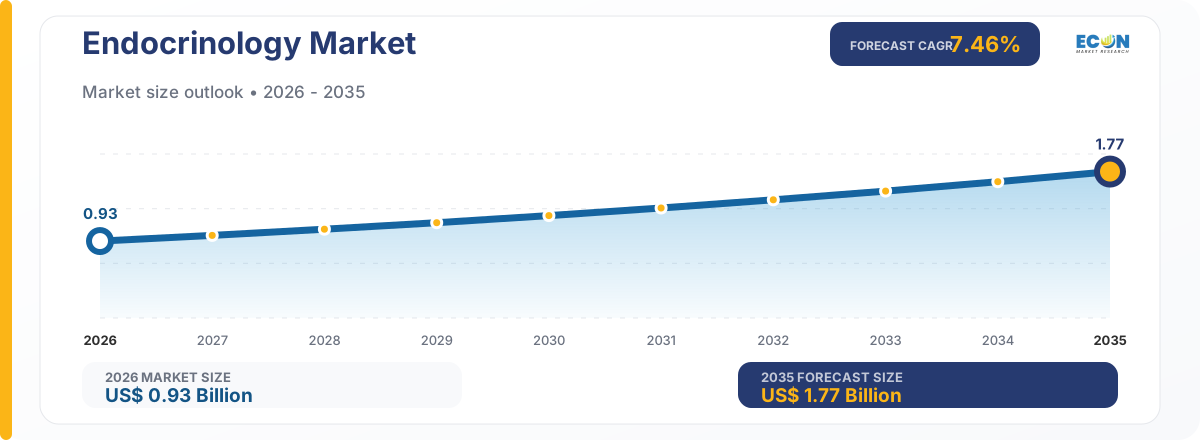
As per Econ Market Research analysis, the Global Endocrinology Market generated revenue of US$ 0.93 Billion in 2026 and is forecast to achieve US$ 1.77 Billion by 2035, at a CAGR of 7.46% during the study period 2026–2035. The base year considered is 2025.
The medical field of endocrinology pertains to the study of the endocrine system, which makes hormones from specific glands for the regulation of metabolism, growth, and the occurrence of reproduction in a human body. Some of the most common endocrine disorders include diabetes, diseases of the thyroid gland, adrenal insufficiency, and obesity. The main driver in this market is the growing prevalence of these conditions, greater awareness with regard to the health of hormones, and advances in medical technology that allow for greater accuracy in diagnosis and effective treatments.
In the past few years, people have had an increased need for new treatments and medications, especially hormone replacement therapies and insulin delivery systems, to control these diseases. The demographic aspect of the ever-growing older population and unhealthy lifestyles, including unbalanced diets and a sedentary lifestyle, are the main causes of the increasing incidence of endocrine diseases. Furthermore, endocrinology research and development are becoming increasingly active, and new medications and treatments are increasingly being found. This growth in the market is further driven by the increasing number of healthcare professionals who specialize in endocrinology along with better access to healthcare services across the globe.
Dynamic Insights
Growth in incidence of hormone-related disorders, such as diabetes and thyroid disease, is one major driver: these have become increasingly prevalent due to a change in lifestyle as well as population aging, with a growing need for effective treatments and management options. Technological advances and research allow the development of cutting-edge therapies that improve patient care, ranging from biologics to targeted treatments.
However, the market has challenges that could hinder its growth. The high cost of advanced therapies and drugs imposes limitations on access to care in some populations, especially in low-income regions. Moreover, the disorder often requires a multi-disciplinary treatment approach, which puts intense pressure on the healthcare system. Regulatory and lengthy drug approval processes may slow down the availability of new drugs in the market.
Drivers Insights
Increasing Prevalence of Hormonal Disorders
The increasing rate of lifestyle-related diseases such as diabetes, obesity, and thyroid disorders is one of the key factors driving the global market for endocrinology. Further, the World Health Organization reports that over the last few decades, the prevalence of diabetes in the world has consistently been increasing and has impacted approximately 422 million globally in the year 2021. Such growth mainly results from an inactive lifestyle, bad eating, and increased urbanization.
The Rising Incidence of These Endocrine Disorders is Also Coupled with the Demand for More Comprehensive Treatment and Care, Thus Resulting in an Upward Surge in Healthcare Expenditure. Although the Growing Awareness of the Importance of Endocrine Health among Patients Enhances the Probability that Such Subjects are Bound to Present Themselves to Hospital for Medical Care, Therefore Leading to a Market Expansion for Endocrinological Therapies and Medications.
Advancements in Medical Technology
Continuous innovation in medical technology is now starting to influence diagnostic and treatment trends in endocrinology. Newer generations of continuous glucose monitoring systems and sophisticated imaging techniques now offer the possibility of early and accurate detection and monitoring of endocrine disorders. In addition, newer therapeutic approaches-biologics, gene therapies, and personalized medicine-continue to enhance the effectiveness of treatments and compliance among patients. Such advancements increase the quality of care provided to the patients and contribute to further market growth as more investments and research and development are infused in the area of endocrinology.
Restraints Insights
High Cost of Treatment
The cost of advanced treatments and drugs is perhaps the most significant restraint in the global endocrinology market. Innovative therapies-for example, biologics and new versions of insulin-can cost much too much to be able to pay for them or become a financial barrier to the patient and healthcare systems. In many instances, even insurance coverage may not be enough to help out with these charges, thereby reducing access to the necessary care. This financial burden may discourage patients from the treatments and therefore influences the growth in the market. In addition, medical practitioners may find it challenging to receive recompense for these costly interventions, hence, their access is limited.
Regulatory Challenges
In the endocrinology market, strict regulation also prevents timely entry into the market of new therapeutic solutions. Regulatory authorities such as the FDA and EMA strictly enforce approval processes to guarantee drugs for public health safety purposes. Notwithstanding this proper legislation, it could be speculated that it prolongs the time it would take to bring out new treatments in the market. The complex procedure of conducting clinical trials, especially for rare endocrine disorders, may discourage investment and innovation. The time-consuming lengthy approval processes may, therefore, hinder the speedy progress of the endocrinology market.
Opportunities Insights
Focus on Preventive Care and Lifestyle Management
There is a growing emphasis on preventive care and lifestyle management in the healthcare landscape, particularly concerning chronic diseases like diabetes and obesity. This shift presents an opportunity for endocrinology professionals to offer integrated care models that combine medical treatment with lifestyle interventions. Programs focusing on nutrition, physical activity, and behavioral changes can empower patients to manage their conditions more effectively. Healthcare providers that incorporate preventive strategies and patient education into their practices can differentiate themselves in the market, enhance patient satisfaction, and potentially reduce long-term healthcare costs, creating a win-win situation for both patients and providers.
Segment Analysis
By Therapy Area
The endocrinology market can be segmented based on therapy area, which comprises diseases such as adrenal insufficiency, diabetes, thyroid hormone disorders, and other related conditions. Adrenal insufficiency is a group of disorders that describe the clinical manifestations resulting from a relative or absolute deficiency of hormones produced by the adrenal glands. This condition calls for different treatments techniques, mainly hormone replacement therapies. Diabetes is one of the biggest therapy areas of the market, with the management of Type 1 and Type 2 diabetes focusing on the use of insulin therapies, oral medications, and continuous glucose monitoring systems.
The thyroid hormone disorder segment refers to conditions such as hypothyroidism and hyperthyroidism that would necessitate hormone replacement or suppression. The other conditions included in the segment are PCOS and growth hormone deficiency. It is indeed a very wide scope of therapy areas that prove to be very complex with regard to hormone-related disorders, and hence, more nuanced treatment approaches need to be developed so as to address different physiological challenges that different patients may present with.
By Distribution Channel
The distribution channels of endocrinology products include hospital pharmacies, retail pharmacies, and online pharmacies. The role of hospital pharmacies is very crucial as they are there to provide specialty medicines and therapies to the patients in health care facilities, thus ensuring immediate access to all sorts of treatments that are vital for handling acute cases and post-operative treatments. Retail pharmacies constitute accessible points for clients in order to obtain their prescriptions and over-the-counter drugs. It is convenient and provides additional health services, such as consultation and wellness programs.
Online pharmacies have emerged as an incredible distribution channel which offers patients accessibility to purchase drugs at home with competitive pricing and sometimes with home delivery. The COVID-19 pandemic has resulted in an upward trend in online shopping for health care services. More and more patients opt to shop on the internet for what they need in terms of health, alleviating common hindrances associated with finding a specific treatment once on a local station. From a mere distributor, every channel became instrumental in ensuring that patients received drugs in good time to manage their endocrine disorders in various instances for better health outcomes.
Regional Analysis
The high presence of diabetes and thyroid disorders, a well-developed healthcare infrastructure, strong research and development, and a presence of key market players along with increasing healthcare expenditure make North America occupy a significant share in the market. Initiatives undertaken toward creating awareness among people about hormonal health also fuel the increasing demand for endocrinological therapy and drugs. In Europe, the market for endocrinology is also expanding and supported by an ageing population and an increasing incidence of chronic endocrine disorders.
The contributors to the market growth include Germany, France, and the UK with well-established healthcare systems and continuous investments in medical research. Market: The Asia-Pacific region is emerging as a significant market due to rapid urbanization, lifestyle changes, and a growing middle-class population. The burden of this region is expected to increase due to diabetes and obesity, which requires governments and healthcare providers to ensure better access to health care and preventive care. Health-related investment in emerging markets in Latin America and the Middle East, as well as growing awareness with regard to endocrine health, increases the demand for services and products in endocrinology significantly.
Competitive Landscape
Major players in the market are Novo Nordisk, Sanofi, Eli Lilly, and Merck &, Co., with diversified portfolios of diabetes medicines, insulin delivery systems, and thyroid hormone treatments. The companies spend more on research and development for new products to be introduced to the market and improve existing therapies. In addition to this, firms also engage in strategic partnerships, mergers, and acquisitions, which allow them to leverage complementary strengths and geographic reach to ensure that they stay competitive in this dynamic environment.
Apart from the giant pharma companies, biotech companies and niche specialized companies in the area of endocrinology increasingly shape the landscape. Many of these players are driven by a need for innovation, as such, they may provide the latest drugs able to fulfil specific unmet needs within specific groups of patients. There are also more recent emerging elements: digital health solutions - especially Telemedicine and mobile health applications, since they start to alter the competitive environment through better patient management and higher treatment adherence, which forces the classical pharmaceutical companies to collaborate with the tech companies to develop all-encompassing healthcare solutions.
List of Key Players:
AstraZeneca PLC
Takeda Pharmaceutical Company Limited
Eli Lilly and Company
Merck KGaA
Novartis AG
AbbVie Inc.
Novo Nordisk A/S
Sanofi
Global Endocrinology Report Segmentation:
Endocrinology Market Report Scope & Segmentation
| Attributes | Details |
|---|---|
| Market Size (Current)Current market valuation | US$ 0.93 Billion in 2026 |
| Market Size (Forecast)Projected market valuation | US$ 1.77 Billion in 2035 |
| Growth RateCompound Annual Growth Rate | CAGR of 7.46% from 2026 to 2035 |
| Forecast PeriodAnalysis timeline | 2026 – 2035 |
| Base YearReference year for analysis | 2025 |
| Historical Data AvailablePast market data availability | Yes |
| Regional ScopeGeographical coverage | Global |
| Segments CoveredMarket segments analyzed | By Therapeutic Area
By Drug Class
By Distribution Channel
|
Frequently Asked Questions
Common questions about this report
The study period covers historical insights and forecast projections for the period 2026-2035.
About the Author
Market research expert with years of industry experience

Dipali Bhingare serves as the Market Research Director at Econ Market Research. With a focus on translating complex global economic shifts into actionable business intelligence, she oversees the strategic direction of comprehensive market studies. Her work empowers organizations to navigate volatile industries through data-driven forecasting and deep-dive competitive analysis.