

Specialty Lighting Market
Specialty Lighting Market Size, Share, Trends, Growth, and Industry Analysis, By Light Source (LEDs, Halogen, Xenon, Incandescent), By Application (Entertainment, Medical, UV Purification, Residential, Others), Regional Analysis and Forecast Period 2026-2035
Market Overview
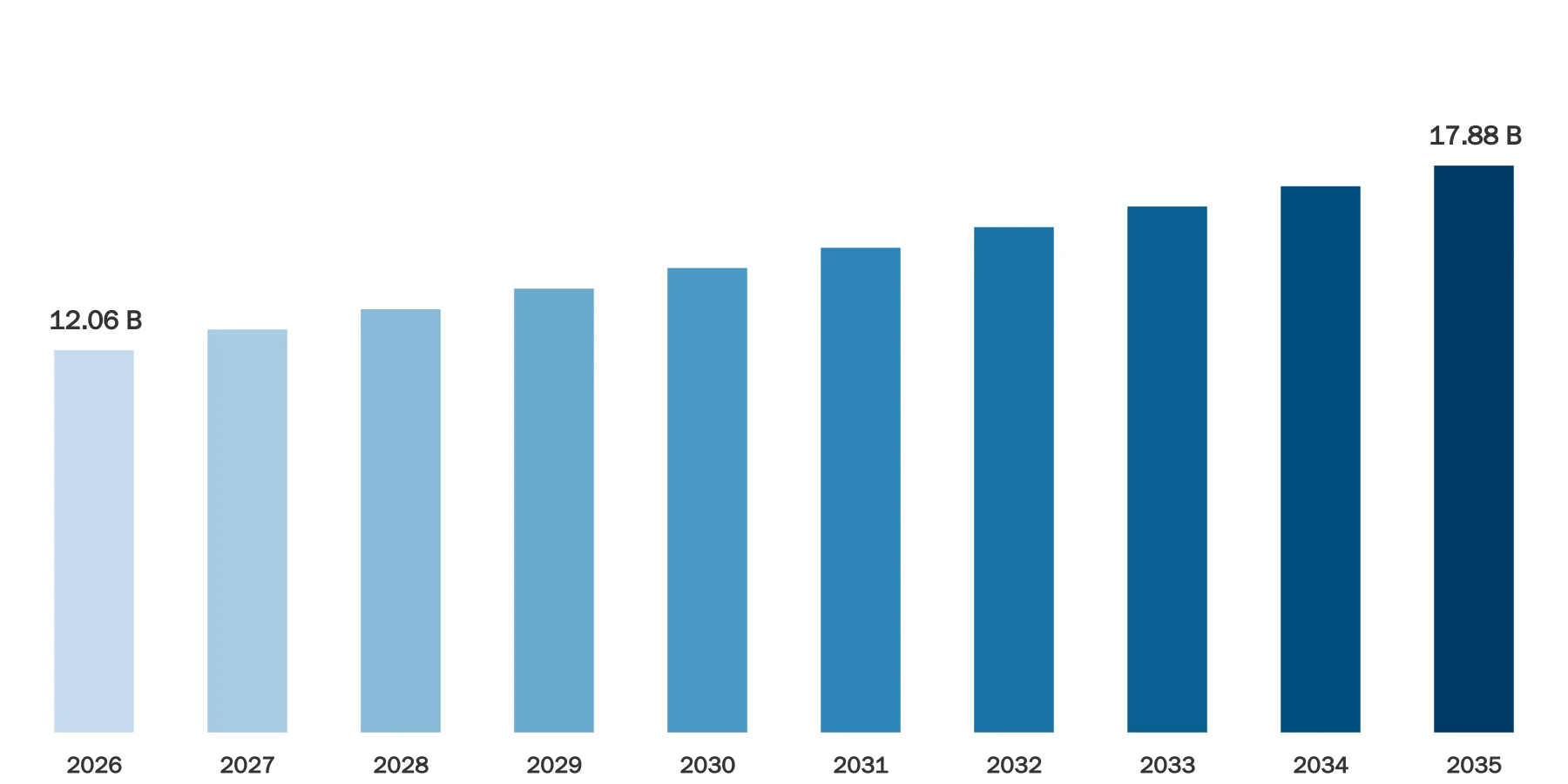
As per Econ Market Research analysis, the Global Specialty Lighting Market reached a valuation of US$ 12.06 Billion in 2026 and is anticipated to grow to US$ 17.88 Billion by 2035, at a CAGR of 4.47% during the forecast timeline 2026–2035. The base year considered is 2025.
Specialty Lighting Market Size 2025-2035 (USD Billion)

Source: Econ Market Research
The specialty lighting market has emerged as a dynamic and transformative segment within the broader lighting industry, catering to diverse and specialized lighting needs. Specialty lighting encompasses a wide array of lighting solutions designed to address specific requirements, ranging from architectural brilliance to functional applications in industries such as entertainment, automotive, healthcare, and more. This market',s growth has been encouraged by advancements in lighting technology, enabling the creation of innovative and customizable lighting solutions that push the boundaries of design, efficiency, and user experience. From mesmerizing LED displays that adorn modern cityscapes to precision lighting used in surgical procedures, specialty lighting has become an indispensable aspect of various sectors.
The demand for energy-efficient and environmentally conscious lighting solutions has driven research and development in the specialty lighting domain. This has led to the emergence of sustainable alternatives that not only meet stringent regulations but also offer long-lasting performance. As smart lighting and Internet of Things (IoT) technologies continue to evolve, specialty lighting systems are becoming integrated, adaptable, and remotely controllable, further expanding their application scope. However, the specialty lighting market is not without its challenges.
Rapid technological changes, the need for cost-effective solutions, and the requirement for skilled professionals to design, install, and maintain these systems present ongoing hurdles. Additionally, market players must stay attuned to shifting consumer preferences and global trends to remain competitive and relevant. The specialty lighting market stands at the intersection of innovation and necessity, providing tailored illumination solutions for a wide range of industries. As technology evolves and demands diversify, this market is poised to play a pivotal role in shaping the future of lighting, enhancing aesthetics, functionality, and sustainability across various sectors.
Specialty Lighting Market Dynamics
The specialty lighting market is characterized by dynamic and multifaceted dynamics that influence its growth trajectory. Technological innovation remains a driving force, with continuous advancements in LED, OLED, and laser technologies enhancing efficiency, color accuracy, and customization possibilities. These innovations are fostering the development of unique lighting solutions across industries, from immersive entertainment experiences to precision medical procedures. Changing consumer preferences and increasing awareness of energy efficiency are also shaping the market.
Consumers seek lighting solutions that balance aesthetics, functionality, and sustainability, prompting manufacturers to create products that align with these demands. The integration of smart lighting and IoT capabilities further amplifies market dynamics, enabling remote control, automation, and data-driven optimization. Collaboration between lighting manufacturers and designers is also driving innovation, resulting in lighting solutions that seamlessly blend with architectural and interior designs. The specialty lighting market is fueled by technological innovation, evolving consumer preferences, regulatory pressures, economic factors, and collaborative efforts. Navigating these dynamics is essential for industry players to remain competitive and capture opportunities in this rapidly evolving landscape
Specialty Lighting Drivers
Rise in Architectural and Decorative Lighting
. Technological progress, particularly in LED and smart lighting, has revolutionized architectural lighting possibilities. LEDs offer energy efficiency, color flexibility, and compact form factors, enabling designers to create intricate lighting schemes with precise control over colors and intensity. Smart lighting systems, integrated with automation and programmability, empower architects to dynamically alter lighting scenes and adapt environments to various activities or moods. Architects now view lighting as a design tool to shape spaces, highlight architectural features, and evoke emotions.
The interplay between light and shadow enhances textures, surfaces, and dimensions, fundamentally altering the perception of a space. Decorative lighting fixtures, from chandeliers to pendant lights, have evolved into artistic expressions that add character and focal points within interiors. Moreover, the rise of experiential design has intensified the demand for architectural lighting. From retail spaces to museums and hospitality establishments, lighting is harnessed to craft immersive and memorable environments, thereby influencing customer engagement and emotional connections.
Technological Advancements and Innovation
In the digital segment, innovations like Artificial Intelligence (AI) and machine learning have revolutionized data analysis, enabling insights and predictions that were previously unimaginable. These technologies have found applications in areas such as healthcare diagnostics, financial forecasting, and personalized marketing. Similarly, the Internet of Things (IoT) has interconnected devices, enabling seamless communication and automation. From smart homes to Industrial Automation, IoT has increased efficiency and convenience while unlocking new avenues for data-driven decision-making. Moreover, advancements in renewable energy technologies like solar panels and energy storage systems are driving the transition towards sustainable energy sources, mitigating environmental challenges. Blockchain technology has disrupted industries through secure and transparent data management, with applications ranging from finance to supply chain management.
Restraints
High initial costs constitute a significant restraint in the specialty lighting market, influencing adoption rates and hindering widespread implementation. These costs encompass various elements that contribute to the overall expense of deploying specialized lighting solutions. Cutting-edge technologies like LEDs, OLEDs, and smart lighting systems, which often form the backbone of specialty lighting, entail substantial research, development, and production expenses.
The customization inherent in many specialty lighting projects introduces complexity and raises design and manufacturing costs. Moreover, the integration of specialized components, optics, and materials tailored to precise performance standards amplifies overall expenditures. Skilled labor is essential for the intricate installation and configuration of these systems, driving labor costs higher. Rigorous testing and quality assurance procedures are imperative, adding to the financial burden.
Limited Consumer Awareness
Limited consumer awareness stands as a significant challenge within the specialty lighting market, impeding its growth and adoption. This restraint arises from a lack of understanding among potential customers about the benefits, functionalities, and applications of specialized lighting solutions. Many individuals and businesses may remain unaware of how advanced lighting technologies, such as LEDs or smart lighting systems, can dramatically enhance their environments, improve energy efficiency, or create unique experiences. The intricate nature of specialty lighting and its technical jargon further contribute to this awareness gap. Consumers might not fully grasp the nuances of color rendering, lumens, or the potential for dynamic lighting scenes. This lack of awareness often translates to conservative choices, where traditional lighting options are favored due to familiarity.
Opportunities
Rising Interest in Smart Homes, Buildings, and Cities
The integration of smart lighting and Internet of Things (IoT) technologies presents a compelling opportunity within the specialty lighting market. As society embraces connectivity and automation, smart lighting solutions have gained prominence for their ability to enhance user experience, efficiency, and sustainability. With the rise of smart homes, buildings, and cities, there is a growing demand for lighting systems that can be controlled, automated, and optimized remotely. Smart lighting offers benefits like personalized lighting scenes, occupancy sensing, daylight harvesting, and dynamic color changing. This creates opportunities for specialty lighting manufacturers to design products that seamlessly integrate with smart home ecosystems, enhancing user comfort and energy savings.
Advancements in Lighting Technology for Medical Settings
Advancements in lighting technology have opened avenues for innovative solutions that cater to the unique lighting needs of medical facilities. In surgical settings, specialized lighting systems are vital for ensuring optimal visibility during procedures. Precision lighting with accurate color rendering and minimal heat emission improves surgical precision and reduces eye strain for medical professionals.
Additionally, the integration of adjustable color temperatures can aid in minimizing eye fatigue during extended procedures. From surgical theaters to patient rooms and diagnostic labs, precision lighting technology can contribute to a safer and more conducive healthcare environment, ultimately enhancing patient care and medical efficiency. As healthcare institutions increasingly recognize the role of lighting in patient outcomes, the specialty lighting market can shape the future of healthcare practices through innovative and medically beneficial lighting solutions.
Segment Overview
By Light Type
Based on Light Type, the global specialty lighting market is divided into light-emitting diode, halogen lamps, xenon bulbs, incandescent lamps, and others. The light-emitting diode category dominates the market with the largest revenue share. LED technology is a dominant force in the specialty lighting market due to its energy efficiency, longevity, and versatility. LEDs offer precise control over color temperature and intensity, making them ideal for architectural lighting, decorative applications, entertainment venues, and even automotive lighting. Where, halogen lamps provide strong, focused illumination and are commonly used in applications where high-intensity light is required. They are utilized in theater and stage lighting, as well as in certain automotive lighting applications. Xenon bulbs are known for their high-intensity discharge and white light output. They find applications in automotive headlights, searchlights, and film projection due to their brightness and color temperature resembling daylight.
By Application
Based on the application, the global specialty lighting market is categorized into entertainment, medical, purification, and others. The entertainment category leads the global specialty lighting market with the largest revenue share. This segment caters to the entertainment industry, encompassing theatrical and stage lighting, concert lighting, studio lighting for film and television, as well as architectural lighting for event spaces. Entertainment lighting relies on technologies that offer dynamic colors, precise control, and the ability to create captivating visual experiences.
Similarly, Medical lighting is crucial for healthcare environments, including surgical theaters, examination rooms, patient care areas, and diagnostics. Specialty lighting in medical settings requires high color accuracy, adjustable illumination levels, and minimal heat emission to ensure optimal visibility, comfort, and accurate diagnosis. Purification lighting plays a role in disinfection and sanitization processes across various sectors. Ultraviolet (UV) disinfection lighting is used to deactivate microorganisms in air, water, and surfaces, contributing to improved hygiene and safety in settings such as hospitals, laboratories, food processing, and public spaces.
By Medical Type
Based on medical type, the global specialty lighting market is segmented into surgical and examination. The surgical segment dominates the specialty lighting market. Surgical lighting is a critical component of operating rooms and surgical suites. It involves the design and implementation of lighting solutions that ensure optimal visibility and precision during surgical procedures. Surgical lighting systems are characterized by high intensity, accurate color rendering, and shadow reduction to illuminate the surgical field effectively. These lighting solutions help surgeons and medical professionals perform procedures with enhanced clarity and accuracy. Proper surgical lighting contributes to patient safety, reduces eye strain for medical staff, and enables efficient diagnosis and treatment.
Specialty Lighting Overview by Region
The global specialty lighting market is categorized into North America, Europe, Asia-Pacific, and the Rest of the World. Asia-Pacific emerged as the leading region, capturing the largest market share in 2022. The Asia-Pacific region has firmly established itself as a dominant force in the specialty lighting market, emerging as the primary driver of industry growth by securing the largest market share. This commanding position can be attributed to a convergence of key factors that have propelled the region to the forefront.
The Asia-Pacific's economic prowess and swift industrialization have paved the way for unparalleled infrastructural development and urban expansion. This, in turn, has fostered an escalating demand for specialized lighting solutions to adorn architectural marvels, illuminate urban landscapes, and invigorate entertainment venues. The region's role as a manufacturing hub has also contributed significantly. It hosts a multitude of lighting technology manufacturers and suppliers, ensuring a robust supply chain and accessibility to cutting-edge lighting innovations. Furthermore, the growing healthcare sector and booming entertainment industries have catalyzed demand for precision medical lighting and captivating entertainment lighting systems, respectively.
Competitive Landscape
In the global specialty lighting market, a few major players exert significant market dominance and have established a strong regional presence. These leading companies remain committed to continuous research and development endeavors and actively engage in strategic growth initiatives, including product development, launches, joint ventures, and partnerships. By pursuing these strategies, these companies aim to strengthen their market position, expand their customer base, and capture a substantial share of the market.
Key Players
Signify N.V.
OSRAM GmbH (ams OSRAM AG)
Samsung Electronics Co., Ltd.
LG Electronics Inc.
Sony Group Corporation
AU Optronics Corp.
Nichia Corporation
Acuity Brands, Inc.
Cree Lighting (IDEAL Industries, Inc.)
Zumtobel Group AG
Hubbell Incorporated
Panasonic Corporation
Seoul Semiconductor Co., Ltd.
Everlight Electronics Co., Ltd.
Recent Developments
In March 2020, Cooper Lighting Solutions was acquired by Signify successfully, enhancing its position in the lucrative North American lighting sector. The acquisition of Cooper Lighting Solutions by Signify, a global leader in lighting, from Eaton is now complete. The deal boosts Signify',s presence in the market and puts the business in a better position to benefit from expansion in the North American lighting industry.
Specialty Lighting Market Report Scope & Segmentation
| Attributes | Details |
|---|---|
Market Size (Current) | US$ 12.06 Billion in 2026 |
Market Size (Forecast) | US$ 17.88 Billion in 2035 |
Growth Rate | CAGR of 4.47% from 2026 to 2035 |
Forecast Period | 2026 – 2035 |
Base Year | 2025 |
Historical Data Available | Yes |
Regional Scope | Global |
Segments Covered | By Light Source
By Application
|
Frequently Asked Questions
Common questions about this report
The study period covers historical insights and forecast projections for the period 2026-2035.
About the Author
Market research expert with years of industry experience

Related Reports
Explore more market insights from the same category