Museums Market Overview
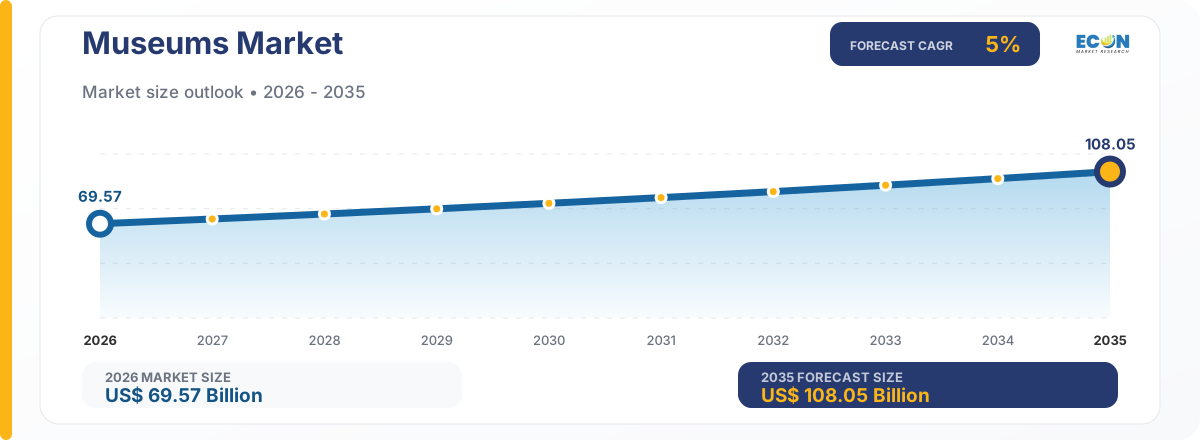
As per Econ Market Research analysis, the Global Museums Market was valued at US$ 69.57 Billion in 2026 and is expected to reach US$ 108.05 Billion by 2035, registering a CAGR of 5% during the forecast period 2026–2035. The base year considered is 2025.
Museums are very significant in education and tourism as they allow visitors access to discovering other cultures and histories. There are many of them, including art museums, history museums, science museums, and specialized institutions that focus on specific themes or topics. Recent developments in this market show improvements over the past few years because of the rising interest towards cultural experiences, education programs, and tourism.
Modern trends have led museums to adopt features that include technology, such as virtual tours and interactive exhibits, for a more engaging audience. This might attract many diversified crowds, from families and students to international tourists. Further, partnerships with schools and community organizations expand reach and enhance access to museum resources. The museums market globally will continue to expand as the demand for more experience and learning opportunities expands through museums, thus enlarging the broader cultural landscape and local economy.
Dynamic Insights
The major driving factor is increased demand for cultural experiences by more people interested in learning history, art, and science through interactive museum visits. This is further complemented by the increasing interest in heritage preservation and cultural learning, prompting institutions to enlarge their collections and involve more visitors with interactive exhibitions and programs.
However, the market still has its challenges. Among these are the closures for a short period during the COVID-19 pandemic. The number of visitors was significantly lowered. Many museums, while adopting digital strategies to provide virtual tours and online exhibitions for audience engagement, suffered further losses. Another is from competition from alternative entertainment sources in the form of online and recreational activities. Despite these difficulties, the museums market is still resilient. Most of the institutions are now focused on innovative approaches to attract visitors, such as special events, workshops, and community outreach programs.
Drivers Insights
Increasing Interest in Cultural Experiences
With the growing global interest in cultural and educational experiences, museums are gaining more visitors. People are more in a mood to relate with history, art, and science, and that',s what museums have to offer. This is even more evident among the youth who want experiential learning and cultural enrichment.
Museums are changing their offerings with interactive exhibits, hands-on workshops, and engaging educational programs, thereby drawing more visitors. The increase in tourism also propels this aspect because most travelers consider visits to museums as integral parts of their travel plans and understand that museums are vital cultural attractions that enhance their experiences.
Technological Advancements
The integration of technology into the museum experience has significantly enhanced visitor engagement. Innovations such as virtual reality (VR), Augmented Reality (AR), and mobile applications allow museums to create immersive experiences that captivate visitors. These technologies enable museums to offer virtual tours and interactive exhibits, making art and history more accessible to a wider audience.
Additionally, social media platforms are utilized to promote events and exhibitions, further attracting visitors. The adoption of these technologies not only improves the visitor experience but also helps museums reach global audiences, thereby driving revenue growth and increasing their relevance in an evolving cultural landscape.
Restraints Insights
Funding and Budget Constraints
Many museums work with incredibly low budgets that inhibit the ability to maintain or even expand collections, improve facilities, or invest in new technologies. Funding is typically sourced through government support, private donation, and ticket sales-all of which are somewhat precarious, especially during downturns in the economy.
These budget constraints often cause under-staffing, insufficient programming, and reduced marketing, which inhibits a museum',s ability to fulfil its role within a community and attract new audiences. This can result in a vicious cycle in which low attendance will contribute to funding problems and therefore, the sustainability and growth of the museum.
Competition from Alternative Entertainment
The most significant threat of digital entertainment options, including streaming services, online gaming, and social media, is competition. Most young people find it easier and cheaper to use these digital options than go to physical museums. Museums will experience reduced visitors, and this calls for innovation in attracting and keeping audiences. If museums are not being differentiated in what they provide and creating an experience then it will simply be forgotten in the crowd of current entertainment.
Opportunities Insights
Expansion of Digital Offerings
The COVID-19 pandemic has accelerated the move toward digital engagement, giving museums the chance to expand their digital reach. Museums can include audiences who cannot physically come to visit by offering virtual tours, educational webinars, and online collections.
This will help the institutions reach a wider global audience, generate additional income through online ticket sales, and create educational material that can be accessed at any time. The embracing of digital technologies can help museums to stay relevant and attract diverse visitors, thus ensuring the growth and sustainability of the museums in the future.
Segment Analysis
By Type
The museums market falls under several types, and the functions and audiences each performs are unique. The types of museums include art museums, these are primarily focused on visual arts, such as forms in paintings, sculptures, and contemporary installations. The history museums preserve artifacts for interpretation that tell about the human experiences and society changes over time, whereas the science museums are all focused on educational content from the scientific principles and discoveries made so far.
Children',s museums try to capture the attention of younger viewers towards interactive exhibits that capture the needs and interests of developing children for sparking creativity and learning. Natural history museums focus on biodiversity, evolution, and environmental conservation. They include fossils, minerals, and specimens of animals. Specialized museums have a focus on narrow subjects such as sports, music, or aspects of cultural heritage.
The virtual museum uses technology to deliver digital exhibitions and experiences, thereby offering art and culture to people all around the world in a boundaryless fashion. This very broad range of museum type ensures them a response to the most diversified interests and educational needs.
By Visitor Demographics
Demographically, visitors going to the museums market will vary with age and the educational background that influences museums in their program and exhibit configuration. Children tend to come for the interactive, experiential experience that challenges curiosity and learning. Adolescents would prefer more contextually related content, through activities of interest. Adult visitors visit museums for educative and recreational purposes, especially for cultural enrichment and information on historical periods.
Seniors would be more interested in nostalgic and educational programs that attract life experiences. Museums also cater to educational institutions, and the segments include primary, secondary, tertiary, and postgraduate education groups. With these demographics, museums can create targeted programs and exhibits that enhance visitor engagement, making cultural experiences meaningful for all age groups and educational levels.
By Revenue Source
There are several revenues that museums get from sources that make it sustainable in terms of finance. Admission fees would be the source of income that enables the museums to be functional, and still, allow people to go and see the exhibits. Membership fees help create loyal customers through which members would get lower entrance and specific events. Selling items from the gift shops is the revenue where it gives people some souvenirs, and educates them regarding the exhibit.
Sponsorship and private donations through individuals, corporations, and foundations are also essential sources for most museums to conduct activities, exhibit, and run community programs. Most revenue is realized through the provision of educational programs: workshops, lectures, or other activities with schools or community groups. With online exhibitions and virtual tours, additional sources of income have now become possible as museums now make money out of content developed in a digital way, and can reach further audiences than can be reached from a physical place.
By Visitor Experience
Visitor experience is the core market in museums, serving in a wide variety of formats designed to engage the best way with the audience. Onsite experiences include physically visiting the premises for the viewing of exhibitions and museum ambiance. Guided tours provide structured exploration that the knowledgeable staff leads by giving insights and context that further interpret the visitor',s understanding.
Whereas, self-guided tours allow a visitor to view at his or her speed often utilized by multimedia guides, interactive exhibitions engage the visitor directly into participative activities, which better reveal and enjoy, online experiences, with acceptance in forms of virtual tours, are essentially digitized versions of real visits to best replicate art and culture all over the world. Online exhibitions and learning webinars extend the reach of exhibitions through museums as they cannot be physically visited in person through distance and offer continued learning outside of the buildings themselves. This diverse mix maximizes exposure to the visitor and is therefore fulfilled in greater measure by active museum cultural outlets.
By Operating Model
The operating models of museums can be starkly different and affect governance, finance, and social mission. Non-profit-oriented museums are seen to have a social welfare orientation and educational focus compared to generating profit, they subsist mainly on donations or grants and sometimes charge for admissions. For-profits have a business-driven model in that they produce revenue but provide an effective experience to the visitor in the museum. Government-funded museums are based on public resources, thus relatively easier to access at a relatively cheap price for visitors.
However, for most of them, these institutions focus more on educational programs and cultural heritage preservation. Private museums are the ones owned either by individuals or institutions, usually offering collections and themes not found elsewhere according to the tastes of their owner. It determines the sort of approach that museums would have toward their audience as well as sources of income, design of programs, and in general the overall landscape of the museums market.
Regional Analysis
North America, therefore, holds a significant market share due to the increased presence of art and history museums in the United States and Canada. Cities like New York and Washington, D.C., attract millions of people every year, backed up by great funding sources from the government, individual grants, and membership schemes. This region has also gained momentum with the increased importance of Cultural Tourism and educational outreach programs.
In Europe, history and museums are very competitive, owing to its wealth of museums with institutions such as the Louvre Museum in France and the British Museum in the UK. The region has a network of existing tourism infrastructure, millions of international tourists visit to enjoy cultural experiences. The government frequently provides financial support through funding and initiatives aimed at preserving cultural heritage, enhancing visitor engagement and education programs. The market for museums in Asia-Pacific is growing rapidly. China and Japan are investing highly into the culture institution also for tourism purposes, while educating people.
Competitive Landscape
Some of the bigger art institutions among the leading players include the Louvre in Paris, the Metropolitan Museum of Art in New York, and the British Museum in London. The largest museums in the world are not only visited by millions of people to the museums every year but also pull customers through their demand for excellence in exhibitions and education-related programs. Not forgetting their massive collection and rich histories, they attract the locals alongside those from afar.
These include smaller regional and community museums that focus on specific themes, local history, or cultural heritage. Smaller museums are usually in a competitive race offering unique, interactive experiences, and educational programs tailored for the needs of the local population. The virtual museums will rise, providing another layer of competition with the institution because these will be able to share exhibitions and content through an internet connection, broadening visitors without having the problem of available space.
Moreover, museums, schools and private institutions have continued developing partnership. For example, the alliances enhance the ability of museums through joint exhibitions, sharing of resources, and cross promotional strategies, making them compete in terms of industry. Another evolutionary characteristic that has become essential for this industry is the introduction of technology to make experiences more interactive. The museum uses a lot of the interactive exhibitions targeting the young audience, while on the side, there are so many means of interaction in social networks. This is a new way to keep up to date in an ever-changing entertainment landscape. It fuels expansion and ensures the visit as a whole is more holistic.
List of Key Players:
Uffizi Gallery
Louvre Museum
Guggenheim Museum
Rijksmuseum
Vatican Museums
State Hermitage Museum
Metropolitan Museum of Art
Prado Museum
Museum of Modern Art (MoMA)
British Museum
Recent Developments:
Feb 2024, a significant partnership between Hyundai Motor and the Whitney Museum of American Art has led to the creation of the Hyundai Terrace Commission, an annual initiative featuring new site-specific artworks, while also supporting the Whitney Biennial. This collaboration, rooted in a profound respect for artists and their visions, aims to enhance a mutual dedication to showcasing the most relevant art and ideas of our era and fostering discussions for audiences across the globe.
March 2023, to celebrate its 4th anniversary, the National Museum of Qatar has unveiled the NMoQ Explorer, a collaborative project developed with Microsoft. This interactive space is dedicated to virtually showcasing the museum',s collections and experiences. The NMoQ Explorer is a tailor-made solution designed to reflect the immersive and interactive ethos of the National Museum of Qatar. Qatar Museum&rsquo,s innovative pilot project features open access and online collections that connect objects to specific periods and locations, utilizing a novel mapping method powered by a fully scalable knowledge mining tool enhanced with Artificial Intelligence. This approach facilitates an interconnected experience, allowing users to transition seamlessly between different spaces, times, and objects.
Nov 2023, Tata Consultancy Services (TCS) has partnered with the Munch Museum (MUNCH) in Oslo to create immersive and interactive drawing experiences for local visitors and global audiences. Scientists from TCS Research will leverage their expertise in AI and Machine Learning (ML) tobring Edvard Munch&rsquo,s artworks and creative process to life through the power of digital innovation.
Global Museums Report Segmentation
Museums Market Report Scope & Segmentation
| Attributes | Details |
|---|---|
| Market Size (Current)Current market valuation | US$ 69.57 Billion in 2026 |
| Market Size (Forecast)Projected market valuation | US$ 108.05 Billion in 2035 |
| Growth RateCompound Annual Growth Rate | CAGR of 5% from 2026 to 2035 |
| Forecast PeriodAnalysis timeline | 2026 – 2035 |
| Base YearReference year for analysis | 2025 |
| Historical Data AvailablePast market data availability | Yes |
| Regional ScopeGeographical coverage | Global |
| Segments CoveredMarket segments analyzed | By Type
By Revenue Source
|
Frequently Asked Questions
Common questions about this report
The study period covers historical insights and forecast projections for the period 2026-2035.
About the Author
Market research expert with years of industry experience