Security and Surveillance Market Overview
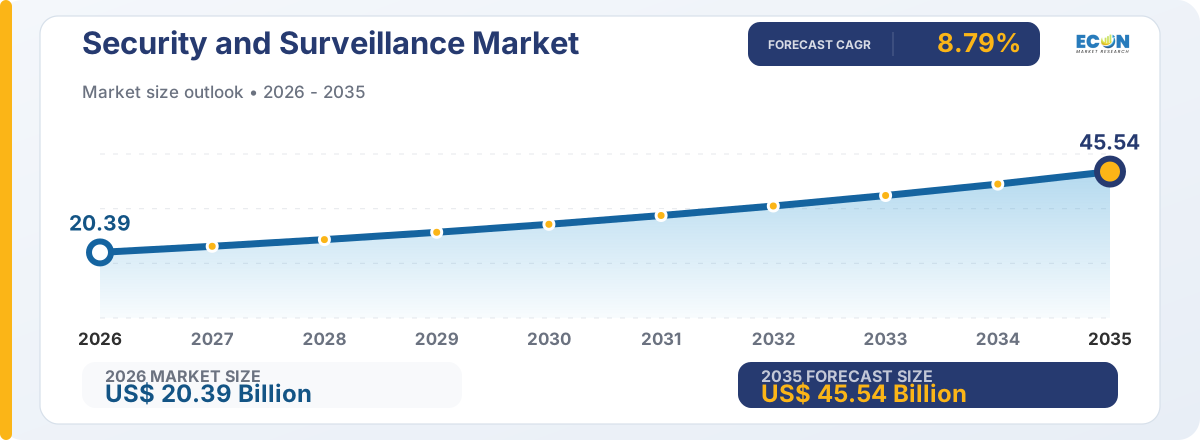
As per Econ Market Research analysis, the Global Security and Surveillance Market was valued at US$ 20.39 Billion in 2026 and is expected to reach US$ 45.54 Billion by 2035, registering a CAGR of 8.79% during the forecast period 2026–2035. The base year considered is 2025.
Security &, Surveillance products include cameras, sensors, alarm systems, video surveillance software, and monitoring services. The objective of these systems is to make places safer and reduce crime, whether it is in a home, business, or public place. Security &, Surveillance technologies range from simple alarm systems to high-tech surveillance cameras with facial recognition capabilities, offering real-time monitoring and remote access. There is a significant growth in the market due to the growing concern for security, technological advancements, and increased demand for smart solutions.
The residential, commercial, government, and transportation industries are investing highly in these technologies to ensure safety. Governments and businesses are driving the demand for surveillance systems to combat crime, terrorism, and vandalism. Moreover, the trend of smart cities, along with the development of Artificial Intelligence and the Internet of Things (IoT), is pushing the market towards more integrated and automated security systems. The Global Security &, Surveillance market is expected to continue its growth trajectory as the need for enhanced safety and monitoring solutions becomes even more important in today',s world.
Dynamic Insights
The Global Security &, Surveillance market primarily grows because more people, business owners, and governments are growing increasingly concerned about security and safety. This is triggering higher spending by these entities on surveillance solutions. It is also led by the rising crime rates, terrorism threats, and the increased need for public safety. More advancement has been witnessed in security systems through the introduction of artificial intelligence (AI), Internet of Things (IoT), and cloud-based surveillance solutions, which have further improved the efficiency and smartness of security systems. Technologies like real-time monitoring, facial recognition, predictive analytics, and management from a remote location are also adding up to the growth of the market.
However, high installation and maintenance costs, plus concerns over privacy and data security regulations, remain barriers to market growth. The advanced technologies, especially artificial intelligence, require a huge sum of investment and hence advanced technology, which may be an issue for small business or residential end users. Further, privacy has been raised as an ethical question concerning the surveillance and collection of data in public spaces. Despite the aforementioned challenges, growing adoption of smart cities, rising awareness about personal and business security, and increasing demand for reliable, real-time surveillance solutions will help drive the market forward. This is expected to propel the market forward in emerging economies where the security infrastructure is rapidly being developed.
Drivers Insights
Increasing Security Threats and Crime Rates
The rise in crime rates and security threats, such as terrorism, theft, and cybercrime, is a significant driver for the Global Security &, Surveillance market. As cities, businesses, and residential areas face growing risks, there is a higher demand for advanced surveillance systems to ensure the safety of people and property. The need for real-time monitoring and quick response systems has become a critical factor for law enforcement agencies, governments, and private sector organizations. As security concerns escalate, investments in security technologies like CCTV cameras, motion sensors, and alarm systems are rising, driving the market growth.
Technological Advancements in Surveillance Systems
Advancements in technologies such as artificial intelligence (AI), machine learning, Internet of Things (IoT), and Cloud Computing have significantly boosted the efficiency and capabilities of security systems. AI-enabled systems, for instance, can analyze vast amounts of data from surveillance cameras to detect potential threats, recognize faces, and predict security breaches. Cloud-based surveillance systems allow users to access security feeds remotely, ensuring continuous monitoring. These technological improvements have made security systems more intelligent, reliable, and cost-effective, attracting both residential and commercial users.
Restraints Insights
High Initial Costs and Maintenance
The cost of implementing and maintaining advanced security systems remains one of the major restraints for the market. While the technology has advanced significantly, the price of high-end surveillance equipment such as high-definition cameras, AI-driven software, and smart systems can be prohibitive for small businesses and residential customers. Additionally, the ongoing maintenance and updates required to keep these systems functioning efficiently add to the overall expenses. This cost factor often discourages smaller players from adopting such solutions, limiting market penetration.
Privacy Concerns and Data Security
The growing use of surveillance technologies, especially in public spaces, raises concerns over privacy violations and data security. The collection, storage, and processing of sensitive personal data, such as facial recognition and license plate recognition, have led to debates about the ethical implications of surveillance. Governments and regulatory bodies in some regions have introduced strict data protection laws, making it more challenging for businesses to implement surveillance systems. These concerns can hinder the widespread adoption of surveillance technologies, especially in regions with strict privacy laws.
Opportunities Insights
Growing Demand for Smart Cities and Urbanization
As urban populations increase globally, governments and municipalities are investing heavily in smart city initiatives, which often involve the integration of advanced security systems. Surveillance technologies are essential components of smart city infrastructure, contributing to public safety, traffic management, and crime prevention. The demand for intelligent monitoring systems that can integrate with other city management tools presents a significant growth opportunity for the security &, surveillance market. This trend is expected to lead to greater adoption of smart surveillance solutions across urban areas worldwide.
Segment Analysis
By Type:
The Security &, Surveillance market is divided into several types of systems that cater to different security needs. Video surveillance systems are the most commonly used and involve the installation of cameras to monitor areas in real-time or to record footage for future analysis. Access control systems are designed to restrict unauthorized entry to buildings or areas, often using key cards, biometric data, or PIN codes.
Intruder alarm systems serve as alert mechanisms for unauthorized access, triggering alarms when breaches are detected. Biometric systems, which rely on unique identifiers like fingerprints or facial recognition, are becoming increasingly popular for high-security environments. Fire and life safety systems are focused on detecting and preventing potential fire hazards and ensuring the safety of individuals during emergencies.
By End-User Industry:
The end-user industry segments of the Security &, Surveillance market are a reflection of the diversified applications of these systems in different sectors. The residential sector experiences increased demand for home security systems, including video surveillance, alarms, and access control, to ensure safety for families and properties. Commercial sectors, including retail spaces and office buildings, use security systems to protect assets, prevent theft, and manage entry points.
Government buildings, which demand high-level security, employs sophisticated surveillance and access control systems to secure sensitive information and open public spaces. In the industrial sector, be it manufacturing or in the field of energy, installing high-quality surveillance systems offers tremendous benefits for the monitoring of factory floors, securing vital infrastructure, and the safety of employees. Transportation nodes such as airports and railways install these systems to guarantee passenger safety, manage crowd densities, and safeguard high value assets.
By Product:
The products in the Security &, Surveillance market are varied, each serving a specific function in the overall security setup. CCTV cameras are essential for video surveillance, allowing for real-time monitoring and recording. These cameras are commonly installed in both residential and commercial settings to monitor activity and deter crime.
Video surveillance systems are often broader solutions that include cameras, recording devices, and software for managing and viewing footage. Access control systems, which include both hardware and software, help to restrict entry to specific areas based on credentials like key cards or biometric data. Motion detectors are used to detect movement in secured areas, alerting individuals of potential intruders, while alarm systems serve as immediate deterrents by sounding off when security breaches occur.
By Technology:
The technology segment of the Security &, Surveillance market is crucial for determining the functionality and effectiveness of security systems. Analog systems, which use traditional video feeds and wiring, remain popular due to their lower cost, though they are being gradually replaced by more advanced technologies. IP-based systems use digital networks to transmit video feeds, offering greater flexibility, scalability, and higher-quality footage than analog systems.
Cloud-based solutions allow security data to be stored off-site, enabling remote access, easier management, and cost efficiency without the need for on-premise storage. AI &, machine learning integration takes security systems to the next level by enabling real-time data analysis, facial recognition, predictive analytics, and automated decision-making, all of which improve system efficiency and responsiveness.
Regional Analysis
North America, specifically the United States, is a leading market for smart security systems, which are in huge demand from the commercial and residential sectors. The high demand has been driven by advanced technologies like AI, cloud-based systems, and IP-based solutions. Government initiatives and the demand for increased security of critical infrastructure and public areas like airports and transport hubs contribute to market growth. In addition, the increasing menace of cybercrime and terrorism creates a growing investment in surveillance technology.
Countries like the UK, Germany, and France, representing Europe, come next, closely following suit to install more complex surveillance systems within all kinds of sectors. Here, public safety and data security regulations, stringent by governments in the region, motivate companies to embrace overall security solutions. With the growth of smart cities in urban areas, the demand for integrated surveillance systems, combining video surveillance with IoT and AI, has increased for more efficient monitoring.
Rapid urbanization, increasing infrastructure projects, and increased security threats have made Asia-Pacific one of the fastest-growing regions in the Security &, Surveillance market. The countries are also investing significantly in surveillance systems for public places and critical infrastructure in China and India. Increasing the middle class population in the region is also promoting residential security systems. Latin America and the Middle East are emerging markets where security concerns such as crime and terrorism are fostering demand for surveillance solutions. In Africa, the need for better security in urban and industrial settings is accelerating growth, although the market faces challenges such as affordability and limited infrastructure in some regions.
Competitive Landscape
The market share is dominated by key players: Honeywell International Inc., Johnson Controls, Bosch Security Systems, Axis Communications, and Tyco International. These market leaders offer comprehensive security products- video surveillance systems, access control solutions, alarm systems, to name a few. They maintain this competitive advantage mainly through strong brand recognition, a well-established network of distribution and comprehensive product offerings. They are also investing in research and development in order to bring the latest cutting-edge technologies, such as AI, machine learning, and cloud-based platforms, into their products, making sure that their solutions are ahead of the industry curve.
Alongside these leading manufacturers, several local and niche vendors are increasingly attaining market momentum due to specialization in specific security solution types or servicing particular market geographies. Leaders from China that are emerging, for example, are Dahua Technology and Hikvision. With video surveillance offerings and at very aggressive price points, these vendors offer quality solutions across Asia-Pacific as well as to emerging markets based on the grounds of providing lower-cost solutions while maintaining cutting-edge features. In addition, cloud-based security providers like Vivint, Ring, and Arlo have emerged as new competitors, especially in the residential market, offering smart home security solutions that can be integrated with IoT devices. With the growing need for integrated systems that include video surveillance, access control, and Data Analytics, companies are focusing on strategic partnerships and acquisitions to broaden their product offerings and improve their technological capabilities.
List of Key Players
Hikvision
Dahua Technology
Axis Communications AB
Panasonic
Honeywell Security
Hanwha
Tyco
Bosch Security Systems
Pelco
Samsung
Uniview
Flir Systems, Inc.
Recent Developments
In Dec 2024, Security 101, a portfolio company of Gemspring Capital and a leading provider of comprehensive commercial security solutions, has announced the strategic acquisition of Eos Business Surveillance Solutions, LLC (",Eos",), a security integration firm based in Flint, MI. Eos specializes in video surveillance, access control, and advanced mobile surveillance trailer solutions. This acquisition strengthens Security 101',s capabilities by adding Eos&rsquo,s expertise in complex mobile surveillance, allowing the company to offer more innovative and expanded solutions to its growing local and national customer base.
Global Security &, Surveillance Report Segmentation
Security and Surveillance Market Report Scope & Segmentation
| Attributes | Details |
|---|---|
| Market Size (Current)Current market valuation | US$ 20.39 Billion in 2026 |
| Market Size (Forecast)Projected market valuation | US$ 45.54 Billion in 2035 |
| Growth RateCompound Annual Growth Rate | CAGR of 8.79% from 2026 to 2035 |
| Forecast PeriodAnalysis timeline | 2026 – 2035 |
| Base YearReference year for analysis | 2025 |
| Historical Data AvailablePast market data availability | Yes |
| Regional ScopeGeographical coverage | Global |
| Segments CoveredMarket segments analyzed | By Component
By System Type
By End User
|
Leading companies covered in this report
- Hikvision
- Dahua Technology
- Axis Communications
- Hanwha Vision
- Bosch Security
- Honeywell
- Avigilon (Motorola)
Frequently Asked Questions
Common questions about this report
The study period covers historical insights and forecast projections for the period 2026-2035.
About the Author
Market research expert with years of industry experience