

Mobile Phone Charger Market
Mobile Phone Charger Market Size, Share, Trends, Growth, and Industry Analysis, By Type (Portable Power Banks, Wall Chargers, Car Chargers, Wireless Chargers), By Power Source (AC Power, Solar Power, Battery Powered), Regional Analysis and Forecast Period 2026-2035
Mobile Phone Charger Market Overview
As per Econ Market Research analysis, the Global Mobile Phone Charger Market was valued at approximately US$ 7.23 Billion in 2026 and is predicted to reach US$ 9.59 Billion by 2035, expanding at a CAGR of 3.2% over the forecast duration. The base year is 2025.
Mobile Phone Charger Market Size 2025-2035 (USD Billion)

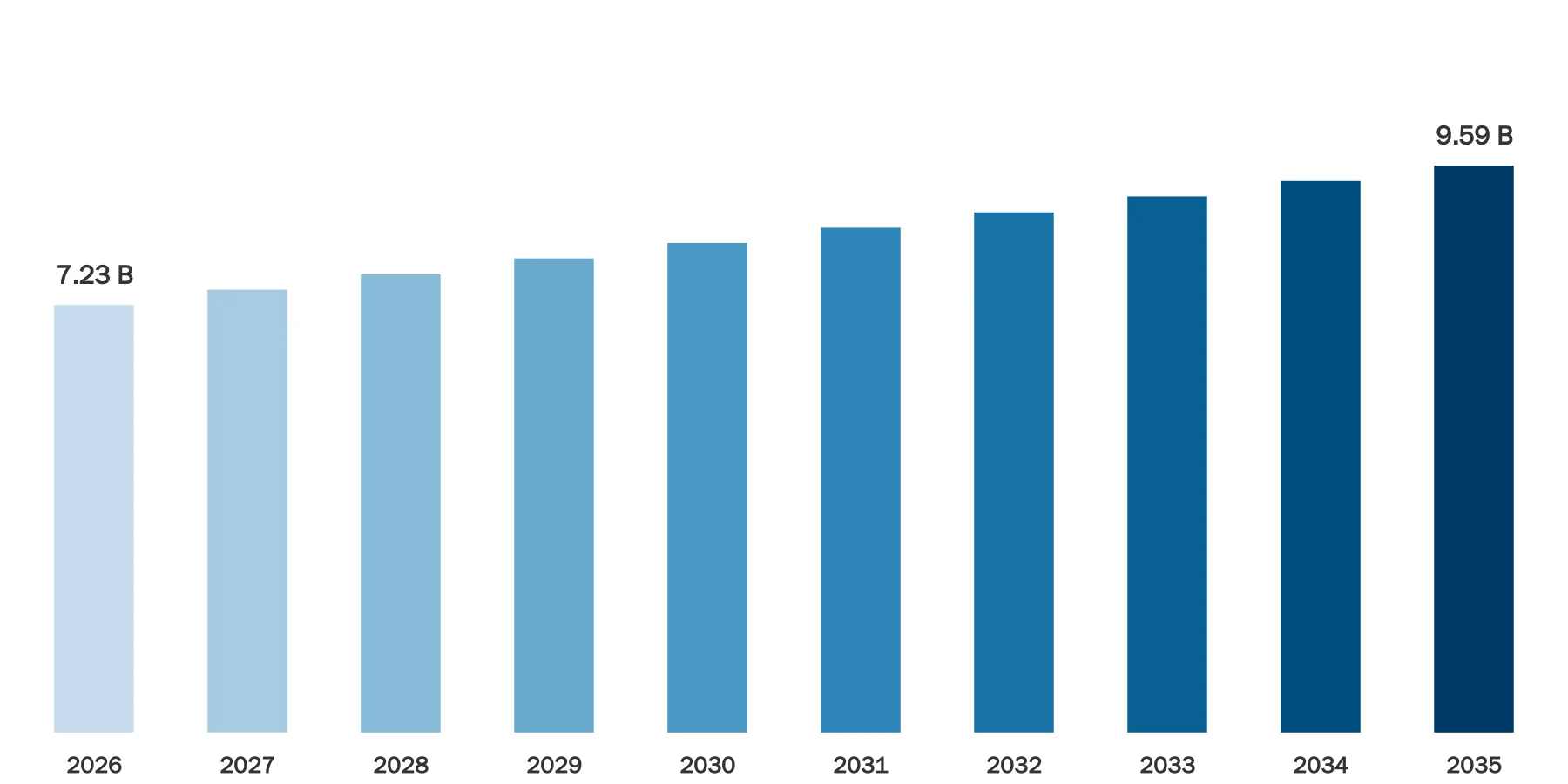
Source: Econ Market Research
There are different types of mobile phone chargers, which are wired and wireless, catering to various brands and models of mobile phones. The market has experienced rapid growth because of the rising number of mobile phone users around the world, increasing smartphone adoption, and the demand for consistent charging solutions for mobile devices. Mobile phones have become a part of everyday life, and the demand for reliable and fast-charging solutions has been increasing.
The market is activated by factors such as technological advancements, increasing popularity of wireless charging, and innovations in fast charging technologies. Furthermore, as convenience becomes the biggest luxury for customers, portable charging solutions like power banks and car chargers are being equally opted for. Also, government regulations regarding energy efficiency and sustainability push manufacturers toward developing an energy-friendly and cost-effective product. The market is highly competitive, and the key players are innovating constantly to meet the consumer demands for faster, more efficient, and versatile options for charging.
Dynamic Insights
Global usage of smart phones is yet another major trend driver. More people are being introduced to their daily use for communication, entertainment, and working. The global need for good, efficient, and fast-charging solutions therefore increases. More developments in the field of charging technologies, especially wireless charging and fast charging, have also made huge contributions towards growth in this market. For a consumer wanting to be served in a fast, efficient way by his/her mobile device, such innovations find ready acceptance.
However, issues facing the market include growing demands on environmental sustainability and electronic waste. As producers look to maximize the demand for these chargers, the environmental responsibility in producing, disposing of them, and providing environmentally friendly end products is going to be extremely crucial. Regulations and what the government plans on doing relating to energy consumption and eco-products are becoming too strict, pressuring companies further to innovate. Additionally, the high competition in the market among the players, especially with cheap and generic brands on the go, pressures the companies to keep the quality and pricing strategies intact.
Drivers Insights
Increasing Smartphone Adoption:
The global surge in smartphone usage is a major driver for the mobile phone charger market. With smartphones becoming integral for communication, work, entertainment, and even payments, the need for reliable charging solutions has skyrocketed. As smartphone penetration increases, especially in developing regions, the demand for chargers continues to grow.
New models of smartphones with advanced features, such as longer battery life, higher resolution displays, and 5G connectivity, further increase the need for frequent charging. Consumers constantly require chargers for both home and on-the-go use, thus fueling the demand for various types of chargers, including wireless chargers, fast chargers, and portable power banks.
Technological Advancements in Charging Solutions:
Technological advancements in charging solutions, including the development of fast charging, wireless charging, and USB-C technology, have significantly boosted the market. Fast charging technologies allow users to charge their phones in a fraction of the time, which has become an attractive feature for consumers who are constantly on the move. Wireless charging, which eliminates the need for cables, is another innovation that enhances consumer convenience. These technologies are not only driving consumer demand but are also prompting manufacturers to invest in research and development to stay competitive. As charging solutions evolve, they provide opportunities for new product offerings and enhanced consumer experiences.
Restraints Insights
Environmental Impact and E-Waste:
Another of the significant threats in the mobile phone charger market is the rising awareness of environmental sustainability. Production and disposal of chargers have significant implications for electronic waste (e-waste). Chargers, mainly made of non-recyclable parts, increase the mount of discarded electronics. Manufacturers face a lot of pressure to come up with chargers that are sustainable. However, with rapid innovation, product life cycles tend to get shorter and hence create an issue. In addition, worldwide, regulatory bodies are trying to impose stringent rules in terms of mitigating e-waste. That remains one of the key challenges for the market.
Price Sensitivity and Market Saturation:
Price sensitivity among consumers, particularly in price-sensitive markets, remains a restraint for the mobile phone charger industry. While premium chargers with advanced features (e.g., fast charging or wireless) are in demand, a large portion of consumers still prefer affordable, basic chargers. As the market becomes saturated with low-cost and generic brands, established companies must continuously adjust their pricing strategies to maintain their market share. Moreover, as mobile phone chargers are often seen as a commodity, competition among manufacturers is intense, which could affect profit margins and reduce overall market growth.
Opportunities Insights
Growth of Wireless Charging:
Wireless charging is rapidly becoming a mainstream charging solution, presenting a significant opportunity for the market. The convenience of charging without cables appeals to a wide range of consumers, and many modern smartphones are now designed with wireless charging capabilities. Additionally, wireless charging is not limited to just smartphones, it can be extended to other devices such as smartwatches, earbuds, and even electric vehicles.
The adoption of wireless charging in consumer electronics, home appliances, and automotive sectors increases the opportunities for charger manufacturers to diversify their product offerings. With the technology being adopted more by consumers, manufacturers can also benefit from the trend by providing innovative wireless charging solutions.
Segment Analysis
By Type:
The mobile phone charger market is segmented by type into wired chargers, wireless chargers, car chargers, and portable chargers. Wired chargers are the most common type, with options including USB Type-C, Micro USB, and Lightning chargers, each designed for specific mobile devices and brands. USB Type-C chargers have become the standard for most modern devices because of their reversible design and fast data transfer capabilities. On the other hand, Micro USB chargers are commonly used in older devices.
There are Lightning chargers specific to Apple products that provide compatibility with iPhones and other Apple devices. Wireless chargers are gaining traction, especially in the increasing implementation of Qi wireless charging standards, in which users don',t need any physical cables for charging their phone. PMA wireless chargers are also common, although to a lesser extent. Car chargers and portable chargers work as alternative options for people looking for mobile charging on the move. Car chargers are designed for automobile use, while portables like power banks are for charging on the go, giving essential and basic comfort to users.
By Charging Technology:
The charging technology segment includes fast charging, standard charging, and wireless charging. Fast charging technologies have revolutionized the way mobile devices are charged, significantly reducing the time required to recharge a device. Among the popular technologies, Qualcomm Quick Charge, USB Power Delivery (PD), and MediaTek Pump Express are the key fast-charging standards with unique features enhancing charging speed and efficiency. Qualcomm Quick Charge is widely supported by many devices. It can charge both smartphones and tablets at faster speeds.
USB PD is also a technology used for charging multiple devices through a USB Type-C port, which can charge a laptop. Pump Express is another fast-charging technology by MediaTek. It is mostly seen in devices powered by MediaTek chipsets. Standard charging uses slower charging speeds, mostly for older or budget devices. Wireless charging is becoming increasingly popular as it removes the need for physical connectors. This means consumers get to enjoy the convenience of cable-free, tangle-free charging. This technology can be used with smartphones and other devices to recharge without cables.
By Distribution Channel:
The distribution channel segment breaks the market into online and offline retailers. Online retailers- such as online stores, websites, or marketplaces, Amazon, eBay, brand-specific web stores, or e-commerce-are increasing steadily as online purchasing has become extremely easy and internet platforms are rapidly becoming more vital for consumers. This type of distribution channel contains various chargers for different smartphones. It has been easy to compare prices among them and then make a purchasing decision. Brand websites are the direct way for consumers to purchase the original chargers compatible with specific devices.
Offline channels include hypermarkets, supermarkets, specialty stores (specialized in mobile accessories or electronic products), as well as direct sales outlets. Offline channels are still relevant, particularly in regions where online shopping penetration is lower or where customers prefer to see and feel products before purchasing. Specialty stores provide a chance for consumers to access mobile accessories and chargers in many varieties, and hypermarkets offer the convenience of getting all types of products under one roof, even phone chargers.
By End-User:
The market for mobile phone chargers can be segmented into end-users in the consumer, business, and automotive markets. In the consumer market, the mobile phone charger is mainly utilized by individuals to charge smartphones, tablets, and other portable devices. The segment is considerable in size since mobile phones are essential tools in both communication and entertainment. The business market is further segmented into corporate/office users and industrial users.
Corporate users need chargers for their devices used in business settings, such as smartphones, laptops, and tablets, often purchasing in bulk for employees. Industrial users, such as those working in manufacturing or logistics, may need specialized charging solutions to power rugged devices or other specialized equipment. Car chargers are becoming more of an important segment, because the driver, while in motion, might have to use a mobile for either navigation or for communication during longer drives and sometimes for entertainment, so there will be the necessity of recharging the batteries.
By Application:
The application segment of the mobile phone charger market is categorized based on the device being charged, which includes smartphones, tablets, wearable devices, laptops, and others. Smartphones continue to be one of the leading device categories in the mobile phone charger market, accounting for a lion',s share of demand for wired and wireless chargers. With smartphones becoming more powerful, users are in need of efficient charging solutions that supply power throughout the day. Other applications include tablets, which are mostly used for work, entertainment, and education.
Therefore, more demand for bigger or faster charging solutions arises. Wearable devices like smartwatches and fitness trackers are becoming more popular, requiring individual charging solutions. Laptops, especially ultrabooks and 2-in-1 devices, require mobile chargers that can provide higher power as USB-C charging has gained popularity. Other include miscellaneous devices that should be charged, such as gaming consoles, and portable speakers and Bluetooth devices, to mention a few, which have been increasing multiple device categories that necessitate flexible charging solutions.
By Voltage:
The voltage segment classifies mobile phone chargers based on the output voltage levels they provide: 5V, 9V, 12V, and higher voltage chargers. 5V chargers are the most common and widely used in mobile phone charging, especially for standard smartphones, as this voltage is sufficient to recharge most devices at a reasonable pace. 9V chargers, commonly used with fast-charging technologies such as Qualcomm Quick Charge, provide a faster charge for supported devices by delivering a higher voltage. 12V chargers, typically used for larger devices like tablets or laptops, can provide even faster charging, accommodating the higher power requirements of these devices. Higher voltage chargers (greater than 12V) are less common and usually targeted at specific applications, such as electric vehicles or high-power laptops, which require more substantial power inputs for efficient charging.
Regional Analysis
The market in North America is in high demand for both wired and wireless chargers. Consumers are now leaning more towards fast-charging solutions and wireless charging pads. This is also aided by the innovation in charging technologies brought about by the presence of big technology companies like Apple, Samsung, and Google. In addition, the region has experienced higher disposable income and a high propensity for upgradations to the latest mobile device models. This implies steady demand for mobile phone chargers.
In Europe, the market is expanding because of the trend in wireless charging and the shift toward eco-friendly charging solutions. Consumers in Europe are very concerned about sustainability, with increasing demand for energy-efficient chargers and those made from recyclable materials. The region',s focus on reducing electronic waste has prompted charger manufacturers to adopt more sustainable practices. Countries in the Asia-Pacific region, particularly China, India, and Japan, account for a large market. The dramatic penetration of smartphones across emerging markets has created unprecedented demand for mobile phone chargers. Additionally, affordable charging options provided by domestic producers have added competitiveness to this market in this region.
In Latin America, with more people using mobile phones and more people surf through the internet, this will maintain a basic demand for charging. In the Middle East and Africa, mobile phone chargers are also highly in demand as the population increasingly uses smartphone and other such devices.The market in North America is in high demand for both wired and wireless chargers. Consumers are now leaning more towards fast-charging solutions and wireless charging pads. This is also aided by the innovation in charging technologies brought about by the presence of big technology companies like Apple, Samsung, and Google. In addition, the region has experienced higher disposable income and a high propensity for upgradations to the latest mobile device models. This implies steady demand for mobile phone chargers.
Competitive Landscape
Some of the key players in the market include Anker Innovations, Belkin International, Samsung Electronics, Qualcomm, and Apple. The companies lead by having strong brand presences and extensive distribution networks to provide a wide range of options to their targeted consumers. For example, one of the brands particularly known for its quality portable chargers is Anker Innovations, and Belkin for its wireless charging solutions and accessories for several smartphones, including iPhones and Android smartphones. Qualcomm is heavily depended on due to proprietary fast charging technologies, such as Quick Charge, incorporated in many devices and chargers.
Recently, Xiaomi, Aukey, RavPower, and Baseus are a few of the most prominent emerging companies that challenge Anker. Especially in the Asia-Pacific region, where demand is growing for more affordable yet higher-quality chargers, these companies have focused on value-driven solutions as the smartphone user base increases in emerging markets. The increasing trend of direct-to-consumer sales, especially through online retailers such as Amazon, eBay, and brand-specific websites, further intensifies the competitive environment. These platforms allow brands to reach a global audience while reducing reliance on traditional brick-and-mortar stores.
Another aspect of innovation in this market is new technologies like USB-C charging, Qi wireless charging, and fast charging. The continuous investment by firms in research and development has allowed them to innovate faster, efficient, and environment-friendly charging solutions, hence beating the competition curve. This way, the battle for the market of mobile phone chargers continues to be quite competitive as each brand competes with the others through pricing, quality of product, technology advancement, and after-sales services.
List of Key Players
Baseus.com
ELECOM CO., LTD.
j5create
Inter IKEA Systems B.V.
Mazer
ZAGG Inc.
RavPower
RORRY.net
SAMSUNG
Sitecom Europe BV
Ugreen Limited
Recent Developments
On June 20, 2024, Navitas Semiconductor, a leader in next-generation GaNFast gallium nitride (GaN) and GeneSiC&trade, silicon carbide (SiC) power semiconductors, announced that its GaNFast power ICs have been chosen to power Lenovo&rsquo,s latest GaN technology chargers. These include the Xiaoxin 105W GaN charger, designed for everyday travel, and the Legion C170W GaN charger, created for gaming power. Both chargers aim to deliver a cutting-edge fast charging experience to consumers.
Global Mobile Phone Charger Report Segmentation
Mobile Phone Charger Market Report Scope & Segmentation
| Attributes | Details |
|---|---|
Market Size (Current) | US$ 7.23 Billion in 2026 |
Market Size (Forecast) | US$ 9.59 Billion in 2035 |
Growth Rate | CAGR of 3.2% from 2026 to 2035 |
Forecast Period | 2026 – 2035 |
Base Year | 2025 |
Historical Data Available | Yes |
Regional Scope | Global |
Segments Covered | By Type
By Power Source
|
Frequently Asked Questions
Common questions about this report
The study period covers historical insights and forecast projections for the period 2026-2035.
About the Author
Market research expert with years of industry experience

Related Reports
Explore more market insights from the same category