Respiratory Care Devices Market Overview
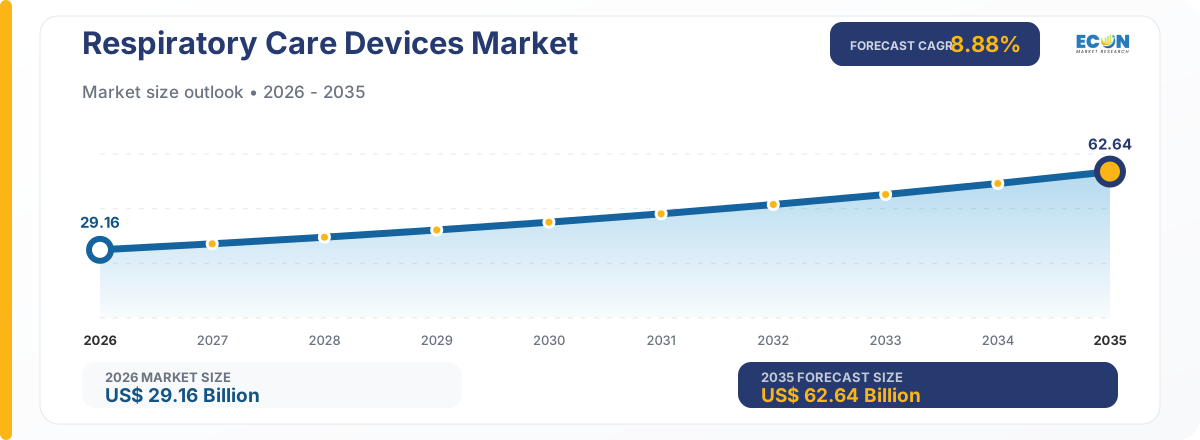
As per Econ Market Research analysis, the Global Respiratory Care Devices Market valuation stood at US$ 29.16 Billion in 2026 and is expected to reach US$ 62.64 Billion by 2035, growing at a steady CAGR of 8.88% from 2026 to 2035. 2025 serves as the base year.
Respiratory Care devices provide the help which is sought by patients in easier breathing as well as the management of lung-related health conditions. The products include oxygen concentrators, nebulizers, ventilators, and sleep apnea devices, such as CPAP machines. Market growth in recent years has been through the rapid increase in respiratory disease cases, high levels of pollution, and the growing elderly population that are more susceptible to respiratory conditions.
Respiratory care devices gained even more traction during the COVID-19 pandemic period when affected patients were treated through such devices for breathing disorders. Other technological advancements such as portable and user-friendly devices have also contributed to increases in market growth. The growing awareness about respiratory health and improvements in health care infrastructure and home care services are spread, and growth is expected to increase steadily for the market for respiratory care devices. However, high costs of devices and low awareness in poor regions will slow down the market growth in some geographies.
Dynamic Insights
One of the prime drivers is the rising prevalence of chronic respiratory diseases like asthma, COPD, and sleep apnea, mainly due to pollution levels, smoking, and aging. During COVID-19, there was an increased demand for respiratory care devices due to patients with severe complications related to these diseases. Also, the growing market for home healthcare services, where patients could receive treatments at their own homes, supported and fed the rising portable and user-friendly respiratory devices like oxygen concentrators and nebulizers.
On the contrary, some challenges that have affected the market include high cost of advanced respiratory care devices-a limiting factor in terms of access, especially to low-income regions. Moreover, some countries have inadequate knowledge concerning respiratory diseases and the correct use of these devices which serves as a barrier to expansion in the market.
Drivers Insights
Rising Prevalence of Chronic Respiratory Diseases
The major drivers of the global respiratory care devices market are the increasing chronic respiratory diseases such as asthma, chronic obstructive pulmonary disease (COPD), and sleep apnea. Most of these diseases have reached epidemic proportions due to upsurging air pollution, smoking patterns, and other lifestyle-related changes, mostly in urban areas.
According to WHO, diseases of the respiratory tract continue to be one of the major causes of morbidity and mortality all over the world, in contrast to this, this growing health burden has prompted higher demand for respiratory care devices. Patients require long-term respiratory support in terms of devices such as nebulizers, oxygen concentrators, and ventilators, which increases market growth.
Technological Advancements in Respiratory Care Devices
The ever-increasing technological innovations in respiratory care devices form the major advantage that is driving the market growth. Manufacturers have innovated up-to-date, portable, user-friendly, and more efficient devices. For instance, miniature and lightweight oxygen concentrators of oxygen ensure that patients are free to move around while receiving oxygen therapy, thereby enhancing the quality of life in daily living of patients with respiratory complications. Treatments for sleep apnea-Continuous Positive Airways Pressure machines with smart monitoring abilities-have improved treatment adherence and outcomes for patients. The innovations of respiratory care are all set to increase access and efficiency, thereby fuelling market demand.
Restraints Insights
High Cost of Advanced Respiratory Care Devices
A significant restraint in the market is that advanced respiratory care devices do not come with a great cost tag. New technologies make the treatment process more efficient and convenient but at greater prices. Such devices are, therefore, out of the reach for many patients in low- and middle-income regions due to inadequate health infrastructure and limited insurance coverage. The cost of acquiring or maintaining respiratory devices can prove to be a significant barrier to accessing proper care and thus act as a limiting factor to market growth in these regions.
Lack of Awareness in Developing Regions
Many developing countries do not have knowledge about respiratory diseases and respiratory care devices. Majority of the patients in most of these regions are not enlightened enough about the symptoms or available treatments, thereby opting to seek medical attention when it is too late. Moreover, most developing regions usually have inadequate health care education and medical personnel. Underdiagnosis or inappropriate use of the respiratory care device is therefore a restraint as well. This consequently reduces the overall demand for such devices in emerging markets.
Opportunities Insights
Expansion of Home Healthcare
Home healthcare is one of the largest opportunities for the respiratory care devices market. As the world',s population ages and increasingly prefers to receive treatment at home, the demand for portable, user-friendly respiratory care devices continues growing. Home healthcare reduces the need for patients to stay in hospitals and affords more control over the patient',s management of pulmonary conditions. This will, however benefit those in need of chronic disease care on an for extended periods of time, and it further provides an opportunity for manufacturers to create products which are solely intended for home use.
Segment Analysis
By Product
The products under respiratory care devices include therapeutic devices, monitoring devices, diagnostic devices, and consumables and accessories. Respiratory care equipment includes oxygen concentrators, ventilators, and the like. These are crucial when it comes to supporting a patient suffering from chronic respiratory conditions such as COPD and sleep apnea. There are monitoring devices, for instance, pulse oximeters and capnography systems, designed to monitor a patient',s pattern of breathing and his or her oxygen levels, which might indicate early intervention.
There are diagnostic machines, like spirometers, that aid in the diagnosis of lung function and diseases. Concluded, consumables and accessories such as masks, tubing, and filters come into play to assist therapeutic and monitoring devices to function well. A wide variety of products in this segment mirrors the wide needs in the respiratory care continuum from diagnosis, through treatment and ongoing maintenance.
By Indication
The market is also segmented on the basis of indication, which includes COPD, asthma, sleep apnea, infectious diseases, and other respiratory conditions. With a high prevalence of the disease in many populations worldwide-aging populations and smokers among them-COPD is an important driver of this market. Asthma is another common respiratory condition that affects children and adults equally and puts considerable demand on the market for respiratory care devices.
A rapidly growing sleep disorder like sleep apnea that causes interruption in breathing during sleep has emerged as a big market for CPAP and other sleep therapy devices. Infectious diseases, such as pneumonia and COVID-19, have tended to inflate the demand for respiratory support products in critical care. Other respiratory disorders, such as pulmonary fibrosis, are also contributing to the market but to a lesser extent. This section highlights the various medical conditions that are dependent on respiratory care products.
By End-User
The groups of people who use respiratory care products include patients in the hospitals, home care settings, ambulatory care centres, among others, an indication of how versatile the respirators can be in their care settings. Among these end-users, hospitals stand out as the largest since it is where most incidences of serious and acute respiratory conditions are addressed using the high-tech therapeutic and monitoring devices. More specifically, growing numbers of patients with chronic respiratory diseases have opted for being treated in home care settings, meaning that additional portable and easy-to-use respiratory care devices, such as oxygen concentrators and nebulizers, are required.
A number of ambulatory care centers that offer outpatient care also use respiratory care devices for patients who are allowed to leave such facilities under strict self-care instructions for the treatment and diagnosis of their ailments. Long-term care facilities are also part of these requirements. Diversity in end-users further goes to reflect the adaptability of respiratory care devices across all the healthcare settings, ranging from intensive hospital care to more patient-friendly home care solutions.
Regional Analysis
North America is one of the largest markets due to high prevalence of chronic respiratory diseases and presence of key market players. The overall market in this region is strongly dominated by the country, U.S. Country due to well-developed healthcare infrastructure and favourable reimbursement policies for innovative respiratory devices. Furthermore, an exponentially increasing geriatric population in North America has increased the requirement of efficient solutions for respiratory care, which in turn has catalysed growth in the market.
The Asia-Pacific region is witnessing rapid urbanization, rising pollution levels, and an increasing percentage of geriatric population. All these factors are driving a higher demand for respiratory care devices. Other countries like China and India are also witnessing a significant increase in respiratory diseases, and it is expected to open the doors for market growth.
The attention being paid by the government in these countries to improve accessibility and affordability of healthcare and increase awareness regarding respiratory health is also going to drive the adoption of respiratory care devices to a significant extent. Europe is also growing steadily, also fuelled by technological advancements and a greater numbers of patients seeking treatment for respiratory conditions. The Middle East and Africa and Latin America are future growth opportunities although these markets have limited healthcare infrastructure and awareness.
Competitive Landscape
Market leaders have been Philips Respironics, ResMed, Medtronic, and Baxter International. They have high-quality offerings in oxygen concentrators, ventilators, and CPAP devices, among others. Such companies enjoy excellent brand recognition, superior distribution networks, and solid research and development investments that enable them to launch new products and solutions to maintain market leadership advantage. The comprehensive portfolios of such market leaders address a wide range of respiratory conditions, catering to the multifaceted needs of patients and practitioners alike.
Innovation and customer-centric solutions such as portable devices and smart technologies for home monitoring are portrayed again and again by these companies. Shaping the competitive landscape here are strategic alliances, mergers, and acquisitions as firms hunt for building on the present offerings and extending their geographical reach. For instance, collaborations between technology companies and healthcare providers try to find ways to make advanced Data Analytics and connectivity part of respiratory care devices, thus making better management of patients possible. Adding an emphasis on home care and Telemedicine, another aspect that changes the competitive landscape and nudges companies toward developing easier-to-use and effective devices for at-home use.
List of Key Players:
Inogen, Inc.
Bio-Med Devices
SERVONA GmbH
Teleflex Incorporated
Fisher &, Paykel Healthcare Limited.
General Electric Company
VYAIRE
CAIRE Inc.
Getinge AB
BPL Medical Technologies
3B Medical Inc.
alpha trace medical systems
APEX MEDICAL CORP.
ResMed
Airon Corporation
Masimo.
Respiratory Care Devices Report Segmentation
Respiratory Care Devices Market Report Scope & Segmentation
| Attributes | Details |
|---|---|
| Market Size (Current)Current market valuation | US$ 29.16 Billion in 2026 |
| Market Size (Forecast)Projected market valuation | US$ 62.64 Billion in 2035 |
| Growth RateCompound Annual Growth Rate | CAGR of 8.88% from 2026 to 2035 |
| Forecast PeriodAnalysis timeline | 2026 – 2035 |
| Base YearReference year for analysis | 2025 |
| Historical Data AvailablePast market data availability | Yes |
| Regional ScopeGeographical coverage | Global |
| Segments CoveredMarket segments analyzed | By Product Type
By End-User
|
Frequently Asked Questions
Common questions about this report
The study period covers historical insights and forecast projections for the period 2026-2035.
About the Author
Market research expert with years of industry experience

Dipali Bhingare serves as the Market Research Director at Econ Market Research. With a focus on translating complex global economic shifts into actionable business intelligence, she oversees the strategic direction of comprehensive market studies. Her work empowers organizations to navigate volatile industries through data-driven forecasting and deep-dive competitive analysis.