

Remote Patient Monitoring and Care Market
Remote Patient Monitoring and Care Market Size, Share, Trends, Growth, and Industry Analysis, By Component (Devices, Software, Services), By Application (Diabetes, Cardiovascular Diseases, Hypertension, Weight Management), By End-User (Hospitals andamp; Clinics, Home Care Settings, Ambulatory Care Centers), Regional Analysis and Forecast Period 2026-2035
Remote Patient Monitoring and Care Market Overview
As per Econ Market Research analysis, the Global Remote Patient Monitoring and Care Market was valued at approximately US$ 20.91 Billion in 2026 and is predicted to reach US$ 279.12 Billion by 2035, expanding at a CAGR of 33.52% over the forecast duration. The base year is 2025.
Remote Patient Monitoring and Care Market Size 2025-2035 (USD Billion)

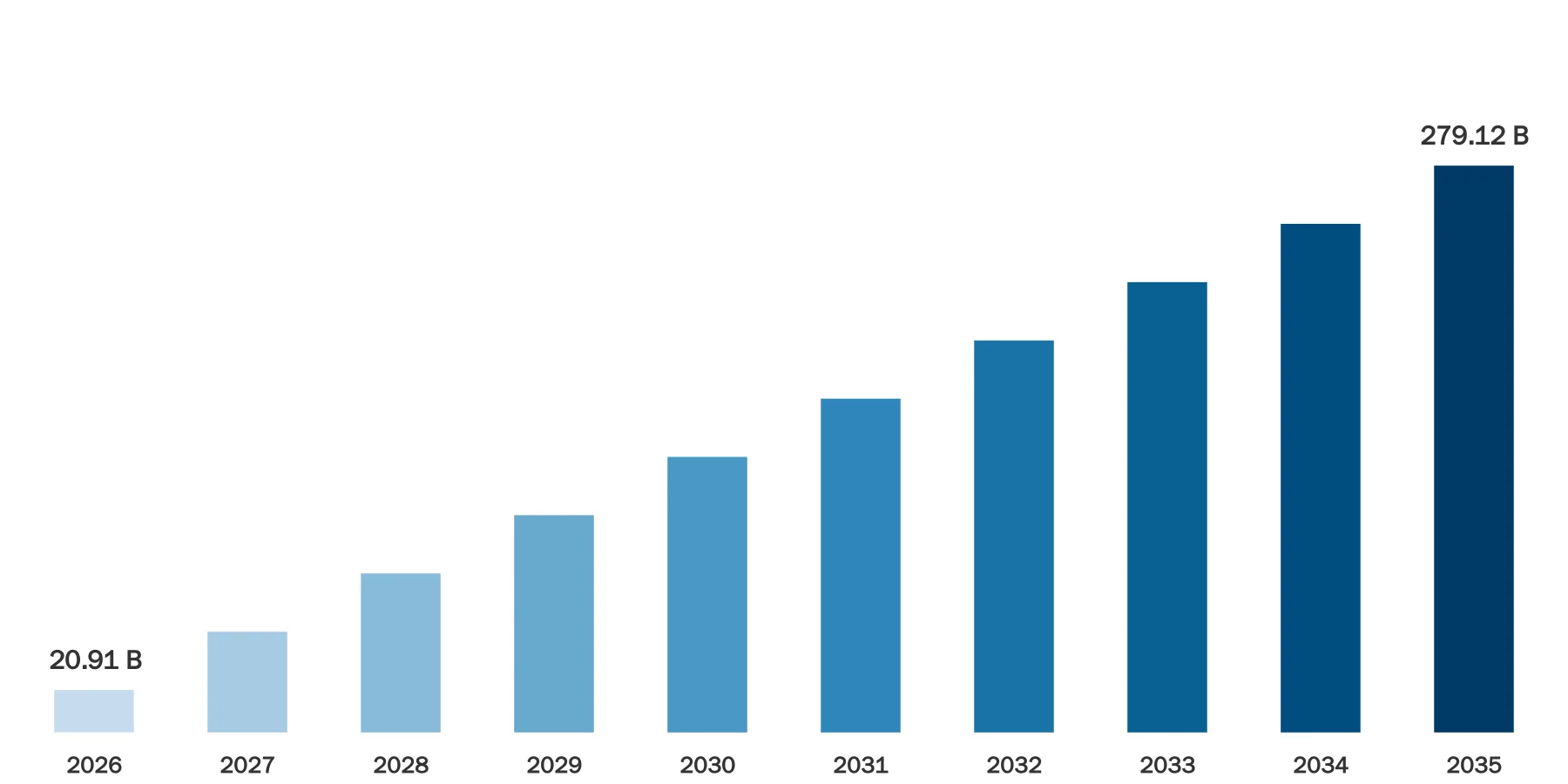
Source: Econ Market Research
Global Remote Patient Monitoring and Care Market involves using advanced technology to check a patient&rsquo,s progress from a distance. This leads to lesser patient trips to the hospital or clinic for consultation or check-up. Thus, it is an enhancement of chronic diseases that need constant tracking and immediate medical actions thus increasing entry and productivity in rendering healthcare services to patients. The rapid development of remote patient monitoring market can be attributed to many aspects like improvements in digital health technologies, high demand for personalized care and aging population with long-term health management needs.
Moreover, it is possible for the remote patient monitoring potentiality to reduce costs of healthcare hence enabling patients&rsquo, easy transit through these systems with less pain or difficulty. Some of the hurdles can include ensuring privacy of information as well as making technology available for everybody who needs care. Irrespective of all such contradictions, there is still room for innovation and growth within this market since solutions on remote care are gaining wider acceptance in the healthcare sector so that they can improve patient outcomes by standardizing care Management Systems.
Dynamic Insights
There are quite a few points that can affect the dynamics of the global remote patient monitoring and care market. Newer devices like better sensors, wearables, and Telemedicine systems are aiding advancements in technology. These developments make remote monitoring easier to perform more accurately. The rising number of elderly people suffering from chronic illnesses increases the need for these systems which can be used constantly to track their health. Further increases in this market result from the added convenience for the patients and reduced healthcare costs.
However, challenges hinder growth in this area. Protection of sensitive information about patients&rsquo, health needs to be taken seriously hence issues regarding data privacy and security are crucial. Furthermore, digital literacy levels among some patients can hold back the widespread use of this kind of technology. It would therefore be important during this process for continued innovation as well as improvement of technologies so as to sustain growth while making remote patient monitoring more beneficial.
Drivers Insights
Growing Prevalence of Chronic Diseases
Market for Remote Patient Monitoring and Care is being driven primarily by Growing incidence of chronic illnesses like diabetes, hypertension, cardiovascular diseases. Chronic diseases need regular management to prevent complications and effective treatment. Patients can constantly track their health status through remote monitoring tools and send this data to their doctors in real time. This constant stream of information allows for timely interventions to treatment plans, resulting in better patient outcomes and reduced hospitalization. The rising global burden of chronic diseases is therefore propelling the demand for remote monitoring systems.
Aging Population
The rise in an aging global population serves as another important factor behind the growth of the Remote Patient Monitoring Market. This is because elderly people often experience numerous health problems as they grow old and therefore, they need medical assistance more frequently than younger generations. Consequently, remote monitoring technologies are helpful to cater for their needs since some can have difficulties moving around or reaching hospitals easily. These systems enable seniors to remain at home but still receive high-quality services. The increasing number of old people is likely to persist thus catering for their Personal Care through these devices will be cutting edge.
Restraints Insights
Data Security and Privacy Concerns
One major constraint confronting the Remote Patient Monitoring and Care Market is data security and privacy concerns. Sensitive health information can be collected and transmitted, thereby exposing them to risks such as data breaches and unauthorized access. Patient data security is critical because any lapse can lead to severe consequences, including identity thefts as well as misuse of personal health information. In addition, remote monitoring solutions face complex implementation processes due to stringent regulations and compliance requirements like GDPR or HIPAA. Robust security measures which are complemented with regular updates are necessary in order to effectively safeguard patient information against such concerns.
Limited Access to Technology
Adoption of remote patient monitoring solutions can be limited by lack of access to technology, especially in underdeveloped areas or rural zones. Though these technologies have the potential to improve health care greatly, they also need an internet connection that is stable plus devices meant for them. In some locations where infrastructure is weak or digital literacy is low, patients may not be able to use remote monitoring systems effectively. This chance of technology imbalance can result into unequal health service provision and make it hard for remote monitoring solution to be adopted all over the world. However, this gap can be closed through improving infrastructure and helping those with limited technological resources.
Opportunities Insights
Integration with Artificial Intelligence (AI)
An immense chance for market expansion arises from the incorporation of artificial intelligence with solutions for distant patient supervision. Remote electronics are made smarter by AIs through prying data out of them or by figuring out problem before they happen in case of illnesses affecting them. AI algorithms are capable of interpreting health data and recognizing trends that could help prevent serious illnesses. This combination can also produce more precise monitoring, early action on health problems and personalized responses. The merging of AI technologies into remote monitoring systems could result in better and cheaper means to offer healthcare as these technologies evolve unpredictably.
Segment Analysis
By Type
By Type, the Remote Patient Monitoring and Care Market can be segmented into Blood Glucose Monitoring, Cardiac Monitoring, Multi-parameter Monitoring, Respiratory Monitoring, and Others. The purpose of Blood Glucose Monitoring is to manage diabetes by monitoring blood sugar levels through various devices such as glucose meters and continuous glucose monitors. Cardiac Monitoring involves making sure that trackers of heart health are used, for instance, ECG monitors and wearable heart rate trackers, to detect heart failure or arrhythmias.
Multi-parameter Monitoring gives an overall broad perspective of all health indicators which include blood pressure, temperature and oxygen saturation simultaneously this offers a comprehensive view of the patient&rsquo,s condition. Respiratory Monitoring addresses issues related to diseases like asthma and COPD it uses tools for tracking patient&rsquo,s breathing patterns including lung function measurements.
By Application
By application, the market is segmented into Diabetes, Cardiovascular Diseases, Oncology, and Others. The management of diabetes largely hinges on the long distant observation of blood glucose levels in order to revise treatment programs. The cardiovascular ailments also profit from such long-distance observations through tracking heart rates, systolic and diastolic pressures as well as other vital signs which are used in dealing with issues like high blood pressure or heart diseases. In oncology, there is the monitoring of health parameters among cancer patients so that drug response can be evaluated and adverse effects handled.
By End-User
By End-User, the Remote Patient Monitoring and Care Market is also segmented into Providers, Payers, and Patients. Healthcare providers, comprising hospitals, clinics and individual practitioners, leverage the remote monitoring tools to better the quality of patients&rsquo, care, elevate treatment precision as well as manage chronic illness much efficiently. Payers like insurance firms and government medical programs express interest in remote monitoring due its potentiality of lower healthcare expenses via minimizing number of inpatients while enhancing management of chronic diseases. Patients for instance are end-users that also benefit from remote monitoring due to enhanced ease, reduced need for regular office appointments as well as more efficient way of managing their illnesses. Each user segment interacts with the solutions differently thereby aiding in market advancement and expansion.
Regional Analysis
The Remote Patient Monitoring and Care Market varies from region to region in its growth patterns. North America is at the forefront of the market, due to sophisticated healthcare infrastructure, widespread technology adoption and an alarming rate of chronic diseases. With a focus on innovative healthcare and supportive regulatory frameworks, Europe is closely following in the footsteps of Asia-pacific which has been recording tremendous growth. This growth can be attributed to increased investments in healthcare, an ageing population and expanding digital health initiatives.
The Latin American market, although still in its early stages, has seen a rise in interest for remote monitoring solutions as health systems modernize. The Middle East and Africa have potential for growth too due to improving health care infrastructures along with rising knowledge about the advantages of remote caregiving. Each region possesses unique opportunities and challenges that are driven by locally based healthcare needs, technological advances and economic conditions respectively.
Competitive Landscape
The market has become markedly dominated by significant players including Medtronic, Philips Healthcare and Abbott Laboratories whose product portfolios are all-encompassing with a range of monitoring devices such as blood glucose monitors, cardiac monitoring systems as well as multi-parameter devices. In a bid to retain their leadership roles in the market these firms utilize their advanced technology abilities, massive R&,D investments as well as wide ranged distribution channels. Additionally, companies like IBM Watson Health and Google Health have been able to enter into this domain profitably by integrating AI and machine learning into their monitoring solutions thereby improving data warehousing possibilities.
New startup firms are also entering the market with novel solutions and specialized technologies fuelling creativity whilst fostering competitive intensity. The scene is further refined by strategies like joint ventures, mergers &, acquisitions (M&,A) records that aim at diversifying products as well as penetrating new geographical regions. Such organizations must grapple with challenges concerning regulations compliance, information security maintenance or even connectivity between different devices hence calling for constant change management practices so as remain relevant. Technological advances are quite rapid hence making this atmosphere competitive among market players who must adopt agility personality traits in order to unlock rising fortunes ahead.
List of Key Players:
Medtronic plc
Philips Healthcare
Abbott Laboratories
Siemens Healthineers
GE Healthcare
IBM Watson Health
Google Health
Boston Scientific Corporation
Honeywell International Inc.
Welch Allyn Inc.
Recent Developments:
March 2023, Monidor Oy and Senko Medical have struck a partnership deal. In accordance with the partnership deal, Senshin Medical Col, Ltd., a subsidiary of Senko Medical, is in charge of selling and representing the remote infusion therapy monitoring service from Monidor Oy in Japan.
February 2023, ApoEx and Monidor Oy developed a partnership to launch their remote infusion monitoring service in Sweden. This will extend the organization&rsquo,s existing services within the domain of European home-based health care for patients.
July 2022, Sleepiz in United States introduced a contactless device that can measure respiration and heart rate remotely and via monitoring patients&rsquo, status on them.
Global Remote Patient Monitoring and Care Report Segmentation
Remote Patient Monitoring and Care Market Report Scope & Segmentation
| Attributes | Details |
|---|---|
Market Size (Current) | US$ 20.91 Billion in 2026 |
Market Size (Forecast) | US$ 279.12 Billion in 2035 |
Growth Rate | CAGR of 33.52% from 2026 to 2035 |
Forecast Period | 2026 – 2035 |
Base Year | 2025 |
Historical Data Available | Yes |
Regional Scope | Global |
Segments Covered | By Component
By Application
By End-User
|
Frequently Asked Questions
Common questions about this report
The study period covers historical insights and forecast projections for the period 2026-2035.
About the Author
Market research expert with years of industry experience

Dipali Bhingare serves as the Market Research Director at Econ Market Research. With a focus on translating complex global economic shifts into actionable business intelligence, she oversees the strategic direction of comprehensive market studies. Her work empowers organizations to navigate volatile industries through data-driven forecasting and deep-dive competitive analysis.
Related Reports
Explore more market insights from the same category