

Portable Medical Devices Market
Portable Medical Devices Market Size, Share, Trends, Growth, and Industry Analysis, By Product (Therapeutics, Smart Wearables, Diagnostics, Monitoring), By Application (Gynecology, Cardiology, Gastrointestinal, Urology, Neurology, Respiratory, Orthopedics, Others), By End-User (Hospitals, Ambulatory Surgery Centers, Home Care Settings, Others), Regional Analysis and Forecast Period 2026-2035
Portable Medical Devices Market Overview
As per Econ Market Research analysis, the Global Portable Medical Devices Market valuation stood at US$ 80.04 Billion in 2026 and is expected to reach US$ 191.1 Billion by 2035, growing at a steady CAGR of 10.4% from 2026 to 2035. 2025 serves as the base year.
Portable Medical Devices Market Size 2025-2035 (USD Billion)

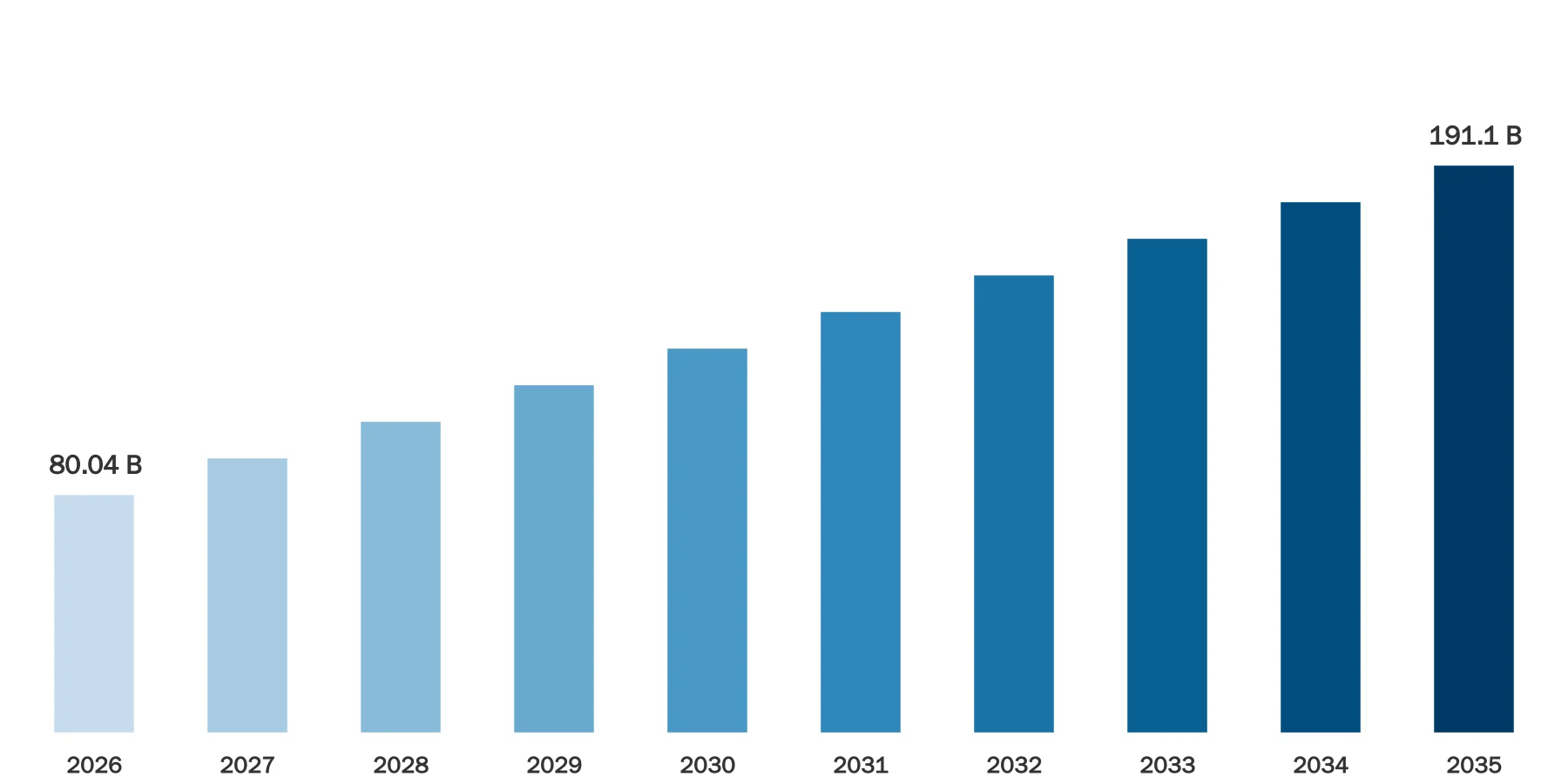
Source: Econ Market Research
A wide variety of small, lightweight Medical Devices with easy portability that offer therapeutic, monitoring, and diagnostic options are included in the global portable medical devices category. The mobility that portable medical devices provide allows medical professionals to provide care in areas that are remote or underserved, going beyond traditional clinical settings. These gadgets consist of, but are not restricted to, portable X-ray machines, blood glucose metres, handheld ECG monitors, and portable ultrasound devices. The global trend towards personalised and home healthcare, the rise in chronic disease prevalence, and the growing demand for point-of-care diagnostics are driving the growth of this market.
Patients are empowered to actively participate in their own healthcare management thanks to the versatility of portable medical devices, which can address a wide range of healthcare needs. Portable medical devices are defined as those that are lightweight, small, and user-friendly, making it possible to provide effective healthcare in a variety of environments. Technological developments like wireless connectivity, miniaturisation, and longer battery life also support the market',s growth. Furthermore, the COVID-19 pandemic has highlighted the significance of portable diagnostic instruments for quick and dispersed testing.
Portable Medical Devices Dynamics
The market dynamics for portable medical devices are defined by a combination of factors driving its expansion. One of the main causes is the rise in chronic illness prevalence, which calls for effective and easily available monitoring and diagnostic tools. The need for remote patient monitoring and point-of-care testing has increased, highlighting the role that portable medical devices play in providing prompt healthcare interventions. Furthermore, technological developments like miniaturisation, connectivity, and Data Analytics support the growth of more complex and user-friendly devices by enhancing market dynamism.
The COVID-19 pandemic has accelerated the adoption of portable medical devices, with a heightened focus on decentralized healthcare delivery. The pandemic underscored the importance of rapid and portable diagnostics for efficient disease management and containment. Telemedicine and remote patient monitoring, facilitated by portable devices, have become integral components of modern healthcare systems, further driving market growth. Regulatory initiatives and supportive policies also play a crucial role, encouraging the approval and adoption of portable medical devices.
Portable Medical Devices Drivers
Rising Prevalence of Chronic Diseases
The market for portable medical devices is largely driven by the rising prevalence of chronic illnesses like diabetes, cardiovascular disease, and respiratory disorders throughout the world. The need for prompt and effective diagnostic and monitoring solutions is being driven by the rising incidence of these conditions, which in turn is driving up demand for portable medical devices. These tools improve patient outcomes and healthcare efficiency by empowering patients and healthcare providers to effectively manage chronic conditions outside of traditional clinical settings.
Technological Advancements and Innovation
The rapid pace of technological advancements and continuous innovation in the healthcare sector significantly propel the Portable Medical Devices market. Miniaturization, wireless connectivity, and enhanced sensor technologies have led to the development of more sophisticated and user-friendly devices. These technological breakthroughs not only improve the portability and ease of use of medical devices but also enable real-time data transmission, fostering the growth of telemedicine and remote patient monitoring. As a result, the market experiences a surge in demand for cutting-edge portable medical solutions, driven by the potential for better patient care and streamlined healthcare workflows.
Restraints:
Regulatory Challenges and Compliance Issues
The market for portable medical devices is facing difficulties related to regulatory approvals and compliance, even with the growing demand for these devices. Tight regulatory procedures may cause delays in new product introductions and market entry, which may have an impact on the growth trajectory as a whole. Market participants are constrained by the need to make large investments to ensure compliance with a variety of standards and requirements when navigating the diverse regulatory landscapes across regions.
Data Security Concerns
The increasing reliance on portable medical devices for data collection and transmission raises significant concerns regarding data security and privacy. As these devices often handle sensitive patient information, the potential for unauthorized access and data breaches is a critical restraint. Addressing these concerns is paramount to gaining and maintaining the trust of healthcare providers and patients, necessitating robust cybersecurity measures and adherence to strict data protection regulations.
Opportunities:
Expanding Applications in Home Healthcare
The growing trend towards home healthcare presents a significant opportunity for the Portable Medical Devices market. As healthcare delivery shifts from traditional settings to patients', homes, portable devices play a pivotal role in enabling remote monitoring and diagnostics. The expansion of home healthcare services, coupled with advancements in wearable technologies, opens new avenues for portable medical devices to enhance patient care and promote proactive health management.
Segment Overview
By Product
The portable medical devices market boasts a comprehensive array of product types designed to meet diverse healthcare needs. Diagnostic imaging products, such as portable ultrasound machines and handheld X-ray devices, empower healthcare professionals with on-the-go imaging capabilities, facilitating rapid point-of-care diagnostics. Therapeutic devices, including portable nebulizers and wearable insulin pumps, enable patients to receive essential treatments outside traditional healthcare settings.
Monitoring Devices, ranging from portable ECG monitors to blood pressure and glucose meters, offer continuous health monitoring, aiding in early detection and proactive management. The innovative Smart Wearable Medical Devices segment, featuring health-monitoring smartwatches, aligns technology with healthcare, providing real-time data tracking and personalized feedback.
By Application
The segmentation of portable medical devices by application caters to various medical specialties and healthcare domains. In Cardiology, portable ECG monitors and ambulatory blood pressure devices contribute to the diagnosis and monitoring of cardiovascular conditions. Urology applications utilize portable ultrasound scanners and uroflowmetry devices for assessing and managing urinary system disorders. Gynecology benefits from portable ultrasound devices for obstetric imaging and handheld colposcopes for cervical examinations.
In Gastrointestinal care, portable endoscopy devices and ultrasound tools aid in diagnosing and monitoring digestive system disorders. Neurology applications involve portable EEG monitors and neuroimaging devices for the diagnosis and monitoring of neurological conditions. Respiratory devices, such as portable spirometers and nebulizers, assist in monitoring and managing respiratory health. Orthopedics benefit from portable X-ray machines and ultrasound devices for musculoskeletal imaging.
Portable Medical Devices Overview by Region
North America stands as a significant player, attributed to its advanced healthcare systems, substantial investment in research and development, and a proactive approach to adopting innovative medical technologies. The region benefits from a strong presence of key market players, fostering a competitive environment. Europe follows suit, leveraging well-established healthcare infrastructure and a growing focus on personalized medicine. The Asia-Pacific region emerges as a hotbed for market growth, fuelled by increasing healthcare expenditure, a large population base, and a rising prevalence of chronic diseases. Countries like China and India are particularly pivotal, witnessing a surge in demand for portable medical devices due to improving healthcare accessibility and a shift towards decentralized healthcare delivery.
Latin America and the Middle East &, Africa exhibit untapped potential, with a growing awareness of the benefits of portable medical devices and increasing investments in healthcare infrastructure. However, these regions face challenges related to economic constraints and varying levels of healthcare development. The COVID-19 pandemic has further accelerated the adoption of portable medical devices globally, with an emphasis on rapid and decentralized diagnostics. Regulatory frameworks, reimbursement policies, and cultural factors also play a significant role in shaping regional market dynamics.
Portable Medical Devices Market Competitive Landscape
The competitive landscape of the portable medical devices market is characterized by intense competition among key players striving for market dominance through innovation, strategic collaborations, and geographic expansion. North America is home to major players such as General Electric Company, Medtronic plc, and Abbott Laboratories, leveraging their strong presence and substantial R&,D investments to introduce cutting-edge portable medical solutions. In Europe, companies like Siemens Healthineers and Philips Healthcare contribute significantly to the competitive environment, capitalizing on well-established healthcare infrastructure and a focus on personalized medicine.
The Asia-Pacific region witnesses a surge in competition with notable players including Mindray Medical International Limited and Omron Corporation, responding to the region',s rising healthcare expenditure and the increasing demand for portable devices, especially in countries like China and India. Latin America and the Middle East &, Africa represent emerging markets, attracting attention from global players such as F. Hoffmann-La Roche Ltd and Johnson &, Johnson, as these regions experience a growing awareness of portable medical devices', benefits.
However, smaller regional players are also entering the fray, contributing to market diversity and competition. The COVID-19 pandemic has accelerated strategic partnerships and collaborations, exemplified by companies like BD (Becton, Dickinson and Company) and bioMé,rieux SA, who joined forces to develop rapid diagnostic solutions. Regulatory compliance and adherence to quality standards are pivotal in this competitive landscape, with companies constantly navigating diverse global regulatory frameworks to ensure market access.
Portable Medical Devices Recent Developments
Nov 2023, Salona Global, announced to rebrand as Evome Medical Technologies, has revealed the introduction of a cutting-edge portable medical device designed for the treatment of individuals with knee replacements and injuries. This innovative product, named the Biodex SpaceTek Knee Device, will be distributed exclusively through the company',s subsidiary, Biodex Medical Systems.
Feb 2023, Abdul Latif Jameel Health, a division of the globally diversified family enterprise Abdul Latif Jameel, has unveiled a recent distribution partnership with iSono Health, a San Francisco-based medical technology firm. This collaboration aims to introduce a 3D ultrasound portable breast imaging scanner that incorporates automated imaging and Artificial Intelligence (AI).
Portable Medical Devices Market Report Scope & Segmentation
| Attributes | Details |
|---|---|
Market Size (Current) | US$ 80.04 Billion in 2026 |
Market Size (Forecast) | US$ 191.1 Billion in 2035 |
Growth Rate | CAGR of 10.4% from 2026 to 2035 |
Forecast Period | 2026 – 2035 |
Base Year | 2025 |
Historical Data Available | Yes |
Regional Scope | Global |
Segments Covered | By Product
By Application
By End-User
|
Frequently Asked Questions
Common questions about this report
The study period covers historical insights and forecast projections for the period 2026-2035.
About the Author
Market research expert with years of industry experience

Dipali Bhingare serves as the Market Research Director at Econ Market Research. With a focus on translating complex global economic shifts into actionable business intelligence, she oversees the strategic direction of comprehensive market studies. Her work empowers organizations to navigate volatile industries through data-driven forecasting and deep-dive competitive analysis.
Related Reports
Explore more market insights from the same category