

Multi Touch Screen Market
Multi Touch Screen Market Size, Share, Trends, Growth, and Industry Analysis, By Technology (Capacitive, Resistive, Infrared, Optical, Others), By Screen Size (Small-Sized Screens, Medium-Sized Screens, Large-Sized Screens), By Application (Smartphones & Tablets, Laptops & Monitors, Interactive Kiosks, Automotive Displays, Gaming Devices, Others), By End Use Industry (Consumer Electronics, Retail, Healthcare, Education, Automotive, BFSI, Others), By Display Type (LCD, LED, OLED), Regional Analysis and Forecast Period 2026-2035
Multi Touch Screen Market Overview
As per Econ Market Research analysis, Global Multi Touch Screen Market size stood at US$ 20.72 Billion in 2026 and is projected to reach US$ 60.73 Billion by 2035, growing at a CAGR of 12.69% over the forecast period 2026–2035. 2025 is taken as the base year.
Multi Touch Screen Market Size 2025-2035 (USD Billion)

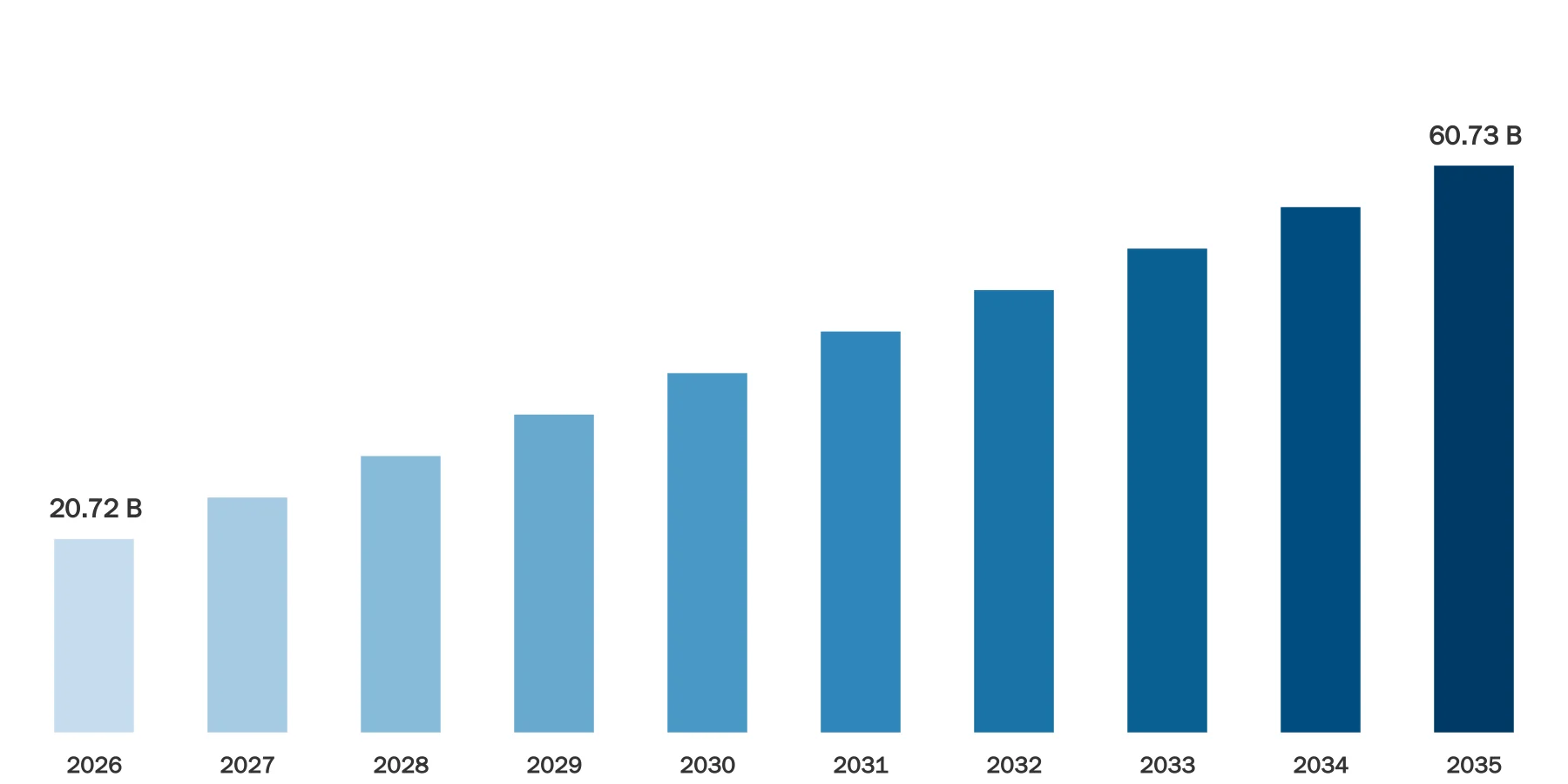
Source: Econ Market Research
The Human Computer Interaction driven Multi-Touch Screen Market expanded significantly in 2024 as more than 4.3 billion smartphone users globally depended on touch-enabled interfaces for communication, banking, gaming, and enterprise workflows. Capacitive technology represented nearly 42% of installed multi-touch interfaces in commercial electronics, while smartphones accounted for approximately 55% of total touch panel integration across devices. More than 420 million multi-touch-enabled units were shipped globally during 2025 across smartphones, kiosks, tablets, automotive displays, and industrial control systems.
Automotive display shipments surpassed 225 million units in 2024, with multi-touch integration becoming standard in infotainment systems and dashboard interfaces. Interactive kiosks exceeded 850,000 active installations worldwide, while over 2.4 million retail stores implemented touch-enabled display systems. OLED-based touch panels increased penetration in premium consumer devices by over 18% between 2023 and 2025. Education institutions in over 70 countries adopted interactive classroom displays with screen sizes exceeding 65 inches, boosting demand for large-format multi-touch solutions in commercial environments.
The United States Multi-Touch Screen Market remains one of the most advanced technology ecosystems, supported by smartphone ownership exceeding 64% among adults and digital banking usage surpassing 57% through mobile interfaces. More than 340,000 touch-enabled POS terminals operated across North America by the end of 2023, with the majority concentrated in the United States retail and hospitality sectors. Interactive display deployment in healthcare facilities expanded by 19% between 2022 and 2024, especially in patient registration kiosks and digital diagnostics systems.
The automotive sector integrated touch-enabled infotainment displays in over 85% of new passenger vehicles sold in 2024. Education technology procurement increased sharply as schools adopted interactive whiteboards larger than 75 inches for hybrid learning systems. More than 62% of mobile users searched healthcare information using touch-enabled smartphones, while approximately 40% used mobile devices for public service access. Enterprise collaboration displays with 4K resolution and 20-point touch capability became standard in corporate meeting rooms across major U.S. metropolitan areas.
The European Multi-Touch Screen Market demonstrated strong adoption across automotive manufacturing, industrial automation, and public infrastructure projects during 2024. Germany, France, Italy, and the United Kingdom collectively represented more than 58% of European interactive display installations. Automotive manufacturers across Europe integrated digital cockpit systems with touch-enabled displays in nearly 78% of new electric vehicle platforms launched between 2023 and 2025. Retail digitization accelerated as more than 420,000 self-service kiosks and interactive signage systems were deployed across shopping centers, airports, and railway stations in Europe.
Educational institutions in over 30 European countries expanded smart classroom programs with displays ranging from 55 inches to 98 inches. OLED and mini-LED touch display penetration in premium laptops and enterprise monitors increased by approximately 16% during 2024. Hospitals in Western Europe installed touch-enabled patient monitoring systems in more than 12,000 critical care units. Public transportation authorities adopted multi-touch ticketing and navigation displays across metro systems, improving passenger interaction efficiency by nearly 24% in major urban transit networks.
Multi-Touch Screen Market Latest Trends
The Multi-Touch Screen Market Trends indicate rapid migration toward AI-enabled displays, OLED integration, ultra-thin bezel designs, and large-format interactive collaboration panels. In 2024, over 55% of premium smartphones integrated advanced in-cell touch technology, improving response latency below 10 milliseconds. Automotive central stack displays using in-cell touch TFT LCD panels reached shipment levels of 26.2 million units during 2023, while market share exceeded 35% in Automotive Infotainment applications. Multi-touch displays above 65 inches gained traction in enterprise conferencing and education, with Interactive White Board deployments increasing by nearly 21% globally.
Retail automation accelerated adoption of interactive kiosks, with more than 850,000 touchscreen kiosks installed worldwide by 2024. Capacitive touch systems accounted for approximately 58% of retail interactive deployments due to high sensitivity and multi-user gesture support. Gaming devices equipped with haptic multi-touch feedback experienced shipment increases exceeding 14% between 2023 and 2025. Healthcare applications expanded through touch-enabled surgical visualization systems, patient monitoring displays, and telemedicine interfaces supporting 10-point and 20-point touch interaction.
Flexible OLED touch panels emerged in foldable smartphones and portable productivity devices, while mini-LED technology improved brightness above 1,500 nits for outdoor commercial displays. Smart city infrastructure projects integrated touch-enabled information systems across airports, transportation hubs, and municipal facilities. Interactive digital signage systems increased consumer dwell time by more than 30% in retail environments. Edge computing and AI analytics integration allowed touchscreens to process biometric recognition, predictive maintenance, and personalized advertising simultaneously. These developments positioned the Multi-Touch Screen Market Analysis around enterprise digitization, connected mobility, and immersive user interface innovation.
Multi-Touch Screen Market Dynamics
The Multi-Touch Screen Market Research Report highlights growing demand from smartphones, electric vehicles, industrial automation, and interactive retail infrastructure. More than 75% of enterprise digital transformation initiatives now include touch-enabled display systems for customer engagement and operational efficiency. Multi-touch displays supporting 10-point to 40-point interaction became standard in education and collaborative workspaces. Automotive display integration surpassed 225 million units in 2024, while retail touch systems expanded across over 2.4 million stores globally. Touch-enabled public information systems improved transaction processing efficiency by nearly 28% in transportation and healthcare sectors. Increased deployment of OLED and mini-LED touch panels improved durability, brightness, and energy efficiency, while AI-enabled touch analytics accelerated adoption in smart cities and industrial control systems.
DRIVER
Increasing Demand for Interactive Consumer Electronics
Consumer electronics remain the largest growth driver in the Multi-Touch Screen Industry Analysis due to rising smartphone, tablet, wearable, and laptop shipments. More than 4.3 billion people globally used smartphones during 2024, and nearly 90% of premium devices incorporated advanced capacitive multi-touch displays. Smartphone applications represented around 55% of total multi-touch screen installations globally. Tablet adoption in education and enterprise sectors increased substantially, especially devices with 10-point and 20-point touch functionality.
The gaming industry also accelerated demand, with touchscreen gaming consoles and portable devices supporting refresh rates above 120 Hz. Laptop manufacturers introduced OLED touch displays with brightness exceeding 1,000 nits and screen resolutions above 4K. Hybrid work trends increased deployment of touch-enabled monitors and collaboration boards larger than 75 inches. Consumer demand for gesture control, haptic feedback, and ultra-responsive interfaces pushed manufacturers toward lower latency touch sensors below 8 milliseconds. Retail sales of foldable smartphones increased by more than 17% between 2023 and 2025, further driving innovation in flexible touch technology. Automotive infotainment systems, wearable health devices, and smart home interfaces added additional momentum to the Multi-Touch Screen Market Growth trajectory.
RESTRAINT
High Manufacturing and Integration Complexity
The Multi-Touch Screen Market faces restraints related to production complexity, material sourcing, and integration costs associated with advanced touch technologies. OLED and flexible touch panel manufacturing requires highly specialized fabrication facilities, with defect rates remaining above 8% in foldable display production. Capacitive touch systems demand precision conductive coatings and controller integration, increasing component complexity in large-format displays exceeding 85 inches.
Supply chain disruptions affected semiconductor controllers, display driver ICs, and conductive materials between 2022 and 2024. Automotive-grade touch displays require durability testing exceeding 100,000 operational cycles and temperature resistance ranging from minus 40 degrees Celsius to 85 degrees Celsius. Such requirements increase validation timelines and manufacturing expenses. In healthcare environments, touch-enabled displays must comply with antimicrobial and sterilization standards, adding further engineering challenges.
Touchscreen durability issues in outdoor environments remain a concern due to moisture, UV exposure, and vandalism risks. Public sector deployments often require impact-resistant glass above IK08 standards, increasing installation complexity. Additionally, power consumption in large interactive displays larger than 98 inches limits adoption in energy-sensitive environments. These operational and engineering barriers continue to influence Multi-Touch Screen Market Outlook across industrial and commercial sectors.
OPPORTUNITY
Expansion of Smart Retail and Smart City Infrastructure
Smart retail and smart city projects represent major opportunities in the Multi-Touch Screen Market Forecast landscape. More than 850,000 touchscreen kiosks were active globally by 2024, while over 71% of Tier-1 retailers implemented interactive touch systems for self-checkout, wayfinding, and digital advertising. Retail touch displays improved customer engagement duration by approximately 30%, increasing adoption across supermarkets, airports, and hospitality chains.
Governments across Asia-Pacific and the Middle East expanded smart city investments involving touch-enabled information terminals, ticketing systems, and municipal service kiosks. Interactive transportation displays improved passenger information access by nearly 24% in urban transit networks. Education modernization programs also created opportunities for interactive classroom boards with screen sizes ranging from 65 inches to 110 inches.
Healthcare digitization accelerated deployment of touch-enabled patient registration systems and telemedicine platforms. Automotive manufacturers introduced curved multi-touch cockpit displays supporting gesture recognition and voice interaction. AI-powered analytics integrated into retail displays enabled personalized content delivery and real-time customer tracking. These developments create strong opportunities for suppliers specializing in durable, high-brightness, and AI-integrated touch interfaces.
CHALLENGES
Competition from Alternative Interface Technologies
The Multi-Touch Screen Market Opportunities landscape also faces challenges from emerging interface technologies such as voice recognition, gesture control, and tactile hardware controls. Automotive manufacturers increasingly reintroduced physical buttons and knobs due to safety concerns associated with touchscreen-only vehicle interfaces. User feedback studies indicated improved operational accuracy with tactile controls during driving conditions.
Voice-enabled AI assistants integrated into smartphones and smart home systems reduced dependence on touch interaction for navigation and device control. Gesture-recognition systems using infrared sensors and computer vision technology gained adoption in gaming, healthcare, and industrial automation applications. Additionally, touchscreen fatigue became a challenge in enterprise and automotive environments involving prolonged interaction periods.
Large-format multi-touch displays require significant maintenance and calibration, especially in public installations with high daily usage exceeding 5,000 interactions per screen. Cybersecurity concerns also increased as connected touch displays processed user credentials, payment transactions, and biometric data. Device overheating and response lag in high-brightness outdoor installations further affected operational reliability. Manufacturers must balance user experience, durability, energy efficiency, and security standards to sustain long-term market competitiveness.
SWOT Analysis
Strengths
Capacitive multi-touch technology represented approximately 42% of global installations due to superior sensitivity and durability.
Smartphones accounted for nearly 55% of touch-enabled device integration worldwide during 2025.
More than 420 million multi-touch units shipped globally across consumer electronics and industrial applications.
Automotive display shipments exceeded 225 million units in 2024, strengthening demand for embedded touch interfaces.
Weaknesses
Flexible OLED touch display manufacturing defect rates remained above 8% in foldable device production.
Large-format interactive displays above 98 inches consume over 350 watts in commercial installations.
Outdoor touchscreens require impact-resistant glass and waterproofing standards, increasing deployment complexity.
Supply chain shortages involving controller ICs and conductive coatings disrupted production schedules during 2023 and 2024.
Opportunities
Over 850,000 interactive kiosks were deployed globally by 2024 across retail and transportation sectors.
Smart classroom adoption increased by more than 21% globally using displays above 65 inches.
In-cell touch automotive displays are projected to exceed 50% shipment share in vehicle infotainment systems.
Smart city infrastructure projects expanded deployment of interactive transportation and municipal displays in over 40 countries.
Threats
Voice-controlled interfaces reduced touchscreen dependency in smart home and automotive systems.
Automotive manufacturers reintroduced tactile buttons due to driver safety concerns associated with touchscreen-only dashboards.
Cybersecurity risks increased as touch-enabled payment and biometric systems processed sensitive user information.
Low-cost counterfeit touchscreen components reduced durability standards in price-sensitive regional markets.
Segmentation Analysis
The Multi-Touch Screen Market Size continues expanding across technologies, display formats, and industrial applications. Capacitive touch technology dominates due to fast response times below 10 milliseconds and support for multi-finger gestures. Large-format screens exceeding 65 inches gained momentum in education and enterprise collaboration environments. Consumer electronics remained the largest application segment, while automotive and retail deployments accelerated significantly between 2023 and 2025.
OLED displays improved penetration in smartphones and laptops due to thinner profiles and brightness levels above 1,000 nits. Industrial automation, healthcare diagnostics, and BFSI self-service terminals also increased demand for durable touch-enabled interfaces supporting continuous operation above 20 hours daily. The Multi-Touch Screen Market Share remained concentrated among smartphone manufacturers, automotive display suppliers, and enterprise interactive display providers.
By Technology
Capacitive technology dominated the Multi-Touch Screen Market Share with approximately 42% installation penetration due to high precision, transparency, and responsiveness. Resistive touch technology maintained relevance in industrial and healthcare applications because of low manufacturing costs and compatibility with gloves and stylus inputs. Infrared touch systems gained adoption in large interactive whiteboards larger than 75 inches due to scalability and durability advantages. Optical touch technology expanded across gaming tables and commercial collaboration systems supporting more than 40 simultaneous touch points.
Projected capacitive displays became standard in smartphones, accounting for nearly 90% of flagship mobile devices launched during 2024. Infrared systems improved touch accuracy to below 2 millimeters for education and retail applications. Optical imaging touch interfaces supported screen sizes exceeding 110 inches in conference halls and museums. Emerging technologies integrated AI gesture recognition and haptic feedback layers, improving user interaction across gaming and automotive systems. Touch latency improvements below 5 milliseconds increased demand in esports and interactive design applications. Industrial resistive displays remained critical in manufacturing facilities operating under dust, moisture, and extreme temperature conditions.
By Screen Size
Small-sized screens below 10 inches dominated smartphone, wearable, and handheld gaming applications, representing more than 60% of total installed units globally. Medium-sized screens ranging from 10 inches to 32 inches expanded across tablets, laptops, automotive displays, and healthcare devices. Large-sized displays exceeding 65 inches experienced rapid adoption in smart classrooms, boardrooms, airports, and retail digital signage environments.
Interactive classroom deployments increased substantially with 75-inch and 86-inch touch displays supporting 20-point touch functionality. Automotive infotainment systems shifted toward medium-sized curved touchscreens between 12 inches and 17 inches, especially in electric vehicles. Retail kiosks increasingly utilized medium-sized displays between 22 inches and 43 inches for self-service operations. Gaming and creative design sectors preferred ultra-wide touch displays above 34 inches with refresh rates exceeding 120 Hz.
Large-sized touch video walls above 100 inches gained popularity in smart city infrastructure projects and command centers. Foldable smartphones and dual-screen devices accelerated innovation in compact flexible touch panels. Brightness levels above 1,500 nits improved outdoor readability for transportation and advertising installations. These factors significantly influenced Multi-Touch Screen Market Trends across multiple end-use industries.
By Application
Smartphones and tablets remained the largest application segment, contributing approximately 55% of total market deployment volume. Laptops and monitors experienced rising adoption in hybrid work environments, with enterprise touch monitor shipments increasing by nearly 18% between 2023 and 2025. Interactive kiosks surpassed 850,000 active installations globally across retail, airports, and public service environments.
Automotive displays represented one of the fastest-growing applications, with 225 million display shipments in 2024 supporting infotainment, navigation, and climate control systems. Gaming devices adopted advanced haptic touch feedback and refresh rates above 144 Hz for immersive experiences. Healthcare applications integrated touch-enabled diagnostics systems and Patient Monitoring Devices supporting real-time data visualization.
Education institutions increasingly deployed interactive whiteboards larger than 75 inches for collaborative learning. BFSI applications expanded through ATM modernization and touch-enabled banking kiosks. Smart manufacturing facilities adopted industrial touch control panels supporting operation in high-temperature and high-vibration environments. Multi-touch interfaces also improved customer engagement in hospitality, transportation, and public information systems, strengthening the Multi-Touch Screen Industry Report landscape globally.
By End Use Industry
Consumer electronics dominated the Multi-Touch Screen Market Analysis with smartphone, laptop, tablet, and wearable integration accounting for the majority of annual installations. Retail emerged as a major adopter with over 71% of Tier-1 retailers implementing interactive touch systems. Healthcare institutions installed touch-enabled patient management systems and diagnostics displays in more than 12,000 critical care units across Europe alone.
Education modernization programs accelerated smart classroom deployments with displays ranging from 55 inches to 110 inches. Automotive manufacturers integrated touch-based infotainment and digital cockpit systems into over 85% of new electric vehicles launched during 2024. BFSI organizations expanded self-service banking infrastructure using touch-enabled ATMs and customer service kiosks.
Industrial automation systems increasingly utilized rugged multi-touch HMIs supporting operation in temperatures ranging from minus 20 degrees Celsius to 70 degrees Celsius. Hospitality providers deployed touch-enabled ordering and check-in systems to reduce customer waiting times by approximately 25%. Transportation authorities implemented touch-based navigation systems across airports and metro stations. These developments significantly diversified Multi-Touch Screen Market Opportunities across global industries.
By Display Type
LCD displays remained dominant due to affordability, durability, and widespread integration across smartphones, monitors, kiosks, and automotive displays. LED touch displays improved brightness performance above 1,500 nits for outdoor commercial applications. OLED technology expanded rapidly in premium smartphones, laptops, and foldable devices because of thinner form factors and improved color accuracy.
In-cell touch TFT LCD shipments reached 26.2 million units in automotive applications during 2023, accounting for approximately 35% shipment share. OLED penetration increased across smartphones and tablets, especially in devices supporting HDR and high refresh rates above 120 Hz. Mini-LED displays gained traction in enterprise collaboration boards and gaming monitors due to improved contrast ratios and energy efficiency.
Commercial digital signage installations increasingly adopted LED-based touch systems for airport terminals, shopping malls, and smart city infrastructure. Flexible OLED touch panels enabled foldable smartphone designs with durability exceeding 200,000 fold cycles. Healthcare and industrial sectors continued preferring LCD technology due to lower operational costs and stable long-term performance. The evolution of display technologies significantly shaped Multi-Touch Screen Market Forecast patterns globally.
Regional Analysis
North America maintained over 33% market share due to advanced consumer electronics and enterprise adoption.
Europe strengthened automotive and industrial touchscreen deployment across Germany, France, and the United Kingdom.
Asia-Pacific dominated manufacturing capacity for LCD, OLED, and capacitive touch sensors.
Middle East & Africa expanded smart city and transportation infrastructure involving interactive displays.
Retail, education, and automotive industries remained primary growth sectors in all major regions.
Interactive kiosks and smart classroom installations accelerated deployment of displays larger than 65 inches globally.
North America
North America accounted for more than 33% of the Multi-Touch Screen Market Share during 2025 due to strong smartphone penetration, automotive digitization, and enterprise technology investments. The United States represented the dominant regional contributor, supported by smartphone ownership exceeding 64% among adults. More than 340,000 touch-enabled POS systems operated across retail and hospitality businesses in North America by the end of 2023.
Automotive manufacturers integrated touch-enabled infotainment systems into approximately 85% of newly launched passenger vehicles. Education institutions expanded interactive classroom infrastructure with displays above 75 inches supporting hybrid learning. Healthcare digitization accelerated deployment of patient self-service kiosks and touch-enabled medical imaging systems across hospitals and clinics.
Retail automation projects expanded self-checkout installations and interactive product displays in supermarkets and shopping malls. Corporate offices increasingly deployed 4K touch collaboration displays supporting 20-point touch functionality. Gaming companies introduced ultra-responsive touch monitors with refresh rates exceeding 144 Hz. OLED touch displays gained significant adoption in premium smartphones and productivity laptops. Government agencies also implemented touch-enabled public service systems to improve digital accessibility. These factors collectively strengthened North America’s position in the Multi-Touch Screen Market Outlook.
Europe
Europe represented a significant Multi-Touch Screen Market Research Report region due to automotive manufacturing leadership and widespread industrial automation. Germany, France, the United Kingdom, and Italy accounted for over 58% of regional interactive display deployments. Automotive cockpit digitization accelerated rapidly, especially in electric vehicle platforms integrating touch-enabled control systems and curved infotainment displays between 12 inches and 17 inches.
Public transportation modernization projects deployed touch-based navigation and ticketing systems across metro stations and airports. More than 420,000 interactive kiosks and information terminals operated across major urban centers in Europe during 2024. Hospitals expanded digital healthcare infrastructure through touch-enabled patient monitoring systems and telemedicine platforms.
Education systems increasingly adopted smart classroom displays larger than 65 inches for collaborative instruction and remote learning. Retailers implemented interactive product browsing systems and self-checkout terminals to improve customer engagement and reduce operational delays. OLED and mini-LED touch displays gained adoption in enterprise laptops and creative workstations due to superior color accuracy and energy efficiency.
Industrial manufacturing facilities utilized rugged touch HMIs for automation systems operating under harsh environmental conditions. Smart city projects across Scandinavia and Western Europe integrated touch-enabled municipal service terminals, enhancing digital public infrastructure accessibility. These developments significantly supported Europe’s Multi-Touch Screen Industry Analysis expansion.
Asia-Pacific
Asia-Pacific remained the largest manufacturing and consumption hub within the Multi-Touch Screen Market Size ecosystem. China, Japan, South Korea, and India collectively represented the majority of global LCD and OLED panel production capacity. Smartphone manufacturing facilities in Asia-Pacific produced hundreds of millions of touch-enabled devices annually, supporting strong regional supply chains for capacitive sensors and display driver ICs.
China led deployment of smart retail infrastructure and transportation displays, while South Korea and Japan advanced OLED and foldable touchscreen innovation. India experienced rapid expansion in smart classroom deployments and affordable smartphone adoption. Automotive display integration accelerated as electric vehicle production increased across China, Japan, and South Korea.
Retail digitization expanded significantly, with self-service kiosks and touch-enabled vending systems becoming standard in metropolitan shopping centers and transportation hubs. Gaming device manufacturers introduced high-refresh-rate touch displays supporting esports applications. Healthcare digitization projects implemented touch-enabled diagnostic systems and telemedicine platforms in urban hospitals.
Large-format touch displays above 86 inches gained popularity in enterprise collaboration environments and universities. Manufacturing plants adopted industrial touch HMIs for robotics and automation control systems. Smart city programs across Southeast Asia integrated interactive transportation information displays and public service kiosks. Asia-Pacific’s manufacturing ecosystem and consumer electronics demand strongly reinforced Multi-Touch Screen Market Growth worldwide.
Middle East & Africa
The Middle East & Africa Multi-Touch Screen Market Trends landscape expanded through smart city initiatives, airport modernization, and retail infrastructure development. Gulf Cooperation Council countries invested heavily in interactive public service systems and transportation displays. Airports across the United Arab Emirates and Saudi Arabia deployed touch-enabled passenger navigation systems and self-service kiosks to manage increasing traveler volumes.
Retail modernization projects integrated digital signage and self-checkout systems in shopping malls and supermarkets. Hospitality providers adopted touch-enabled guest management and ordering systems to improve operational efficiency. Smart classroom initiatives expanded across universities and government education programs, increasing deployment of interactive displays larger than 65 inches.
Healthcare institutions implemented touch-enabled patient registration and diagnostics systems to improve workflow management. Banking and financial institutions deployed advanced touch-enabled ATMs and customer service terminals in urban centers. Industrial facilities in oil and gas sectors adopted rugged touch HMIs capable of operating under extreme environmental conditions.
African urban centers also increased adoption of touchscreen public information systems in transportation and municipal facilities. Telecommunications growth and smartphone adoption improved consumer demand for affordable touch-enabled devices. Smart infrastructure projects and enterprise digitization programs continue creating opportunities for suppliers across the Multi-Touch Screen Market Insights ecosystem.

Competitive Landscape
The Multi-Touch Screen Market Competitive Landscape remains highly concentrated among global electronics manufacturers, display panel suppliers, and touch technology innovators. Leading companies compete through OLED advancements, high-refresh-rate touch displays, AI-enabled interaction systems, and durable industrial touchscreen solutions. Smartphone manufacturers continued dominating shipment volumes, while enterprise display providers focused on large-format collaboration systems above 75 inches.
Capacitive touch technology remained the preferred standard, accounting for approximately 42% of total installations due to responsiveness and gesture support. Companies increasingly invested in flexible OLED production lines and in-cell touch technologies for automotive and foldable devices. Automotive infotainment integration became a strategic focus as display shipments surpassed 225 million units in 2024.
Retail and hospitality sectors intensified competition around interactive kiosks and self-service terminals, with over 850,000 kiosks deployed globally. Education technology suppliers emphasized multi-user collaboration displays supporting 20-point and 40-point touch interaction. Industrial manufacturers developed ruggedized touch HMIs resistant to dust, moisture, vibration, and temperature extremes.
Strategic partnerships between panel makers, chipset providers, and software companies accelerated innovation in AI-driven touch analytics and haptic feedback systems. OLED and mini-LED advancements improved brightness, contrast, and energy efficiency in commercial applications. Competitive differentiation increasingly depends on touch accuracy, durability, response latency, display resolution, and integration with cloud-based enterprise ecosystems.
List of Top Multi-Touch Screen Companies
3M
Samsung Electronics
LG Electronics
Apple Inc.
Microsoft Corporation
Dell Technologies
HP Inc.
Sharp Corporation
AUO Corporation
Elo Touch Solutions
Leading Companies by Market Share
Samsung Electronics maintained one of the highest market shares due to leadership in OLED smartphone displays, foldable touch panels, and automotive infotainment technologies. The company supplied touch-enabled OLED panels for millions of premium smartphones and introduced displays supporting refresh rates above 120 Hz and brightness exceeding 1,500 nits.
Apple Inc. remained another leading company through large-scale integration of multi-touch technology across smartphones, tablets, laptops, and wearable devices. The company expanded OLED touch adoption in flagship mobile devices and enhanced touch latency optimization below 10 milliseconds for advanced user interaction experiences.
Investment Trends & Opportunities
Investment activity in the Multi-Touch Screen Market Outlook increased sharply across OLED fabrication, automotive display production, AI-integrated touch systems, and interactive retail infrastructure. Display manufacturers expanded production facilities for flexible OLED panels supporting foldable smartphones and automotive curved displays. In-cell touch technology investment accelerated as shipment share in automotive central stack displays approached 50%.
Governments and private enterprises invested heavily in smart city infrastructure involving touch-enabled kiosks, digital signage, and transportation information systems. Retail technology investments expanded self-checkout deployments and interactive customer engagement platforms. More than 71% of Tier-1 retailers integrated interactive touchscreen systems to improve operational efficiency and customer interaction.
Education technology providers increased procurement of interactive classroom boards above 75 inches. Healthcare facilities invested in touch-enabled telemedicine platforms and diagnostics systems supporting real-time imaging and patient management. Industrial automation projects adopted rugged touch HMIs for robotics and predictive maintenance systems.
Venture capital activity also focused on haptic feedback technology, gesture recognition integration, and AI-based touch analytics platforms. Gaming companies invested in ultra-responsive touch monitors with refresh rates above 144 Hz for immersive applications. Enterprise collaboration software integration created opportunities for touchscreen vendors delivering cloud-connected conference solutions. These trends strongly support long-term Multi-Touch Screen Market Opportunities expansion globally.
Product Innovation & Development
Product innovation in the Multi-Touch Screen Market Trends ecosystem centered on OLED integration, flexible displays, haptic feedback, and AI-enhanced interaction systems. Foldable smartphone displays improved durability beyond 200,000 fold cycles while reducing thickness below 7 millimeters. Automotive touch displays evolved into curved panoramic interfaces supporting gesture recognition and voice-assisted navigation.
Manufacturers introduced touch displays with refresh rates above 240 Hz for gaming and creative design applications. Mini-LED technology improved contrast ratios and brightness performance above 1,500 nits for outdoor digital signage. Interactive enterprise displays expanded support for 40 simultaneous touch points, enabling advanced collaboration environments.
Healthcare innovations included antimicrobial touchscreens and waterproof medical displays supporting continuous sterilization procedures. Retail systems incorporated AI-driven analytics capable of monitoring customer interaction patterns and dwell times. Industrial touchscreens improved durability standards with IK08 impact resistance and IP65 waterproof certification.
Transparent touch displays emerged in automotive heads-up systems and retail advertising installations. Haptic feedback technology improved tactile interaction in touchscreen keyboards and gaming systems. Low-latency touch sensors reduced response times below 5 milliseconds for immersive applications. These developments significantly enhanced user experience and strengthened the Multi-Touch Screen Industry Report innovation landscape globally.
Recent Developments
In 2024, automotive display shipments reached approximately 225 million units globally, with increased adoption of multi-touch infotainment systems and digital cockpit displays.
In 2024, in-cell touch TFT LCD automotive display shipments reached 26.2 million units and accounted for around 35% shipment share in automotive central stack display applications.
During 2024, more than 850,000 touchscreen kiosks operated globally across retail, transportation, and hospitality sectors, reflecting large-scale interactive infrastructure deployment.
In 2025, capacitive touch technology represented approximately 42% market share due to strong integration in smartphones, tablets, and interactive enterprise displays.
Between 2023 and 2025, OLED and foldable touchscreen smartphone adoption increased significantly, with premium mobile devices integrating refresh rates above 120 Hz and brightness exceeding 1,500 nits.
Scope of the Multi-Touch Screen Market Report
The Multi-Touch Screen Market Report covers technology trends, deployment patterns, industrial applications, manufacturing ecosystems, and regional demand analysis across consumer electronics, automotive, healthcare, education, retail, and industrial sectors. The report evaluates capacitive, resistive, infrared, optical, and emerging touch technologies supporting interaction points ranging from 2-point to 40-point touch capability.
Coverage includes screen sizes from compact smartphone displays below 10 inches to interactive commercial displays above 110 inches. The report analyzes LCD, LED, OLED, mini-LED, and flexible display technologies, along with advancements in haptic feedback, AI-driven touch analytics, and gesture recognition systems. Automotive infotainment displays, self-service kiosks, enterprise collaboration boards, and industrial automation interfaces represent major application areas.
Regional analysis includes North America, Europe, Asia-Pacific, and Middle East & Africa with detailed assessment of manufacturing hubs, deployment trends, and smart infrastructure projects. The report also evaluates smartphone penetration, interactive kiosk deployment, automotive display shipments, and education digitization programs influencing market expansion.
Competitive benchmarking covers display manufacturers, touch controller suppliers, OLED innovators, and enterprise touchscreen solution providers. Investment analysis examines smart city initiatives, retail automation, healthcare digitization, and industrial automation opportunities shaping the future Multi-Touch Screen Market Forecast globally.
Multi Touch Screen Market Report Scope & Segmentation
| Attributes | Details |
|---|---|
Market Size (Current) | US$ 20.72 Billion in 2026 |
Market Size (Forecast) | US$ 60.73 Billion in 2035 |
Growth Rate | CAGR of 12.69% from 2026 to 2035 |
Forecast Period | 2026 – 2035 |
Base Year | 2025 |
Historical Data Available | Yes |
Regional Scope | Global |
Segments Covered | By Technology
By Screen Size
By Application
By End Use Industry
By Display Type
|
Frequently Asked Questions
Common questions about this report
The study period covers historical insights and forecast projections for the period 2026-2035.
About the Author
Market research expert with years of industry experience
As a Senior Research Associate at Econ Market Research, Akash Bhingare leads comprehensive market studies across dynamic and highly specialized sectors, ranging from advanced biotech fields to niche industrial markets. He excels at dissecting complex supply chains, analyzing market segmentation, and forecasting future industry trajectories. Akash’s commitment to high-fidelity data ensures that every report he authors delivers reliable, foundational knowledge for enterprise-level decision-making.
Related Reports
Explore more market insights from the same category