

Patient Monitoring Devices Market
Patient Monitoring Devices Market Size, Share, Trends, Growth, and Industry Analysis, By Product (Hemodynamic Monitoring Devices, Neuromonitoring Devices, Cardiac Monitoring Devices, Respiratory Monitoring Devices, Fetal andamp; Neonatal Monitoring Devices), By End User (Hospitals, Ambulatory Surgical Centers, Home Care Settings), Regional Analysis and Forecast Period 2026-2035
Patient Monitoring Devices Market Overview
As per Econ Market Research analysis, the Global Patient Monitoring Devices Market generated revenue of US$ 68.88 Billion in 2026 and is forecast to achieve US$ 134.63 Billion by 2035, at a CAGR of 7.72% during the study period 2026–2035. The base year considered is 2025.
Patient Monitoring Devices Market Size 2025-2035 (USD Billion)

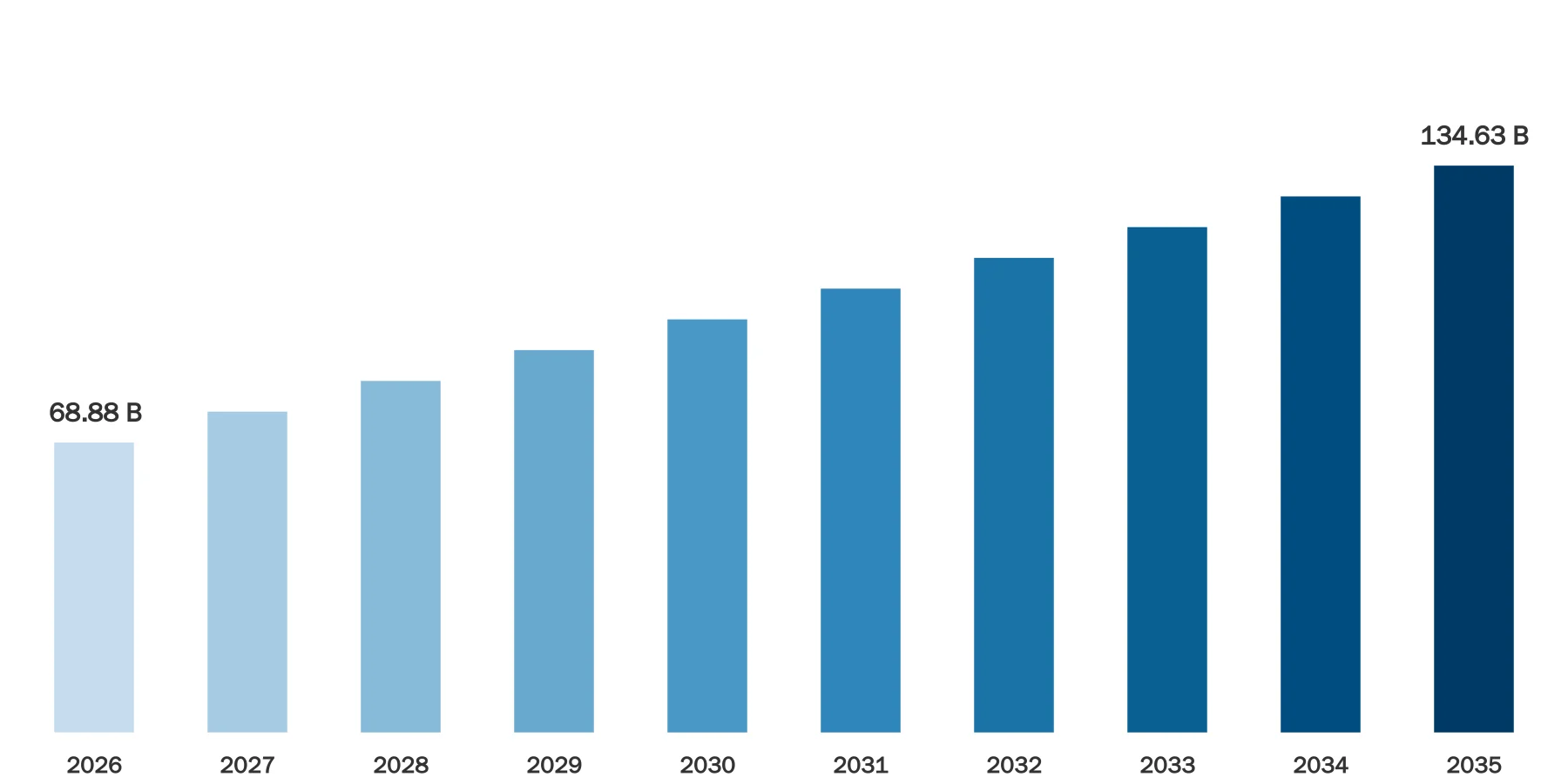
Source: Econ Market Research
Patient Monitoring devices include blood pressure monitors, heart rate monitors, temperature monitors, and more, allowing healthcare professionals to continuously monitor patients', health status and detect any abnormalities or changes promptly. Patient monitoring devices are critical in modern healthcare because they provide real-time data that allows doctors to make more informed decisions about patient care. The demand for these devices is gradually increasing as chronic diseases become more prevalent and the population ages.
Technological advances, such as wireless connectivity and remote monitoring capabilities, are also boosting market growth, allowing healthcare professionals to monitor patients', health status remotely and provide prompt interventions when necessary. The global market for patient monitoring devices is highly competitive, with numerous players offering a wide range of products and solutions. Key players in the market are focused on innovation and product development to stay ahead of the competition and meet the evolving needs of healthcare providers and patients. Additionally, increasing investments in healthcare infrastructure and rising awareness about the importance of continuous patient monitoring are further fuelling market growth.
Patient Monitoring Devices Dynamics
The increasing prevalence of chronic diseases such as cardiovascular disorders, diabetes, and respiratory illnesses is driving the demand for patient monitoring devices. As these conditions require continuous monitoring of vital signs and health parameters, healthcare providers are increasingly adopting these devices to ensure timely intervention and management of patients', health.
Furthermore, technical improvements play an important influence in determining market dynamics. Wireless connectivity, wearable sensors, and remote monitoring capabilities are among the innovations that improve the performance and usefulness of patient monitors. These technology improvements not only improve the precision and reliability of monitoring, but also allow healthcare personnel to remotely monitor patients', health state, resulting in better patient outcomes and increased efficiency in healthcare delivery.
Moreover, the growing emphasis on preventive healthcare and wellness initiatives is also contributing to market growth. Patient monitoring devices are increasingly being used for home healthcare monitoring and personal health tracking, empowering individuals to take proactive measures to manage their health and well-being. Additionally, the integration of Artificial Intelligence (AI) and machine learning (ML) technologies into patient monitoring devices is expected to further revolutionize the market by enabling predictive analytics and personalized healthcare solutions.
Patient Monitoring Devices Drivers
Technological Advancements
Continuous advances in technology propel the growth of patient monitoring devices, improving functionality, accuracy, and usability. Wireless connectivity, wearable sensors, and remote monitoring capabilities have revolutionized patient monitoring, allowing for real-time data transfer and analysis. These improvements not only improve patient care by offering prompt treatments, but they also simplify healthcare workflows, resulting in increased efficiency and cost savings. Additionally, emerging technologies such as artificial intelligence (AI) and machine learning (ML) are being integrated into patient monitoring devices, enabling predictive analytics and tailored healthcare solutions, driving market expansion.
Increasing Prevalence of Chronic Diseases
The increasing prevalence of chronic diseases such as cardiovascular problems, diabetes, and respiratory illnesses is a major driver of the patient monitoring devices market. These disorders often require constant monitoring of vital signs and health markers in order to discover irregularities or changes in a timely manner. Patient monitoring devices play an important part in chronic disease management since they allow healthcare providers to remotely monitor patients', health condition and intervene when necessary. As the global burden of chronic diseases continues to grow due to factors such as aging populations and bad lifestyles, the need for patient monitoring devices is predicted to rise significantly, driving market growth.
Patient Monitoring Devices Restraints:
High Cost of Advanced Devices
While technological advancements have led to the development of more sophisticated patient monitoring devices, the high cost associated with these advanced devices can be a significant barrier to market growth. The initial investment required for purchasing and implementing advanced monitoring systems can be substantial for healthcare facilities, especially in resource-constrained settings. Additionally, ongoing maintenance and upgrade costs further add to the financial burden, limiting the adoption of advanced patient monitoring technologies, particularly in developing regions.
Data Security and Privacy Concerns
The rising digitalization of healthcare data, as well as the use of linked patient monitoring devices, raises issues regarding data security and privacy. Patient health data acquired by these devices is frequently sent across networks, raising the danger of data breaches and illegal access. Healthcare institutions and device manufacturers must employ strong Cyber Security safeguards to protect sensitive patient data from cyber threats. Furthermore, compliance with data protection standards such as HIPAA (Health Insurance Portability and Accountability Act) and GDPR (General Data Protection Regulation) adds complexity and cost to the development and deployment of patient monitoring solutions, thereby limiting market growth.
Patient Monitoring Devices Opportunities:
Rapid Growth of Remote Patient Monitoring
The rapid growth of remote patient monitoring presents significant opportunities for the patient monitoring devices market. Remote monitoring allows healthcare providers to monitor patients', health status outside traditional healthcare settings, enabling early detection of health issues and proactive interventions. With advancements in Telemedicine technologies and increasing patient acceptance of remote monitoring solutions, there is a growing demand for wearable and home-based patient monitoring devices. This trend is expected to drive market growth, particularly in the context of aging populations and the need for chronic disease management.
Segment Overview
By Product
The patient monitoring devices market includes a wide range of products that are used to monitor various aspects of patient health. Blood glucose monitoring systems include both self-monitoring and continuous glucose monitoring devices, which are essential for diabetes care. Cardiac Monitoring Devices include ECG devices, implantable loop recorders, event monitors, mobile cardiac telemetry monitors, and smart/wearable ECG monitors, which are critical for detecting heart issues. Multi-parameter Monitoring Devices provide low, mid, and high acuity monitoring to meet a wide range of patient needs.
Respiratory Monitoring Devices include pulse oximeters, spirometers, capnographs, and peak flow meters, which are critical for measuring lung function. Temperature Monitoring Devices comprise handheld, table-top, wearable continuous, invasive, and smart temperature monitors, vital for detecting fever and monitoring body temperature fluctuations. Hemodynamic/Pressure Monitoring Devices consist of hemodynamic monitors, blood pressure monitors, and disposables, important for assessing cardiovascular health.
Fetal &, Neonatal Monitoring Devices include fetal and neonatal monitors, crucial for monitoring the health of unborn babies and newborns. Neuromonitoring Devices encompass electroencephalograph machines, electromyography machines, cerebral oximeters, intracranial pressure monitors, magnetoencephalograph machines, and transcranial Doppler machines, essential for assessing neurological function. Weight Monitoring Devices include both digital and analog scales, important for tracking changes in weight, a key indicator of health status. Additionally, there are other miscellaneous devices catering to specific monitoring needs within the healthcare ecosystem.
By End-Use
Patient monitoring devices have uses in a variety of healthcare settings. Hospitals are the principal end users, with these devices being widely employed for continuous patient monitoring in inpatient and critical care settings. Ambulatory Surgery Centers use patient monitoring equipment to ensure patient safety during surgical procedures and post-operative care.
Patient monitoring devices are increasingly being used in home care settings for remote patient monitoring and chronic condition management. Other healthcare facilities, such as clinics, nursing homes, and long-term care facilities, use patient monitoring equipment to address the varied healthcare needs of their patients. Each end-use group represents a unique market potential for patient monitoring device manufacturers, catering to different areas of healthcare delivery and patient care.
Patient Monitoring Devices Overview by Region
North America dominates the market, owing to advanced healthcare infrastructure, high healthcare expenditure, and early adoption of innovative technologies. The presence of key market players and favourable reimbursement policies further contribute to the region',s market dominance. Europe follows closely, characterized by a strong emphasis on patient safety, stringent regulatory standards, and increasing investments in healthcare digitization.
Asia Pacific is poised for significant growth, fuelled by rising healthcare spending, expanding access to healthcare services, and increasing awareness about the importance of continuous patient monitoring. Countries like China and India are witnessing rapid market expansion due to large patient populations, government initiatives to improve healthcare access, and investments in healthcare infrastructure development.
Latin America and the Middle East &, Africa regions are also experiencing growth, albeit at a slower pace, driven by improving healthcare infrastructure, rising disposable incomes, and growing healthcare awareness. However, challenges such as limited access to healthcare in remote areas, healthcare disparities, and economic uncertainties restrain market growth in these regions.
Patient Monitoring Devices Market Competitive Landscape
Leading players such as Medtronic plc, Philips Healthcare, GE Healthcare, Abbott Laboratories, and Siemens Healthineers dominate the market with their extensive product portfolios, robust distribution networks, and strong brand presence. These organizations make major investments in research and development to launch innovative monitoring technologies and improve product features, adapting to the changing needs of healthcare practitioners and patients.
Furthermore, strategic partnerships, mergers, and acquisitions are popular methods used by significant competitors to increase their market position, expand their product offerings, and enter new markets. Emerging players, notably those from Asia Pacific, are also gaining traction in the market by providing creative and cost-effective solutions adapted to local market requirements. However, regulatory compliance, demanding quality requirements, and pricing pressures provide hurdles for both established and emerging competitors in the highly competitive patient monitoring devices industry.
Patient Monitoring Devices Market Leading Companies:
GE Healthcare,
OMRON Corporation,
Medtronic plc (Ireland),
Koninklijke Philips N.V.,
Dexcom, Inc.,
Natus Medical,
Masimo Corporation,
Shenzhen Mindray Bio-Medical Electronics Co., Ltd.,
Nihon Kohden Corporation,
Hill-Rom Holdings, Inc.,
Drä,gerwerk AG &, Co. KGaA,
Compumedics Limited
Patient Monitoring Devices Recent Developments
Oct 2022, GE Healthcare and AMC Health have joined forces to enable clinicians to provide Remote Patient Monitoring (RPM) as a virtual care solution, extending patient care beyond the hospital to the comfort of their homes. This collaboration merges GE Healthcare',s acute patient monitoring expertise within hospital settings with AMC Health',s proficiency in RPM solutions, utilizing an FDA Class II 510(k)-cleared platform equipped with analytics. Together, they aim to broaden the spectrum of non-acute care for patients post-hospital discharge.
Oct 2022, Henkel and Byteflies have expanded their ongoing collaboration to advance inventive solutions for remote patient monitoring. Consequently, the firms have entered into a letter of intent to jointly pursue commercial and developmental endeavours. This partnership seeks to enhance the synergy between Henkel',s expertise in medical adhesives and printed electronics and Byteflies', remote patient monitoring solutions, particularly in ECG monitoring. Together, the partners are dedicated to pioneering further innovative remote patient monitoring solutions, with the ultimate goal of democratizing virtual care accessibility for all, whether within hospital settings or at home.
Jan 2023, Royal Philips and Masimo both renowned in health technology, have unveiled an extended collaboration. They aim to enhance patient monitoring in home telehealth setups using Masimo',s advanced health tracking watch, the W1. This integration with Philips&rsquo,s enterprise patient monitoring system is set to propel tele-monitoring and telehealth to new heights.
Patient Monitoring Devices Report Segmentation
Patient Monitoring Devices Market Report Scope & Segmentation
| Attributes | Details |
|---|---|
Market Size (Current) | US$ 68.88 Billion in 2026 |
Market Size (Forecast) | US$ 134.63 Billion in 2035 |
Growth Rate | CAGR of 7.72% from 2026 to 2035 |
Forecast Period | 2026 – 2035 |
Base Year | 2025 |
Historical Data Available | Yes |
Regional Scope | Global |
Segments Covered | By Product
By End User
|
Frequently Asked Questions
Common questions about this report
The study period covers historical insights and forecast projections for the period 2026-2035.
About the Author
Market research expert with years of industry experience

Dipali Bhingare serves as the Market Research Director at Econ Market Research. With a focus on translating complex global economic shifts into actionable business intelligence, she oversees the strategic direction of comprehensive market studies. Her work empowers organizations to navigate volatile industries through data-driven forecasting and deep-dive competitive analysis.
Related Reports
Explore more market insights from the same category