

In-Pipe Hydro Systems Market
In-Pipe Hydro Systems Market Size, Share, Trends, Growth, and Industry Analysis, By Component (Turbines, Generators, Control Systems, Others), By Application (Residential, Commercial, Industrial, Agricultural), By Capacity (Micro, Small, Medium, Large), By Installation Type (New Installations, Retrofit Installations), Regional Analysis and Forecast Period 2026-2035
Market Overview
As per Econ Market Research analysis, the Global In-Pipe Hydro Systems Market generated revenue of US$ 2.41 Billion in 2026 and is forecast to achieve US$ 3.51 Billion by 2035, at a CAGR of 4.24% during the study period 2026–2035. The base year considered is 2025.
In-Pipe Hydro Systems Market Size 2025-2035 (USD Billion)

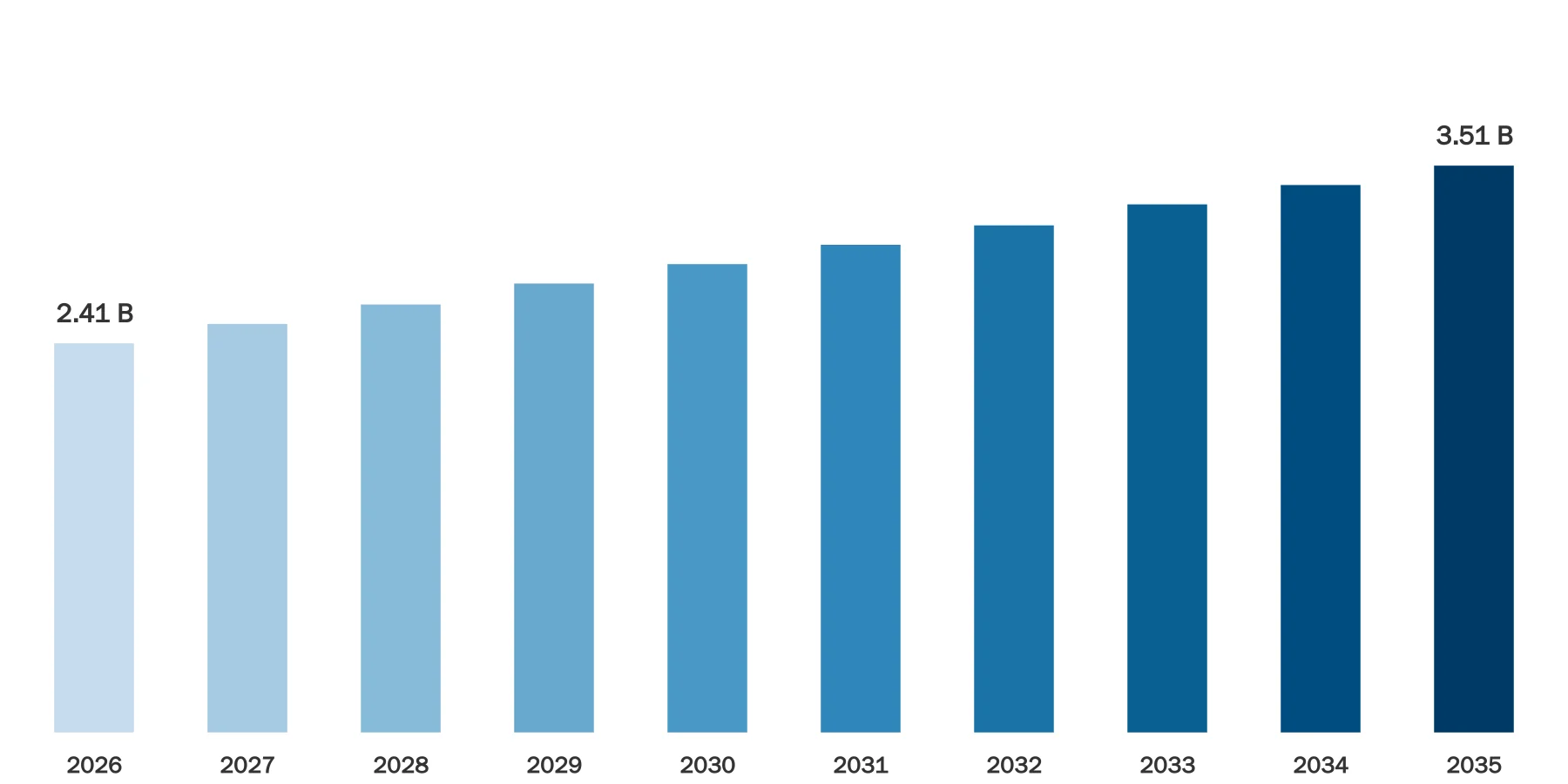
Source: Econ Market Research
In-Pipe Hydro Systems refer to innovative technologies designed to harness the power of flowing water within existing water pipelines to generate clean and sustainable electricity. These systems are characterized by their ability to efficiently tap into the kinetic energy of water flowing through pipelines, converting it into electrical energy without the need for traditional hydropower infrastructure like dams or large water reservoirs.
The market',s expansion is driven by increasing emphasis on sustainable energy sources, rising awareness about the environmental impact of conventional power generation, and the growing need for decentralized energy solutions. In-Pipe Hydro Systems offer a unique advantage by leveraging the vast network of water pipelines that crisscross urban and rural areas globally. The technology provides a dual benefit of optimizing water infrastructure while simultaneously generating renewable energy.
Key market players are focusing on technological advancements to enhance the efficiency and scalability of In-Pipe Hydro Systems, making them more adaptable to diverse pipeline configurations. The integration of smart sensors and monitoring capabilities further enhances the overall performance and maintenance of these systems. Government initiatives promoting clean energy and favorable regulatory frameworks are also contributing to the market',s upward trajectory.
In-Pipe Hydro Systems Dynamics
The growing global focus on sustainable energy solutions amid growing concerns over climate change and environmental degradation is one of the main drivers. Globally, governments and regulatory agencies are enacting laws and incentives to encourage the use of renewable energy technologies, such as In-Pipe Hydro Systems, which is driving the market',s expansion. Furthermore, the demand for novel energy sources like in-pipe hydro systems is being fueled by the need for decentralised power generation solutions in addition to the growing demand for electricity.
Moreover, advancements in technology are playing a pivotal role in enhancing the efficiency and viability of In-Pipe Hydro Systems. Innovations in materials science, sensor technology, and Data Analytics are enabling the development of more robust and cost-effective systems. Furthermore, the integration of smart grid solutions and digitalization initiatives is facilitating seamless integration of In-Pipe Hydro Systems into existing water infrastructure, optimizing energy generation and distribution. However, challenges such as high initial investment costs, regulatory hurdles, and technical complexities associated with retrofitting existing pipelines pose significant barriers to market expansion.
In-Pipe Hydro Systems Drivers
Rising Demand for Sustainable Energy:
The market for in-pipe hydro systems is being driven by two major factors: the shift to cleaner energy sources and the growing emphasis on sustainability on a global scale. With governments and businesses pledging to cut carbon emissions and combat climate change, there is an increasing need for renewable energy technologies such as In-Pipe Hydro Systems. These systems use the kinetic energy of water flowing through pipelines to provide a dependable and environmentally responsible way to generate electricity. Additionally, In-Pipe Hydro Systems', versatility and scalability make them ideal for a range of urban and rural environments, which promotes their widespread adoption.
Technological Advancements:
Ongoing technological developments are a major factor in the expansion and effectiveness of in-pipe hydro systems. Developments in data analytics, sensor technology, and materials science allow for the creation of systems that are more efficient, long-lasting, and high-performing. Smart sensors, monitoring devices, and improved turbine designs increase the overall efficiency and dependability of In-Pipe Hydro Systems, increasing their appeal to utilities and infrastructure operators. In addition, the incorporation of digitalization and smart grid solutions promotes the smooth functioning and enhancement of In-Pipe Hydro Systems, thereby aiding in their extensive implementation in diverse areas.
Restraints:
One of the primary restraints for the In-Pipe Hydro Systems market is the high initial investment required for system installation and infrastructure retrofitting. The capital-intensive nature of these projects often poses a barrier to entry for smaller utilities and municipalities, limiting widespread adoption. Additionally, the long payback periods associated with In-Pipe Hydro Systems may deter potential investors and stakeholders, especially in regions with limited financial resources or uncertain regulatory environments.
Regulatory and Policy Challenges:
Regulatory complexities and inconsistent policy frameworks present significant challenges for the deployment and operation of In-Pipe Hydro Systems. Regulatory approvals, permits, and compliance requirements vary across different jurisdictions, adding time and costs to project development. Moreover, uncertainty surrounding government incentives, subsidies, and renewable energy targets can hinder long-term investment planning and project financing for In-Pipe Hydro Systems initiatives.
Opportunities:
Integration with Water Infrastructure Projects:
Considerable market growth potential is offered by the incorporation of In-Pipe Hydro Systems into water infrastructure projects. Municipalities and water utilities are searching more and more for creative ways to maximise their infrastructure and create new sources of income. Utilities can improve their water networks', sustainability and resilience while utilising renewable energy sources by implementing In-Pipe Hydro Systems into new pipeline construction and rehabilitation projects. Public-private partnerships and collaborative methods can help In-Pipe Hydro Systems integrate smoothly with water infrastructure projects, opening up new possibilities for resource management and sustainable energy production.
Segment Overview
By Application
By applications, In-Pipe Hydro Systems find diverse utility across municipal water or wastewater systems, industrial water systems, and various other sectors. Municipalities deploy these systems within water distribution networks and sewer lines to generate electricity sustainably, offsetting energy costs associated with water treatment and distribution. In industrial settings, In-Pipe Hydro Systems are integrated into water infrastructure to generate renewable electricity, enhancing energy resilience and reducing carbon footprints. The ",Others", category encompasses applications in agriculture, irrigation, and aqueducts, where these systems offer opportunities for clean energy generation and operational sustainability.
By Capacity
Regarding capacity segmentation, In-Pipe Hydro Systems span various scales tailored to specific energy requirements. Mini-hydro systems, exceeding 100 kilowatts (kW), serve large-scale municipal water treatment plants and industrial complexes, offering substantial generation potential. Micro-hydro systems, generating up to 100 kW, are versatile solutions suitable for small-scale municipal facilities, agricultural operations, and rural electrification projects.
Pico-hydro systems, with capacities up to 5 kW, cater to micro-grid and residential settings, providing compact and affordable local energy generation options. Each capacity segment addresses distinct energy demands and operational contexts, contributing to the widespread adoption and versatility of In-Pipe Hydro Systems in diverse applications.
In-Pipe Hydro Systems Overview by Region
In developed regions like North America and Europe, mature water infrastructure networks and stringent environmental regulations propel the adoption of In-Pipe Hydro Systems. These regions prioritize sustainability and seek innovative solutions to reduce carbon footprints, driving market growth. Additionally, government incentives and funding support further stimulate investment in renewable energy projects, including In-Pipe Hydro Systems. In Asia-Pacific, rapid urbanization, industrialization, and population growth fuel demand for energy and water infrastructure. Emerging economies in the region, such as China and India, witness increasing investments in renewable energy initiatives, presenting significant opportunities for market expansion.
Government initiatives promoting clean energy, coupled with favorable regulatory policies, encourage the adoption of In-Pipe Hydro Systems as part of sustainable development agendas. Furthermore, the Middle East and Africa region show nascent but promising developments in the adoption of renewable energy technologies, including In-Pipe Hydro Systems. With growing awareness of environmental challenges and the need for energy diversification, countries in the region explore innovative solutions to enhance water and energy sustainability. Collaborative efforts between governments, industries, and international organizations drive initiatives aimed at improving water infrastructure resilience and promoting renewable energy adoption.
In-Pipe Hydro Systems Market Competitive Landscape
Key players in the market focus on research and development to enhance the efficiency, reliability, and scalability of In-Pipe Hydro Systems. These companies invest in cutting-edge technologies, such as advanced turbine designs, smart sensors, and monitoring systems, to optimize energy generation and system performance. Moreover, strategic partnerships and mergers and acquisitions enable players to expand their product portfolios, geographic presence, and customer base, fostering competitiveness in the market.
Additionally, startups and smaller firms play a significant role in driving innovation and disruption in the market by introducing novel approaches and solutions to address specific industry challenges. These agile and entrepreneurial ventures leverage niche expertise and flexible business models to carve out market niches and compete effectively against larger incumbents.
As the demand for clean and sustainable energy solutions continues to rise, the competitive landscape of the In-Pipe Hydro Systems market is expected to evolve further, with technological innovation, market consolidation, and strategic alliances shaping the industry',s trajectory. Adaptable players capable of anticipating market trends, addressing customer needs, and leveraging partnerships will be well-positioned to capitalize on emerging opportunities and maintain competitive advantage in the dynamic market landscape.
In-Pipe Hydro Systems Market Leading Companies:
Lucid Energy Inc.
Rentricity Inc.
Xinda Green Energy Co. Limited
Leviathan Energy
Natel Energy
Tecnoturbines SL
HS Dynamic Energy Co. Ltd
GS-Hydro
InPipe Energy
Hydrospin Ltd.
Fuji Electric
Canyon Hydro
Energy Systems Design Inc.
Kubota Corporation
In-Pipe Hydro Systems Recent Developments
Sept 2021, Hydro Systems, a division of PSG within Dover has unveiled the launch of its Connected Total Eclipse Controller. This latest iteration, infused with IoT capabilities, represents a technologically advanced version of Hydro',s highly sought-after electronic controller tailored for on-site laundry facilities accommodating up to four washers. Through harnessing the power of the Hydro Connect®, platform and a cellular gateway, this innovative IoT-enabled controller offers enhanced oversight and cost-efficiency with real-time reporting features.
Global In-Pipe Hydro Systems Report Segmentation
In-Pipe Hydro Systems Market Report Scope & Segmentation
| Attributes | Details |
|---|---|
Market Size (Current) | US$ 2.41 Billion in 2026 |
Market Size (Forecast) | US$ 3.51 Billion in 2035 |
Growth Rate | CAGR of 4.24% from 2026 to 2035 |
Forecast Period | 2026 – 2035 |
Base Year | 2025 |
Historical Data Available | Yes |
Regional Scope | Global |
Segments Covered | By Component
By Application
By Capacity
By Installation Type
|
Frequently Asked Questions
Common questions about this report
The study period covers historical insights and forecast projections for the period 2026-2035.
About the Author
Market research expert with years of industry experience

Dipali Bhingare serves as the Market Research Director at Econ Market Research. With a focus on translating complex global economic shifts into actionable business intelligence, she oversees the strategic direction of comprehensive market studies. Her work empowers organizations to navigate volatile industries through data-driven forecasting and deep-dive competitive analysis.
Related Reports
Explore more market insights from the same category